

Benefits Of Desalination Technology For Modern Water Systems
Desalination used to be a niche solution. Today, it is becoming a core part of how coastal and water-stressed regions secure reliable drinking and process water. But desalination is more than membrane trains or plant buildings. Its success depends heavily on the pipelines that bring seawater in and carry treated water and brine out.
At American Pipeline Solutions (APS), we focus on that pipeline side of the story. This blog looks at the key benefits of desalination technology and how well-designed, well-maintained pipelines help utilities unlock those benefits safely and efficiently.
What Is Desalination Technology?
Desalination technology converts seawater or brackish water into usable water by removing dissolved salts and other contaminants. In most modern plants, this is done using membrane-based processes such as reverse osmosis, supported by pre-treatment and post-treatment steps.
Desalination can be used for municipal drinking water, industrial process water, power generation, and in some cases agriculture or irrigation. It offers a way to reduce dependence on overdrawn rivers, lakes, and aquifers by tapping vast saline sources instead.
APS does not design or build desalination plants. Our role is to keep the intake, product water, and brine pipelines associated with those plants clean, inspectable, and ready for long-term service.
Drought-Resistant, Climate-Independent Water Supply
One of the biggest benefits of desalination is that it is not tied directly to rainfall. Surface reservoirs and groundwater recharge depend on climate and weather. Desalination plants depend on coastal access, energy, and properly functioning infrastructure.
For coastal cities, island communities, and arid regions, this independence is a major advantage. When drought reduces river flows or reservoir levels, desalination can continue producing water at a predictable rate, provided the intake and delivery systems are reliable.
Those delivery systems are pipelines. Seawater intake mains bring raw water to the plant. Product water mains carry treated desalinated water inland to storage, distribution networks, and end users. APS helps operators pre-commission, pig, and pressure test these lines so that when a desal plant starts up, the pipelines are ready to support continuous operation.
Protecting Freshwater Sources And Ecosystems
Another benefit of desalination technology is its potential to relieve pressure on existing freshwater sources. Many regions are already withdrawing close to, or beyond, sustainable limits from rivers, lakes, and aquifers. Adding desalinated supply can allow some of that stress to ease.
When a portion of municipal or industrial demand is shifted to desalinated water, utilities have more options. They can redirect traditional freshwater sources toward ecosystem restoration, agricultural support, or long-term recovery of groundwater levels.
For that shift to work, the new desalinated supply has to reach customers efficiently. That means minimizing leaks, controlling deposits, and maintaining hydraulic capacity in product water and distribution pipelines. APS supports those goals with services such as pigging, Ice Pigging™, internal coating, and pipeline inspection and condition analysis. Clean, well-maintained pipelines make it possible to fully realize the environmental benefits of desalination by reducing non-revenue water and unplanned losses.
High-Quality, Consistent Water For Sensitive Uses
Modern desalination systems can produce very high-quality water with tightly controlled characteristics. For many contaminants, properly operated plants can exceed the quality of some traditional sources, especially where those sources are impacted by pollution or variable inflows.
This consistency is valuable for municipal drinking water, but also for industries that depend on stable water quality. Power plants, data centers, refineries, and high-tech manufacturing facilities often require water with specific characteristics to protect equipment and maintain process performance.
The challenge is that water quality must be maintained after it leaves the plant. If product water pipelines develop biofilm, scale, or corrosion, quality can degrade before it reaches the tap or process connection. APS addresses this risk through:
Pipeline cleaning programs tailored to potable systems
Ice Pigging™ for controlled biofilm and deposit removal in lined mains
Inspection and condition analysis to detect corrosion, wall loss, and internal defects
By focusing on the internal condition of desalinated water mains, we help utilities preserve the quality advantages desal plants are designed to deliver.
Versatility Across Municipal, Industrial, And Agricultural Uses
Desalination technology is flexible in how its output is used. In some settings, desalinated water goes directly into municipal supply. In others, it is dedicated to industrial or power customers so that conventional freshwater can be reserved for households, agriculture, or ecosystems.
This versatility is a key benefit. A region might, for example, build a desal plant primarily to feed a power station, refinery, or industrial zone. That reduces the demand those facilities place on rivers or aquifers. The same infrastructure might also support emergency or peak-demand supply to municipalities during drought.
Pipelines are the backbone of this flexibility. Dedicated mains can carry desalinated water to industrial parks, coastal plants, or agricultural distribution points. As demand grows or shifts, new segments and tie-ins are often required. APS provides pigging, smart pigging, and mapping services that give operators a clear picture of how these lines are performing and where reinforcement or rehabilitation is most urgent.
Scalable, Modular, And Increasingly Efficient
Desalination systems can be built in a range of sizes, from small modular units serving localized communities to large municipal plants serving entire cities. This scalability allows capacity to grow over time, matching demand and funding availability.
Technology improvements have also made desalination more efficient than earlier generations. Better membranes, energy recovery devices, and smarter process control all contribute to lower specific energy use and operating cost compared with previous plants.
Every time capacity is added, however, there is a pipeline implication. New intake lines may be needed. Product water mains may need upsizing, duplication, or new branches. Brine or concentrate lines may need to be extended or re-routed.
APS supports this expansion with turnkey, T&M, and consulting services focused on pipelines. We clean, gauge, hydrotest, and dry new segments. We help operators design pigging and inspection programs that keep those new lines in top condition from the start, rather than waiting for problems to appear.
Strengthening Water Security And Resilience Strategies
Water security is about more than having enough volume in a typical year. It is about having a diversified, resilient portfolio of sources and infrastructure that can handle extremes, maintenance, and unexpected events.
Desalination technology fits naturally into that portfolio. By providing a controllable source that is not tied to a single watershed, it allows utilities to spread risk. When combined with reuse, conservation, and demand management, desalination can become a key pillar of long-term resilience.
Pipelines are central to this resilience story. Strategically routed product mains can link desal plants to critical customers such as hospitals, emergency services, industrial hubs, and high-risk neighborhoods. Redundant routes and looped networks can maintain supply even when part of the system is off-line.
APS contributes by mapping, inspecting, and analyzing desal pipelines so utilities understand where vulnerabilities lie. With smart pigging, condition analysis, and corrosion-focused inspection, we help identify weak points before they become failures, supporting more robust water security planning.
Operational Challenges And Pipeline Considerations
Desalination does come with challenges. Energy use and greenhouse gas emissions are key concerns, although newer plants and better process design are steadily improving performance. Brine disposal and intake design must be handled carefully to protect marine environments.
On the pipeline side, several technical issues need attention. Seawater intake pipelines operate in highly corrosive conditions. Brine and concentrate lines may see high salinity and elevated pressures. Product water mains, especially where they transition from desalinated water to mixed networks, can experience unique scaling and biofouling behaviors.
Managing these challenges requires a strong pipeline integrity approach. APS supports operators with:
Corrosion-oriented inspection and condition analysis, including inline inspection where appropriate
Internal coating services to protect critical desal pipelines from aggressive environments
Regular cleaning and Ice Pigging™ programs to control deposits and maintain hydraulic efficiency
By focusing on these pipeline considerations, we help ensure that the benefits of desalination technology are not undermined by preventable infrastructure issues.
How American Pipeline Solutions Supports Desalination Pipelines
Desalination plants are visible at the surface; pipelines do the quiet work underground and offshore. APS is dedicated to that pipeline side of the desalination equation, bringing decades of experience in pigging, inspection, and pressure pipe inspection to support these critical assets.
Pipeline Pre-Commissioning For Desal Projects
Before new intake, product, or brine mains are put into service, they need to be properly prepared. APS provides cleaning, gauging, hydrostatic testing, and drying for new desalination pipelines. Our teams focus on safety, code compliance, and thorough documentation so operators have confidence when they introduce seawater or desalinated water to the system.
Cleaning And Ice Pigging™ For Product Water Mains
Over time, even high-quality product water lines can develop biofilm and deposits, especially in complex networks and varying operating conditions. APS uses conventional pigging and Ice Pigging™ to restore internal cleanliness without damaging linings or coatings. This helps maintain water quality, reduce headloss, and control pumping costs.
Smart Pigging And Pipeline Condition Analysis
Where pipelines are piggable and the risk profile warrants it, APS deploys smart pigging to collect detailed data on wall loss, corrosion, deformation, and other integrity threats. Our pipeline inspection and condition analysis services turn that data into clear recommendations so desalination operators know which segments are in good shape and which require attention.
Internal Coating, Mapping, And Long-Term Planning
In aggressive environments, especially seawater intake and brine lines, internal coating can be an effective way to extend asset life. APS supports internal coating projects as part of larger integrity strategies. We also provide mapping and data integration so inspection results, coating records, and operational history can be used together for long-term planning.
FAQs About Desalination Technology And Pipelines
Why Is Desalination Important For Water-Stressed Regions?
Desalination provides a water source that is not tied directly to rainfall or river flows. For coastal and arid regions, this creates a more stable supply option during droughts and climate-driven variability, especially when backed by reliable intake and product pipelines.
What Are The Main Benefits Of Desalination Technology?
Key benefits include drought-resistant water supply, reduced pressure on overdrawn freshwater sources, consistent high-quality water for sensitive uses, versatility across municipal and industrial needs, and scalable capacity that can grow with demand.
How Do Pipelines Impact Desalination Plant Performance?
Pipelines connect the plant to its raw water sources and end users. If intake mains, product water lines, or brine pipelines are compromised by corrosion, deposits, or leaks, the plant cannot deliver its intended capacity or quality. Well-maintained pipelines are essential to realizing the full value of desalination investments.
Can Desalinated Water Be Used Beyond Drinking Water?
Yes. Desalinated water is often used for industrial process supply, power generation, and sometimes agriculture. In many regions, providing desalinated water to industry allows more traditional freshwater sources to be reserved for households and ecosystems.
What Are The Environmental Concerns With Desalination?
Concerns typically center on energy use, greenhouse gas emissions, brine disposal, and intake impacts on marine life. Technology improvements, careful plant design, and properly engineered pipelines help address these issues and reduce environmental footprint.
What Maintenance Do Desalination Pipelines Require?
Desalination pipelines need regular cleaning to control biofilm and scaling, inspection to monitor corrosion and wall loss, and, in some cases, internal coating to resist aggressive conditions. Pigging programs, Ice Pigging™, hydrostatic testing, and inline inspection are all part of a robust maintenance plan.
How Does American Pipeline Solutions Support Desal Projects?
APS supports desalination projects by preparing new pipelines for service, cleaning and maintaining existing mains, performing smart pigging and condition analysis, applying internal coatings where appropriate, and providing mapping and consulting to support long-term integrity and planning.

Pipeline Pigging Safety: Protecting People, Assets, And The Environment
Pipeline pigging is one of the most effective ways to clean, inspect, and maintain pipelines. It also brings some of the highest energy and product hazards you will ever see in a pipeline program.
At American Pipeline Solutions (APS), safety is not a box to check at the end of a procedure. It is built into how we plan, design, and execute pigging campaigns—from basic cleaning runs to smart pigging, Ice Pigging™, pre-commissioning, and condition analysis.
This guide walks through the fundamentals of pipeline pigging safety and how APS approaches each job to keep people, assets, and the environment protected.
What Makes Pipeline Pigging Safety-Critical?
Pigging operations take place at the interface between the pipeline and the outside world. At the launcher and receiver, we are opening equipment that has been, or is still, connected to high-pressure product. If safety controls are weak, the result can be sudden releases, projectiles, product exposure, or severe injuries.
Pig traps are essentially pressure vessels fitted with large closures, vent and drain valves, and multiple connections. Inside the line, pigs can affect flow, create pressure surges, and interact with debris and internal features in ways that are not always obvious from the outside.
The hazards are present on:
High-pressure transmission lines
Low-pressure distribution systems
Water and wastewater force mains
Industrial and plant piping
Different products change the nature of the risk, but not the need for strong safety practice. Whether the line carries gas, crude, potable water, or wastewater, pigging must be treated as a high-consequence activity.
Core Hazards In Pigging Operations
The first step in safe pigging is understanding the hazards we are controlling. Most risks fall into four main groups.
Pressure hazards are central. Trapped pressure in a launcher or receiver can turn a pig or closure into a projectile. Rapid pressurization or depressurization can also damage equipment and create dangerous jetting of gas or liquid.
Mechanical hazards are common around traps and valves. Closures are heavy and often require tools or mechanical aids to open and close. Handling large pigs, especially in poor weather or tight sites, can create pinch points, crush points, and ergonomic strain.
Product and atmosphere hazards vary by system. Gas and liquid hydrocarbon lines can contain flammable and toxic atmospheres. Wastewater and certain industrial fluids may carry biological or chemical hazards. Any time a trap is opened, there is a potential for exposure or release.
Operational hazards arise from pipeline conditions and procedures. Pigs can become stuck, lost, or mis-directed. Valves can be operated out of sequence. Incomplete isolation can leave traps unintentionally connected to high-pressure sections of the system.
Recognizing these hazards up front is what drives good planning and disciplined procedures.
Planning For Safe Pigging Before You Start
Safe pigging begins long before anyone touches a closure tool. APS treats planning as a formal stage, not a quick pre-job conversation at the truck tailgate.
We start with a data review. That means looking at pipeline drawings, recent inspection reports, valve lists, product data, operating pressures and temperatures, and any record of previous pigging issues. We identify tight bends, diameter changes, partial blockages, tees, dead legs, and any “problem spots” operators already know about.
From there, we choose pig types with safety in mind. An overly aggressive brush pig in a fragile or heavily tuberculated pipe can create more risk than it removes. In other cases, smart pigging or Ice Pigging™ may be a better fit than purely mechanical cleaning. The goal is always the same: get the job done while minimizing the chance of sticking or damaging a pig.
We also plan the work as a controlled operation. That includes formal Job Safety Analyses, permits where required, lockout/tagout for energy isolation, and clear communication plans. Everyone on the crew knows the sequence of operations, the stop-work criteria, and who is in charge of each step.
Launcher And Receiver Safety Fundamentals
Launchers and receivers are the focal points of pigging safety. They must be treated as pressurized equipment until proven otherwise, and every opening must follow a deliberate sequence.
Isolation And Verification Of Zero Energy
Before any closure is touched, the trap must be isolated from the live pipeline. That typically involves closing and securing multiple valves, including mainline and bypass valves, and any relevant drain or vent routes.
APS never relies on a single indicator. We use pressure gauges, vent and bleed-off checks, and, where needed, additional confirmation to ensure the trap is completely isolated. Written sequences and checklists are used so steps are not skipped under time pressure.
Venting, Draining, And Depressurization
Once isolated, the trap must be vented and drained in a controlled way. Vapors are vented through the correct valves to a safe location. Liquids are drained to containment, not onto the ground.
Depressurization is done gradually, with ongoing monitoring of gauges. Only when pressure is confirmed at zero and vents show no further product flow is the closure considered safe to approach. Even then, we treat it with respect, recognizing the possibility of residual pockets of pressure.
Closures, Interlocks, And Safe Opening
Many modern closures are fitted with mechanical interlocks to stop them being opened when pressure is present or valves are in the wrong position. APS uses those interlocks as intended, not as obstacles to be worked around.
When it is time to open a closure, personnel stand to the side, not in front of the barrel. Tools and hardware are used correctly, without extensions, impacts, or modifications that change their behavior. If anything does not feel or sound right, the job stops and the system is re-evaluated.
Gas-Freeing And Atmosphere Testing
In hydrocarbon or chemical service, traps may contain flammable or toxic atmospheres. For water and wastewater, biological hazards and odors are concerns. We treat traps as potential confined spaces and use gas detectors and ventilation to verify safe atmospheres before anyone works near an open barrel.
In some cases, more formal confined space entry procedures are triggered, including entry permits, stand-by attendants, and rescue plans. The key is not to assume safety based on appearance or smell.
Safe Pig Launching Practices
Launching a pig is a routine step, but it should never be casual. Most incidents happen when something that “always works” is taken for granted.
Before launch, APS confirms that the correct pig has been selected and inspected for damage. Seals, cups, discs, and body components are checked and the pig is oriented the right way in the barrel. Tracking devices, if used, are installed and tested.
When the launcher is closed, we equalize pressure slowly between the trap and mainline. Gauges and vents are monitored closely during equalization.
No closure or valve is operated under suspected differential pressure unless the sequence calls for it and conditions are understood.
Flow is then brought up to move the pig into the line. We control flow rate so the pig accelerates smoothly, avoiding slamming or sudden pressure spikes. Crew members stay clear of the immediate area of the closure while the pig is being launched.
During the run, we track pig location and monitor pressure and flow. If arrival times or readings suggest the pig may have stalled or slowed unexpectedly, we respond early rather than waiting for a problem to develop.
Safe Pig Receiving Practices
Receiving a pig is often more hazardous than launching one, because the trap has to be opened after the pig and product have moved into it.
Before a run, APS prepares the receiver by cleaning it, verifying valve positions, and testing vents, drains, and gauges. We set flow paths to capture the pig gently rather than slamming it against the closure.
As the pig approaches, we reduce flow and pressure where possible. Tracking data, indicators, and sometimes sound are used to confirm arrival in the receiver. We do not assume the pig has arrived just because enough time has passed; we verify.
After capture, the receiver is isolated using a defined valve sequence, then vented and drained as described earlier. Only when pressure is confirmed at zero, vents show no movement, and arrival is fully verified does anyone begin to open the closure.
When the trap is opened, we anticipate residual liquids, debris, and gas pockets. Pigs are handled with appropriate lifting tools and PPE, and the trap is inspected for damage or unusual residues that could indicate problems in the pipeline.
Managing Stuck Or Lost Pigs Safely
Even with good planning, pigs can occasionally become stuck or lost. How a team responds in those situations is a critical part of pigging safety.
Early warning signs of a stuck pig include unexpected pressure spikes, changes in flow, or tracking signals that stop or drift. When these appear, APS slows or stops flow, stabilizes pressures, and confirms valve positions before taking further action.
We treat pig recovery as a controlled operation with its own plan. Location tools, additional tracking, and sometimes inspection pigs or cameras may be used to verify where and why a pig is stuck. Excavation or cut-in work is only done under proper isolation, venting, and confined space controls.
What never happens is blind “pumping harder” to force a pig through unknown conditions. That approach increases the risk of pipeline damage, rupture, or sudden releases. Instead, we use data and stepwise procedures to restore safe operation.
Environmental, Emissions, And Community Safety
Pigging safety also extends beyond the immediate work crew. Operations can affect emissions, water quality, and neighboring communities if not managed correctly.
On gas lines, venting and blowdowns are sometimes needed to safely isolate and depressurize traps or sections. APS works with operators to minimize the volume and frequency of venting, using best practices and available equipment to reduce emissions without compromising safety.
On liquid systems, drained product and debris are captured and disposed of according to environmental requirements. With water and wastewater lines, we plan for possible discolored water events or changes in flow and coordinate with operators on notifications to customers or regulators.
Site safety matters too. Traffic control, signage, barriers, and housekeeping reduce the chance of vehicle incidents, public intrusion, or trip hazards around pigging equipment. Good safety practice includes the people who are not on the crew but may be nearby.
Training, Competency, And Safety Culture
Procedures and equipment are only as effective as the people using them. Pigging should never be treated as an entry-level task without proper training and oversight.
APS technicians are trained in pigging hazards, launching and receiving sequences, lockout/tagout, atmosphere testing, and emergency response. New team members work under experienced supervision until they can demonstrate consistent competency.
We review and refresh pigging procedures regularly. Incident reports, near-misses, and lessons learned are built back into standard work methods so improvements become part of everyday practice, not just individual memory.
Most importantly, we support a safety culture where anyone can call a stop if something does not look or feel right. That might mean a gauge that reads oddly, a valve that turns harder than expected, or an unexpected noise from a trap. Listening to those signals is often what prevents an incident.
How American Pipeline Solutions Prioritizes Pigging Safety
Safety is woven into every APS service, not just one “safety section” of the manual.
For cleaning, Ice Pigging™, and routine maintenance runs, we apply the same level of planning and control as we do for smart pigging and pre-commissioning work. We recognize that a “simple” foam pig in a high-pressure system can be just as dangerous as a complex intelligent tool if isolation or depressurization steps are skipped.
For Pipeline Inspection and Pipeline Condition Analysis, we treat intelligent pigging as both a data project and a safety-critical field operation. Tool selection, cleaning, launching, tracking, receiving, and post-run analysis all follow documented procedures designed to keep people and assets safe.
Our experience across oil, gas, water, wastewater, and industrial pipelines allows us to tune safety practices to the specific product and environment. We also document pigging runs thoroughly—pressures, flows, sequences, and outcomes—so operators have a clear record for regulatory compliance and future planning.
Most importantly, APS approaches pigging safety as a partnership. We work with operators to identify improvements in launcher and receiver design, pig selection, and operating envelopes that reduce risk on future runs.
If you are planning a pigging campaign and want safety at the center of the plan, our team is ready to help you design and execute the work from start to finish.
FAQs About Pipeline Pigging Safety
What Is The Biggest Safety Risk During Pipeline Pigging?
The biggest safety risk is opening a launcher or receiver that still has trapped pressure or product inside. That combination can turn a closure, pig, or liquid into a projectile. Strict isolation, venting, and depressurization procedures are essential.
How Do You Make Sure A Pig Launcher Or Receiver Is Safe To Open?
We isolate the trap with the correct valves, verify zero pressure using gauges and vent/bleed checks, drain liquids to containment, and confirm no further movement at vents. Only then, and from a safe position, do we begin to open the closure.
What PPE Should Crews Use During Pigging Operations?
PPE varies by product and site, but typically includes hard hats, safety glasses or goggles, gloves, protective footwear, and flame-resistant clothing for hydrocarbon service. Additional respiratory or face protection may be needed where vapors, mists, or biological hazards are present.
How Do You Handle A Stuck Or Lost Pig Safely?
We respond early by stabilizing pressures and slowing or stopping flow, then use tracking and location tools to find the pig. Recovery is carried out under a dedicated plan with proper isolation, venting, and confined space controls, rather than forcing the pig with pressure or guesswork.
Are Pigging Safety Practices Different For Water Pipelines Versus Gas Pipelines?
The core principles are the same—control pressure, isolate and depressurize traps, protect people and the environment. The specific hazards differ: gas lines emphasize flammability and emissions, while water and wastewater lines focus more on biological exposure, discolored water, and spills.
How Often Should Pigging Procedures And Training Be Reviewed?
Procedures and training should be reviewed at least annually, and more often when new equipment, new pig types, or new operating conditions are introduced. Any incident, near-miss, or major change in system configuration should trigger a procedure review.
How Does American Pipeline Solutions Help Operators Improve Pigging Safety?
APS brings structured planning, documented procedures, trained crews, and integrated services to each pigging project. We help operators design pigging campaigns, execute them under strict safety controls, and use post-job feedback to improve equipment, sequences, and future runs.

Science Behind Pipeline Pigging Operations
Pipeline pigging often looks straightforward from the outside. A tool goes in, it travels through the line, and it comes out the other end. But anyone who has planned or executed pigging in the field knows the truth: pigging is controlled physics, not guesswork.
At American Pipeline Solutions (APS), we treat pigging as engineered field work. The difference shows up in how consistently the pig moves, how effectively debris is removed, and how reliable inspection data is after the run. This article breaks down the science behind pipeline pigging operations—pressure differential, fluid mechanics, friction, geometry, and smart pigging sensors—so you can understand what drives success in real pipelines.
Why Pigging Is More Than “Running A Pig”
Pigging is a moving system inside a moving system. A pig is pushed by pressure and flow, but it is also slowed by friction, deposits, geometry, and changes in operating conditions. When those forces get out of balance, pigs stall, move too fast, bypass debris, or deliver inconsistent inspection signals.
The science matters because it turns pigging from a trial-and-error task into a predictable process. Once you understand what is driving pig behavior, you can plan cleaning trains, set operating windows, and choose the right inspection approach with higher confidence and lower risk.
Where The Science Shows Up In Real Projects
In the field, science shows up as practical outcomes. A stable pig speed produces more consistent cleaning and better data for smart pigging. A clean, well-prepared line reduces the risk of stuck tools and improves sensor performance. A thoughtful sequence of pigs often outperforms a single aggressive run, especially when deposits vary along the route.
APS applies these principles across oil, gas, water, wastewater, and industrial pipelines. The goal is not to overcomplicate the job. The goal is to execute pigging with control, repeatability, and clear results.
Differential Pressure Drives The Pig
The most fundamental concept in pigging is differential pressure. A pig moves because the pressure behind it is higher than the pressure in front of it. When the pig seals against the pipe wall, it behaves like a piston. That pressure difference pushes it forward.
This is why sealing matters so much. If the pig does not seal well, pressure leaks around it and drive force drops. If the seal is too tight, friction rises and the pig may slow down or stall. In both cases, you lose control over the run.
The Pig As A Piston
Think of the pig as a movable barrier that separates two pressure zones. The pig’s sealing elements create contact with the pipe wall so the fluid behind it builds pressure. The fluid in front of it is displaced forward, typically toward the receiver.
In practical terms, successful pigging depends on maintaining a consistent seal without creating excessive friction. That balance changes based on pipeline diameter, internal roughness, deposit type, and fluid properties. This is why pig selection is never “one size fits all.”
What Happens When Differential Pressure Drops
When differential pressure collapses, the pig loses drive. This often occurs when flow drops, when pressure equalizes unexpectedly, or when leakage paths open around the pig. It can also happen when debris shifts and creates a bypass channel that reduces the pressure behind the pig.
In these moments, “push harder” is not a plan. Adding pressure without understanding the cause can increase risk and worsen a stuck-pig event. APS plans for differential pressure management by defining operating windows, controlling flow changes, and tracking pig progress so issues are identified early and handled safely.
Fluid Mechanics Controls Pig Speed
Pig speed is one of the most important variables in pigging operations. It affects cleaning effectiveness, risk of tool damage, and the quality of inspection data. Pig speed is controlled by fluid mechanics—how the product or test medium flows through the pipe and how pressure and friction interact along the route.
A pig that moves too fast may skip over deposits, create unstable contact, or generate poor sensor signals during intelligent pigging. A pig that moves too slowly may lose momentum and stall in high-friction areas or complex geometry.
Why Constant Speed Matters
Stable speed creates stable contact and stable performance. During cleaning runs, that means consistent sweeping and predictable debris transport. During smart pigging runs, it means consistent sensor sampling and fewer signal artifacts caused by vibration, turbulence, or acceleration.
Different pig types have different speed windows, and different pipelines create different speed challenges. The key is not chasing an exact number. The key is controlling speed enough that the pig does its job without introducing unnecessary risk.
What Changes Pig Speed In The Field
Pig speed changes when operating conditions change. A shift in flow rate is the most obvious driver, but it is not the only one. Elevation changes can alter how pressure is distributed, especially over long routes. In gas pipelines, compressibility adds another layer of complexity because pressure and flow can change rapidly.
Deposits also influence speed. A section with heavy scale or rough internal surfaces increases friction and slows the pig. A clean, smooth section may reduce resistance and allow the pig to accelerate. These variations are why pigging requires active monitoring rather than assumption.
How Speed Is Controlled During Pigging
Speed control starts before launch. APS plans pigging with defined flow and pressure ranges, realistic run times, and tracking points that confirm progress. During the run, operational adjustments can be used to maintain stability rather than reacting only when the pig is late.
In some cases, pig design features can help manage flow behavior at a high level, but the core control is operational discipline. When speed is treated as a critical parameter instead of an afterthought, pigging becomes more repeatable and less event-driven.
Friction, Drag, And Deposit Interaction
Pigging is a pressure problem, but it is also a friction problem. The pig only moves when drive force exceeds resistance. Resistance comes from seal contact, surface roughness, and the deposits that the pig is interacting with.
This is why pigging is not only about pushing a tool through a line. It is about managing how the pig contacts the pipe and how it lifts, scrapes, sweeps, or displaces what is inside.
The Science Of Cleaning Mechanisms
Cleaning occurs through contact and transport. Some pigs sweep soft debris forward with wiping action. Others use brushing or scraping action to break down harder deposits. In many pipelines, deposits are not uniform, so cleaning needs to adapt across the route.
A staged cleaning train is often more effective than a single aggressive tool. Starting with a more forgiving pig can remove loose debris and reduce the load on subsequent runs. Then more targeted cleaning pigs can address harder deposits once the line is already in a better state.
Why Cleaning Directly Impacts Inspection
Intelligent pigging depends on clean internal surfaces. Deposits can mask corrosion, interfere with sensor contact, and create “noise” in data that makes interpretation harder. They can also increase the risk of tool issues by narrowing the effective bore.
This is where APS integrates cleaning strategy with inspection planning. For water and force mains where biofilm and mineral buildup are common, Ice Pigging™ can be a powerful preparation method because it removes internal buildup effectively under controlled conditions. The better the cleaning, the better the inspection outcomes.
Geometry And Piggability
Pipeline geometry is where pigging theory meets real-world constraints. Bends, diameter changes, valves, tees, and internal restrictions all influence whether a pig can pass and whether it can do its job effectively.
A pipeline may be “piggable” on paper but challenging in operation. That is why geometry review and feasibility evaluation are essential before committing to a run.
How Bends, Valves, And Diameter Changes Affect Motion
Tight bends increase friction and can change how seals contact the wall. Back-to-back bends can create articulation challenges. Diameter changes influence sealing and differential pressure because the pig may over-seal in smaller sections or under-seal in larger sections.
Valves and fittings matter too. Internal profiles can create hang-up points, especially for pigs with aggressive cleaning elements or long bodies. A key part of safe pigging is understanding these internal features before a tool is launched.
Why Some Lines Become “Challenging”
Some pipelines become challenging because their operating conditions are limited. Low flow and low pressure reduce drive force. Some lines cannot be adjusted because they serve critical users or operate in tight envelopes.
Other lines become challenging because of aging infrastructure. Unknown internal conditions, undocumented repairs, or heavy deposits can change piggability. APS addresses these risks through pre-job review, staged cleaning, careful pig selection, and monitoring plans that reduce uncertainty.
Smart Pigging Science: How Sensors “See” Pipe Condition
Smart pigging adds measurement science to the pigging process. These tools collect signals that indicate wall loss, corrosion, deformation, and other integrity threats. The sensors do not “see” like a camera. They detect physical responses—magnetic fields, sound waves, and geometry change—and convert them into data.
APS integrates smart pigging into Pipeline Inspection / Pipeline Condition Analysis programs, turning those signals into actionable integrity decisions.
Magnetic Flux Leakage And Metal Loss Detection
Magnetic flux leakage works by magnetizing the pipe wall. When the wall is uniform, the magnetic field remains predictable. When metal is missing or thinner, the magnetic field changes and “leaks” in measurable ways.
MFL tools record those changes and later analysis converts them into estimates of corrosion depth, length, and distribution. This is one of the most common approaches for assessing metal loss in ferrous pipelines, especially when corrosion is a primary threat.
Ultrasonic Testing And Wall Thickness Measurement
Ultrasonic tools use high-frequency sound waves. The tool sends pulses through the pipe wall and measures the time it takes for reflections to return. Those timing differences translate into wall thickness measurements.
UT tools are often chosen when high-precision wall thickness information is required. Like all inspection tools, performance depends on stable speed and good internal conditions. Clean pipelines and predictable operating windows improve measurement reliability.
Geometry Tools And Deformation Measurement
Geometry and caliper tools measure changes in internal diameter and shape. They help identify dents, ovality, buckles, and other deformation features that may increase integrity risk.
This matters because deformation and corrosion can interact. A corrosion feature in a deformed area may carry higher risk than a similar feature in a straight section. Combining geometry data with metal loss data supports stronger condition analysis.
Mapping And Feature Location
Inspection data only becomes actionable when it can be located accurately. Mapping supports the ability to tie inspection features to real-world coordinates, chainage references, and field landmarks.
APS integrates mapping into inspection programs so that repair planning and targeted verification are more efficient. Accurate location reduces rework, minimizes excavation uncertainty, and improves confidence in integrity decisions.
Turning Signals Into Decisions
One gap in many “science of pigging” articles is what happens after the run. Raw signals do not protect pipelines. Decisions protect pipelines. That is where analysis and interpretation matter.
APS uses condition analysis to identify which features require immediate action, which should be monitored, and how inspection results should shape long-term maintenance planning. Repeat inspections can also enable corrosion growth assessments, which improve remaining life estimates and re-inspection scheduling.
Operators need more than a list of anomalies. They need a practical plan that translates inspection outcomes into repair priorities, maintenance scopes, and risk management actions.
The Safety Physics Behind Pigging Operations
Pigging safety is grounded in physics. Pressure systems store energy. Trapped pressure can release suddenly if a trap is opened incorrectly. That is why launchers and receivers require strict isolation, venting, and verification procedures.
Monitoring during the run is also a safety practice. Pressure and flow trends can provide early warnings of a stuck pig or an abnormal condition. Tracking adds visibility to what is happening inside the pipe, reducing uncertainty and limiting escalation.
APS treats safety as a function of planning and control, not just personal protective equipment. Strong procedures, disciplined sequencing, and clear stop-work criteria reduce the chance of high-consequence events.
How APS Applies The Science In Real Pipeline Programs
APS uses science to make pigging predictable. That means building the right sequence, not forcing a single tool to solve every problem.
We typically start with cleaning strategy that fits the deposits and pipeline condition. We then confirm inspection readiness and execute smart pigging runs under stable operating conditions. Finally, we deliver condition analysis that supports real decisions, not just raw data.
APS integrates pigging into broader pipeline programs that may include Pipeline Cleaning, Ice Pigging™ Services, Smart Pigging Services, Pipeline Inspection / Pipeline Condition Analysis, Pipeline Pre-Commissioning, Pipeline Mapping, Internal Pipe Coating, and Turnkey / T&M / Consulting support for complex scopes.
The outcome is cleaner lines, more reliable inspection data, safer execution, and better long-term integrity planning.
Frequently Asked Questions
What Is The Science Behind Pipeline Pigging?
Pipeline pigging is driven by differential pressure, controlled by fluid mechanics, influenced by friction and deposits, and constrained by pipeline geometry. Smart pigging adds sensor physics and data analysis to measure pipe condition.
How Does Differential Pressure Move A Pig Through A Pipeline?
A pig seals against the pipe wall and acts like a piston. Pressure behind the pig is higher than pressure in front, creating a force that pushes it forward. The quality of the seal and the resistance ahead determine how smoothly it moves.
What Causes A Pig To Get Stuck Or Stall?
Common causes include heavy deposits, tight geometry, inadequate differential pressure, excessive friction, and unexpected restrictions. Poor preparation and insufficient cleaning increase risk. Monitoring and tracking help detect issues early.
Why Does Pig Speed Matter For Cleaning And Smart Pigging?
Speed affects cleaning contact and debris transport. For smart pigging, speed affects sampling density and signal stability. Consistent speed supports better cleaning outcomes and more reliable inspection data.
How Do MFL And UT Smart Pigs Detect Corrosion Or Wall Loss?
MFL tools detect changes in magnetic fields caused by metal loss. UT tools measure wall thickness using sound wave reflections. Both depend on stable speed and clean conditions for high-quality data.
What Role Does Cleaning Play Before A Smart Pig Run?
Cleaning removes debris and deposits that can mask defects, interfere with sensors, and create tool risks. A clean pipeline supports better data quality and safer operations. Ice Pigging™ can be a valuable preparation method for water and force mains.
How Does APS Handle Challenging Or Low-Flow Pipelines?
APS begins with feasibility and engineering review, then uses staged cleaning, careful tool selection, stable operating windows, and tracking plans to reduce uncertainty. Where needed, APS integrates alternative approaches and consulting to make inspection practical and safe.

Hydrostatic Failures In Piping Systems
A hydrostatic test is meant to confirm that a piping system can safely hold pressure before it is placed into service or returned to operation. When that test fails, it is more than a temporary setback. It is often a sign that something in the system, the test setup, or the preparation process needs closer attention.
Hydrostatic failures can show up as leaks, pressure loss, seepage at joints, or in more serious cases, deformation and rupture. For pipeline owners, contractors, and operators, these failures create delays, add cost, and raise important questions about system integrity. The good news is that most hydrostatic failures do not happen without a reason. They usually point to issues that can be identified, corrected, and prevented with the right approach.
What A Hydrostatic Failure Really Means
A failed hydrostatic test is often described as a piping system not being able to maintain the required pressure under controlled conditions. On paper, that sounds straightforward. In practice, it can reveal a wide range of problems, from minor sealing issues to deeper structural concerns.
The most important thing to understand is that a failed hydrotest is not just a testing problem. It is an integrity signal. It may point to weak welds, damaged components, trapped air, poor pressurization control, material defects, or corrosion that was already present before the test began.
That is why hydrostatic failures should never be treated as isolated events. They need to be understood in the context of the entire piping system, the test procedure, and the condition of the line itself.
Why Hydrostatic Failures Matter Beyond The Test
A failed test costs time. It can delay commissioning, interrupt schedules, and create additional repair and retesting work. But the bigger concern is what that failure says about the readiness of the system.
If a line cannot pass a controlled water pressure test, it may not be ready for the demands of real operating conditions. The failure may expose a weakness early, before the system sees product, pressure cycles, or long-term service loads. In that sense, the failure is useful. It gives operators a chance to address the problem before it becomes a larger operational or safety issue.
For that reason, hydrostatic failures should be investigated carefully, not just patched quickly. The immediate goal is to resolve the failed test. The broader goal is to understand what caused it and reduce the chance of repeat failures.
The Most Common Causes Of Hydrostatic Failures
Hydrostatic failures rarely happen because of one single issue. In many cases, the problem is a combination of line condition, installation quality, and test execution.
Weld And Joint Defects
Welds and connections are some of the most common failure points during hydrostatic testing. Poor weld quality, incomplete fusion, porosity, cracking, or defects in repaired sections can all become visible once pressure is applied.
Flanged joints can also create problems. A damaged gasket, uneven bolt loading, incorrect torque, or misalignment at the connection point can result in leakage during the hold period. Threaded fittings and transition points may also become weak spots if installation quality was inconsistent.
Trapped Air In The Line
Air is one of the most overlooked causes of hydrotest trouble. A hydrostatic test depends on water because water is relatively incompressible. Air is not. If air pockets remain in the system, pressure behavior becomes less predictable and more dangerous.
Trapped air can distort readings, create unstable pressure conditions, and increase the risk of sudden pressure changes. It can also make it harder to determine whether the issue is an actual leak or a testing problem. Proper filling, venting, and air removal are critical before the system is brought up to test pressure.
Material Defects And Existing Weak Points
Not every failure begins during the test itself. Some begin long before it. Manufacturing flaws, wall thinning, laminations, seam defects, or damage from handling and installation may already exist in the piping system before testing starts.
A hydrotest simply exposes those weaknesses under controlled pressure. That is one reason pre-test inspection matters so much. The more information you have about the condition of the line before testing, the easier it is to avoid surprises during the test window.
Pressure Mismanagement During Testing
Even a sound piping system can be put at risk by poor testing practices. Rapid pressurization, overshooting the target pressure, incorrect hold times, or the use of uncalibrated equipment can all contribute to test failures.
A hydrotest needs to be controlled from start to finish. Pressure should build gradually. Gauges and monitoring equipment should be verified. The test procedure should match the project requirements and the system being tested. When the process is rushed, small issues can become bigger ones very quickly.
Corrosion And Moisture-Related Weakness
Corrosion can affect a hydrotest in two ways. First, existing corrosion may already have weakened the piping system before the test begins. Second, if test water is not properly managed, the testing process itself can contribute to future corrosion concerns.
Residual water left in low points, dead legs, or difficult-to-drain sections can create post-test problems if the system is not cleaned and dried correctly. That is why hydrostatic testing is not only about reaching pressure. It is also about what happens before filling and after draining.
Where Hydrostatic Failures Commonly Show Up
Hydrostatic failures can happen anywhere in a piping system, but some locations deserve extra attention. Areas with welds, flanges, fittings, transitions, repaired sections, and valves often carry higher risk during testing.
Low points can also become trouble spots, especially if debris, trapped air, or residual moisture is present. Changes in pipe diameter, direction changes, and sections with a history of corrosion or repair should be evaluated closely as well.
This is where experience matters. Knowing where to look before a test, during pressurization, and after a pressure drop can help teams isolate issues faster and avoid unnecessary delays.
Early Warning Signs Before A Full Failure
Not every hydrostatic failure starts with an obvious rupture. In many cases, there are smaller warning signs that show up before the test fully fails. Paying attention to those signs can help teams respond early.
Pressure Instability And Unexplained Drops
A noticeable pressure drop is one of the clearest indicators that something is wrong. But not every pressure change means the same thing. A pressure drop might indicate leakage, trapped air, temperature influence, or equipment error.
That is why gauge readings should always be interpreted in context. If pressure behavior looks inconsistent, the next step is not guesswork. It is a careful review of the system, the setup, and the test conditions.
Weeping, Seepage, And Dampness
Small amounts of moisture forming at a weld, fitting, or flange may not look dramatic, but they should never be ignored. Weeping and seepage often point to a connection problem or an early-stage failure point that may worsen under continued pressure.
These smaller signs matter because they give crews a chance to act before a more disruptive failure takes place.
Bulging Or Permanent Deformation
Any sign that the piping system is moving beyond its elastic limit is a serious concern. Bulging, bending, or visible deformation suggests that the material has been overstressed or that the section already had an underlying weakness.
This is not a condition for quick cosmetic repair. It calls for a closer integrity review of the affected section and, in some cases, a broader review of similar areas in the system.
What To Do After A Hydrostatic Failure
The right response after a failure is not simply to repair the visible leak and repeat the test. That may solve the symptom without solving the cause. A better approach is methodical.
First, isolate and document the failure location. Record the pressure data, timing, and visible condition of the affected area. Then verify the testing setup itself, including gauges, connections, venting, and pressurization procedure.
Next, inspect the failed section carefully. Determine whether the issue came from weld quality, connection integrity, material condition, corrosion, or an error in the testing process. From there, repairs can be planned with a clear understanding of what actually happened.
After repair, cleaning and drying may be needed before the next test cycle. Retesting should be done only after the underlying cause has been addressed. If the failure suggests a broader integrity concern, then a more complete condition analysis may be the right next step.
How To Prevent Hydrostatic Failures
The best way to reduce hydrostatic failures is to stop thinking about the test as a single isolated event. A successful hydrotest depends on the condition of the system, the quality of preparation, and the discipline of the testing process.
Start With Inspection Before Testing
Pre-test inspection is one of the strongest ways to reduce failure risk. Visual review, weld evaluation, condition analysis, and targeted inspection of known weak points can identify issues before pressure is applied.
This step is especially important for older systems, repaired lines, or piping with known corrosion history. It is far better to find a problem during inspection than during a failed test.
Improve Filling, Filtration, And Air Removal
A controlled fill process matters. Clean water, proper filtration, and thorough venting can make the difference between a smooth test and a confusing failure.
Air removal should be treated as a core step, not a minor detail. When air remains in the system, pressure behavior becomes harder to interpret and the risks increase. A disciplined filling and venting process supports safer, more reliable test results.
Control The Pressurization Process
Hydrotesting should never feel rushed. Pressure needs to increase in a controlled way, with calibrated equipment and a clear procedure. Crews should know the test pressure, hold period, allowable parameters, and what conditions would require the test to stop.
Consistency matters here. When the same disciplined process is followed every time, there is less room for preventable errors.
Address Post-Test Moisture And Corrosion Risk
Passing the test is not the end of the job. If water remains in the system after draining, that moisture can create future corrosion problems. Proper drying, cleaning, and post-test handling help protect the system after the pressure test is complete.
That is especially important for systems that will not go into immediate service or that contain areas where residual water can remain trapped.
Treat Repeat Failures As Bigger Signals
If a line fails more than once, the answer may not be another simple repair and retest. Repeat failures often suggest that the issue is broader than one gasket, one weld, or one fitting.
At that point, the system may need a deeper review of its overall condition, testing plan, or readiness for service. That is where pipeline inspection and condition analysis become especially valuable.
How APS Helps Reduce Hydrostatic Failure Risk
At American Pipeline Solutions, hydrostatic work is approached as part of a bigger pipeline integrity picture. A successful test is not just about building pressure and checking a box. It is about preparing the system correctly, controlling the process, and understanding what the results mean.
That is why services such as hydrostatic testing, filling and filtration, pipeline inspection, pre-commissioning support, and condition analysis work together. Each one helps reduce uncertainty before the test starts and supports better decisions if issues appear during the process.
For operators, contractors, and project teams, that means fewer surprises, more reliable testing, and a clearer path from testing to safe operation.
Final Thoughts
Hydrostatic failures in piping systems are costly, disruptive, and frustrating, but they are also important warning signs. They reveal where a system may be vulnerable and where testing, preparation, or inspection needs to improve.
The most effective response is not to treat a failed hydrotest as bad luck. It is to treat it as useful information. When the cause is understood and the right corrective steps are taken, hydrostatic testing becomes more than a pass-or-fail event. It becomes a practical tool for protecting pipeline integrity, reducing risk, and helping piping systems perform the way they are supposed to.
FAQs
What Is A Hydrostatic Failure In A Piping System?
A hydrostatic failure happens when a piping system cannot maintain the required test pressure during a controlled water pressure test. It may appear as leakage, pressure loss, seepage, deformation, or rupture.
What Causes A Hydrostatic Test To Fail?
Common causes include weld defects, leaking flanges or fittings, trapped air, material flaws, poor pressurization control, and pre-existing corrosion or wall loss in the system.
Can Trapped Air Cause Hydrostatic Test Problems?
Yes. Trapped air can make pressure behavior unstable and harder to interpret. It can also increase risk during pressurization, which is why proper filling and venting are essential before testing.
Are Hydrostatic Failures Always Caused By Bad Pipe?
No. Some failures come from the piping itself, but others come from poor test setup, inaccurate equipment, improper filling, or pressure management errors during the testing process.
What Should Be Done After A Failed Hydrotest?
The failure point should be documented and inspected, the testing setup should be reviewed, and the root cause should be identified before repair and retesting. A broader condition analysis may also be needed if the failure suggests deeper integrity concerns.
How Can Hydrostatic Failures Be Prevented?
The best way to reduce hydrostatic failures is through pre-test inspection, controlled filling and filtration, complete air removal, proper pressurization procedures, and good post-test drying and corrosion management.

Importance And Benefits Of Pigging Pipelines
Pipeline pigging is often described as “cleaning the line,” but that undersells what it really does. A well-run pigging program protects pipeline integrity, improves flow performance, supports inspection readiness, and reduces surprise maintenance events. In other words, pigging is a core part of modern pipeline asset management.
At American Pipeline Solutions (APS), pigging is never treated as a one-off push. We approach pigging as engineered field work that ties directly into pre-commissioning, cleaning, smart pigging, condition analysis, dewatering, drying, internal coating, and mapping. This guide explains why pigging matters, what benefits operators can expect, and how to build a program that delivers predictable results.
Why Pigging Matters More Than Most Operators Think
Many pipelines run for years with minimal internal visibility. Over time, deposits accumulate, flow performance changes, and corrosion risks increase. The challenge is that these changes often happen gradually, until performance drops or a failure forces urgent response.
Pigging is one of the few maintenance methods that provides direct internal action without dismantling long segments of pipe. It removes deposits, displaces liquids, and helps keep internal conditions stable. When paired with inspection tools, pigging also becomes an integrity decision driver rather than just a cleaning task.
Where Pigging Delivers Immediate Wins
Pigging can quickly restore hydraulic efficiency when deposits are restricting flow. It can also improve water quality and reduce contamination risks by removing internal buildup. In many cases, the first pigging run provides immediate operational insight based on what comes out of the pipeline and how the run behaves.
The most valuable wins, however, come when pigging becomes a program. Scheduled, data-driven pigging reduces emergencies, improves inspection quality, and gives operators a repeatable way to control risk.
What Is Pipeline Pigging?
Pipeline pigging is the process of inserting a device, called a pig, into a pipeline and driving it through using differential pressure and flow. The pig travels from a launcher to a receiver, performing a mechanical job such as cleaning, displacement, or inspection along the way.
Pigging is used in oil and gas pipelines, water and wastewater systems, and industrial networks. The objective varies by system, but the principle is the same: move a tool through the pipeline to remove deposits, confirm internal conditions, or gather integrity data.
The Three Core Pigging Objectives
Most pigging programs align with three broad objectives. Cleaning and deposit removal is the most common. Product separation or displacement is used in certain service types where interfaces matter. Inspection and integrity data collection, often called smart pigging or inline inspection (ILI), provides detailed condition information to guide maintenance decisions.
APS designs pigging around these objectives rather than around generic routines. The “why” determines the pig type, the sequence, and the monitoring plan.
The Real Importance Of Pigging In Pipeline Operations
Pigging is important because it addresses failure drivers before they become failures. Deposits reduce diameter, increase friction, and create uneven flow behavior. Water and debris can accelerate corrosion. Biofilm and scaling can degrade water quality and increase pumping costs. All of these issues build slowly until they create high-impact problems.
Pigging helps operators move from reactive to proactive maintenance. It reduces the unknowns inside the pipeline by physically removing buildup and, when paired with inspection, by capturing defect-level information. That shift is often the difference between planned maintenance windows and emergency repairs.
Pigging Protects Pipeline Integrity
Internal deposits can trap moisture, concentrate corrosive agents, and create localized zones where wall loss accelerates. Pigging reduces these corrosion drivers by removing debris and reducing the conditions that allow internal deterioration to hide.
Pigging also helps prevent restriction-related stress. Blockages and narrowing can lead to pressure anomalies, operational instability, and increased strain on equipment. By restoring internal diameter and stability, pigging lowers operational stress and improves reliability.
Pigging Supports Compliance And Integrity Planning
Many integrity programs require documented maintenance actions and evidence-based inspection planning. Pigging supports this by creating repeatable, measurable activity that can be tracked over time. When pigging is tied to inspection scheduling and condition analysis, it becomes a defensible part of long-term integrity management.
Key Benefits Of Pigging Pipelines
Pigging benefits stack over time. One run may improve flow or remove debris, but a program improves predictability and reduces risk. The sections below outline the primary benefits operators typically see when pigging is planned and executed correctly.
Improved Flow, Lower Pressure Drop, And Better Throughput
Deposits reduce effective internal diameter and increase friction, which raises pressure drop and reduces throughput. Even a thin layer of buildup can impact flow performance in long pipelines. Pigging restores hydraulic efficiency by removing that restriction and returning the pipeline closer to its intended capacity.
As hydraulic performance improves, systems often require less pumping or compression effort to move the same volume. That can reduce operating cost and stabilize day-to-day performance, especially in lines that have gradually degraded over time.
Reduced Corrosion Risk And Longer Asset Life
Corrosion risk is not just about product chemistry. It is also about internal conditions, moisture retention, debris accumulation, and zones where bacteria or sediments concentrate. Pigging removes these contributors and reduces the likelihood of hidden corrosion growth.
A cleaner pipeline is also easier to evaluate. When internal conditions are controlled, inspection tools can better detect true wall loss, and operators can make clearer decisions about repair needs and remaining life. Over time, that supports longer asset life and fewer “surprise” failures.
Better Inspection Results And Fewer Failed Runs
Inline inspection tools depend on stable conditions. Heavy debris can mask signals, create noisy data, or increase the risk of tool issues. Pigging is often the foundation of inspection readiness, clearing loose debris and stabilizing the bore before intelligent tools are introduced.
This is where many programs go wrong. Operators schedule smart pigging without sufficient cleaning, then face poor data or operational delays. APS builds inspection readiness intentionally by using staged cleaning trains and gauging where needed before high-value inspection runs.
Reduced Unplanned Downtime And Faster Maintenance Decisions
Unplanned downtime is expensive because it is disruptive and unpredictable. Pigging reduces downtime risk by removing deposits before they restrict flow or trigger emergency events. It also helps operators plan maintenance based on evidence rather than guesswork.
When pigging is combined with inspection and condition analysis, maintenance becomes more targeted. Instead of broad repairs or repeated troubleshooting, operators can focus on the segments that truly need attention.
Cleaner Delivered Quality And Lower Contamination Risk
In potable water systems, internal buildup can contribute to discoloration, taste and odor issues, and reduced water quality confidence. In industrial systems, residue and contamination risk can affect process performance and equipment reliability.
Pigging helps maintain cleaner internal surfaces and reduces buildup that can shed into the flow stream. When performed on a schedule, it supports more consistent delivered quality and fewer customer or process disruptions.
Safer Operations And Lower Environmental Exposure
Integrity is safety. Cleaner pipelines have fewer restriction events, fewer unexpected pressure anomalies, and reduced corrosion drivers. That translates into fewer failures and less environmental exposure risk over time.
Pigging safety also matters at the launcher and receiver. Proper procedures, pressure control, and trained crews reduce the operational hazards of pigging itself. APS treats pigging as high-consequence work, planned and executed with safety as the baseline.
Types Of Pigs And When They’re Used
Pig selection is where outcomes are won or lost. Competitor articles often list pig types without explaining how to choose them. In the field, pig choice must match pipeline geometry, deposits, and the objective of the run.
APS often uses progressive cleaning trains. That means starting with a pig designed for passability and loose debris removal, then escalating cleaning intensity based on returns and run behavior.
Utility Pigs For Cleaning And Displacement
Utility pigs are used for cleaning, dewatering, and general maintenance. Foam pigs are common for wiping and displacement, especially in pipelines with bends or variable internal conditions. Brush and scraper pigs are used when deposits are tougher and require more mechanical action.
The right utility pig depends on deposit type, pipeline condition, and the risk tolerance of the system. Aggressive pigs can remove tougher deposits but may increase friction and stuck-pig risk if the pipeline is not prepared.
Gauging And Caliper Tools For Proving Piggability
Gauging and caliper pigging help confirm that a pipeline is piggable before running higher-risk or higher-value tools. A gauging plate can reveal restrictions that might damage a tool or cause it to stall.
Caliper tools provide geometry information like dents, ovality, and bore changes. This is especially useful before smart pigging runs, where tool passage and data quality depend on stable travel conditions.
Smart Pigging For Integrity Data
Smart pigs carry sensors such as Magnetic Flux Leakage (MFL) and Ultrasonic Testing (UT) to detect metal loss, corrosion, and deformation. These tools provide defect-level information that supports repair planning and integrity decisions.
Smart pigging is not just “run it and get a report.” It requires cleaning readiness, speed control, tracking, and post-run condition analysis. APS integrates these steps so inspection data leads to clear action.
Specialty Pigging Use Cases
Certain pigging programs include specialty objectives like dewatering after hydrotests, condensate displacement, or controlled separation in appropriate systems. These use cases are highly pipeline-specific and must be planned with safety and operational constraints in mind.
How To Build A Pigging Program
The biggest gap in most competitor content is program design. Operators want to know not only why pigging matters, but how to implement it in a way that makes sense for their assets and budgets.
Pigging works best as a repeatable cycle: assess condition, clean appropriately, inspect when needed, and adjust frequency based on real evidence rather than habit.
Triggers That Tell You It’s Time To Pig
Pigging is often triggered by performance changes. Rising pressure drop, reduced throughput, changes in water quality, or recurring operational issues are common signals. Pigging is also triggered by project milestones such as pre-commissioning steps, post-repair verification, or scheduled inspection windows.
In many systems, the best trigger is a combination of operational trends and inspection planning. That approach ensures pigging is proactive rather than reactive.
Pigging Frequency: What Actually Drives It
Pigging frequency depends on what is flowing through the line, how quickly deposits form, pipeline age, coating condition, and operating profile. Some pipelines need routine cleaning to maintain performance. Others may only need targeted pigging before inspection or after specific events.
Data-driven intervals usually outperform calendar-only schedules. Returns from pigging runs, inspection findings, and operational trend data can all be used to adjust frequency and keep programs efficient.
Progressive Cleaning Trains: Why One Aggressive Run Isn’t Ideal
One aggressive run can create unnecessary risk, especially in older pipelines or systems with unknown internal conditions. Progressive trains reduce that risk by starting with passability and loose debris removal, then escalating based on evidence.
This approach also improves outcomes. You remove loose debris first, reduce friction, and lower the chance of aggressive pigs stalling in heavy deposit zones. APS uses this staged methodology to deliver safer, more predictable runs.
Pigging Safety And Risk Control
Pigging can be performed safely, but it requires discipline. The launcher and receiver are the highest-risk zones because they are pressure vessels connected to the pipeline. Trapped pressure, incorrect valve sequencing, or poor depressurization can create severe hazards.
APS builds risk control into every pigging plan. That includes defined isolation procedures, controlled venting, monitored pressurization, and tracking to reduce uncertainty during runs.
Launcher And Receiver Safety Basics
Safe pigging requires verifying isolation and depressurization before opening closures. It also requires controlled venting and safe opening positions, with clear procedures that crews follow every time. No shortcuts, no assumptions, and no “it should be fine.”
Avoiding Stuck Pigs And Abnormal Events
Stuck pigs are a safety and operational risk. They are often caused by restrictions, heavy deposits, low flow, or poor pig selection. Gauging, progressive cleaning, speed control, and tracking reduce this risk significantly.
When pressure behavior or arrival timing changes, the right move is to slow down, stabilize, and reassess. Safe pigging is controlled pigging.
Pigging Across Industries
Pigging fundamentals are universal, but deposit types and constraints vary by industry. A program that works in oil transmission may not translate directly to water mains or industrial process lines.
Oil And Gas Pipelines
Oil and gas lines often face wax, scale, corrosion drivers, and liquid management challenges. Pigging supports flow assurance, integrity planning, and inspection readiness. It can also reduce internal conditions that accelerate corrosion.
Water And Force Mains
Water and force mains often face biofilm, mineral buildup, and hydraulic restrictions that can degrade performance and water quality. Foam pigging and gentle cleaning approaches may be suitable in some systems.
For heavy biofilm and mineral deposit issues in water networks, APS may recommend Ice Pigging™ as a more effective cleaning approach, depending on the pipeline and constraints.
Industrial Pipelines
Industrial pipelines often prioritize uptime and process stability. Pigging supports reliable flow, reduces unexpected downtime, and prepares lines for inspection where condition certainty matters. Programs are typically designed around production schedules and safety requirements.
How American Pipeline Solutions Delivers Better Pigging Outcomes
APS is a specialist pigging company focused on engineered pipeline services. We do not manufacture pigs. We design, execute, and support pigging programs that match real pipeline conditions and integrity goals.
Our work often integrates:
Pipeline Cleaning Services to remove deposits and restore performance
Smart Pigging Services for integrity data and defect identification
Pipeline Inspection / Pipeline Condition Analysis to turn data into decisions
Pipeline Pre-Commissioning including cleaning, gauging, filling, hydrotesting, dewatering, and drying support
Nitrogen Pressure Testing where a dry pressure test is preferred
Internal Pipe Coating when extending service life is the goal
Pipeline Mapping to locate features and support long-term planning
Operators choose APS because we build programs around outcomes: safer runs, better data, fewer surprises, and long-term integrity support.
If you want a pigging plan review, share your pipeline diameter, approximate length, medium, access points, and objectives. APS will confirm the safest, most effective path forward.
Frequently Asked Questions
What Is Pipeline Pigging And Why Is It Important?
Pipeline pigging is the process of moving a tool through a pipeline to clean deposits, displace liquids, or perform inspection. It is important because it improves flow, reduces corrosion drivers, supports integrity planning, and helps prevent unplanned failures.
What Are The Benefits Of Pigging Pipelines?
Key benefits include improved throughput, lower pressure drop, reduced corrosion risk, better inspection readiness, fewer unplanned outages, cleaner delivered quality, and more predictable maintenance planning.
How Often Should Pipelines Be Pigged?
Frequency depends on product or medium, deposit tendency, pipeline age, operating conditions, and inspection schedules. Many operators use trend data and run returns to set practical, evidence-based intervals rather than fixed calendar schedules.
What Types Of Pipeline Pigs Are Used For Cleaning?
Common cleaning pigs include foam pigs for wiping and displacement, brush pigs for tougher deposits, and scraper pigs where more mechanical action is needed. APS often uses staged cleaning trains to reduce risk and improve results.
Does Pigging Stop Pipeline Operations?
Not always. Many pigging runs are performed while the pipeline remains in service, using flow and differential pressure to move the pig. Certain systems may require controlled operational adjustments, which APS plans in advance.
How Does Pigging Help Prevent Corrosion?
Pigging removes deposits and trapped liquids that contribute to corrosion, reduces internal conditions that accelerate wall loss, and supports inspection readiness so corrosion can be detected and addressed earlier.
What’s The Difference Between Cleaning Pigging And Smart Pigging?
Cleaning pigging removes deposits and restores flow. Smart pigging collects integrity data using sensors such as MFL or UT to detect metal loss, corrosion, and deformation. Cleaning is often a prerequisite for reliable smart pigging results.

Ice Pigging Equipment Rental or Lease: What To Know
Ice Pigging™ is widely recognized as an effective method for removing biofilm and deposits from pipelines, especially in water systems where traditional flushing may fall short. Because the process can deliver strong cleaning results with less water use and less disruption than some alternatives, it’s understandable that operators sometimes ask a simple question: can we just rent the ice pigging equipment and run it ourselves?
In practice, “renting the equipment” is not the same as running a controlled ice pigging operation. The equipment is only one part of the process. The real success factors are training, setup, control of operating variables, and the ability to troubleshoot quickly when conditions change mid-run.
At American Pipeline Solutions (APS), we support operators who want predictable results and safe execution. This guide explains what ice pigging equipment typically includes, why operating it requires extensive training, why it can be finicky in real pipelines, and what to consider before making a rental decision.
Why “Renting The Equipment” Isn’t The Same As Running Ice Pigging
Ice pigging is not a plug-and-play cleaning method. It is a controlled intervention where outcomes depend on consistency. Small changes in pressure, flow, temperature, pipeline geometry, and deposit type can shift the way the ice pig behaves and how effectively it cleans.
That is why experienced operators treat ice pigging as a system, not a single machine. The best results come from aligning the equipment, the pipeline, the access points, and the operating plan into one coordinated run.
The Difference Between Equipment Access And Operational Control
It’s easy to assume that if you have the equipment, you have the capability. In reality, capability comes from knowing how to keep the operation stable from start to finish. That includes controlling injection conditions, maintaining predictable movement through the line, and managing discharge and recovery safely.
When a run is stable, it looks simple. When it becomes unstable, corrections must be made quickly and correctly—often with limited options once the process is underway. That’s where training and field experience make the difference between a clean result and a costly repeat.
What Ice Pigging Equipment Typically Includes
Operators exploring ice pigging equipment rental usually want to know what they are actually renting. The short answer is that an ice pigging setup is not a single item. It is a coordinated set of components that must work together under real pipeline conditions.
The equipment must also match the job. Pipe size, access limitations, expected deposits, and run distance all influence how the setup should be configured and how the operation should be controlled.
Core Components In An Ice Pigging Setup
Most ice pigging deployments require more than “a machine.” A successful run depends on an equipment system that can create the ice pig, deliver it consistently, control pressure and flow behavior, and manage discharge safely. If any one part is mismatched to the pipeline or operated inconsistently, the run can become unstable and results can vary.
Because pipelines behave differently in the field, changes in diameter, bends, deposits, elevations, and operating constraints, the equipment has to be configured for the specific job. That’s why ice pigging equipment can feel finicky without a team that understands how each component affects the overall run.
Ice Pig Generation And Conditioning
The “ice pig” is not just ice. It has to be produced and conditioned so it behaves predictably during injection and travel. Consistency matters because the cleaning effect depends on how the ice pig interacts with the pipe wall and deposits along the route.
In most setups, this includes a controlled method of forming the ice pig and maintaining it in a usable state until injection begins. Even small shifts in consistency can change how the run behaves, especially in long mains or variable hydraulic conditions.
Storage And Handling System
Once the ice pig is generated, it must be held and handled in a way that supports stable delivery. This sounds simple, but it is one of the areas where real-world performance can swing. A system that doesn’t manage the ice pig properly can lead to uneven injection, inconsistent cleaning, or unplanned interruptions.
A reliable storage and handling arrangement typically accounts for staging, controlled transfer, and maintaining a predictable feed to the injection point. This becomes more important as run distances increase or site logistics get tighter.
Injection Skid And Delivery Hardware
The injection system is the “interface” between the ice pig and the pipeline. It is where stability is either created—or lost. Injection equipment must match the pipeline’s operating envelope and the planned run approach so the ice pig enters the line smoothly and consistently.
In practical terms, injection systems usually include controlled delivery hardware, valves, and a structured way to introduce the ice pig into the pipeline without creating sudden pressure swings or unstable flow behavior. The injection point itself often becomes a key constraint depending on access and site geometry.
Pumping And Flow Control
Ice pigging performance depends heavily on maintaining stable flow and predictable behavior through the pipeline. That requires pumping and control capability that can respond to changing conditions in real time.
Most projects require a pumping arrangement and control elements that can regulate delivery, maintain stable conditions, and prevent run “drift.” This is one reason ice pigging is not a simple “turn it on and walk away” operation—control has to be actively managed as conditions change along the line.
Pressure Control And Backpressure Management
Pressure behavior is one of the most important factors in both performance and safety. Even when the ice pigging equipment is working correctly, pipeline conditions can create pressure changes that affect cleaning outcomes and increase risk at discharge points.
A complete setup includes ways to manage pressure responsibly, especially near discharge and recovery. This typically involves controlled pressure management practices and equipment that keeps energy release predictable rather than sudden. This is also where experienced operators make the biggest difference, because they know how to interpret pressure behavior and respond early.
Monitoring And Instrumentation
Ice pigging is a “data-aware” operation even when it isn’t an inspection run. Monitoring is what turns the job from guesswork into a controlled process. Without clear monitoring, teams can miss early warning signs and end up reacting late.
A well-run setup typically includes instrumentation for pressure and flow behavior, plus logging or recording that supports post-run verification and project documentation. Monitoring is also what helps teams distinguish between normal variation and true anomalies that require intervention.
Connection Hardware And Access Adaptation
Most ice pigging challenges happen at the access points. Every pipeline has different fittings, valves, spacing, and site constraints. That means the connection hardware and access adaptation work must be planned carefully to avoid delays and improvised decisions in the field.
This part of the equipment system includes the practical items that make the setup possible—connection hardware, safe isolation planning, and the ability to fit the equipment into the space that actually exists on site.
Discharge, Recovery, And Site Management Equipment
Ice pigging does not end at injection. The run must be recovered and managed at the discharge end in a way that is safe, controlled, and environmentally responsible. Recovery planning is often underestimated by teams who are focused primarily on injection.
A complete setup includes discharge management tools and site controls to handle the return stream, manage debris and removed deposits, and keep the work area safe and contained. This is also where job planning impacts public disruption, traffic control needs, and overall schedule reliability.
Safety Systems And Fail-Safes
Because ice pigging interacts with live pipelines and can involve pressure variation, safety systems are not optional. A professional setup includes safety controls that help prevent uncontrolled events and reduce risk to personnel and assets.
This typically includes safety-rated control practices, pressure safeguards, and disciplined sequencing around access points. The key is that safety is designed into the setup, not added as a checklist item after equipment is connected.
What’s Not Obvious Until You’re On Site
The biggest surprises often come from the site itself. Access points that look usable on paper may be too tight or too constrained in the field. Connection hardware may require adjustments. Safety zones may be larger than expected, especially near streets, facilities, or high-traffic areas.
Crew coordination also matters. Ice pigging is not a one-person operation. It requires clear roles, clear communication, and disciplined sequencing so the run stays controlled and predictable.
Why Ice Pigging Equipment Requires Extensive Training
Ice pigging performance depends on the operator’s ability to manage variables and respond to conditions. The operator must understand how the ice pig behaves as it is introduced, how it moves through the line, and how to keep the run stable when conditions shift.
Training is not just about “how to use the equipment.” It’s about understanding the system dynamics and knowing what to do when the pipeline behaves differently than expected.
The Skills That Matter Most
Ice pigging success relies on practical operator judgment. The team must be able to manage stable operating conditions, maintain consistent delivery, and monitor run behavior closely enough to detect early warning signs.
Key skills include controlling pressure and flow behavior, maintaining a stable ice pig consistency during the run, reading signals that indicate restrictions or instability, and coordinating the passage and recovery steps without creating unnecessary risk.
The Hidden Cost Of “Figuring It Out”
A common assumption behind rental interest is that an in-house team can learn as they go. The problem is that trial-and-error happens on live systems with real consequences. The “cost” of learning is rarely limited to the rental fee.
When a run goes poorly, the cost shows up as time overruns, repeated mobilizations, extended disruption to operations, and incomplete cleaning that fails to solve the underlying performance issue. In many cases, that is when operators realize they have paid twice—once for the rental and again to get the results they needed in the first place.
Why Ice Pigging Can Be Finicky In Real Pipelines
Even with good planning, ice pigging is sensitive to real pipeline variables. Pipelines are not uniform test loops. They have bends, fittings, transitions, deposits of varying hardness, and operational constraints that can change moment to moment.
That reality is why ice pigging can be described as finicky. Not because the method is unreliable, but because the method is precise. When it’s controlled, results are strong. When conditions drift, performance can change quickly.
Pipeline Variables That Affect Performance
Geometry matters. Tight bends, back-to-back fittings, and diameter transitions can influence how the ice pig moves and how consistently it contacts the wall. Lines with complicated internal profiles may require careful planning and controlled operating behavior to avoid instability.
Deposit type matters as well. Biofilm, mineral buildup, and mixed debris do not behave the same way. Some deposits break free easily. Others require more controlled contact and longer exposure to achieve uniform cleaning.
Flow conditions are also a major factor. If the system cannot maintain stable flow or pressure, it becomes harder to keep the run predictable. Changes upstream can ripple through the run and alter cleaning behavior.
Operational Variables That Change Outcomes
Even small operational shifts can change results. Injection timing, consistency, temperature changes, and discharge conditions all influence the run. In some systems, a minor change in operating conditions can create noticeable differences in cleaning uniformity.
That is why skilled execution matters. The team must be able to identify when conditions are drifting and adjust in a controlled way, without creating new problems in the process.
Common Failure Modes When Renting Ice Pigging Equipment
Most operators don’t set out to run a poor ice pigging job. The problem is that many of the failure modes occur mid-run, when correction options become limited. That’s why preparation and experience are so important.
The most common issues are not dramatic breakdowns. They are partial successes that create false confidence, leading operators to believe the pipeline is clean when the underlying restrictions or deposits remain.
Incomplete Cleaning And “False Confidence”
A run may improve performance without fully removing deposits. That can happen when cleaning is uneven along the length of the line or when certain sections require different run behavior than others. The result is often a short-term improvement followed by a quick return to restrictions.
This is one of the main reasons experienced teams verify results. Without verification, it is easy to assume the problem is solved when it has only been reduced.
Unstable Pressure Behavior And Run Control Issues
Unstable pressure behavior can signal restrictions, inconsistent contact, or changes in internal conditions. Without trained operators, these signals may be missed or misinterpreted. That can lead to overcorrection or to continuing the run under conditions that reduce effectiveness.
In controlled operations, pressure behavior is monitored closely and addressed early. In less controlled runs, instability often escalates into delays and incomplete results.
Time Overruns And Site Disruption
Ice pigging can be fast when conditions cooperate. But when setup challenges, access issues, or troubleshooting appear, time can extend quickly. Longer on-site time can mean longer traffic control, more disruption, and greater operational burden for the owner.
These overrun risks are a major consideration when evaluating whether “rental” is truly a lower-cost approach.
Ice Pigging Equipment Rental Cost: What People Miss
The rental fee is only one part of the cost equation. The real cost is the all-in cost of executing the run, managing risk, and verifying results. That includes personnel time, site setup, safety management, troubleshooting windows, and the potential cost of repeat work.
In many cases, the cost difference between renting and hiring a specialist narrows quickly once the full operational picture is included.
The “All-In” Cost Drivers
Even when the equipment is available, execution still requires a capable crew and a controlled plan. Cost drivers often include crew time and specialized operator capability, setup requirements, contingency windows for troubleshooting, and the need for verification runs or documentation.
If a run does not meet objectives, the cost of re-mobilization can exceed the initial rental fee. That is why “all-in cost” thinking matters more than the base rental price.
When Renting Might Make Sense (And When It Usually Doesn’t)
A fair discussion should acknowledge that rental can work in some narrow situations. If an organization already has trained operators, consistent pipelines, and repeatable conditions, rental may be feasible.
For most operators, however, the conditions are not that clean. Pipelines vary, deposits vary, access varies, and the consequences of delays can be high. In those cases, managed execution is usually the safer path to predictable results.
Rental May Be A Fit When
Rental tends to be most realistic when the system is short, access is straightforward, and the operator has experienced personnel who have run ice pigging projects successfully before. In these cases, the pipeline behaves predictably and the team is not learning under pressure.
Specialist Execution Is Usually Better When
Specialist execution is often the better option when the line is long or critical, access is limited, deposits are severe or inconsistent, or documentation and accountability matter. It is also preferred when you need the result to be right the first time, with controlled risk and minimal operational disruption.
A Safer Alternative To Rental: Ice Pigging As A Managed Service
With a managed service, you are paying for the outcome, not just equipment access. The primary value is predictable execution, controlled risk, and results that can be verified and documented.
For many operators, this approach reduces disruption, reduces repeat work, and delivers stronger long-term performance outcomes.
Ice Pigging Equipment Rental Vs Lease: Why Equipment Access Is Not Enough
Whether you are considering a short-term rental or a longer equipment lease, the same challenge remains: ice pigging success depends on trained operators, controlled setup, pressure and flow management, and real-time troubleshooting. The equipment is only one part of the process. Without the right field experience, a rental or lease can quickly become more expensive than a managed ice pigging service.
How APS Runs Ice Pigging Projects
APS begins with a feasibility review that considers pipe size, length, access points, deposit expectations, and operational constraints. We then design the run plan around safety, stability, and measurable outcomes.
During execution, APS maintains disciplined control of operating variables, monitors run behavior closely, and manages discharge and recovery safely. After the run, we provide verification support and clear documentation so operators can confidently move to the next step.
How APS Integrates Ice Pigging With Other Pipeline Services
Ice pigging is most effective when it is part of a broader program. APS integrates Ice Pigging™ with Pipeline Cleaning Services and can support Pipeline Inspection / Pipeline Condition Analysis where inspection is needed to confirm condition improvements.
For commissioning programs, APS can coordinate related steps such as hydrostatic testing, dewatering, and drying support. Where extending service life is the goal, internal pipe coating may be considered following cleaning and condition assessment. APS also supports pipeline mapping when location accuracy and asset planning are important.
Frequently Asked Questions About Ice Pigging Equipment Rental
Can You Rent Ice Pigging Equipment?
Ice pigging equipment rental options may exist, but successful use depends on operator capability, pipeline conditions, and the ability to manage the process safely. Equipment access alone does not guarantee a successful cleaning outcome.
How Much Does Ice Pigging Equipment Rental Cost?
Cost varies by scope, site conditions, and what is included. The more important number is the all-in cost, including crew, setup, troubleshooting time, and verification requirements.
What Equipment Is Needed For Ice Pigging?
Ice pigging typically requires a coordinated system for injection and control, connection hardware, monitoring points, and a safe recovery plan. The exact configuration depends on pipeline diameter, length, access, and deposits.
Do You Need Training To Operate Ice Pigging Equipment?
Yes. Ice pigging is sensitive to operating conditions, and trained operators are needed to manage stable performance and handle troubleshooting safely.
Why Can Ice Pigging Be Finicky In Real Pipelines?
Real pipelines have bends, deposits, varying conditions, and operational constraints. Small changes in pressure and flow can alter run behavior, which is why experience and control are critical.
What Can Go Wrong During An Ice Pigging Run?
Common issues include incomplete cleaning, unstable pressure behavior, time overruns, and the need for repeat runs. These issues are often preventable with strong planning and experienced execution.
Is Ice Pigging Better Than Flushing Or Jetting?
It depends on pipeline type, deposits, access, and objectives. Ice pigging is often effective for biofilm and mineral buildup in water systems, while other methods may be better in different conditions. APS can recommend the most practical approach based on the pipeline.
When Should You Hire A Specialist Instead Of Renting Equipment?
Hiring a specialist is usually the better choice when the pipeline is long, critical, hard to access, heavily fouled, or when predictable outcomes and documentation matter. It is also the safer approach when internal conditions are uncertain.
Request An Ice Pigging Plan Review From APS
If you are considering ice pigging equipment rental, the first step is confirming whether the pipeline, access points, and operating conditions are suitable for a controlled run. APS can review your system and recommend the lowest-risk path to reliable results.
Share your pipe diameter, approximate length, available access points, and cleaning goals. We’ll confirm feasibility, outline the safest execution plan, and help you decide whether a managed Ice Pigging™ service is the best fit for your project.

Pipeline Monitoring And Leak Detection
Pipeline monitoring and leak detection are essential parts of modern pipeline integrity strategy. For operators managing oil, gas, water, and industrial systems, the ability to identify abnormal conditions early can help reduce safety risks, limit environmental exposure, and prevent minor issues from turning into larger operational problems.
A leak is rarely just a leak. It can lead to product loss, costly downtime, regulatory pressure, cleanup expenses, and long-term damage to the pipeline system itself. That is why monitoring matters. It gives operators better visibility into what is happening inside the line and helps support faster, more informed decisions.
At the same time, pipeline monitoring is broader than leak detection alone. Leak detection is one important part of a larger effort to track pipeline condition, spot unusual behavior, and support long-term asset performance. When used correctly, monitoring helps strengthen maintenance planning and improve overall pipeline reliability.
For American Pipeline Solutions, this topic fits directly into the bigger picture of pipeline integrity. Monitoring systems can help identify warning signs, but real value comes from knowing how to respond. That is where inspection, cleaning, pigging, condition analysis, and broader maintenance planning all come together.
What Pipeline Monitoring And Leak Detection Mean
Pipeline monitoring is the ongoing process of observing pipeline operating conditions and performance. This may include pressure, flow, temperature, vibration, sound, and other indicators that help operators understand whether a system is functioning as expected.
Leak detection is more specific. It focuses on identifying signs that product may be escaping from the system or that abnormal conditions suggest a possible release event. In some cases, the goal is simply to detect a leak quickly. In others, it is also important to estimate its location and severity.
The two terms are closely related, but they are not exactly the same. Monitoring is the broader framework. Leak detection is one of the key outcomes that monitoring is designed to support. That distinction matters because operators often need more than an alarm. They need useful insight that fits into a broader integrity plan.
Why Pipeline Monitoring Matters For Integrity And Operations
Pipeline failures are not always sudden or obvious in the early stages. Small leaks, developing wall loss, pressure irregularities, or changing flow behavior may begin as subtle events. Without monitoring, those signs can be missed until the impact becomes more serious and more expensive to address.
That is one reason monitoring plays such an important role in pipeline integrity. It helps reduce the time between the start of a problem and operator awareness. Faster awareness can mean faster response, less product loss, and better control over the situation.
Monitoring also supports day-to-day operations. It gives operators another layer of visibility into how the pipeline is performing under real conditions. That can help with planning inspections, prioritizing maintenance activity, and making better decisions about where to focus time and resources.
In practical terms, good monitoring supports both risk reduction and operational efficiency. It is not only about emergency response. It is also about protecting the useful life of the asset.
How Pipeline Leak Detection Works
Pipeline leak detection works by identifying behavior that does not match normal operating expectations. Different systems do this in different ways, but the basic principle is the same.
A leak changes how the pipeline behaves, and detection methods are designed to recognize those changes.
In some cases, the system looks for differences in pressure or flow. In others, it listens for acoustic signals, tracks temperature shifts, or uses modelling to compare real-time data against expected hydraulic performance.
Some systems focus on internal operating data, while others rely on external monitoring methods along the route.
No single method works best in every setting. The effectiveness of leak detection depends on pipeline type, operating conditions, route environment, product characteristics, and the level of visibility the operator needs.
That is why the conversation should never stop at naming the technology. It has to include how the system will actually perform in the field.
Main Types Of Pipeline Leak Detection Methods
There are several common approaches to pipeline leak detection, and each one offers different strengths. Some provide broad, continuous visibility. Others are better suited for particular risk points or operating environments.
Pressure And Flow Monitoring
Pressure and flow monitoring is one of the most familiar leak detection approaches. These systems look for changes in operating values that may suggest product loss, blockage, or other abnormal conditions within the line.
This method can be useful because it builds from information operators are often already tracking. It can support broad operational awareness and provide a practical first layer of monitoring. Still, pressure and flow changes alone may not always tell the full story, especially in complex or noisy systems.
Computational Pipeline Monitoring
Computational pipeline monitoring uses system data and hydraulic modelling to compare expected performance with actual operating conditions. If the live data does not align with what the model predicts, the system may trigger an alert for possible abnormal behavior.
This can be a powerful method, but it depends heavily on data quality, operating stability, and accurate modelling. If those pieces are weak, the reliability of the output can suffer. That is why computational monitoring should be understood as a high-value tool that still requires careful implementation and interpretation.
Acoustic Leak Detection
Acoustic monitoring uses sensors to identify the sound or vibration created when fluid or gas escapes from the pipeline. Because leaks can produce distinct acoustic signatures, this method can help detect abnormal events quickly under the right conditions.
Its usefulness depends on the operating environment and the amount of background noise affecting the system. In some applications, acoustic monitoring can provide valuable location-focused insight. In others, it works best as part of a layered approach rather than a stand-alone solution.
Fiber Optic Monitoring
Fiber optic systems use sensing cables along the pipeline route to detect changes in temperature, vibration, or acoustic activity. These systems are often discussed in connection with real-time monitoring because they can provide continuous visibility over long distances.
This approach can be especially attractive where broad route coverage and rapid event awareness are priorities. It can also support better location precision in certain settings. Like any method, though, it has to be evaluated in the context of the asset, the route, and the operator’s actual monitoring goals.
External And Supplemental Monitoring Methods
Some programs use additional tools such as visual surveillance, targeted site monitoring, drones, thermal sensing, or vapor detection in higher-risk areas. These methods are usually not replacements for core monitoring systems, but they can add another layer of information where conditions justify it.
This is particularly relevant in environmentally sensitive areas, difficult access points, or locations where added visibility improves response planning.
What Makes A Leak Detection System Effective
The most important question is not simply whether a pipeline has a leak detection system. It is whether that system performs well enough to support real decisions.
An effective system must do more than generate alerts. It should detect meaningful events in a reasonable timeframe, provide useful information for response, and avoid overwhelming operators with false alarms. Sensitivity matters, but so do reliability, location accuracy, and operational usefulness.
That balance is critical. A system that misses small leaks may leave operators exposed. A system that triggers too many false positives can create fatigue, waste time, and reduce trust in the monitoring process. In the real world, detection performance has to be judged by how well it supports action.
False Alarms, Uncertainty, And Real-World Limitations
Leak detection is not perfect, and it should not be presented that way. Pipelines operate under changing conditions. Flow rates shift. Pressure changes occur during normal operations. Data quality can vary. Noise from the environment or the system itself can affect how signals are interpreted.
All of that creates uncertainty. It also explains why false alarms remain a common challenge in monitoring programs. A technically advanced system can still struggle if the pipeline conditions are highly variable or if the data feeding the system is incomplete or inconsistent.
That does not mean monitoring is less important. It means operators need a realistic understanding of its role. The goal is not just to install technology and hope for ideal results. The goal is to build a monitoring approach that fits the asset and supports better decisions over time.
Monitoring Is Not One-Size-Fits-All
Different pipelines require different monitoring strategies. A buried water pipeline does not operate under the same conditions as an industrial process line or a long-distance energy asset. Product type, operating pressure, route complexity, surrounding environment, and access conditions all affect which methods are practical.
That is why leak detection should not be treated as a generic technology decision. It is part of a broader asset-specific integrity strategy. The right approach depends on what the pipeline carries, how it operates, where it runs, and what level of response precision is needed.
A strong program is built around those realities. It is not based on whichever monitoring method sounds the most advanced in theory.
Where Leak Detection Fits Into A Broader Pipeline Integrity Strategy
Leak detection becomes more valuable when it is connected to the rest of the integrity program. Monitoring can highlight abnormal conditions, but it does not replace inspection, cleaning, pigging, or condition analysis. Those services help confirm what is happening and determine the right next step.
That connection is where APS has a clear role. Pipeline monitoring may point to a problem area or indicate changing system behavior. From there, inspection and condition analysis help clarify the issue. Pigging and cleaning services may support flow improvement, debris removal, or further evaluation. Pre-commissioning and integrity-focused maintenance planning help bring structure to the bigger picture.
In other words, monitoring helps create visibility, but field services and analysis are what turn visibility into action.
How Monitoring Supports Better Maintenance Planning
One of the biggest long-term advantages of monitoring is better planning. When operators have a clearer picture of system behavior, they can make smarter decisions about where to inspect, where to intervene, and where to continue monitoring without unnecessary disruption.
That can help reduce reactive maintenance and improve the way resources are allocated across the system. Instead of treating every section of pipeline the same, operators can focus more attention on areas showing signs of change or elevated risk.
Over time, that supports more efficient maintenance planning, better budgeting, and stronger asset management. It also improves the operator’s ability to justify decisions based on system condition rather than guesswork.
How American Pipeline Solutions Supports Pipeline Integrity
At American Pipeline Solutions, pipeline integrity is approached as a service challenge grounded in real operating conditions. Monitoring and leak detection are important, but their value depends on what happens next.
That is why APS focuses on the bigger integrity picture. Pipeline inspection, condition analysis, conventional pigging, cleaning, pre-commissioning, and related maintenance services all play a role in helping operators respond to evolving system conditions with a practical plan.
The goal is not just to identify abnormal behavior. The goal is to support pipeline performance, reduce risk, and extend system life through informed service decisions.
Final Thoughts On Pipeline Monitoring And Leak Detection
Pipeline monitoring and leak detection are important tools for improving awareness, reducing risk, and supporting faster response across oil, gas, water, and industrial systems. They help operators see more, respond sooner, and plan maintenance with better information.
But monitoring alone is not the full answer. The strongest results come when leak detection is treated as one part of a broader integrity strategy that includes inspection, analysis, cleaning, pigging, and targeted field action.

How To Prepare A Pipeline For Smart Pigging
Smart pigging can deliver valuable insight into pipeline condition, but only when the line is properly prepared first. If the pipeline is not ready, the inspection tool may struggle to pass, collect poor-quality data, or create delays that increase cost and disrupt operations.
That is why preparation is not a minor step before in-line inspection. It is a critical part of the process. A well-prepared line helps support safer operations, better data capture, and a smoother smart pigging run from launch to receipt.
At American Pipeline Solutions, we approach smart pigging as part of a broader pipeline integrity strategy. Preparation matters because the inspection is only as effective as the condition of the line it travels through.
Why Pipeline Preparation Matters Before Smart Pigging
Smart pigs are designed to gather information from inside the pipeline. Depending on the tool, that may include metal loss data, geometry information, crack detection insights, or other indicators tied to pipeline condition. For the tool to do its job well, it needs a line that is clean, passable, and operationally suitable for inspection.
A pipeline can be active and still be unready for smart pigging. Debris, wax, scale, sludge, liquids, or internal restrictions can interfere with tool movement and reduce the value of the run. In some cases, poor preparation can lead to unreliable inspection results. In other cases, it can create the much bigger problem of a stuck tool or failed run.
Preparation helps reduce those risks. It gives the inspection team a better picture of what the line can support and makes it more likely that the smart pig will travel as expected and return usable, high-quality data.
Start With A Full Pipeline Review
Before cleaning pigs or inspection tools are selected, the line itself needs to be reviewed carefully. This early evaluation helps shape the preparation plan and reduce surprises later in the process.
Review The Pipeline’s Physical Characteristics
The first step is understanding the pipeline’s design and construction details. Diameter changes, bend radius, wall thickness, fittings, tees, valves, and launcher and receiver setup all matter when planning for smart pigging.
Even a small internal feature can affect passability. If the inspection tool is not compatible with the line’s actual configuration, the run may be at risk before it even begins. That is why preparation starts with line knowledge, not just tool selection.
Evaluate Operating Conditions
Flow rate, pressure, temperature, product characteristics, and operating stability all play a role in smart pigging readiness. Some tools require a certain flow range or speed profile to perform correctly, while others may be more sensitive to changes in line conditions during the run.
Preparation should account for how the line behaves in real operating conditions, not just on paper. A pipeline that looks acceptable from a design standpoint may still need operational adjustments before a smart pig can run successfully.
Look At Pigging And Maintenance History
Past pigging records can reveal a lot. If the pipeline has been pigged regularly, that history may help define what type of cleaning approach is likely to work. If the line has limited pigging history, long intervals between cleanings, or a pattern of buildup, the preparation strategy may need to be more conservative.
Historical maintenance information also helps identify recurring trouble spots. Areas with repeated debris accumulation, wax issues, or past restrictions should be factored into the preparation plan from the beginning.
Clean The Line Before You Inspect It
Cleaning is one of the most important steps in preparing a pipeline for smart pigging. A line does not need to be completely free of every trace of material, but it does need to be clean enough for the inspection tool to move properly and collect dependable data.
This is where many operators can get caught off guard. A line may be flowing, carrying product, and performing normally, yet still contain enough internal contamination to create problems for an in-line inspection tool.
Remove Debris That Can Affect Tool Performance
The exact cleaning target depends on the line and the service it handles, but common issues include wax, paraffin, scale, sludge, corrosion byproducts, residual liquids, sand, construction debris, and other forms of buildup.
These materials can do more than restrict movement. They can interfere with sensor contact, affect tool stability, create speed issues, and limit the accuracy of the inspection data. In other words, the goal is not just to get a pig through the line. The goal is to get the smart pig through the line in conditions that support a successful inspection.
Expect More Than One Cleaning Run
One cleaning run is often not enough. Pipeline preparation usually requires multiple pigging runs, especially in lines with heavy buildup, limited pigging history, or variable internal conditions.
Each run provides information. What comes back in the receiver, how the pig travels, and how much debris is removed all help shape the next step. In many cases, preparation is a progressive process. The line is cleaned, assessed, cleaned again if needed, and then verified for readiness.
That step-by-step approach is often what separates a smooth smart pigging run from an expensive rerun.
Choose The Right Cleaning Method For The Line
Not every pipeline responds to the same cleaning method. Some lines may be prepared effectively with conventional pigging and repeated cleaning runs. Others may benefit from a more specialized cleaning approach depending on the product, buildup type, and overall operating conditions.
This is where experience matters. The cleaning plan should match the line, not follow a one-size-fits-all formula. The more accurately the cleaning method fits the pipeline’s actual condition, the better the chance of getting the line ready for quality inspection data.
Confirm The Pipeline Is Piggable
Cleaning alone does not confirm that the line is ready for smart pigging. A pipeline can be cleaner than before and still contain features or restrictions that create risk for the inspection tool. That is why passability and geometry verification are such important parts of preparation.
Use A Gauge Pig To Check For Restrictions
A gauge pig is commonly used to identify internal restrictions that could prevent safe passage. It can help reveal issues such as dents, obstructions, or reduced internal clearance that may not be obvious from records alone.
This step is valuable because it provides a practical check of line passability. It helps answer an essential question before a smart pig is launched: can the tool physically travel through the pipeline without unacceptable risk?
Understand What A Gauge Pig Does Not Prove
A successful gauge run is useful, but it is not the same as full inspection readiness. It may suggest that the line is passable, but it does not prove that the line is clean enough for optimal data collection.
That distinction matters. Some operators assume that once a gauge pig passes, the smart pig can go next. In reality, passability and cleanliness are related, but they are not the same thing. A line can allow passage while still carrying enough debris or residue to compromise inspection results.
Add Caliper Or Geometry Checks When Needed
In some lines, additional geometry verification adds important value before smart pigging. Caliper or geometry tools can help detect changes in internal shape, dents, ovality, buckles, wrinkles, or other conditions that may affect tool performance.
That extra step is especially helpful when the pipeline has a more complex configuration, uncertain condition history, or known risk areas. It provides a clearer understanding of what the inspection tool will face inside the line.
Check Launch And Receive Facilities
Pipeline preparation is not only about the condition of the pipe barrel itself. The launcher, receiver, and related handling systems also need to be ready. If those facilities are not functioning properly, the run can face problems before or after the tool even enters the line.
The launch and receive setup should be inspected for cleanliness, sealing condition, pressure control, venting capability, and overall readiness for the planned operation. These are practical details, but they have a direct effect on execution.
A smart pigging run is a system event, not just a tool event. The tool, the line, and the facilities all have to work together.
Review Valves, Tees, And Other Internal Features
Internal features are a major part of smart pigging preparation. Full-bore passage matters. Branch connections, barred tees, valve configurations, and other fittings need to be reviewed carefully to avoid travel issues.
A line may seem straightforward from a high level, but local features can still create restrictions or complications for the inspection tool. This is one reason detailed preparation planning is so important. A smart pigging program should account for actual field conditions, not only general pipeline specs.
If anything in the line could affect passage, speed, or tool safety, it should be addressed during preparation rather than discovered during the run.
Prepare For Tracking And Monitoring
Tracking is another important part of pipeline readiness. Once the smart pig is in the line, the team needs reliable visibility into tool progress and confidence in how the run is developing.
Tracking and monitoring help confirm movement, support timing expectations, and improve response if the run does not go as planned. They are also important for coordinating field operations and verifying that the tool is approaching critical locations or the receiver as expected.
The better the run is tracked, the better the team can manage the operation in real time.
Know What Inspection Readiness Actually Looks Like
One of the biggest mistakes in this process is assuming that a pipeline is ready because a few early steps have been completed. Real readiness comes from evidence, not assumptions.
A pipeline is more likely to be ready for smart pigging when the cleaning results show improvement over successive runs, debris recovery is trending down, pig movement is consistent, restrictions have been checked, and the line’s operating conditions align with the selected tool’s requirements.
Readiness also means the preparation work has been interpreted correctly. Cleaning data, pig returns, geometry insights, and facility checks all need to be reviewed together. The point is not just to complete a checklist. The point is to confirm that the line is genuinely prepared for a successful smart pigging run.
Common Mistakes That Cause Smart Pigging Problems
Pipeline preparation often goes wrong when the process is rushed or oversimplified. Smart pigging is a technical operation, and it needs more than a quick cleanup run and a launch date.
Some of the most common mistakes include assuming the pipeline is clean because it is in service, relying too heavily on a single gauge run, underestimating wax or solids, skipping geometry concerns, or using a cleaning strategy that does not fit the line’s actual condition.
Another common issue is treating preparation as a formality instead of a risk-reduction process. When that happens, the operation may still move forward, but the chance of poor data, reruns, and avoidable complications goes up.
Why Specialist Support Matters
Preparing a pipeline for smart pigging is not just about sending pigs through the line. It is about understanding what the line needs, what the inspection tool requires, and how to bridge the gap between the two.
That usually takes more than general pigging knowledge. It requires an integrity-focused preparation strategy that looks at cleaning, passability, operating conditions, facility readiness, and execution planning as connected parts of one process.
This is where experienced pipeline pigging and inspection support can make a significant difference. A stronger preparation strategy can improve first-run success, reduce unnecessary delays, and support better inspection outcomes overall.
How American Pipeline Solutions Supports Smart Pigging Preparation
American Pipeline Solutions provides specialized pipeline services that support inspection readiness, cleaning efficiency, and long-term pipeline integrity. Our work is built around helping operators understand line condition, prepare pipelines properly, and reduce the operational risks that come with poor internal maintenance or incomplete preparation.
For smart pigging projects, that may include conventional pigging support, cleaning strategy development, pipeline condition review, and related field services designed to help the line get ready for inspection. When a line requires a different cleaning approach, our Ice Pigging™ services can also play a role in targeted cleaning strategies for the right applications.
This preparation-first mindset is part of how APS approaches pipeline inspection, pipeline cleaning, and broader pipeline maintenance services. The goal is not just to move a tool through the line. The goal is to help create the conditions for a successful inspection and better decision-making afterward.
Preparation Is What Helps Smart Pigging Deliver Value
Smart pigging can reveal valuable information about pipeline condition, but only if the line is ready for the tool and the tool is ready for the line. That readiness comes from careful planning, effective cleaning, passability verification, facility checks, and a realistic view of what the pipeline can support.
Preparation is what helps protect the inspection itself. It improves the chance of a smooth run, supports stronger data quality, and reduces the risk of costly problems that could have been addressed earlier.
If you are planning a smart pigging project, the preparation phase deserves the same level of attention as the inspection run itself. In many cases, it is the work that determines whether the inspection will truly deliver useful results.
FAQs
How Clean Does A Pipeline Need To Be Before Smart Pigging?
The pipeline needs to be clean enough for the inspection tool to travel reliably and collect usable data. That usually means removing enough debris, wax, scale, sludge, or residual material to avoid interference with tool movement and sensor performance.
Is A Gauge Pig Enough Before A Smart Pigging Run?
Not always. A gauge pig can help confirm passability and identify restrictions, but it does not prove that the line is clean enough for quality inspection data. Many pipelines require both cleaning verification and passability verification before smart pigging.
What Is The Difference Between A Gauge Pig And A Caliper Pig?
A gauge pig is typically used to check for restrictions that could block passage. A caliper pig provides more detailed information about internal geometry, such as dents, ovality, or deformation that may affect the inspection tool.
How Many Cleaning Runs Are Usually Needed Before Smart Pigging?
There is no fixed number. Some lines may require only a few runs, while others need a longer preparation sequence depending on buildup, operating history, and internal conditions. Preparation should be based on evidence from the line, not a preset number.
Can A Dirty Pipeline Affect Smart Pigging Results?
Yes. A dirty pipeline can interfere with tool travel, reduce data quality, affect sensor contact, and increase the risk of a failed run or stuck tool. That is why cleaning is such an important part of smart pigging preparation.
What Happens If A Pipeline Is Not Properly Prepared?
If the line is not prepared correctly, the smart pig may collect poor data, experience movement problems, or fail to complete the run. In more serious situations, the operation may require additional cleaning, a rerun, or recovery work that increases cost and downtime.
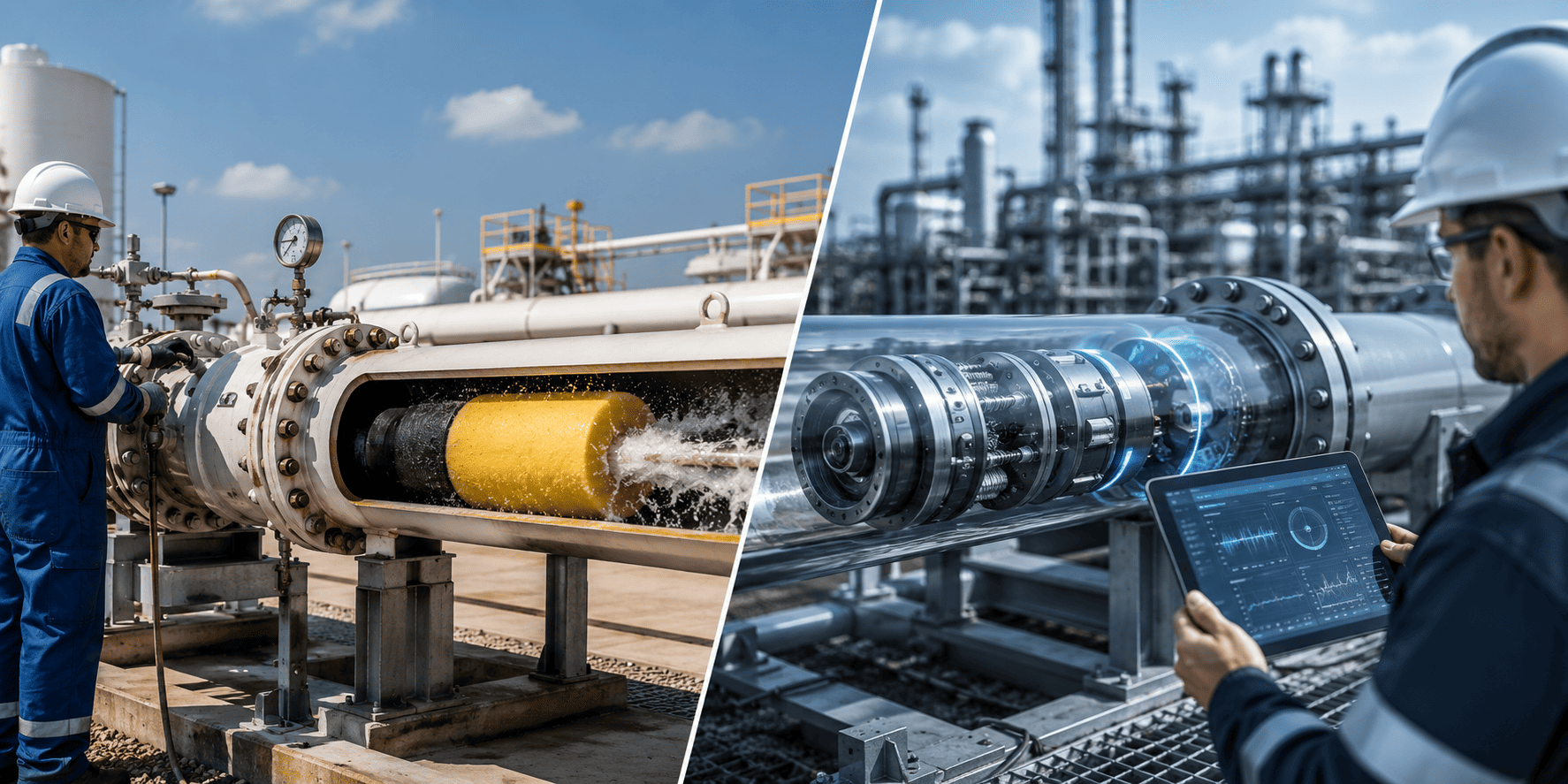
Utility Pigging vs Inspection Pigging: What’s the Difference?
When pipeline operators compare utility pigging vs inspection pigging, the question is often framed the wrong way. These are not competing services that solve the same problem. They serve different purposes within a broader pipeline maintenance and integrity strategy. Utility pigging supports cleaning, dewatering, batching, and line preparation, while inspection pigging uses in-line inspection technology to assess pipe condition and identify defects such as corrosion, metal loss, cracks, and geometry issues.
For many pipelines, both are important. In fact, utility pigging often comes first because a line that is not properly cleaned and prepared can interfere with inspection data quality or create avoidable risk during a smart pig run.
Utility Pigging vs Inspection Pigging At A Glance
Utility pigging is used to keep a pipeline operational. It removes debris, separates products, pushes liquids, supports dewatering, and helps prepare a line for other activities.
Inspection pigging, often called smart pigging or in-line inspection, is used to gather data. It evaluates the condition of the pipeline interior and helps operators understand where deterioration, wall loss, cracks, or deformation may be developing.
The simplest way to understand the difference is this:
Utility pigging changes the condition of the line.
Inspection pigging measures the condition of the line.
That distinction matters because pipeline performance and pipeline integrity are closely related, but they are not the same thing.
What Is Utility Pigging?
Utility pigging is the practical workhorse of ongoing pipeline operations. It is used for line cleaning, swabbing, batching, dewatering, gauging, and general pipeline preparation.
Depending on the application, utility pigs may be made from foam, urethane, or mandrel-based designs with cups, discs, brushes, or scraping components. Their purpose is not to generate high-resolution integrity data. Their purpose is to move through the pipeline and physically perform a task that improves flow, removes buildup, or prepares the line for the next step.
Operators commonly use utility pigging to remove wax, scale, sand, sludge, liquids, and other debris that can restrict flow or create operational issues. It is also used to separate different products in a line, assist with hydrotest cleanup, and prepare a line before commissioning, coating, or inspection.
In short, utility pigging is about restoring or maintaining line function.
What Is Inspection Pigging?
Inspection pigging is a diagnostic service. Instead of focusing on cleaning or product separation, it focuses on assessing pipeline condition.
Inspection pigs use advanced sensor technology such as magnetic flux leakage, ultrasonic testing, caliper systems, and related in-line inspection tools to detect and record internal conditions that may not be visible from normal operation. These tools can identify corrosion, metal loss, cracks, dents, ovality, and other integrity concerns that affect the safe and efficient operation of the pipeline.
This is why inspection pigging is often referred to as smart pigging. The tool is not just traveling through the line. It is collecting high-value condition data that supports pipeline integrity assessment, maintenance planning, and repair prioritization.
For operators managing aging assets, pressure pipe systems, or critical infrastructure, that data can be essential for reducing risk and making informed decisions about rehabilitation or continued service.
The Biggest Difference Between The Two
The most important difference is purpose.
Utility pigging is task-based. It is used to clean, separate, push, remove, or prepare.
Inspection pigging is information-based. It is used to inspect, measure, detect, and analyze.
That difference affects everything from tool design to project planning.
A utility pig may confirm that debris is being removed or that a line can be dewatered effectively. An inspection pig is expected to produce usable data about wall condition, anomalies, and potential defects.
Both matter. But they answer very different questions.
Utility pigging answers:
Is the line clean, clear, and operationally prepared?
Inspection pigging answers:
What is the actual condition of the pipe wall and where are the integrity risks?
Why Utility Pigging Often Comes Before Inspection Pigging
This is where many short comparison articles stop too early.
Inspection pigging usually depends on successful utility pigging first. If the line still contains debris, buildup, or liquids that interfere with the tool, the inspection run may not collect clean data. In some cases, poor preparation can even increase the risk of tool damage, tracking issues, or unsuccessful runs.
That is why pre-inspection cleaning matters.
Before an in-line inspection run, operators often perform multiple utility pigging passes to clean the line and confirm piggability. This can include cleaning pigs, swabs, and gauge pigs depending on the line condition and inspection goals.
The sequence matters because inspection technology performs best when the line is ready for inspection, not simply passable.
A Clean Line Is Not Always An Inspection-Ready Line
This is an important distinction for pipeline planning.
A gauge pig may help identify major restrictions or confirm that the line can physically accommodate a tool. But passing a gauge pig does not automatically prove the line is clean enough for a successful smart pig run. Residual debris, scale, or other material may still affect data quality or tool performance. TD Williamson’s ILI preparation case study specifically notes that a successful gauging run does not by itself confirm a line is sufficiently clean for high-quality inspection.
That is why pipeline readiness should be evaluated in stages.
A line may be:
mechanically passable
operationally clean enough for flow
still not fully prepared for high-quality inspection data
For operators, that difference can affect cost, scheduling, and confidence in the inspection results.
When Utility Pigging Is The Right Service
Utility pigging is typically the right fit when the goal is operational performance, cleaning, or preparation.
That may include:
removing buildup or debris
separating products in the line
dewatering after hydrotesting
cleaning before commissioning
preparing for inspection
supporting internal coating or rehabilitation work
If the problem is tied to flow restriction, contamination, residual liquids, or line preparation, utility pigging is usually the first place to start.
When Inspection Pigging Is The Right Service
Inspection pigging is the better fit when the goal is to understand pipeline condition and identify defects before they become failures.
That may include:
evaluating corrosion or metal loss
locating dents, deformation, or geometry changes
assessing wall condition
supporting integrity management
prioritizing repairs
establishing baseline condition for future comparison
If the question is about structural health, remaining useful life, or integrity risk, inspection pigging is the service that provides the data needed to move forward.
Utility Pigging And Inspection Pigging Often Work Together
For many projects, the best answer is not one or the other. It is both, in the right order.
A typical workflow may look like this:
Utility pigging begins the process by removing debris, buildup, or liquids from the line. Gauging and piggability checks follow to confirm that the line can safely accommodate the planned inspection tool.
Once the line is ready, inspection pigging is used to gather the condition data needed for analysis. That information then supports maintenance planning, repairs, rehabilitation, coating, or further cleaning as required. This general sequence is consistent with how industry sources describe pre-ILI preparation and pigging workflow.
This is why comparing utility pigging and inspection pigging as if one replaces the other can be misleading. In many cases, utility pigging enables inspection pigging to succeed.
Common Mistakes Operators Should Avoid
One common mistake is assuming that a pipeline only needs cleaning when the real need is integrity assessment. Another is assuming that passing a gauge pig means the line is fully ready for smart pigging.
A third mistake is treating pig selection as a generic task rather than matching the pigging approach to the line condition, geometry, and project objective. Inspection goals, product type, debris load, flow conditions, and bend characteristics all affect the right plan.
The strongest pigging programs do not start with a tool. They start with a clear understanding of what the pipeline needs.
How American Pipeline Solutions Supports Both
At American Pipeline Solutions, pipeline pigging is not treated as a one-size-fits-all service. The right approach depends on whether the line needs cleaning, gauging, dewatering, inspection, coating preparation, or condition analysis.
That is why APS supports pipeline operators with both utility-focused pigging services and advanced inspection-driven solutions. From conventional pigging and swabbing to pipeline inspection, condition analysis, mapping, pre-commissioning support, and specialty cleaning strategies, the goal is the same: improve performance, protect integrity, and help clients make better decisions about their assets.
When utility pigging and inspection pigging are planned correctly, they do more than keep a line moving. They help reduce avoidable risk, improve maintenance planning, and support the long-term reliability of the system.
Final Thoughts
Utility pigging and inspection pigging are not interchangeable terms.
Utility pigging is used to clean, prepare, separate, and support operations. Inspection pigging is used to inspect, assess, and identify integrity issues using in-line diagnostic technology.
Knowing the difference helps operators choose the right service at the right time. Knowing how they work together is what leads to better pipeline outcomes.
If your pipeline needs cleaning, gauging, inspection, or a broader integrity strategy, American Pipeline Solutions can help you determine the right next step for your system.
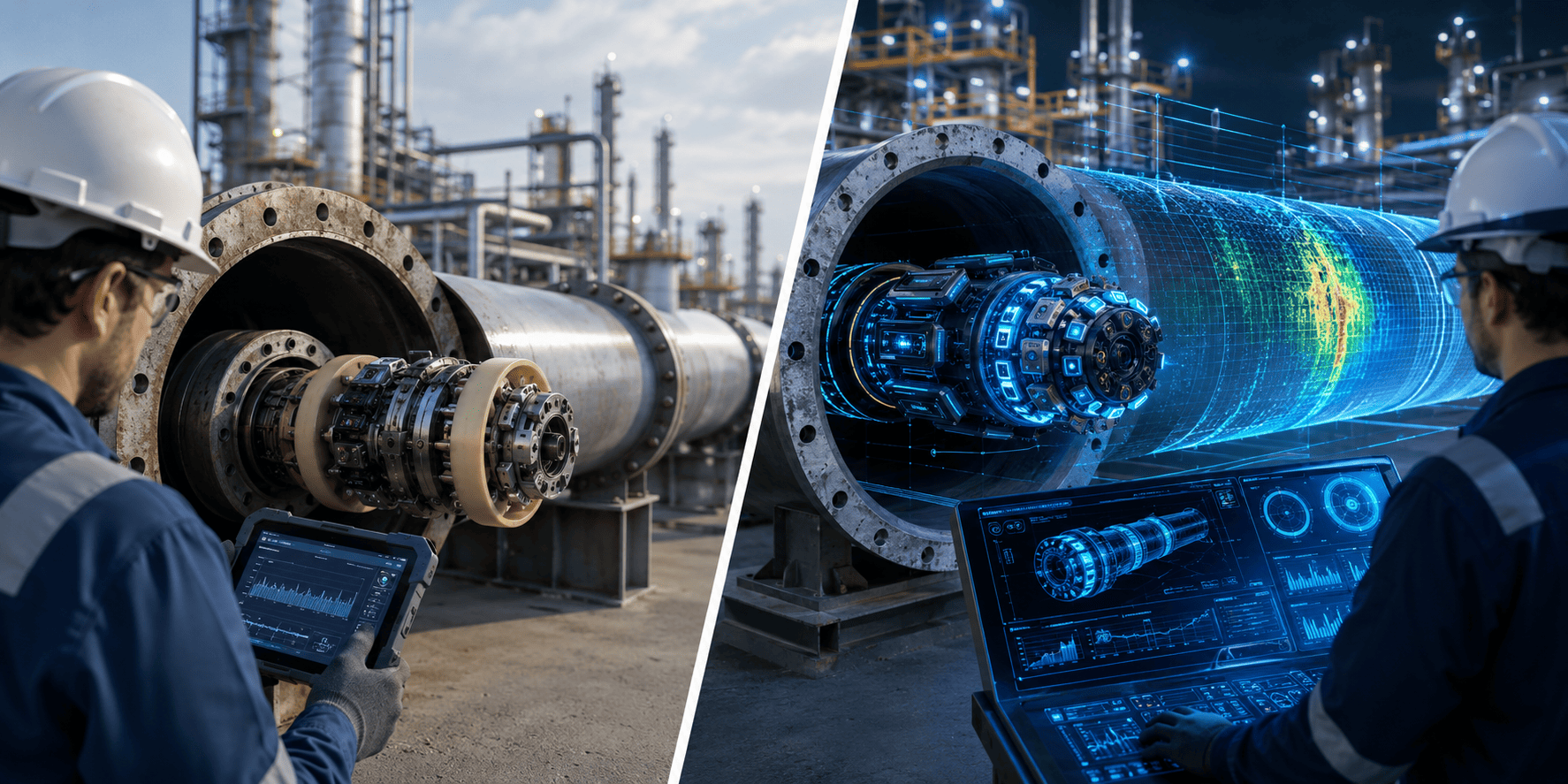
Smart Pigging Vs Intelligent Pigging: What’s The Difference?
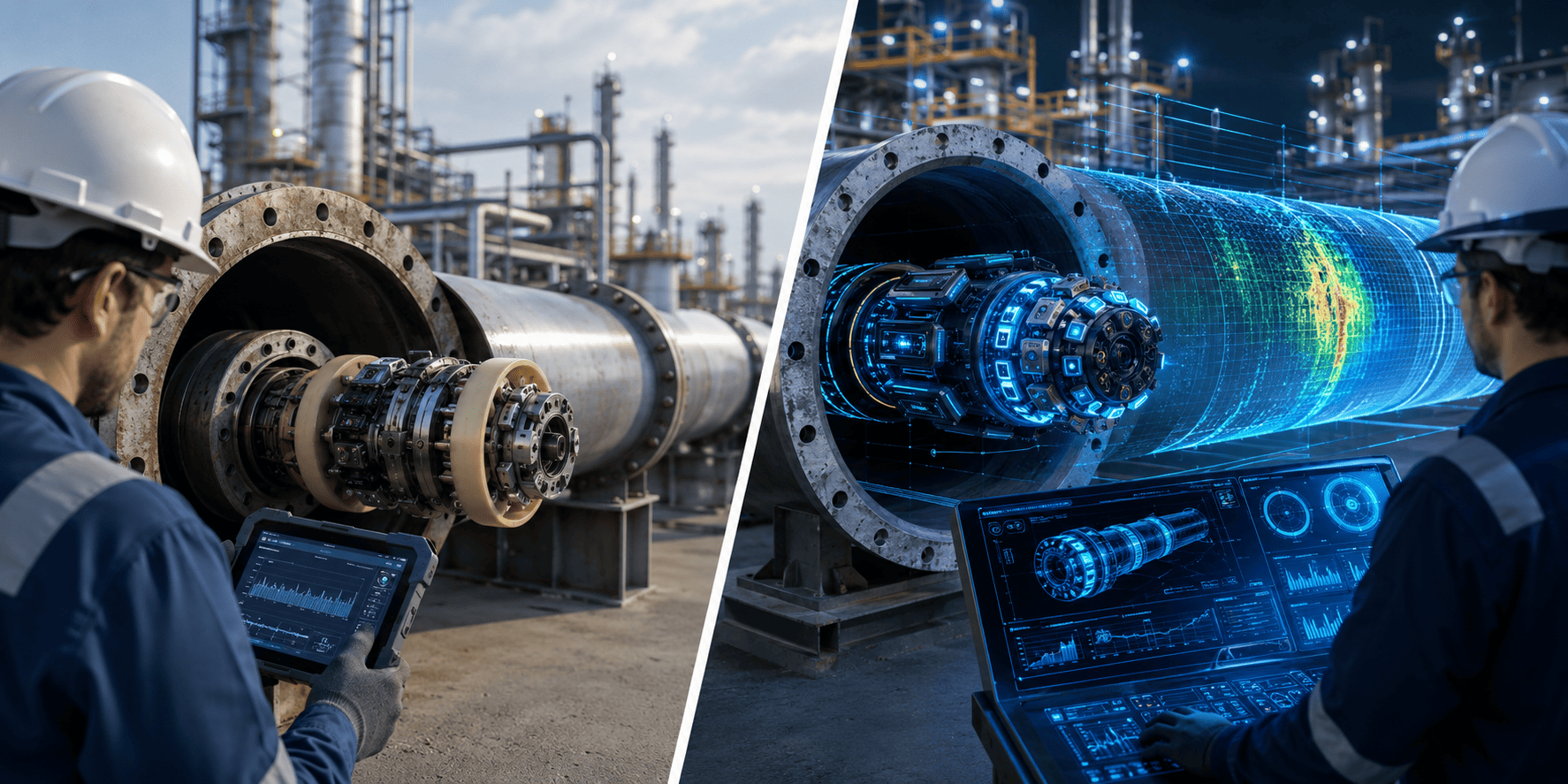
In pipeline integrity work, terminology matters. Different teams may use different language for the same inspection method, and that can create confusion when planning a project, comparing service options, or reviewing scope requirements.
Smart pigging and intelligent pigging are two terms that are often used to describe the same type of inline inspection. Both refer to the use of an instrumented pig that travels through a pipeline and collects data about the condition of the line. The inspection is designed to identify issues such as corrosion, wall loss, dents, cracks, deformation, and other anomalies that may affect pipeline integrity.
Even though the terms are commonly used interchangeably, it is still worth understanding how they are used in practice. In some cases, the wording changes depending on whether someone is talking about the tool itself, the inspection process, the service offering, or the data collected during the run.
For pipeline operators, the real priority is not choosing between two completely different methods. The priority is understanding what type of inspection is being performed, what information the tool is designed to collect, and whether the line is suitable for that inspection approach.
Why Both Terms Exist
The pipeline industry has a long history of using overlapping terminology. Smart pigging and intelligent pigging developed as different ways to describe an inline inspection process that goes beyond basic cleaning or utility pigging.
The word “smart” is often used in broader commercial and operational language because it is simple and easy to recognize. It communicates that the pig is doing more than moving through the line mechanically. It is collecting inspection data.
The word “intelligent” tends to appear more often in technical descriptions, inspection documentation, and integrity-focused discussions. It emphasizes that the pig is instrumented and capable of detecting and recording condition-related information from inside the pipeline.
In practical terms, both phrases usually point to the same category of work. The more important distinction is not smart versus intelligent. The more important distinction is what technology the tool uses and what kind of integrity questions the inspection is meant to answer.
What Smart Pigging And Intelligent Pigging Actually Mean
Both smart pigging and intelligent pigging refer to inline pipeline inspection using a pig equipped with sensors and onboard data collection capability.
As the pig moves through the pipeline, it gathers information about the internal condition and physical characteristics of the line. That data is then reviewed to identify defects, assess pipeline condition, and support decisions around maintenance, repair, rehabilitation, or further investigation.
This type of inspection is very different from conventional pigging used for cleaning, batching, gauging, or dewatering. A conventional pig performs a physical task in the pipeline. A smart or intelligent pig performs an inspection task.
That distinction is important because not every pigging run is an inspection run. Some pigs are designed to clean the line. Others are designed to measure the condition of the line. Smart pigging and intelligent pigging belong to the second category.
The Relationship Between Smart Pigging And Inline Inspection
Inline inspection, often shortened to ILI, is the broader technical term behind both smart pigging and intelligent pigging.
When an operator talks about ILI, they are generally referring to the inspection of a pipeline from within using an instrumented tool. Smart pigging and intelligent pigging are common phrases used to describe that same general concept in a more service-oriented or descriptive way.
This is why the terms often overlap in proposals, service pages, and project discussions. One team may say the line needs smart pigging. Another may describe the same scope as intelligent pigging. Another may call it an inline inspection run.
The wording may change, but the central goal remains the same. The pipeline is being inspected internally to gather condition data that cannot be confirmed through a basic visual review alone.
What These Inspection Tools Are Designed To Detect
The value of smart or intelligent pigging comes from the type of information the inspection tool can collect. Depending on the sensor package and the condition of the line, the inspection may detect a range of integrity concerns.
Corrosion And Metal Loss
One of the most common uses of smart pigging is identifying corrosion and wall loss in metallic pipelines.
This includes areas where internal or external deterioration may be reducing wall thickness and weakening the pipe over time. Early identification of corrosion allows operators to make more informed decisions before the issue develops into a leak, failure, or major repair event.
Cracks And Other Structural Defects
Certain inspection tools are also used to detect cracks, seam-related issues, or other structural anomalies that are not visible through routine operation.
These types of defects can be especially important in pipelines where pressure, product type, age, or operating conditions increase the consequences of failure.
Dents, Deformation, And Geometry Changes
Not all pipeline issues are related to corrosion. Some involve shape, geometry, or physical deformation.
A smart or intelligent pig may detect dents, ovality changes, buckles, kinks, and other geometric anomalies that could affect performance or indicate a developing integrity concern.
Mapping And Positional Data
Many modern inspection tools also support mapping and location-based analysis.
That means the inspection does not just identify an anomaly. It also helps locate where that anomaly exists along the pipeline so that operators can investigate, plan repairs, or compare findings across future runs.
The Technologies Behind Smart And Intelligent Pigging
When operators ask about smart pigging versus intelligent pigging, the more useful technical question is usually about sensor type.
Different inspection tools are built for different purposes, and the actual capabilities of the run depend on the technology being used.
Magnetic Flux Leakage
Magnetic Flux Leakage, often called MFL, is commonly used in metallic pipelines to identify metal loss and corrosion-related defects.
This method is widely used because it can generate detailed information about wall condition and help identify areas where deterioration may already be underway.
Ultrasonic Inspection
Ultrasonic inspection tools use sound-based measurement to evaluate wall thickness and detect certain types of flaws.
These tools can provide highly valuable integrity data in the right application and are often selected based on the inspection objective, line condition, and material characteristics.
Caliper And Geometry Tools
Caliper tools are used to assess physical shape and internal geometry.
They are particularly useful for detecting dents, ovality changes, restrictions, and other dimensional issues that may affect piggability or indicate mechanical damage.
IMU And Mapping Systems
Some inspection tools also include inertial measurement capability to support location tracking and mapping.
This helps connect inspection findings to physical locations in the field, which is critical for planning maintenance, excavation, verification, or long-term integrity management.
What Smart Pigging Is Not
One of the biggest sources of confusion in pigging terminology is the assumption that all pigging serves the same purpose.
Smart pigging is not the same as a routine cleaning run. It is not the same as basic swabbing, batching, or dewatering. It is not just another way to describe any pig moving through a pipeline.
Conventional pigging is primarily about performing a physical maintenance function. Smart or intelligent pigging is about collecting diagnostic information.
That is why inspection readiness matters so much. A line may need utility pigging first to remove debris, confirm piggability, or improve conditions before an inspection tool can be used effectively.
Does The Wording Ever Matter In Real Projects?
In most projects, the wording matters less than the scope. If a provider says smart pigging and another says intelligent pigging, they may be talking about the same inspection category.
Where the wording starts to matter more is in technical clarification. A proposal may need to define whether the inspection involves MFL, caliper, eddy current, ultrasonic, acoustic support, or a combination of technologies. The pipeline material, diameter, bends, fittings, debris levels, and access conditions can all influence what type of inspection is practical.
That is why operators should avoid focusing too much on the label alone. The more important questions are:
What defects is the tool intended to detect?
Is the line piggable and ready for inspection?
What data will the run produce?
How will the results be used for condition analysis or repair planning?
Those answers are what define the true value of the inspection.
Pipeline Requirements Before A Smart Or Intelligent Pig Run
Not every pipeline is immediately ready for inline inspection.
A smart or intelligent pig run often depends on the line being piggable, accessible, and sufficiently prepared. That may involve cleaning runs beforehand, confirming launcher and receiver access, reviewing bends and restrictions, and making sure the inspection tool can travel safely through the pipeline.
This preparation matters because even the most advanced inspection tool is only as effective as the conditions in which it is run. If debris interferes with sensors or the tool cannot move through the line properly, data quality and project success can both suffer.
For that reason, inspection planning should never begin and end with the pig itself. The line condition, system layout, and inspection objective all need to be evaluated together.
How American Pipeline Solutions Approaches Smart Pigging
American Pipeline Solutions approaches smart pigging as part of a broader pipeline inspection and condition analysis strategy.
The goal is not simply to run a tool through a pipeline. The goal is to match the inspection approach to the pipeline material, operating conditions, and integrity concerns so the resulting data is useful for real decision-making.
That may involve metallic pipeline inspection, geometry-based analysis, mixed-material inspection support, mapping, leak-related evaluation, or preparation work before the inspection run begins. In some cases, cleaning and readiness steps are just as important as the inspection itself.
This approach helps clients move beyond terminology and focus on what matters most: understanding pipeline condition, identifying risk early, and planning the right next step for the asset.
Final Thoughts
Smart pigging and intelligent pigging are usually two names for the same type of inline inspection process.
Both refer to the use of an instrumented pig that gathers integrity data from inside a pipeline. In most cases, the more meaningful differences are not found in the terminology itself, but in the sensor package, inspection objective, line condition, and the type of defects the run is meant to detect.
For operators evaluating inspection services, that distinction is important. A project should not be scoped around wording alone. It should be scoped around pipeline condition, integrity goals, and the kind of data needed to support maintenance or repair decisions.
When the terminology is clarified early, it becomes much easier to compare providers, define the right inspection method, and move forward with a more effective pipeline integrity strategy.
FAQs
Is Smart Pigging The Same As Intelligent Pigging?
In most pipeline inspection contexts, yes. The two terms are commonly used to describe the same type of instrumented inline inspection process.
What Is The Difference Between A Smart Pig And An Intelligent Pig?
Usually, there is no major practical difference. Both terms refer to a pig equipped with sensors and data collection capability for inspecting pipeline condition.
Is Smart Pigging The Same As Inline Inspection?
Smart pigging is generally a common industry phrase for inline inspection using an instrumented pig. Inline inspection, or ILI, is the broader technical category.
What Can Smart Or Intelligent Pigs Detect?
Depending on the tool and sensor package, they may detect corrosion, metal loss, dents, deformation, wall thickness changes, cracks, and other integrity-related anomalies.
Does Smart Pigging Require A Piggable Pipeline?
Yes. The line must be suitable for pig travel, which means geometry, access, restrictions, and operating conditions all need to be considered before the run.
Can Every Pipeline Be Inspected With Smart Pigging?
No. Some pipelines may not be piggable, may require preparation first, or may be better suited to another inspection method depending on material, layout, and operating conditions.
What Is The Difference Between A Cleaning Pig And A Smart Pig?
A cleaning pig is designed to remove debris, liquids, or buildup from the line. A smart pig is designed to inspect the condition of the pipeline and collect diagnostic data.
Why Do Some Companies Say Smart Pigging While Others Say Intelligent Pigging?
The difference is often just wording preference. Some use “smart pigging” in general service language, while others use “intelligent pigging” in more technical or formal inspection contexts.
What Matters More Than The Terminology?
The inspection technology, sensor type, pipeline readiness, and the specific integrity issues the run is meant to detect matter far more than whether the service is labeled smart pigging or intelligent pigging.
When Should A Pipeline Operator Consider Smart Pigging?
A pipeline operator should consider smart pigging when the goal is to assess internal pipeline condition, identify integrity threats, gather inspection data, and support maintenance or repair planning.
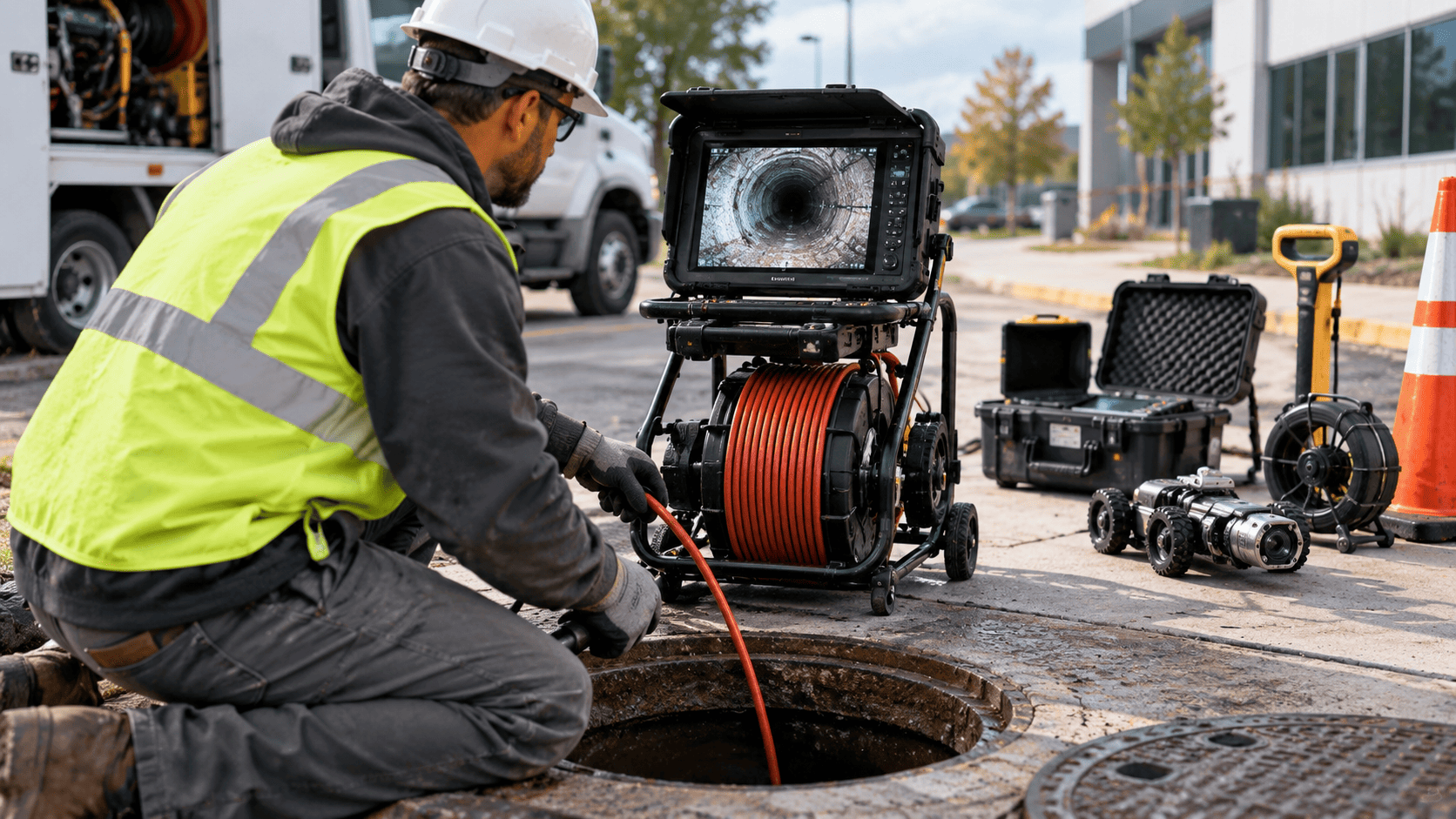
CCTV vs. Other Pipe Inspection Methods: When Is Video The Right Tool?
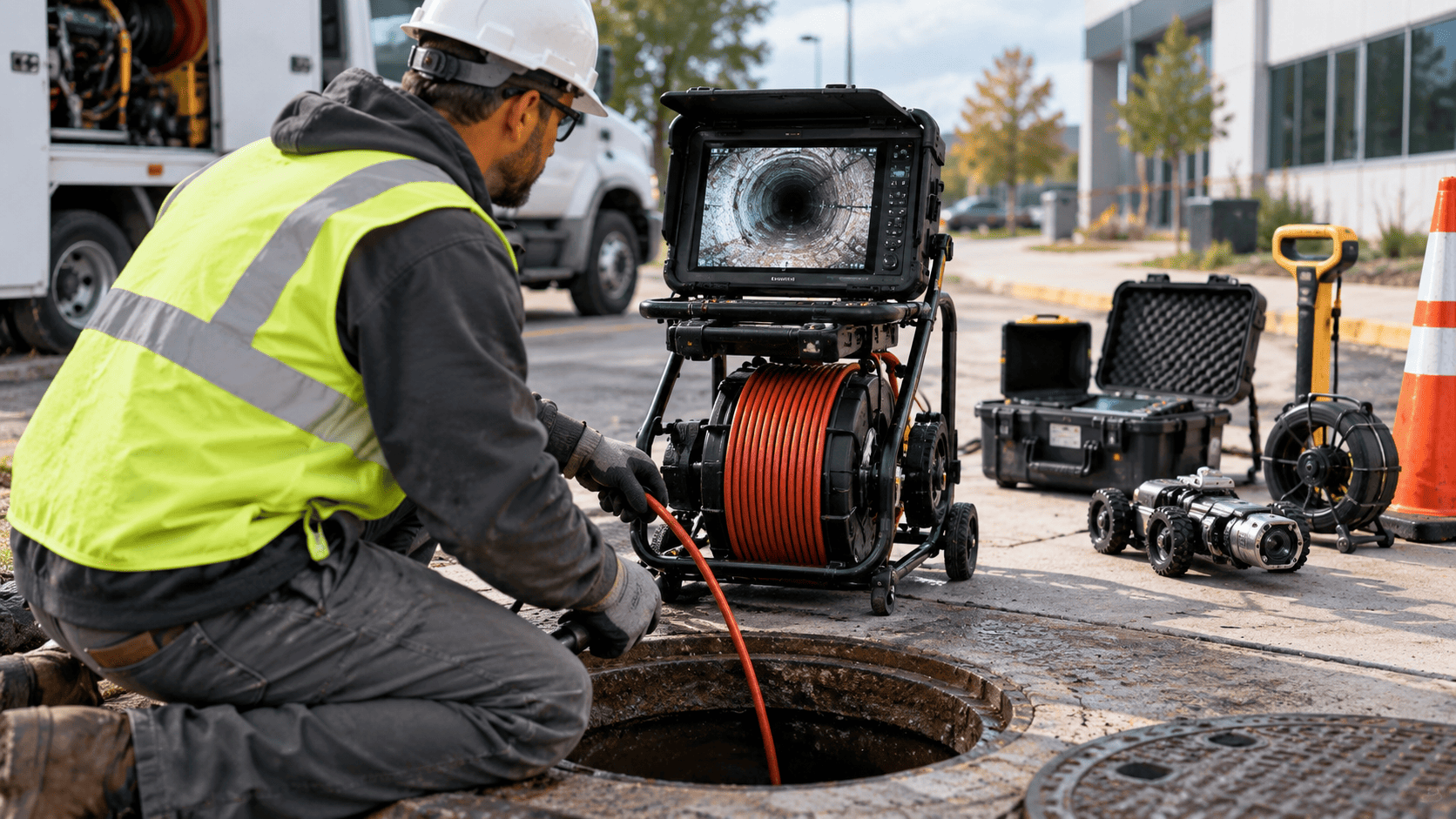
A pipeline may appear to operate normally while corrosion, sediment, cracks, or other defects develop inside it. For municipal utilities and industrial operators, identifying these problems early is essential for maintaining reliable infrastructure and avoiding unexpected repairs.
CCTV pipe inspection provides a direct view of a pipeline's interior, making it useful for identifying visible damage, blockages, and deterioration. However, cameras cannot reveal every problem, particularly when defects are hidden within pipe walls or submerged beneath water.
Understanding how CCTV compares with sonar, laser profiling, and smart pigging helps operators select the appropriate inspection method for their pipeline's condition and maintenance requirements.
What Is CCTV Pipe Inspection?
Closed-circuit television (CCTV) inspection uses specialized cameras to examine and record the interior of pipelines. Depending on pipe diameter and access, technicians may deploy robotic crawlers, push cameras, or other inspection equipment.
CCTV is widely used for gravity sewers, storm drains, and accessible industrial piping. It provides visual evidence of existing conditions and helps operators determine whether cleaning, repairs, or further testing are necessary.
What Can CCTV Detect?
CCTV inspection is particularly effective for identifying visible problems, including:
Cracks, fractures, and displaced joints
Tree root intrusion and accumulated debris
Sediment, grease, and other deposits
Visible corrosion and surface deterioration
Obstructions and apparent structural deformation
Recorded footage can document defect locations and provide a reference for future inspections. However, visual evidence alone may not establish the full extent of structural deterioration.
When Is CCTV The Right Inspection Method?
Video inspection is most useful when the suspected problem is visible and the camera can reach the affected section. It is often an appropriate starting point for assessing sewer conditions and planning maintenance.
Routine Sewer And Storm Drain Inspections
Municipal utilities use CCTV to assess gravity sewers, identify developing obstructions, and document deterioration. Regular inspections help maintenance teams prioritize cleaning and investigate sections experiencing recurring problems.
CCTV also supports rehabilitation planning by providing visual evidence of damaged joints, cracks, and other accessible defects before repairs begin.
Investigating Blockages And Verifying Cleaning
When a pipeline experiences recurring blockages, CCTV can help identify the location and possible cause. It may reveal accumulated grease, root intrusion, displaced joints, or debris restricting flow.
Following cleaning, another camera inspection can help confirm that visible deposits have been removed. However, a clear video does not necessarily establish that the pipeline is structurally sound.
What Are The Limitations Of CCTV Pipe Inspection?
Although video inspection provides valuable information, it cannot measure every defect or assess every operating condition. Relying exclusively on CCTV may leave important questions about pipeline integrity unanswered.
Hidden Corrosion And Wall Thickness
A camera can identify visible rust, deposits, and surface deterioration, but it cannot reliably measure remaining pipe wall thickness or detect corrosion hidden beneath the surface.
When operators suspect significant metal loss, a suitable sensor-based inspection method may be necessary to evaluate the pipeline's structural condition.
Submerged And Pressurized Pipelines
Standing water, sediment, and poor visibility can obscure defects during conventional CCTV inspections. Cameras may document the exposed portion of a sewer while providing little information about submerged surfaces.
Pressurized pipelines introduce additional challenges involving access, isolation, pressure, and equipment compatibility. Specialized inspection technologies may be more appropriate for these conditions.
CCTV Vs. Other Pipe Inspection Methods
Different inspection technologies answer different questions. Choosing between them depends on pipeline material, operating conditions, suspected defects, and the information required for maintenance decisions.
CCTV Vs. Sonar Inspection
Sonar inspection uses acoustic signals to assess submerged pipeline sections where conventional cameras have limited visibility. It is particularly useful in large sewers and interceptors that cannot easily be drained.
Combining CCTV and sonar can provide information about both exposed and submerged internal surfaces, resulting in a more complete assessment of suitable sewer systems.
CCTV Vs. Laser Profiling
Laser profiling measures internal pipe geometry, helping identify ovality, deformation, diameter changes, and joint displacement. Unlike ordinary video, calibrated laser systems can provide quantitative measurements for engineering assessments.
CCTV and laser profiling are complementary. Video documents visible conditions, while laser measurements help determine the extent of geometric changes.
CCTV Vs. Smart Pigging
Smart pigging uses instrumented inspection tools that travel through compatible pipelines and collect condition data. Depending on the sensors selected, these tools can identify metal loss, corrosion, wall thickness changes, and geometric abnormalities.
Unlike conventional cameras, appropriate smart pigs can detect certain defects that are not visible on the internal surface. APS provides smart pigging services for pipeline condition assessments where sensor-based inspection is appropriate.
However, not every smart pig detects every defect. Inspection technology must be matched to the pipe material and suspected deterioration.
Which Inspection Method Does Your Pipeline Need?
A gravity sewer experiencing recurring blockages may benefit from CCTV inspection. A large sewer containing substantial standing water may require sonar, while a pipeline showing signs of deformation may need laser profiling.
For metallic pipelines with suspected corrosion or wall loss, appropriate in-line inspection technologies can provide information beyond what cameras reveal. Operators investigating these conditions should understand the capabilities and limitations of MFL inspection before selecting a method.
Some pipelines also present access restrictions, tight bends, diameter changes, or other obstacles that prevent standard equipment from traveling through the line. These challenging inspection conditions may require specialized equipment or a combination of assessment techniques.
The goal is to select a method that answers the operator's specific questions rather than choosing equipment based solely on availability.
Should Pipelines Be Cleaned Before Inspection?
Deposits, sediment, and accumulated debris can obstruct camera visibility and interfere with certain sensor-based inspections. Cleaning beforehand may improve access to internal surfaces and produce more useful inspection data.
However, aggressive cleaning is not always the appropriate first step. Where internal conditions are uncertain, a preliminary inspection may help operators identify restrictions and determine a suitable cleaning strategy.
For compatible systems, foam pigs used for pipeline cleaning can remove loose deposits and support preparation for subsequent inspections.
Cleaning requirements should always reflect the pipeline's condition, the inspection method, and the risks associated with dislodging accumulated material.
How American Pipeline Solutions Supports Pipeline Inspection
American Pipeline Solutions helps municipal utilities, industrial operators, and oil and gas companies evaluate pipeline conditions and determine appropriate maintenance strategies.
Our pipeline inspection services include camera inspection, smart pigging, condition analysis, and specialized inspection support. Depending on project requirements, our team can integrate inspection with pipeline cleaning, gauging, leak detection, and integrity testing.
Every pipeline presents different challenges. APS evaluates pipe material, diameter, configuration, operating conditions, and suspected defects to develop an inspection approach suited to the system.
Our objective is to provide useful condition information that supports informed maintenance decisions, protects infrastructure, and reduces avoidable operational disruptions.
Frequently Asked Questions
Can CCTV Inspection Detect Pipe Corrosion?
CCTV can identify visible corrosion, rust, and surface deterioration. However, it cannot reliably quantify remaining wall thickness or identify every hidden defect. Suitable ultrasonic, electromagnetic, or other sensor-based technologies may be needed for a more detailed assessment.
Can CCTV Inspect A Pipe Full Of Water?
Conventional CCTV has limited visibility when pipe surfaces are submerged, particularly in turbid water. Sonar inspection may be more appropriate for evaluating submerged sections of large sewers and other compatible pipelines.
What Is The Difference Between CCTV And Smart Pigging?
CCTV records visible internal conditions using cameras. Smart pigging uses specialized sensors to collect information about pipeline geometry, corrosion, metal loss, and other defects, depending on the tool's capabilities.
Can CCTV Measure Pipe Wall Thickness?
No. Conventional CCTV cannot directly measure remaining wall thickness. Operators requiring this information should consider an appropriate nondestructive inspection method selected for their pipe material and operating conditions.
Should A Sewer Be Cleaned Before CCTV Inspection?
Cleaning is often beneficial when debris or deposits obstruct camera visibility. However, an initial inspection may be appropriate before cleaning when the condition of the pipeline is unknown or existing deposits need to be documented.
Is CCTV Suitable For Pressurized Pipelines?
CCTV may be suitable for certain pressure pipelines when appropriate access and operating conditions can be established. Specialized in-line inspection or acoustic technologies may be preferable when isolation is impractical or hidden defects are suspected.
Request A Pipeline Inspection Consultation
Choosing the appropriate inspection method starts with understanding your pipeline and the problem you need to investigate. American Pipeline Solutions can help determine whether your project requires visual inspection, sensor-based condition analysis, or additional preparation.
Contact APS to discuss your pipeline inspection requirements and develop an approach suited to your system.
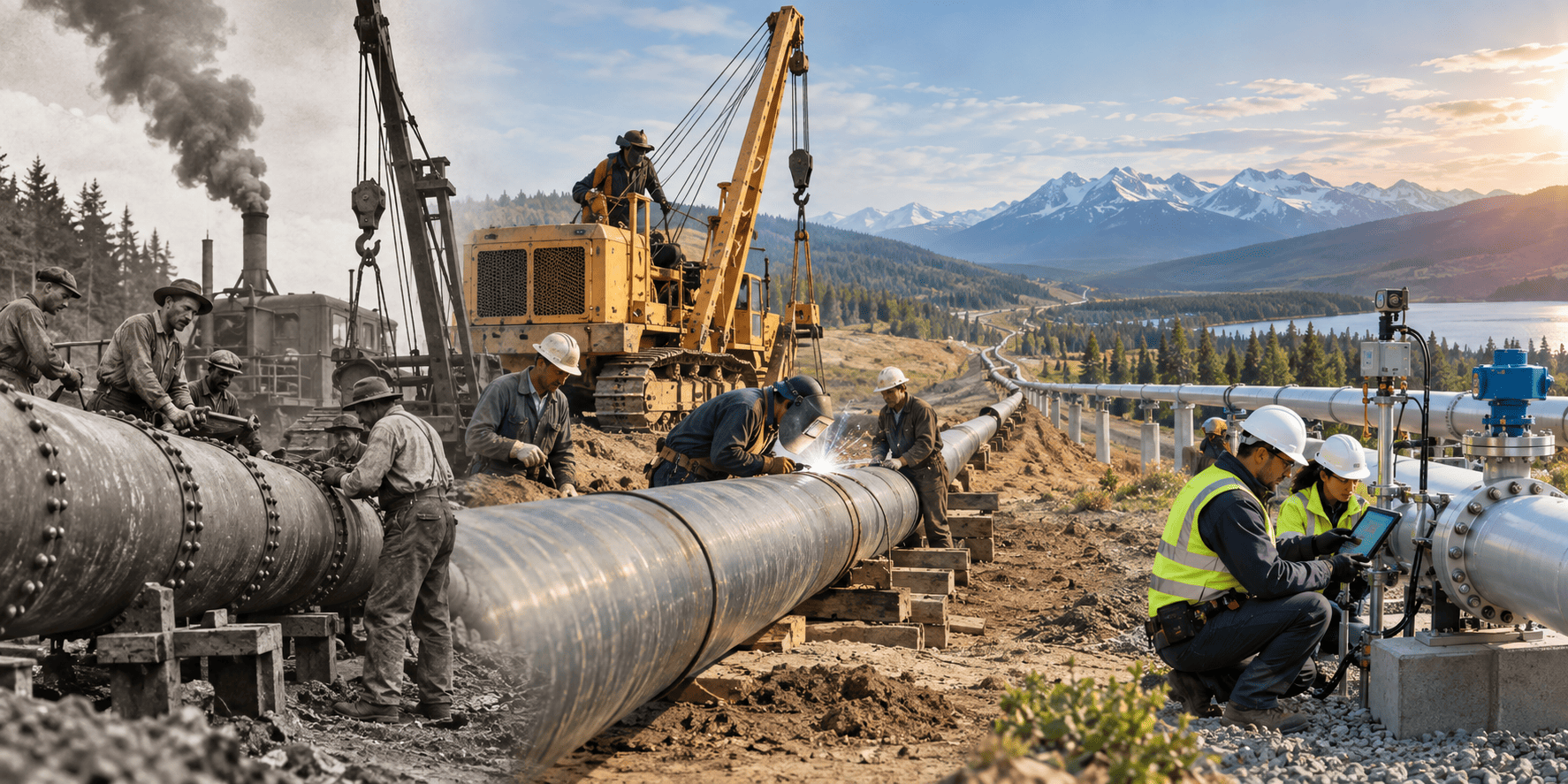
Pipelines Through Time: Cast Iron, Ductile Iron, And The Corrosion Challenge That Never Went Away
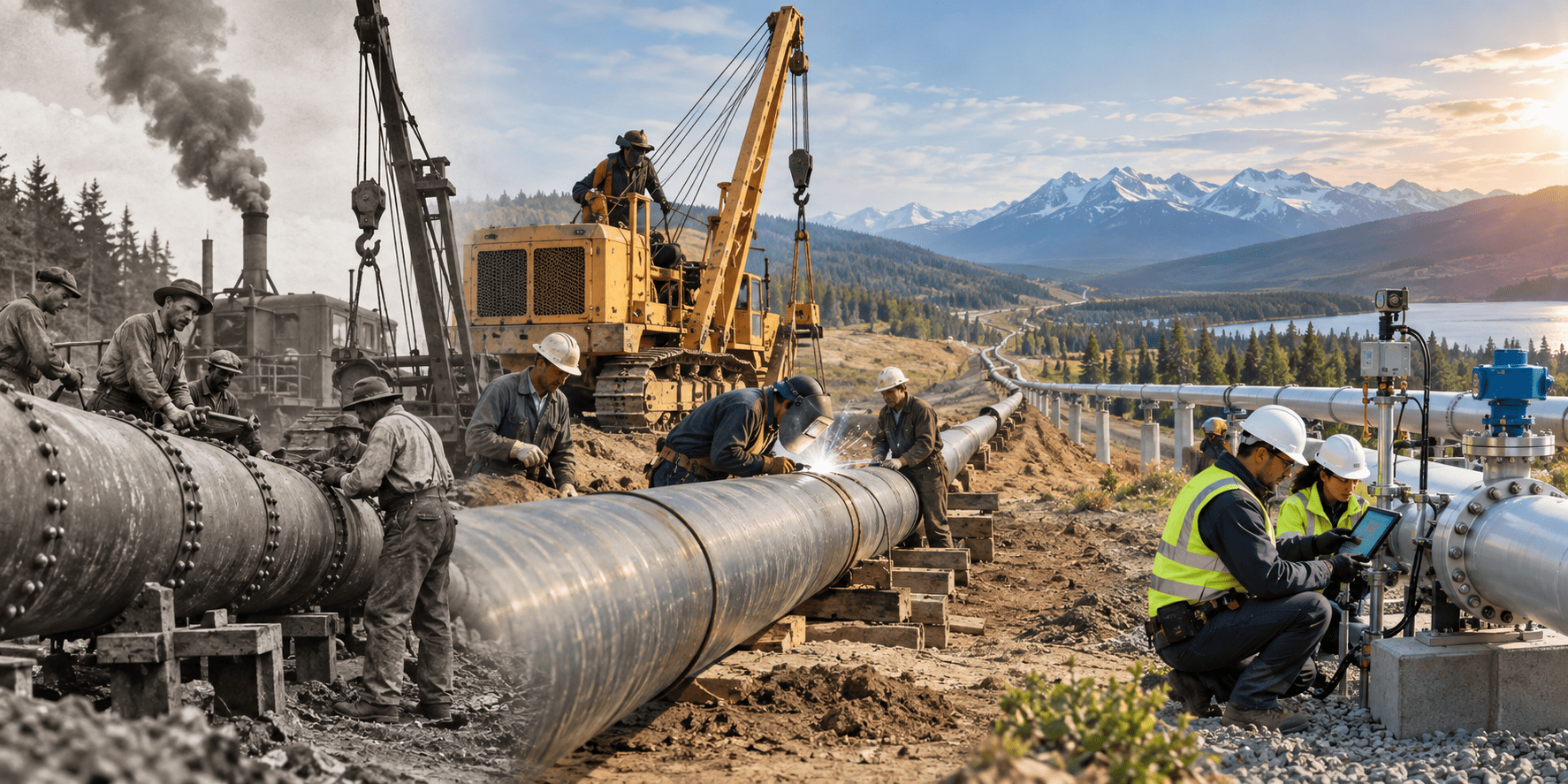
America's water infrastructure tells a story of engineering progress. From cast iron water mains installed more than a century ago to modern ductile iron pipelines, each generation of pipe brought improvements in strength, durability, and performance. Yet one challenge has remained remarkably persistent: corrosion.
Despite advances in manufacturing, pipe materials, and protective coatings, aging iron pipelines continue to experience internal deterioration, mineral buildup, and structural damage. For municipal water utilities and industrial operators, understanding these challenges is essential to maintaining reliable infrastructure.
The history of cast iron and ductile iron pipes reveals an important lesson. Stronger materials improved pipeline performance, but protecting those pipelines still requires proper inspection, cleaning, and long-term maintenance.
The Evolution Of Cast Iron And Ductile Iron Pipelines
Iron pipelines have transported water for centuries. Their widespread adoption helped cities develop reliable water distribution networks, but improvements in manufacturing eventually introduced a stronger alternative.
Cast Iron: The Foundation Of Early Water Infrastructure
Cast iron became a widely used material for municipal water mains during the nineteenth and early twentieth centuries. Its strength, durability, and ability to withstand underground conditions made it an attractive choice for expanding water distribution systems.
Many of these pipelines remain operational today. However, traditional gray cast iron has a relatively brittle structure, making it more susceptible to fracture under certain mechanical stresses, particularly when corrosion has weakened the pipe.
Ductile Iron: A Major Advancement In Pipe Manufacturing
Ductile iron entered the commercial pipeline market in 1955, offering greater strength, flexibility, and resistance to sudden fracture. Its development changed the way engineers designed and installed water distribution infrastructure.
The difference lies largely in the material's internal structure. Traditional gray cast iron contains graphite flakes, while ductile iron contains rounded graphite nodules. This change allows ductile iron to withstand greater deformation before breaking.
However, greater mechanical strength does not make ductile iron immune to corrosion.
Cast Iron Vs Ductile Iron: What Actually Changed?
Both materials are iron-based, but their mechanical properties differ considerably. These differences affect how pipelines respond to pressure, external loads, ground movement, and structural deterioration.
Cast Iron Vs Ductile Iron: What Actually Changed?
Both materials are iron-based, but their mechanical properties differ considerably. These differences affect how pipelines respond to pressure, external loads, ground movement, and structural deterioration.
Ductile iron addressed several important limitations of traditional cast iron. Nevertheless, both materials can deteriorate when exposed to aggressive soils, unfavorable water chemistry, or inadequate corrosion protection.
For pipeline operators, the critical question is not simply which material is stronger. It is how well the existing pipeline has performed under its actual operating conditions.
Why Corrosion Remains A Challenge For Iron Pipelines
Corrosion develops when iron reacts with its surrounding environment. The rate and severity depend on several factors, including water chemistry, soil conditions, protective linings, and the pipeline's service history.
Importantly, corrosion can attack pipelines from both the inside and outside, creating different maintenance and structural concerns.
Internal Corrosion And Tuberculation
Internal corrosion occurs when water interacts with exposed iron surfaces. Over time, corrosion products and mineral deposits can accumulate along the interior walls, forming irregular, rust-colored deposits known as tuberculation.
As these deposits grow, they reduce the effective internal diameter of the pipeline, restrict flow, and increase resistance within the system. Severe buildup can become a significant problem for municipal water mains, industrial pipelines, and fire protection systems.
Professional tuberculation removal can help restore hydraulic capacity in suitable pipelines. However, cleaning must account for the underlying pipe condition because removing heavy deposits may expose existing corrosion damage.
External Corrosion And Structural Deterioration
While internal corrosion affects water flow and pipe surfaces, external corrosion attacks pipelines from the surrounding soil.
Soil moisture, chemical composition, oxygen availability, and environmental conditions can contribute to localized pitting and progressive wall loss. Over time, these defects may reduce the pipeline's ability to withstand operating pressures and external loads.
In gray cast iron, graphitic corrosion can leave behind a weakened graphite-rich structure that retains much of the pipe's original appearance. This makes deterioration difficult to assess through appearance alone.
The EPA's research on ferrous water pipelines identifies both internal and external corrosion as significant considerations in pipeline condition assessment.
Why Some Older Cast Iron Pipelines Outlast Newer Pipes
Pipeline age alone does not determine remaining service life. Some cast iron mains installed more than a century ago continue operating, while newer pipelines may experience premature deterioration under unfavorable conditions.
Original wall thickness, manufacturing quality, installation practices, soil characteristics, operating pressures, and corrosion protection all influence performance.
An older cast iron pipeline installed in relatively favorable soil conditions may remain structurally sound, while a newer ductile iron main exposed to aggressive corrosion conditions may require earlier intervention.
Consequently, utilities should evaluate actual pipeline condition rather than automatically replacing infrastructure based solely on installation dates.
Warning Signs Of Corrosion In Aging Water Mains
Corrosion frequently develops gradually. Municipalities and industrial operators may notice changes in pipeline performance long before a complete failure occurs.
Common warning signs include:
Persistent water discoloration or recurring sediment.
Reduced water flow or declining hydraulic performance.
Repeated leaks, pipe breaks, or localized failures.
Corrosion deposits discovered during pipeline maintenance.
Increasing pumping requirements or failed fire flow tests.
These symptoms do not automatically indicate severe structural corrosion. However, they provide valuable reasons to investigate the pipeline before problems become more expensive.
How Pipeline Inspection Supports Better Maintenance Decisions
Understanding the condition of existing infrastructure is essential when deciding whether a pipeline needs cleaning, rehabilitation, or replacement.
Professional pipeline inspection and condition analysis can help identify deterioration, internal deposits, geometric irregularities, and other issues affecting pipeline performance.
Depending on the pipe material and inspection requirements, suitable methods may include camera inspection, electromagnetic sensors, caliper measurements, and other specialized technologies.
Inspection findings help utilities prioritize maintenance, investigate potential structural concerns, and determine whether an existing pipeline is suitable for rehabilitation.
Cleaning, Coating, Or Replacement: Choosing The Right Solution
Not every corroded pipeline requires complete replacement. In many cases, appropriately selected cleaning or rehabilitation methods can address specific operational problems while preserving existing infrastructure.
The appropriate approach depends on the severity of corrosion, remaining wall thickness, pipeline configuration, and operating requirements.
Restoring Flow Through Pipeline Cleaning
When accumulated sediment and corrosion deposits restrict water flow, professional cleaning may improve hydraulic performance.
APS has documented a Montgomery County, Maryland, project involving cast iron water mains that had served the community for more than 60 years. Severe tuberculation had reduced flow from approximately 800 to 130 gallons per minute in certain sections.
The project combined high-pressure jetting and foam pigging to remove deposits and restore hydraulic performance. The results illustrate how aging water main maintenance can address substantial restrictions without automatically requiring complete pipe replacement.
For appropriate systems with sediment, biofilm, or softer deposits, Ice Pigging™ offers another specialized cleaning approach.
Protecting Suitable Pipelines With Internal Coating
Cleaning removes existing deposits, but it does not replace metal already lost through corrosion. Once a pipeline has been inspected and properly prepared, internal coating may provide additional protection where the remaining pipe is suitable.
Professional internal pipe coating can create a protective barrier between the pipe wall and the transported fluid, helping reduce direct exposure of the internal surface.
However, internal coating does not repair significant external corrosion or automatically restore structural strength. Pipelines with extensive wall loss or other serious defects may require engineered rehabilitation or replacement.
How American Pipeline Solutions Helps Maintain Aging Infrastructure
American Pipeline Solutions provides specialized pipeline inspection, cleaning, and rehabilitation services for municipal, industrial, and other critical infrastructure systems throughout the United States.
Our team evaluates each pipeline's condition, operating requirements, and maintenance objectives before recommending an appropriate approach. Services include conventional pigging, Ice Pigging™, pipeline inspection, condition analysis, tuberculation removal, and internal pipe coating.
Whether a municipality is dealing with declining water main performance or an industrial operator needs to assess an aging pipeline, APS focuses on practical solutions that improve reliability while minimizing unnecessary disruption.
The objective is not simply to clean an old pipeline. It is to understand its condition and identify the most appropriate way to maintain its performance.
Frequently Asked Questions
Is Ductile Iron More Corrosion-Resistant Than Cast Iron?
Ductile iron has greater mechanical strength and flexibility than traditional gray cast iron, but it is still susceptible to corrosion. Its actual corrosion performance depends on environmental conditions, wall thickness, protective systems, and operating history.
How Long Do Cast Iron And Ductile Iron Pipes Last?
Both materials can remain in service for many decades, and some cast iron water mains have operated for more than a century. However, actual service life varies considerably. Pipe age, corrosion exposure, maintenance history, and remaining structural condition should guide replacement decisions.
Can Corroded Cast Iron Pipes Be Cleaned Instead Of Replaced?
Yes, when inspection confirms that the pipeline remains suitable for cleaning. Removing internal deposits can improve flow, while appropriate rehabilitation may help protect the existing pipe. Extensive structural deterioration, however, may require repair or replacement.
Does Internal Pipe Coating Stop External Corrosion?
No. Internal coating protects the pipe's interior surface when properly selected and applied. External corrosion requires separate assessment and, where appropriate, external protection or structural rehabilitation.
Protect Your Pipeline Infrastructure With APS
The transition from cast iron to ductile iron represented an important advancement in pipeline engineering, but it did not eliminate corrosion. Understanding the condition of existing infrastructure remains essential for maintaining reliable water distribution systems.
American Pipeline Solutions helps operators assess aging pipelines, address internal buildup, and evaluate appropriate maintenance and rehabilitation options.
Contact APS today to discuss your pipeline inspection, cleaning, or rehabilitation project.

MFL Pipeline Inspection: What It Detects, What It Misses, And How To Prepare
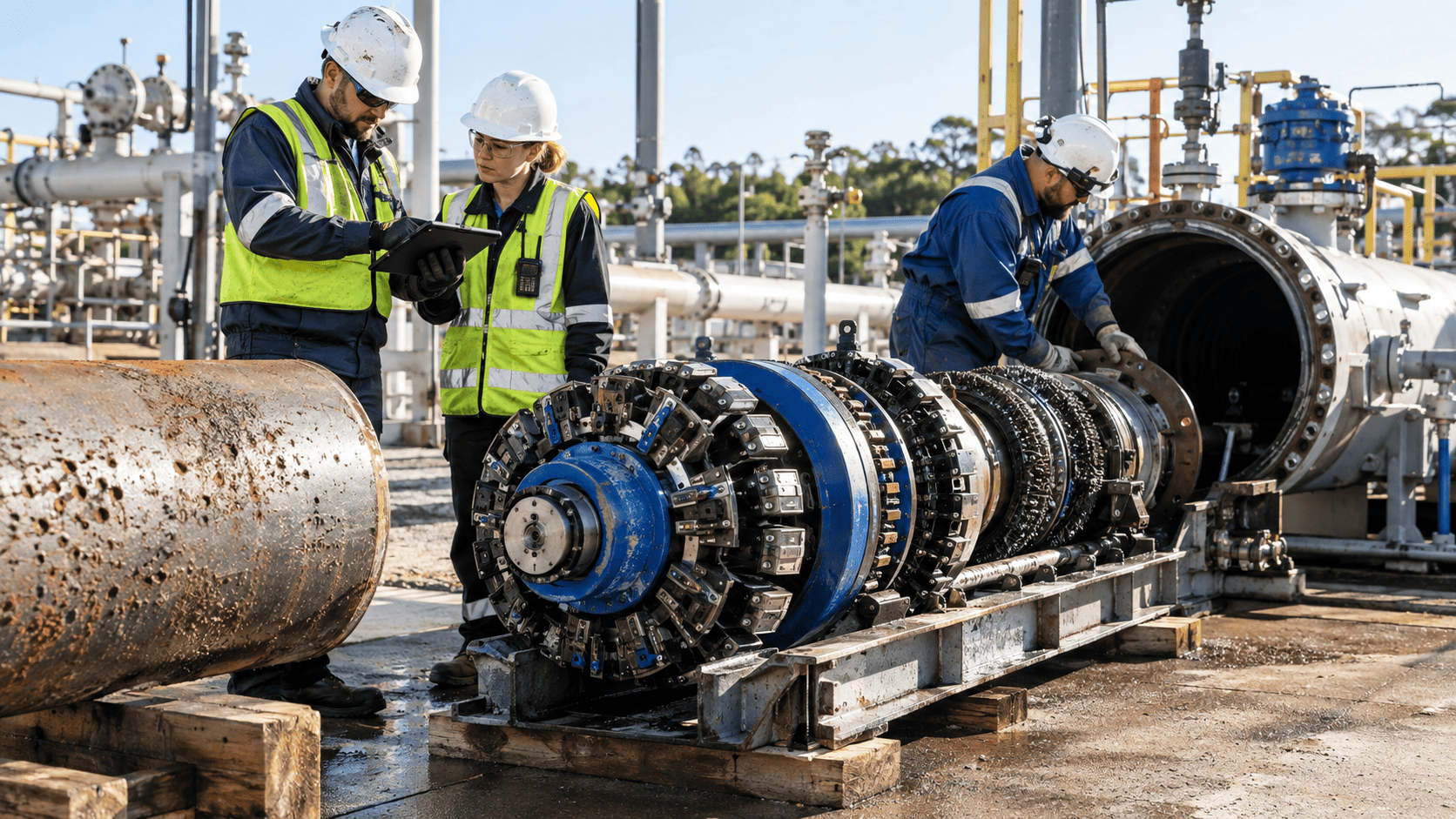
Magnetic Flux Leakage, commonly called MFL, is one of the most widely used in-line inspection technologies for evaluating corrosion and metal loss in ferromagnetic pipelines. It allows operators to examine pipe wall condition without removing the pipeline from service for direct visual inspection.
MFL is particularly valuable for identifying areas where steel has been lost through corrosion, pitting, erosion, or other forms of deterioration. However, it is not designed to identify every possible pipeline defect equally well.
Understanding what MFL can detect, where its limitations lie, and how to properly prepare the pipeline can make a significant difference in the quality and usefulness of an inspection.
What Is MFL Pipeline Inspection?
MFL pipeline inspection is a non-destructive testing method that uses magnetic fields to evaluate the condition of steel pipe walls. In pipeline applications, the technology is commonly incorporated into an in-line inspection tool, often referred to as a smart pig.
As the tool travels through the pipeline, magnets create a strong magnetic field within the steel. Areas where the pipe wall remains intact allow that magnetic field to travel through the material relatively consistently.
Where corrosion or another defect has reduced the amount of steel, part of the magnetic field leaks away from the pipe wall. Sensors on the inspection tool measure these changes and record their location and characteristics.
MFL is therefore especially useful when the inspection goal is understanding where metal has been lost and how that loss may affect pipeline integrity.
APS also uses multiple technologies as part of broader pipeline inspection and condition analysis projects, allowing the inspection method to be matched to the pipeline material, condition, and expected integrity threat.
Pipeline Experts: Inspection, Cleaning, Coating & More
Certified solutions for inspection, pre-commissioning, cleaning, internal coating, ice pigging™, mapping, and turnkey pipeline projects—maximizing safety and reliability at every stage.
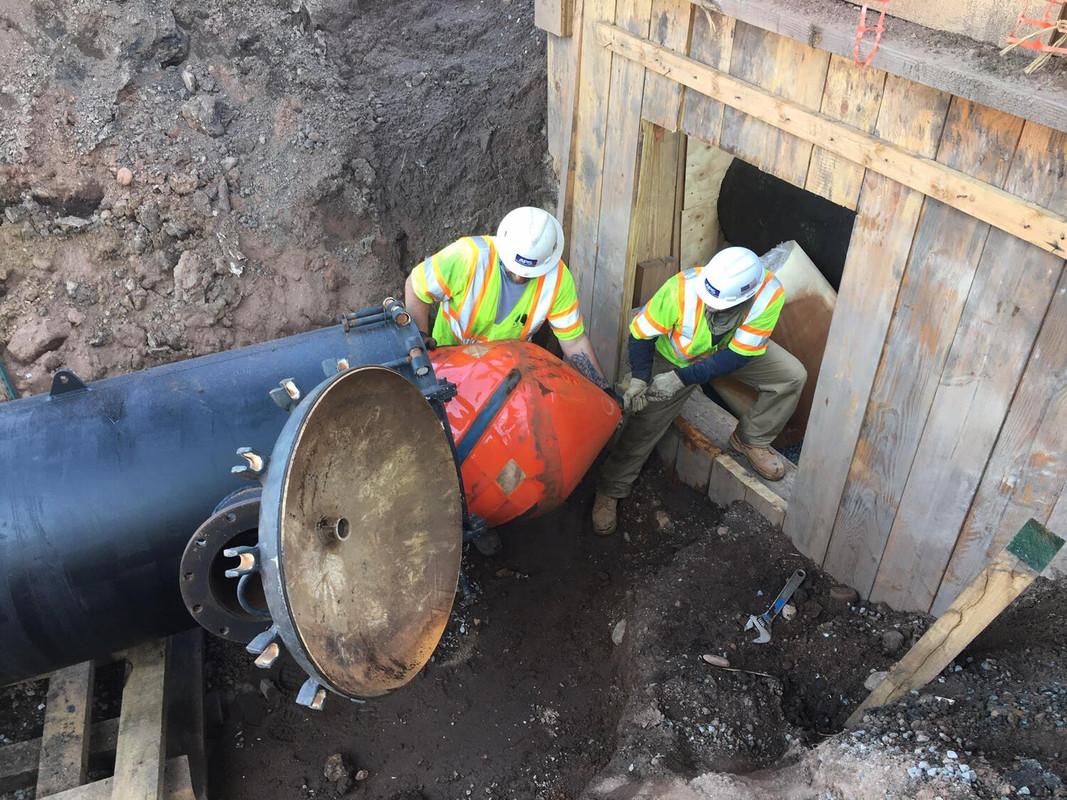
What Does MFL Pipeline Inspection Detect?
MFL is primarily a metal loss inspection technology. Its greatest value comes from identifying areas where the steel wall has become thinner or has been physically reduced.
Common conditions that MFL can help identify include:
General corrosion and wall thinning
Localized pitting
Internal corrosion
External corrosion
Erosion related metal loss
Certain gouges and metal loss around weld areas
Areas of unusual wall loss that require further evaluation
Modern inspection systems may also provide information that helps distinguish whether an anomaly is located toward the internal or external surface of the pipe.
That distinction matters because internal and external corrosion can result from very different operating conditions. Internal corrosion may be associated with moisture, contaminants, or the transported product, while external corrosion may involve coating condition, environmental exposure, or cathodic protection performance.
MFL does not directly identify the cause of corrosion. It gives integrity teams information about where metal loss is present so those findings can be evaluated alongside operating history and other pipeline data.
For operators specifically investigating deteriorating steel infrastructure, a broader corrosion pipeline inspection strategy may combine MFL findings with other inspection and condition assessment methods.
What Can MFL Inspection Miss?
MFL is highly useful for corrosion related threats, but it should not be treated as a universal pipeline defect detector.
The effectiveness of any MFL inspection depends on the tool configuration, magnetization direction, sensor resolution, defect shape, operating conditions, and the type of anomaly being investigated.
Narrow And Crack Like Defects
Conventional corrosion focused MFL tools are generally optimized for volumetric metal loss. Very narrow cracks may produce a much different magnetic response than corrosion pits or areas of broad wall thinning.
Stress corrosion cracking, fatigue cracking, seam related cracking, and other narrow defects may therefore require specialized inspection technologies or tool configurations.
Some MFL systems are designed to improve sensitivity to specific crack orientations, but operators should not assume that every MFL tool provides the same crack detection capability.
Dents And Pipeline Geometry Changes
A dent changes the shape of the pipeline but does not necessarily remove steel. Because MFL is focused primarily on changes in metal volume, geometry problems are usually evaluated more effectively with caliper or geometry inspection systems.
These technologies can identify conditions such as dents, ovality changes, restrictions, wrinkles, and other deformation.
In many integrity programs, MFL and geometry data are used together because metal loss and deformation can sometimes occur in the same location.
Non Ferromagnetic Pipelines
MFL depends on magnetizing the pipe wall, which means conventional MFL inspection is intended for ferromagnetic materials such as carbon steel.
PVC, HDPE, and other non ferrous pipelines require different inspection methods. APS can use technologies such as caliper sensors and other condition assessment methods when inspecting systems where MFL is not suitable.
Why Defect Orientation Matters In MFL Inspection
Not all metal loss features are shaped or oriented the same way. This is one reason the specific MFL technology selected for an inspection matters.
Axial MFL
Axial MFL systems magnetize the pipeline primarily along its length. These tools are widely used for corrosion and general metal loss inspection.
They can perform well for many common corrosion morphologies but may have reduced sensitivity to some long, narrow features that follow the same general orientation as the magnetic field.
Circumferential MFL
Circumferential MFL changes the direction of magnetization around the pipe.
This orientation can improve detection of certain axially aligned features that may be more difficult for conventional axial MFL configurations to characterize.
The important point for pipeline operators is that choosing an inspection method should begin with the expected integrity threat. The tool should be selected for the defect type rather than assuming one inspection technology can identify every condition equally well.
MFL Vs Ultrasonic Pipeline Inspection
MFL and ultrasonic testing are both used for pipeline integrity assessment, but they operate differently.
MFL evaluates how magnetic fields change around areas of reduced steel. Ultrasonic inspection uses sound waves to measure material characteristics and, depending on the technology, can provide direct wall thickness measurements or specialized crack detection.
MFL is commonly used for metal loss inspection because it can operate effectively in many pipeline environments without requiring the same liquid coupling conditions associated with conventional ultrasonic tools.
Ultrasonic technologies may be preferable when the inspection requires detailed wall thickness information or when certain crack like threats are the main concern.
Neither technology is automatically the right choice for every pipeline. Inspection objectives, pipeline product, material, operating conditions, and suspected failure mechanisms should determine the method.
Why Pipeline Preparation Matters Before An MFL Run
Even a highly capable inspection tool cannot provide its best data if the pipeline is poorly prepared.
Deposits inside the line can affect sensor proximity, interfere with smooth tool movement, and create unnecessary risk during the inspection run. Black powder, scale, wax, paraffin, sand, sludge, rust, and other debris may all need to be addressed beforehand.
A controlled pipeline cleaning program can help remove deposits progressively rather than sending a sensitive inspection tool into an unknown internal environment.
Cleaning requirements vary significantly from one system to another, so preparation should be based on actual pipeline condition rather than a standard number of cleaning runs.
How To Prepare A Pipeline For MFL Inspection
Successful preparation normally involves more than simply running one cleaning pig through the line.
Review The Pipeline Configuration
Before selecting an MFL tool, operators should understand the physical characteristics of the pipeline. Important factors include diameter, wall thickness, bends, valves, tees, diameter changes, launcher and receiver arrangements, and previous pigging history.
Operating pressure, flow rate, transported product, and expected tool speed should also be considered during planning.
Clean The Line Progressively
Cleaning should remove enough material to allow the inspection tool to travel reliably while maintaining proper contact or proximity between its sensors and the pipe wall.
Different cleaning pigs may be required as debris conditions change. A pipeline with substantial deposits may require several progressively more aggressive runs rather than a single cleaning pass.
Confirm Piggability And Internal Clearance
A gauge pig can help determine whether internal restrictions, deformation, or unexpected geometry could interfere with the inspection tool.
APS has previously outlined why pipeline gauging is an important step before more sophisticated pigging operations.
Passing a gauge pig does not automatically prove that a line is completely inspection ready. It confirms important geometry and clearance information, while cleanliness and operating conditions must still be evaluated separately.
Plan Tracking And Tool Movement
Knowing where an inspection tool is throughout the run improves operational control and helps crews respond if its movement changes unexpectedly.
Professional pig tracking can confirm tool passage at key locations and support more reliable inspection execution.
What Happens After The MFL Inspection?
Completing the physical tool run is only one part of the inspection process.
After retrieval, the collected information is reviewed to confirm data quality. Analysts then evaluate recorded signals to identify and classify potential metal loss features.
Depending on the inspection system, the resulting assessment may include anomaly location, estimated dimensions, depth, orientation, and internal or external classification.
Those findings can then support decisions about direct examination, repair priorities, rehabilitation, additional testing, or future monitoring.
This is why MFL should be viewed as part of a pipeline integrity process rather than simply a tool run. The goal is to convert inspection data into practical maintenance decisions.
Pipeline Experts: Inspection, Cleaning, Coating & More
Certified solutions for inspection, pre-commissioning, cleaning, internal coating, ice pigging™, mapping, and turnkey pipeline projects—maximizing safety and reliability at every stage.
How American Pipeline Solutions Supports MFL Inspection Projects
American Pipeline Solutions supports operators throughout the pipeline inspection process, from initial preparation through condition assessment.
APS works with pipeline owners to evaluate line configuration, cleaning requirements, piggability, inspection objectives, and operating conditions before an advanced inspection tool is introduced.
Depending on the project, that support may include pipeline cleaning, gauging, pig tracking, smart pigging, mapping, pressure testing, and condition analysis.
APS also provides smart pigging services that combine appropriate inspection technologies with field experience and careful project planning.
The objective is not simply to complete an MFL run. It is to create an inspection strategy that produces useful data while reducing avoidable operational risk.
Frequently Asked Questions About MFL Pipeline Inspection
Can MFL Detect Internal And External Corrosion?
MFL systems can identify metal loss associated with both internal and external corrosion. Many modern systems can also help distinguish whether the anomaly is located closer to the inside or outside surface of the pipeline.
Can MFL Detect Cracks?
Some specialized MFL configurations can identify certain crack like or weld related features, but conventional corrosion focused MFL should not be treated as a universal crack detection technology. Specialized ultrasonic, EMAT, or other inspection methods may be more appropriate when cracking is the primary concern.
Can MFL Detect Stress Corrosion Cracking?
Conventional MFL may have limitations when detecting narrow, tightly closed stress corrosion cracks. Tool selection should be based on the expected threat, and another inspection technology may be required when SCC is a primary integrity concern.
Can MFL Detect Dents?
MFL may identify metal loss associated with a dent, but geometry tools such as caliper inspection are generally better suited for measuring dents, ovality, wrinkles, and changes in pipeline shape.
How Accurate Is MFL Pipeline Inspection?
There is no single accuracy percentage that applies to every MFL inspection. Performance depends on the inspection tool, sensor resolution, pipe wall thickness, anomaly type, defect orientation, cleanliness, tool speed, magnetization, and data interpretation.
Why Does A Pipeline Need Cleaning Before MFL Inspection?
Debris can increase the distance between sensors and the pipe wall, interfere with tool movement, and reduce data quality. Proper cleaning helps create conditions that allow the inspection system to perform as intended.
Is MFL The Same As Smart Pigging?
MFL is one inspection technology that can be installed on a smart or intelligent pig. Smart pigging is the broader category and may include MFL, ultrasonic, caliper, IMU, acoustic, or other sensing technologies depending on the inspection objective.
Can MFL Be Used On Plastic Pipelines?
Conventional MFL inspection cannot evaluate plastic pipe walls because plastics are not ferromagnetic. Other technologies such as caliper, acoustic, or specialized inspection methods may be used depending on the material and condition being evaluated.
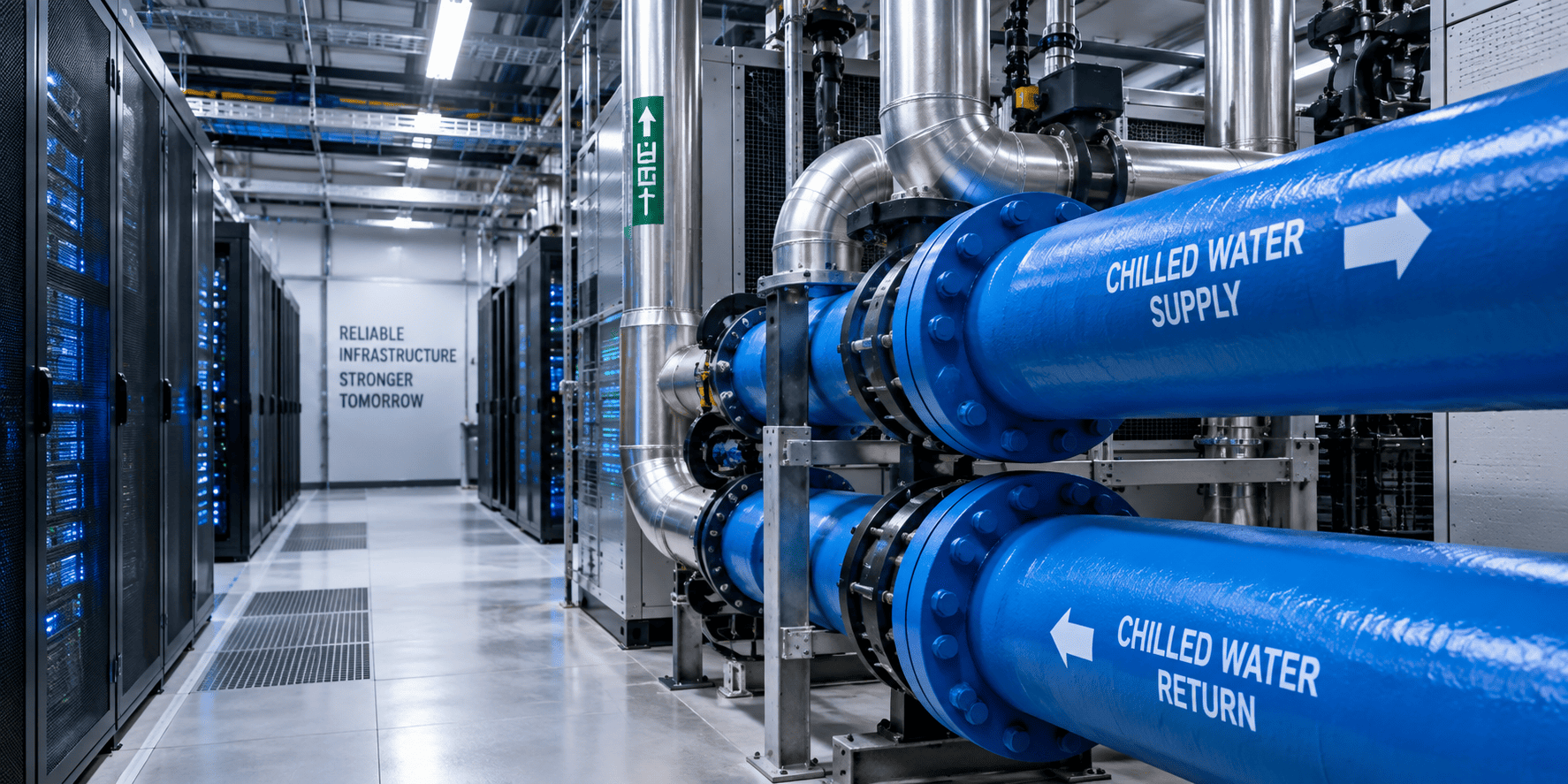
Data Center Piping: How Cooling Infrastructure Protects Uptime
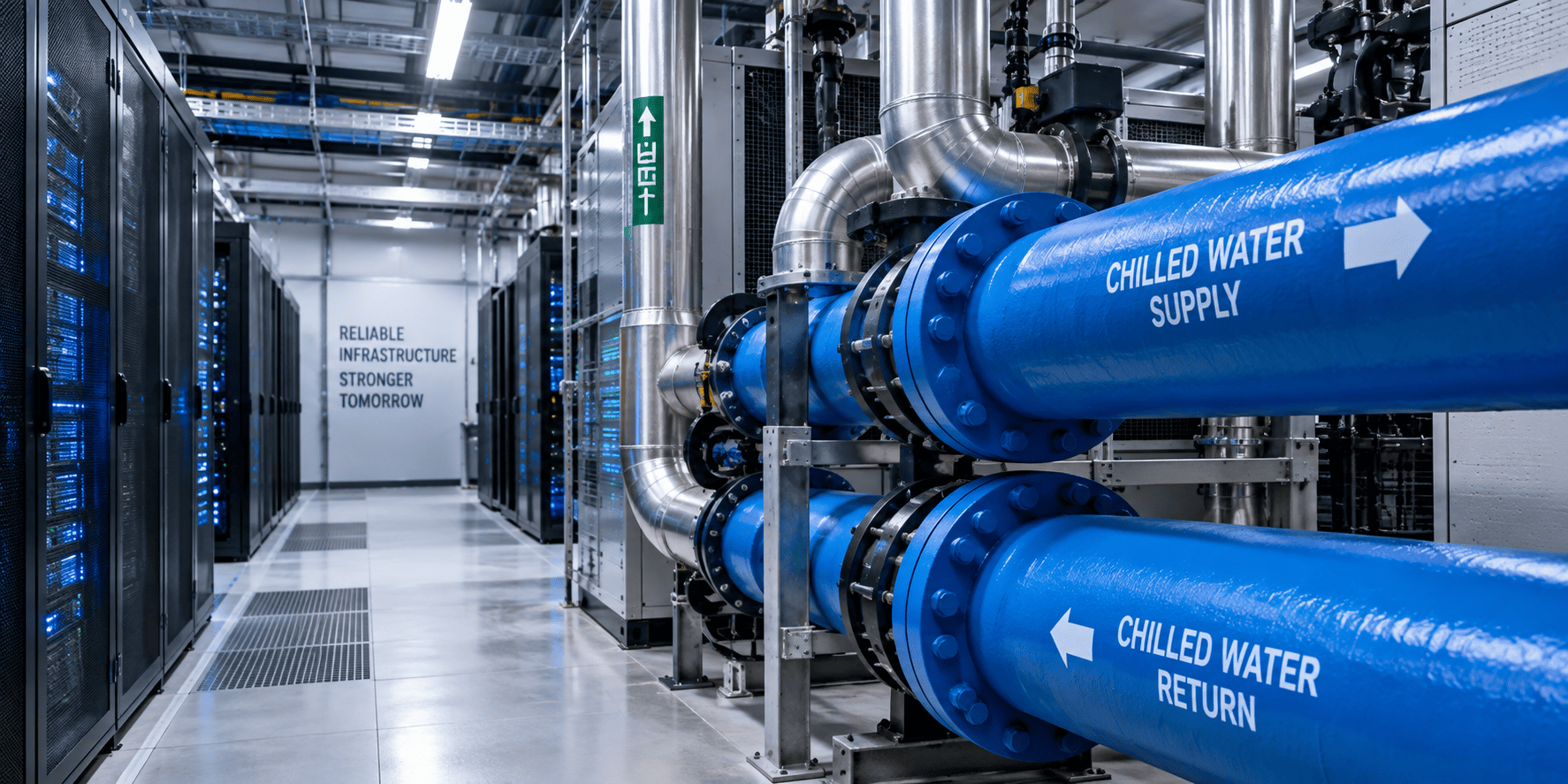
Data centers depend on more than servers and cooling equipment. Behind reliable cooling is a piping network that moves chilled water, glycol, or other fluids between IT spaces and heat-rejection equipment.
As rack densities rise and liquid cooling becomes more common, leaks, debris, corrosion, restricted flow, or poor commissioning can create avoidable downtime.
What Is Data Center Piping?
Data center piping includes the pipes, valves, fittings, pumps, manifolds, and related components that move cooling fluids throughout a facility. These systems may connect chillers, cooling towers, heat exchangers, coolant distribution units, and rack-level cooling equipment.
Some facilities rely on chilled water loops. Others use separate facility-side and technology-side loops to support direct-to-chip or other high-density cooling systems.
Why Data Center Piping Matters For Cooling And Uptime
Cooling equipment can only perform properly if the piping delivers stable flow, predictable pressure, and reliable heat transfer.
Restricted flow, leaks, corrosion, or debris can reduce cooling capacity, force part of a loop offline, or clog strainers and heat exchangers. In a mission-critical facility, these problems can affect redundancy and uptime.
How Data Center Cooling Piping Works
Most cooling systems use piping loops to move heat from IT equipment to a point where it can be rejected from the facility. The exact configuration depends on the cooling design.
Chilled Water And Condenser Water Piping
Chilled water systems circulate cooled water to air handling equipment or heat exchangers, then return warmer water to the cooling plant. Condenser water piping moves heat from chillers to cooling towers or other heat-rejection equipment.
Clean, unrestricted piping helps maintain the flow and heat-transfer performance required by both systems.
Facility Water And Technology Cooling Loops
Liquid-cooled data centers may use separate facility and technology cooling loops. Coolant distribution units help manage flow, pressure, temperature, and heat transfer between the two sides.
This becomes especially important as fluid moves closer to processors and high-density racks, where smaller passages require tighter control over cleanliness and fluid condition.
Pipeline Experts: Inspection, Cleaning, Coating & More
Certified solutions for inspection, pre-commissioning, cleaning, internal coating, ice pigging™, mapping, and turnkey pipeline projects—maximizing safety and reliability at every stage.
How AI And High-Density Computing Are Changing Piping
AI and high-performance computing are increasing rack-level heat loads and accelerating the use of direct-to-chip cooling, rear-door heat exchangers, and other liquid cooling systems.
These technologies increase demands on piping design, leak control, filtration, and monitoring. As coolant moves closer to IT equipment, controlling particles and corrosion products becomes increasingly important.
What Materials Are Used For Data Center Piping?
Material selection depends on coolant chemistry, pressure, temperature, pipe diameter, corrosion risk, cleanliness requirements, and project specifications.
Common systems may use carbon steel, stainless steel, copper, or approved thermoplastic materials. No single material is right for every project, so compatibility with the fluid, equipment, fittings, and long-term maintenance plan should guide the decision.
Common Data Center Piping Risks
Data center piping can experience many of the same problems found in industrial fluid systems, but the consequences may be greater because cooling reliability is tied directly to IT operations.
Common risks include:
Leaks at joints, valves, fittings, or equipment connections
Corrosion, pitting, scale, rust, or biological buildup
Construction debris left after installation
Blocked strainers, filters, or heat exchangers
Poor flow balance or unexpected pressure loss
Incompatible materials or unsuitable fluid chemistry
Cleaning, testing, and maintenance help reduce the chance that these issues remain hidden until they affect performance.
Why Clean Piping Matters Before Startup
New piping is not automatically clean. Fabrication and installation can leave behind mill scale, weld slag, oils, rust, dust, metal shavings, and other construction debris.
If those contaminants remain, they can reach pumps, valves, heat exchangers, strainers, and coolant distribution equipment, reducing flow or damaging components.
Professional pipeline cleaning services help remove unwanted material before a system enters normal operation. The cleaning method should match the pipe material, configuration, fluid, and required cleanliness level.
Flushing, Cleaning, And Filtration Serve Different Purposes
Flushing, cleaning, and filtration are related, but they are not interchangeable. Flushing uses fluid velocity to move loose debris, while specialized cleaning may be needed where residue or deposits are harder to remove.
Filtration helps capture remaining particles as the system circulates. APS pre-commissioning services can support cleaning, filling, testing, filtration, and other preparation steps before critical piping is placed into service.
Pressure Testing Before Commissioning
Before cooling piping goes into service, the system should be checked for leakage and pressure integrity according to project specifications and engineering requirements.
Hydrostatic testing uses liquid to pressurize the line and verify that it can hold the required pressure. Other projects may use controlled gas or nitrogen testing when the design, materials, and safety plan support that approach.
The correct method depends on pipe material, equipment limitations, test boundaries, and project standards.
From Installation To Reliable Operation
A reliable cooling loop depends on a controlled transition from installation to operation. The system should be clean, tight, filled correctly, and capable of maintaining required flow and pressure.
A typical sequence includes system review, debris removal, cleaning or flushing, filtration, pressure testing, filling, flow balancing, leak detection verification, controls checks, and functional commissioning.
Maintaining Data Center Piping After Startup
Cooling piping still needs attention after commissioning because fluid chemistry, pressure, temperature, and operating conditions can change.
Maintenance may include checking filters and strainers, monitoring pressure and flow, reviewing fluid chemistry, inspecting valves and joints, and watching for corrosion or leakage.
A broader pipeline maintenance strategy shows how cleaning, inspection, testing, and condition monitoring work together over time. Regular pipe cleaning can also help protect flow and operating efficiency where buildup becomes a concern.
Pipeline Experts: Inspection, Cleaning, Coating & More
Certified solutions for inspection, pre-commissioning, cleaning, internal coating, ice pigging™, mapping, and turnkey pipeline projects—maximizing safety and reliability at every stage.
How American Pipeline Solutions Supports Critical Piping Systems
Reliable data center cooling depends on piping that is clean, tested, leak-tight, and properly prepared for service. American Pipeline Solutions supports critical industrial and utility piping projects with specialized cleaning, testing, inspection, and pre-commissioning capabilities.
APS works with complex systems where safe execution, cleanliness, and reliable startup are essential. Where internal condition is uncertain, pipeline inspection services can provide additional information about integrity, geometry, corrosion, or other concerns.
For operators, contractors, and project teams responsible for mission-critical cooling infrastructure, the goal is not simply to complete the piping installation. It is to put the system into service with confidence that it can support reliable operation.
Frequently Asked Questions About Data Center Piping
What Is Data Center Piping?
Data center piping is the network of pipes, valves, pumps, fittings, manifolds, and related equipment used to move chilled water, condenser water, glycol, or other cooling fluids through a facility.
Why Is Piping Important To Data Center Uptime?
Piping carries the fluids that remove heat from IT environments. Leaks, restrictions, pressure loss, contamination, or poor flow can reduce cooling capacity and increase the risk of service interruptions.
Why Should Data Center Cooling Piping Be Cleaned Before Startup?
New piping can contain weld debris, scale, oils, rust, dust, and other installation contaminants. Cleaning and flushing help prevent that material from reaching pumps, heat exchangers, valves, strainers, and liquid cooling equipment.
What Is A CDU In A Data Center?
A coolant distribution unit manages heat transfer between facility-side and technology-side cooling loops. It helps control flow, pressure, and temperature while keeping the two fluid circuits properly managed.
How Is Data Center Piping Pressure Tested?
Pressure testing may use water or another approved test medium to verify system integrity before startup. The method should follow engineering requirements, equipment limitations, safety procedures, and project specifications.
How Often Should Data Center Cooling Piping Be Inspected?
There is no universal interval. Inspection frequency depends on pipe material, fluid chemistry, operating conditions, maintenance history, monitoring data, equipment requirements, and facility standards.

Preparing A Pipeline For Inline Inspection: Cleaning And ILI Readiness Checklist

A successful inline inspection starts long before the inspection tool enters the pipeline. Cleaning, bore verification, geometry checks, operating conditions, and field coordination all influence whether the ILI tool can travel safely and collect reliable data.
Simply getting a smart pig through the line is not enough. The pipeline must be clean enough for the selected inspection technology, free of restrictions that could interfere with tool passage, and operating within conditions that support consistent inspection performance.
Why Pipeline Preparation Matters Before Inline Inspection
Inline inspection tools depend on controlled movement through the pipeline and reliable interaction between their sensors and the pipe wall. Excessive debris, scale, wax, black powder, liquids, or other deposits can interfere with these conditions and reduce inspection quality.
Poor preparation can also increase the risk of unstable tool speed, damaged components, incomplete inspection data, or a stuck tool. In some cases, the result is additional cleaning, another mobilization, and a complete rerun of the inspection.
A structured readiness program helps reduce these risks before the diagnostic tool is launched.
Pipeline Experts: Inspection, Cleaning, Coating & More
Certified solutions for inspection, pre-commissioning, cleaning, internal coating, ice pigging™, mapping, and turnkey pipeline projects—maximizing safety and reliability at every stage.
Start With A Pre ILI Pipeline Assessment
Before selecting cleaning pigs or scheduling an inspection, operators need a clear picture of the pipeline being inspected.
Pipeline diameter, material, length, wall thickness, bends, valves, tees, elevation changes, diameter transitions, launcher dimensions, and receiver configuration can all affect piggability. Previous pigging records and known problem areas can also help predict the conditions the cleaning program may encounter.
The inspection objective should also be established early. MFL, ultrasonic, caliper, geometry, and other ILI tools have different operating requirements, so preparation should be matched to the planned technology rather than treated as a generic cleaning exercise.
Step 1: Use Progressive Pipeline Cleaning
Pre ILI cleaning should normally progress from less aggressive to more aggressive methods as pipeline conditions become better understood.
A planned pipeline cleaning program allows pig type, cleaning intensity, and the number of runs to be adjusted according to the deposits recovered and the condition of the system.
Begin With Baseline Cleaning
Initial runs may use foam pigs, swabs, or standard cup and disc pigs to remove loose material, standing liquids, and easily displaced debris.
The first passes also provide useful information about what is inside the pipeline. Where internal geometry is uncertain or deposits vary significantly, the flexibility of foam pigs for pipeline cleaning can make them useful during early cleaning stages before more aggressive configurations are introduced.
Increase Cleaning Aggressiveness As Needed
Pipelines containing paraffin, wax, scale, rust, or hardened deposits may require brushes, scraper elements, blades, or other mechanical cleaning configurations.
The objective is not to remove as much material as possible in one run. Cleaning should remain controlled so large debris loads do not create downstream restrictions or increase the risk of a pig becoming lodged.
Address Ferrous Debris
Black powder, corrosion products, mill scale, welding debris, and other ferrous material can be especially important when preparing for magnetic inspection technologies.
Magnetic cleaning configurations may be used to capture this material and reduce the amount remaining in the line before inspection.
Step 2: Evaluate Debris After Every Cleaning Run
There is no universal number of cleaning runs required before an inline inspection.
After every pass, the crew should inspect both the recovered material and the condition of the pig. Changes from one run to the next provide a much better indication of cleaning progress than simply counting how many pigs have traveled through the line.
Important observations can include:
Total debris recovered
Ferrous material
Wax, scale, rust, or sludge
Standing liquids
Pig wear or damage
Travel time and pressure behavior
As cleaning progresses, debris recovery should generally decline and become more consistent. Unexpected pig damage or unusual debris may indicate an internal condition that requires further investigation before continuing.
How Clean Is Clean Enough For ILI?
There is no single cleanliness standard that applies to every inspection project.
The acceptable condition depends on the planned inspection technology, contaminants present, operating product, pipeline history, and requirements of the ILI tool provider. A pipeline being prepared for an MFL inspection may have different cleanliness needs from one being prepared for a geometry tool.
The practical goal is to reduce deposits to the point where they are unlikely to interfere with sensor performance, tool movement, or inspection data.
This is why cleaning should be evaluated as part of ILI readiness rather than treated as a separate maintenance task.
Step 3: Confirm Bore Clearance With Pipeline Gauging
After sufficient cleaning, the project team needs to determine whether the inspection tool can physically travel through the pipeline.
A gauge pig normally carries a deformable plate sized relative to the pipeline bore. If the plate returns significantly bent or damaged, it may indicate restrictions, internal obstructions, dents, or reduced bore conditions.
Proper pipeline gauging provides another level of confidence before a larger or more complex ILI tool is introduced into the system.
A Successful Gauge Run Does Not Mean The Pipeline Is Clean
This distinction is critical.
A gauge pig primarily confirms available bore clearance. It does not determine whether the pipe wall is sufficiently clean for accurate inspection data.
Debris may remain along the bottom or sides of the pipe while the gauge plate passes without significant deformation. This means a pipeline can be physically passable but still not be ready for an intelligent inspection tool.
Understanding why pipeline gauging matters helps separate two different readiness questions: whether the tool can pass through the line and whether internal conditions are suitable for high quality inspection.
Both questions should be answered before final ILI authorization.
Step 4: Verify Pipeline Geometry Where Needed
Some inspection programs may benefit from a geometry or caliper run before the primary diagnostic inspection.
These tools can help identify dents, ovality, wrinkles, bore changes, and other dimensional conditions that could affect tool passage or inspection performance.
A separate geometry run is not required on every project. The decision should reflect pipeline history, configuration, previous gauging results, and the capabilities of the planned inspection tool.
Step 5: Confirm Launcher And Receiver Readiness
Pipeline readiness does not stop with the pipe itself.
Launchers and receivers must be able to safely accommodate the selected inspection tool. Barrel dimensions, valve bore, access, bend radius, internal protrusions, diameter transitions, and retrieval space should all be confirmed before mobilization.
The receiver should also be prepared for any material that may travel through the pipeline with the inspection tool.
Checking these details in advance reduces the chance of discovering a compatibility problem when the inspection crew and equipment are already onsite.
Step 6: Verify ILI Operating Conditions
Every ILI tool has an operating envelope.
Pressure, flow rate, temperature, differential pressure, product characteristics, and expected pig velocity should be reviewed before the run. Significant elevation changes or changing flow conditions may also influence how consistently the tool travels.
Tool speed is particularly important because many inspection systems depend on controlled movement to gather usable data.
Keeping conditions within the inspection provider's operating requirements improves the likelihood of completing the run successfully the first time.
Step 7: Plan Tracking And Field Coordination
Once the inspection tool is launched, field teams need to know where it is and whether it is moving according to plan.
Well planned pig tracking can confirm tool passage at key points along the route, helping crews compare actual travel times with expected movement and respond more quickly if progress changes.
Tracking locations, communications, expected arrival times, launcher responsibilities, and receiver responsibilities should all be established before launch.
A contingency plan should also be prepared in case the tool slows or stops. If a pig does become lodged, understanding the likely causes and principles of stuck pig recovery can help limit unnecessary excavation, downtime, and additional pipeline risk.
Step 8: Complete The Final ILI Readiness Checklist
Before launching the diagnostic tool, the project team should conduct a final go or no go review.
Confirm that:
Pipeline records and configuration have been reviewed
Progressive cleaning has been completed
Debris recovery has reached an acceptable level
Ferrous debris has been addressed where applicable
Bore clearance has been verified
Geometry concerns have been evaluated
Launcher and receiver dimensions are compatible
Valves, bends, and diameter transitions allow tool passage
Pressure, flow, temperature, and expected velocity meet requirements
Tracking and field communications are ready
Tool checks and QA procedures are complete
Recovery and contingency plans are established
Final authorization should consider the complete inspection system rather than relying on a single successful cleaning or gauging run.
What Happens If A Pipeline Is Not ILI Ready?
Launching an inspection tool too early can compromise both safety and inspection quality.
Remaining deposits may interfere with sensors or cause inconsistent tool movement. Restrictions may damage the inspection equipment or prevent it from completing the run. Excessive debris can also reduce confidence in the resulting data.
A failed inspection may require additional cleaning, repeat mobilization, or another full ILI run. In more serious cases, recovering a stopped tool can require significant operational intervention.
Thorough preparation helps operators reduce these risks while improving the value of the condition data collected.
Pipeline Experts: Inspection, Cleaning, Coating & More
Certified solutions for inspection, pre-commissioning, cleaning, internal coating, ice pigging™, mapping, and turnkey pipeline projects—maximizing safety and reliability at every stage.
How American Pipeline Solutions Supports ILI Readiness
American Pipeline Solutions supports the stages that lead from unknown internal pipeline conditions to successful inline inspection.
Depending on the project, that may include cleaning, debris removal, gauging, geometry verification, tracking, and inspection planning. Once the line is properly prepared, Smart Pigging services can provide the condition data needed to identify corrosion, wall loss, geometry changes, and other integrity concerns.
The objective is not simply to move an inspection tool from launcher to receiver. It is to create the conditions needed for safe passage, dependable inspection data, and better maintenance decisions.
Frequently Asked Questions
How Do You Prepare A Pipeline For Inline Inspection?
Preparation typically begins with reviewing pipeline geometry, operating history, previous pigging information, and the requirements of the selected inspection tool.
The process may then include progressive cleaning, debris evaluation, pipeline gauging, geometry verification, operating condition checks, launcher and receiver inspection, tracking preparation, and final QA review.
How Clean Does A Pipeline Need To Be Before ILI?
The pipeline should be clean enough that remaining deposits are unlikely to interfere with tool movement, sensor contact, or data quality.
There is no universal debris limit because acceptable cleanliness varies according to pipeline conditions and the inspection technology being used.
How Many Cleaning Pig Runs Are Needed Before ILI?
There is no predetermined number.
Cleaning should continue until recovered debris decreases to a consistent and acceptable level for the planned inspection. Pipelines with heavy deposits or limited pigging history may require more runs than regularly maintained lines.
Why Is A Gauge Pig Used Before Inline Inspection?
A gauge pig helps verify that the internal bore provides enough clearance for the planned inspection tool.
Significant deformation of the gauge plate may indicate a restriction, dent, obstruction, or reduced bore that should be investigated before the ILI tool is launched.
Does A Successful Gauge Pig Run Mean The Pipeline Is ILI Ready?
No. A successful gauge run confirms bore clearance, but it does not prove that the pipe wall is sufficiently clean for inspection.
Cleanliness, geometry, operating conditions, launcher and receiver compatibility, and tool requirements must also be considered.
What Types Of Debris Can Interfere With ILI?
Potential contaminants include wax, paraffin, scale, rust, sludge, sand, black powder, mill scale, welding debris, and standing liquids.
Their effect depends on the inspection tool being used and how the material is distributed inside the pipeline.
What Happens If An ILI Tool Gets Stuck?
A stopped inspection tool can cause operational delays and may require pressure adjustments, additional tracking, shutdowns, excavation, or other recovery measures.
Progressive cleaning, gauging, geometry review, and careful run planning help reduce the likelihood of this occurring.
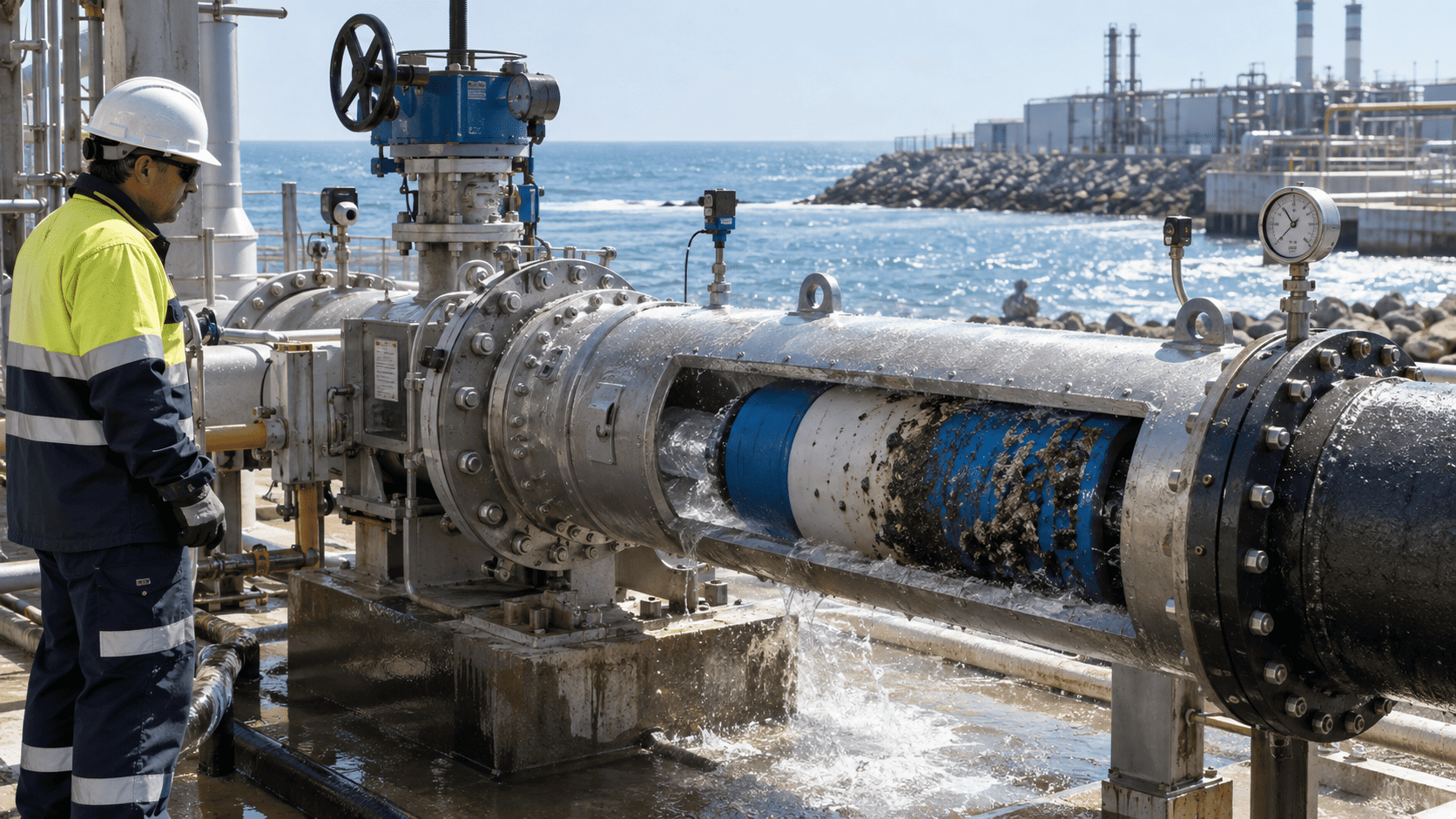
How Pigging Keeps Seawater Intake Pipelines Clean
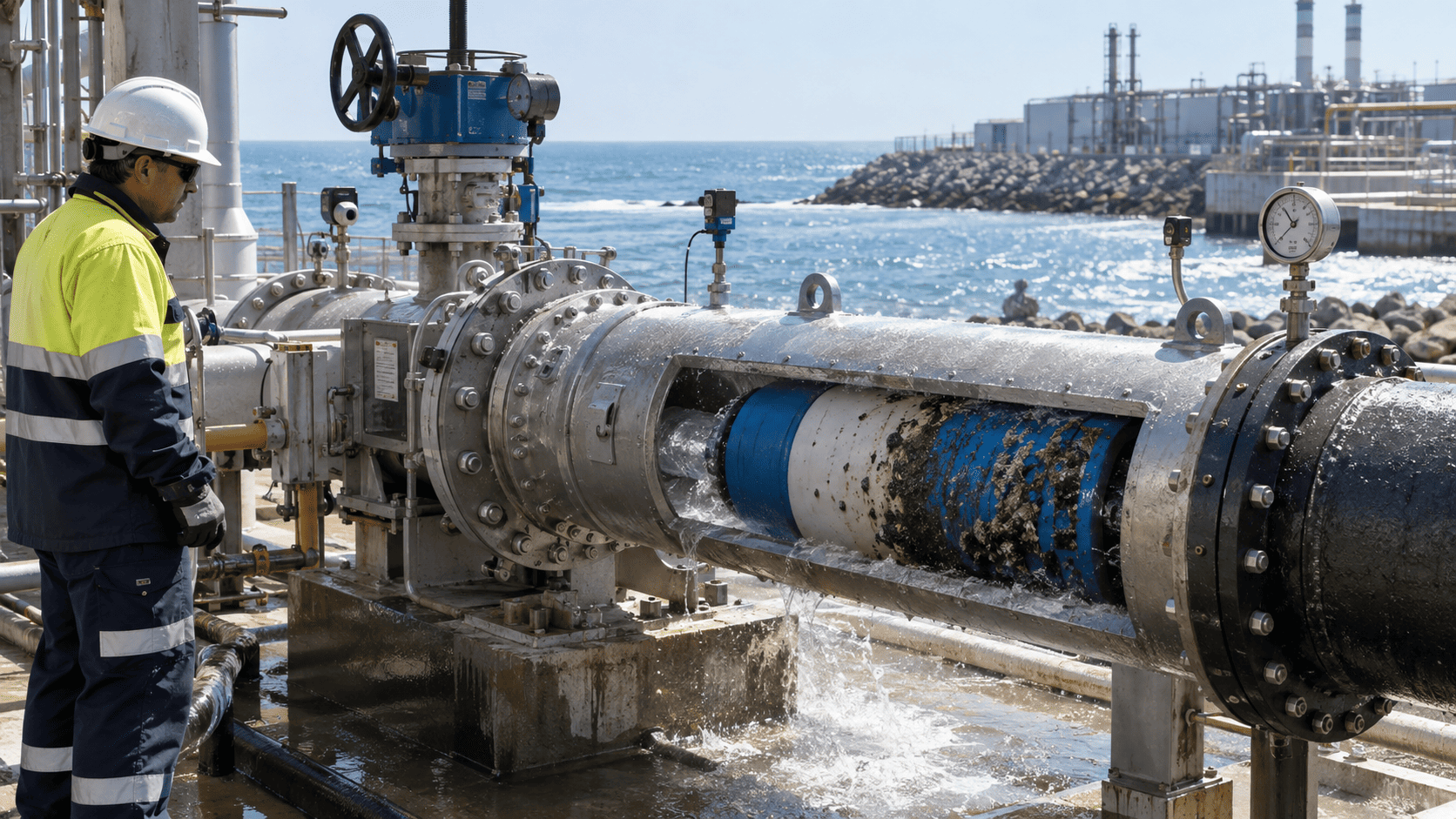
Seawater intake pipelines operate in one of the most challenging environments for pipeline maintenance. Every day, seawater carries microorganisms, marine larvae, suspended solids, sand, and other material into the intake system.
Over time, biofilm, barnacles, mussels, sediment, and other deposits can accumulate on the internal pipe wall. As that buildup grows, the usable diameter of the pipeline decreases and resistance to flow increases.
Pipeline pigging provides a mechanical way to remove these deposits and restore a cleaner internal surface. When the process is planned correctly, pigging can help improve flow, reduce hydraulic restriction, and support more reliable operation of desalination plants and other seawater intake systems.
Pipeline Experts: Inspection, Cleaning, Coating & More
Certified solutions for inspection, pre-commissioning, cleaning, internal coating, ice pigging™, mapping, and turnkey pipeline projects—maximizing safety and reliability at every stage.
Why Seawater Intake Pipelines Become Fouled
Seawater pipelines are continuously exposed to biological and inorganic material. Fouling can begin soon after a pipeline enters service and gradually become more severe if deposits are not controlled.
Several forms of buildup can occur at the same time.
Biofilm And Microbiological Growth
Microorganisms naturally present in seawater can attach themselves to the inner pipe surface and form a biological layer known as biofilm.
Biofilm may appear relatively thin at first, but it creates a surface where additional organisms and suspended material can attach more easily. Over time, this can contribute to increasingly dense fouling.
Barnacles, Mussels, And Marine Growth
Marine organisms can enter intake pipelines during early stages of development and attach themselves to pipe walls.
Barnacles, mussels, shellfish, and similar marine growth can eventually create significant restrictions. Heavy colonies can reduce the effective internal diameter of the pipeline and make mechanical cleaning more challenging if the buildup is allowed to develop for long periods.
Sand, Silt, And Sediment
Not all seawater pipeline fouling is biological.
Sand, silt, sediment, shells, and other suspended solids can accumulate in sections of the intake line, particularly where velocity changes or pipeline geometry allows material to settle.
A professional pipeline cleaning program must consider both biological growth and physical deposits when selecting the appropriate cleaning approach.
What Fouling Does To Pipeline Performance
A seawater intake pipeline does not need to be completely blocked before buildup becomes a problem.
As deposits reduce the effective diameter of the pipeline, water encounters more resistance as it moves through the system. Pumps may need to work harder to maintain the required intake flow.
Operators may eventually experience reduced flow capacity, higher hydraulic losses, greater pump demand, and declining plant performance.
The change may happen slowly, which can make fouling difficult to recognize until the pipeline has already lost meaningful capacity.
Routine performance monitoring combined with scheduled cleaning can help operators address buildup before it becomes a major operational restriction.
How Pigging Cleans A Seawater Intake Pipeline
Pigging removes deposits through direct mechanical contact with the inside of the pipeline. A cleaning pig travels through the line while its foam body, discs, cups, brushes, or other cleaning components loosen material from the pipe wall.
The exact process depends on the pipeline condition and cleaning objective.
Pipeline Assessment And Pig Selection
Before launching a pig, the pipeline should be evaluated carefully.
Diameter, pipe material, bends, fittings, valves, access points, flow conditions, fouling severity, and potential restrictions can all affect how a pig behaves inside the pipeline.
Pig selection should match those conditions rather than relying on a standard tool for every project. For some cleaning programs, foam pigs provide the flexibility needed to begin removing deposits while accommodating variations within the line.
Controlled Pig Propulsion
Once the system is prepared, the pig is introduced through an appropriate launching arrangement and propelled through the intake pipeline using controlled water flow or pressure.
As the pig moves forward, it maintains contact with the internal surface and begins loosening accumulated deposits.
Pressure and movement should be monitored throughout the run. Knowing where the pig is located is especially important on long or difficult pipelines, which is why pig tracking can become an important part of the cleaning operation.
Marine Growth And Sediment Removal
As the cleaning pig moves through the line, mechanical contact breaks loose biofilm, marine growth, sediment, and other deposits.
The removed material moves ahead of or around the pig depending on the cleaning method and operating conditions. Proper debris planning is therefore essential.
A successful cleaning strategy considers not only how to remove deposits from the pipe wall, but also how the resulting debris will be controlled and recovered.
Cleaning Verification
The process should not end simply because a pig reaches the recovery point.
Operators can compare flow conditions, hydraulic performance, recovered debris, and other operating data to determine whether the desired cleaning result has been achieved.
Camera inspection or additional condition assessment may also be appropriate when greater verification is required.
Why Progressive Pigging Matters For Heavily Fouled Pipelines
Sending an aggressive cleaning pig into a heavily fouled pipeline on the first run can create unnecessary risk.
Large quantities of marine growth or sediment may be released at once, potentially creating downstream restrictions or making pig movement more difficult.
Progressive pigging uses a staged approach. A softer or less aggressive pig can be run first to evaluate the condition of the line and begin removing loose material. Additional pigs can then provide progressively greater cleaning action.
Before more demanding pigging or inspection work, pipeline gauging can also help identify internal restrictions that may affect tool passage.
The goal is controlled removal rather than simply applying maximum cleaning force.
Pigging Vs. Chlorination For Seawater Intake Cleaning
Chemical treatment and mechanical pigging address fouling in different ways.
Chlorination can help control biological activity and reduce the settlement or growth of organisms in some seawater systems. Its effectiveness depends on operating conditions, dosing strategy, environmental requirements, and the nature of the fouling.
Pigging physically removes material that has already accumulated inside the pipeline.
This makes mechanical cleaning particularly valuable when thick biofilm, established marine growth, sediment, or other deposits have reduced the usable cross section of the line.
For some systems, chemical treatment and mechanical cleaning may form part of the same maintenance strategy rather than serving as competing solutions.
How Pigging Can Restore Flow And Pump Efficiency
Pipeline fouling directly affects hydraulics.
When deposits narrow the internal diameter of the pipeline, friction and resistance increase. The intake system may then require greater pumping effort to move the same volume of seawater.
Removing those deposits can restore usable pipe area and reduce unnecessary hydraulic restriction.
The exact improvement depends on the condition of the pipeline before cleaning. A heavily fouled line may show a substantial change, while a pipeline cleaned regularly may experience smaller but still important improvements in operating stability.
Pigging should therefore be viewed as part of maintaining hydraulic performance, not simply as a way to remove visible debris.
Signs A Seawater Intake Pipeline May Need Cleaning
Changes in operating performance often provide the first indication that fouling is becoming significant.
Operators should pay attention to conditions such as:
declining seawater intake flow
increasing pumping demand
rising hydraulic resistance or head loss
reduced plant throughput
repeated sediment or marine debris downstream
known seasonal marine growth
a long period since the previous cleaning
No single indicator proves that pigging is required, but changes in several operating conditions can justify a closer assessment.
How Often Should Seawater Intake Pipelines Be Pigged?
There is no universal pigging interval that works for every seawater intake pipeline.
Marine growth varies by geography, seawater temperature, season, biological activity, operating velocity, sediment concentration, and pipeline design. Two similar pipelines in different environments may develop fouling at very different rates.
Cleaning schedules should therefore be based on actual operating data and historical conditions.
Flow trends, pump performance, previous cleaning results, inspection findings, and the type of material recovered during earlier pigging runs can all help determine an appropriate maintenance interval.
Preventive cleaning is generally easier to manage than waiting until severe marine growth has already restricted the line.
Pipeline Design And Piggability Matter
Not every pipeline can accept every type of pig.
Diameter changes, tight bends, partially closed valves, internal projections, unusual fittings, or undocumented repairs can interfere with pig movement.
Safe launch and recovery access must also be considered.
This is particularly important for offshore or submerged seawater intake systems where recovering a stalled pig can be far more complex than retrieving one from an easily accessible land based pipeline.
Evaluating piggability before cleaning reduces the likelihood of an unexpected restriction becoming an operational problem.
Cleaning And Pipeline Inspection Work Together
Cleaning restores the internal surface and removes material that interferes with flow. Inspection answers a different question: what condition is the pipeline itself in?
Once deposits have been removed, operators may have a better opportunity to evaluate pipe geometry, corrosion, damage, or other integrity concerns.
A professional pipeline inspection can complement cleaning by helping operators distinguish between a performance problem caused by deposits and a condition issue affecting the pipe itself.
This combination supports better maintenance planning because operators are not limited to knowing that the line is cleaner. They can also develop a clearer understanding of the asset condition.
Professional Pigging Helps Reduce Operational Risk
Pigging a seawater intake pipeline requires more than selecting a cleaning tool and pushing it through the line.
The project must account for pipeline geometry, pig compatibility, debris volume, propulsion pressure, tracking, launch procedures, recovery, and contingency planning.
Heavy fouling makes these considerations even more important.
Experienced crews can adjust the cleaning strategy as actual pipeline conditions become clear. That ability to respond is especially valuable when historical information about the line is incomplete or the amount of marine growth is uncertain.
Pipeline Experts: Inspection, Cleaning, Coating & More
Certified solutions for inspection, pre-commissioning, cleaning, internal coating, ice pigging™, mapping, and turnkey pipeline projects—maximizing safety and reliability at every stage.
How American Pipeline Solutions Supports Pipeline Cleaning
American Pipeline Solutions provides pipeline pigging, cleaning, tracking, inspection, and condition assessment services for water, industrial, and other pressure pipeline systems.
Each cleaning project begins with the condition and operating requirements of the pipeline itself. APS evaluates factors such as pipe geometry, material, buildup, access, operating conditions, and project objectives before determining an appropriate strategy.
Experience with water pipeline pigging also gives APS a practical understanding of the challenges involved in restoring flow through pipelines affected by sediment, deposits, and long term buildup.
The objective is not simply to move a pig through a pipeline. It is to complete the cleaning operation safely, remove buildup effectively, and help restore reliable pipeline performance.
FAQs
What Is Seawater Intake Pipeline Pigging?
Seawater intake pipeline pigging is a mechanical cleaning process in which a specialized cleaning pig travels through the pipeline and removes biofilm, marine growth, sediment, and other deposits from the internal pipe surface.
Can Pigging Remove Barnacles And Mussels?
Yes. Properly selected cleaning pigs can remove established marine growth including barnacles, mussels, shells, and other biological deposits. Heavy fouling may require multiple progressive cleaning runs rather than one aggressive pass.
What Type Of Pig Is Used For Seawater Intake Pipelines?
The appropriate pig depends on pipeline diameter, material, geometry, fouling severity, and cleaning objectives. Foam pigs, polyurethane pigs, disc pigs, and other configurations may be considered depending on the system.
Can HDPE Seawater Intake Pipelines Be Pigged?
Many HDPE pipelines can be pigged when the geometry, fittings, access points, and operating configuration allow safe tool passage. Piggability should be evaluated before selecting the cleaning equipment.
Does Pigging Improve Seawater Intake Flow?
Pigging can improve flow when buildup is restricting the effective internal diameter of the pipeline. Removing marine growth and sediment reduces hydraulic resistance and can help restore intake capacity.
How Often Should A Seawater Intake Pipeline Be Cleaned?
Cleaning frequency depends on local marine conditions, sediment load, water temperature, operating velocity, seasonal biological activity, and historical fouling rates. Flow and pump performance should be monitored to help establish the appropriate schedule.
Is Pigging Better Than Chlorination?
The two methods serve different purposes. Chlorination can help control biological growth, while pigging mechanically removes deposits that have already accumulated. Some systems may benefit from using both approaches as part of a broader fouling management strategy.
What Happens To Debris Removed During Pigging?
Marine growth, sediment, shells, and other loosened material must be managed as part of the cleaning plan. Debris may be transported toward a designated recovery point or handled using project specific collection and disposal procedures.
How Do Operators Know The Pipeline Is Clean?
Operators can compare pre-cleaning and post-cleaning flow, pump performance, pressure conditions, and recovered debris. Camera inspection or other pipeline condition assessments can provide additional verification when required.
Can A Seawater Intake Pipeline Be Inspected After Pigging?
Yes. Cleaning can improve the conditions for subsequent pipeline inspection by removing deposits that may obstruct visual or sensor based assessment. Combining cleaning and inspection can provide a more complete picture of both pipeline performance and physical condition.
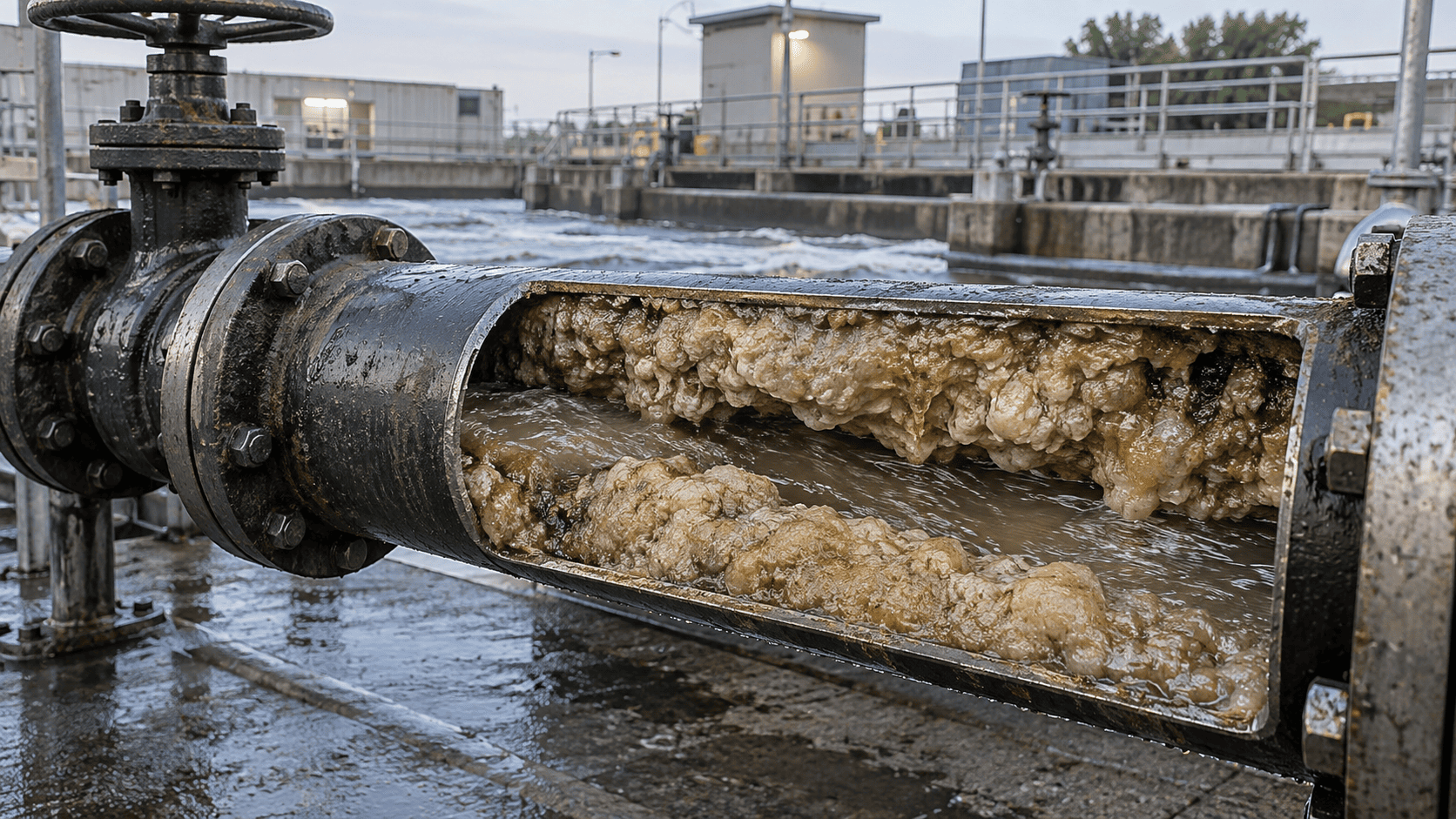
FOG In Wastewater Pipelines: How Grease Buildup Restricts Flow
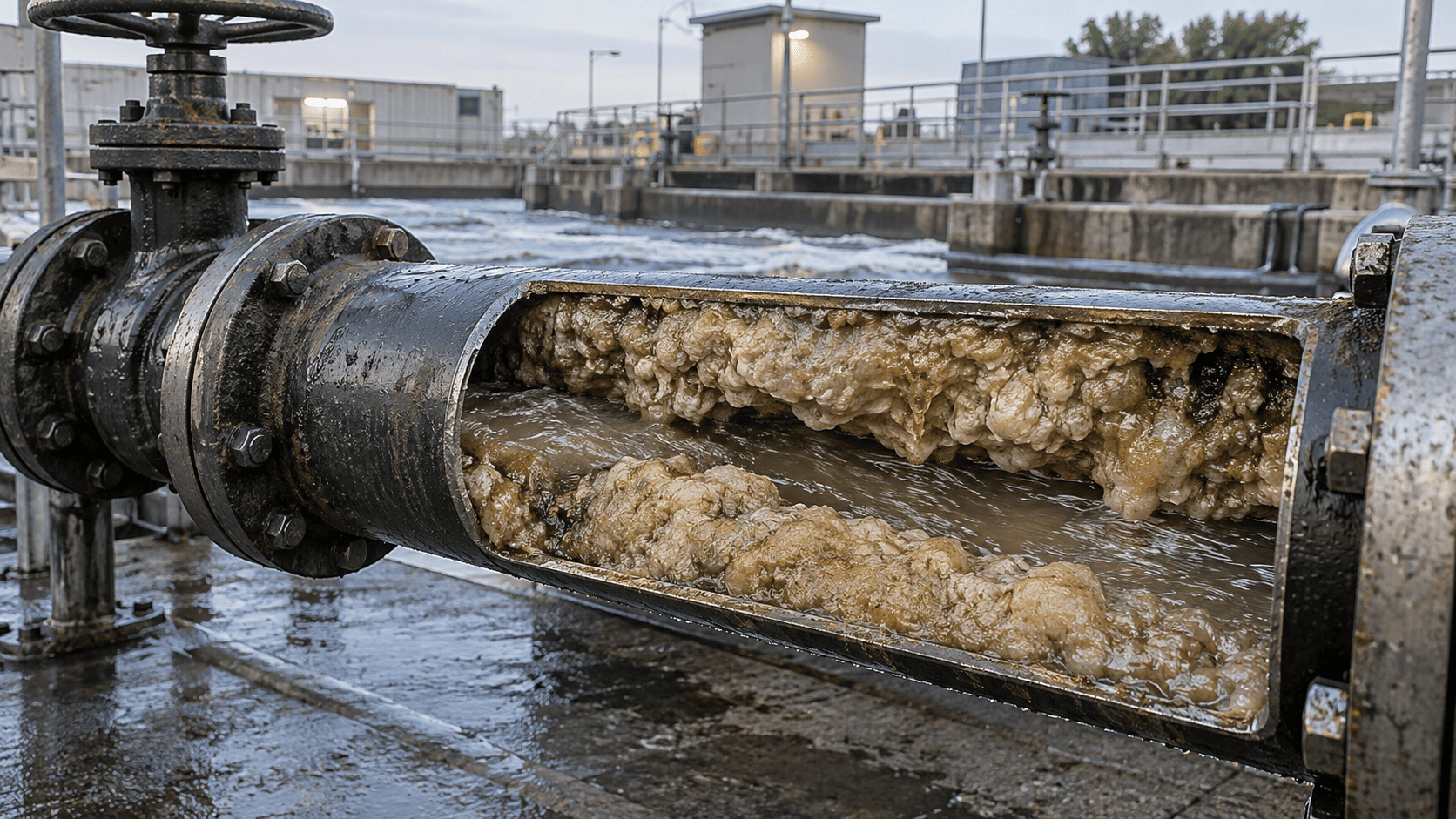
Fats, oils, and grease can create serious operating problems once they accumulate inside wastewater pipelines. What begins as a thin layer along the pipe wall can gradually combine with sediment, wipes, solids, and other debris until the available flow area becomes smaller.
For wastewater utilities, the problem is not limited to blockages. FOG buildup can also increase hydraulic resistance, extend pump runtime, reduce force main capacity, and raise energy use long before a pipeline becomes completely obstructed.
Source control can reduce how much grease enters the wastewater system, but it cannot remove deposits already attached to the inside of a pipeline. When buildup begins affecting system performance, physical pipeline cleaning may be necessary.
Why FOG Buildup Matters In Wastewater Pipelines
FOG stands for fats, oils, and grease. These materials enter wastewater systems from homes, restaurants, commercial kitchens, food processors, and other facilities.
Some grease enters the collection system in liquid form. As wastewater moves downstream and cools, fats and grease can thicken and begin adhering to pipe walls. Repeated discharges allow those deposits to continue growing.
FOG also creates a surface that can capture other materials already traveling through the wastewater system. Sediment, wipes, biological material, and suspended solids can become incorporated into the buildup, producing a denser restriction that normal wastewater flow may not remove.
The result can be a gradual loss of usable pipe diameter and hydraulic performance.
Pipeline Experts: Inspection, Cleaning, Coating & More
Certified solutions for inspection, pre-commissioning, cleaning, internal coating, ice pigging™, mapping, and turnkey pipeline projects—maximizing safety and reliability at every stage.
How FOG Affects Wastewater Force Main Performance
Wastewater force mains are particularly sensitive to internal restrictions because pumps must move wastewater through the pipeline under pressure.
As deposits accumulate, the effective internal diameter decreases. At the same time, the rougher pipe surface can increase friction. The pump station must then move wastewater through a smaller, more resistant flow path.
Utilities may begin seeing:
Lower flow rates
Longer pump cycles
Higher discharge pressure
Increased electrical consumption
Poorer wet well drawdown
Reduced capacity during peak flow
Recurring operational problems
These symptoms do not automatically mean FOG is the only cause. Sediment, scale, biofilm, debris, or deterioration may produce similar performance changes.
However, when pumps are operating normally but the system requires more runtime to move the same amount of wastewater, internal pipeline resistance should be part of the investigation.
APS has previously explained how force main pigging can improve flow rate and pump efficiency when internal deposits are reducing hydraulic capacity.
Why FOG Deposits Become Difficult To Remove
FOG buildup rarely consists of grease alone. Wastewater pipelines carry a mixture of materials, and the deposits that develop inside them can reflect those changing conditions.
This is one reason cleaning strategies need to be based on the actual pipeline rather than the assumption that every grease restriction behaves the same way.
Cooling And Adhesion
Fats and grease that enter a sewer while warm can become increasingly viscous as wastewater temperature drops.
Once grease begins adhering to the pipe wall, later discharges can add more material to the same area. Low velocity sections may be especially susceptible to accumulation because there is less hydraulic force available to carry deposits downstream.
FOG Combined With Solids
Grease can trap sediment, wipes, organic solids, calcium compounds, and other wastewater debris.
Over time, this combination can become much more difficult to remove than a fresh grease layer. In severe cases, hardened masses can occupy a significant portion of the pipeline opening and create recurring restrictions.
Source Control Does Not Clean An Existing Pipeline
Reducing FOG at the source remains an important part of wastewater management. Grease interceptors, food service inspections, proper disposal practices, and public education can all reduce the amount entering the collection system.
But prevention and pipeline cleaning solve different problems.
Source control limits new material entering the sewer. It does not remove years of accumulated grease, sediment, biofilm, or solids from a downstream force main.
Once existing deposits begin affecting flow, pressure, pump runtime, or available capacity, the operator must determine whether the line itself needs to be cleaned.
That distinction is important when utilities are troubleshooting declining system performance. Replacing or upsizing pumping equipment will not remove a restriction that exists inside the pipeline.
Signs FOG Or Other Deposits May Be Restricting A Force Main
A force main does not need to reach complete blockage before internal buildup becomes an operational concern.
Performance data can often reveal a developing restriction before the problem becomes severe.
Operators may want to investigate pipeline condition when they see steadily declining flow, increasing pump runtime, higher discharge pressure, worsening wet well drawdown, increasing electricity consumption, or repeated buildup at known problem locations.
Historical data can be particularly useful. If the same pumps previously moved more wastewater under comparable operating conditions, something within the system may have changed.
The pipeline should be evaluated alongside pumps, valves, controls, and other equipment rather than assuming the lift station is responsible for declining performance.
How FOG Is Removed From Wastewater Pipelines
There is no single cleaning method that is appropriate for every wastewater pipeline.
Pipe diameter, material, length, geometry, access, pressure, deposit type, severity of buildup, flow conditions, and the method for controlling removed material all affect the cleaning plan.
Conventional Pipeline Pigging
Pigging uses a cleaning device that travels through the pipeline and physically removes accumulated material from the internal surface.
In heavily restricted pipelines, cleaning may require multiple runs rather than immediately sending an aggressive pig through the line. Progressive cleaning allows the amount of material being removed to be controlled while reducing the risk associated with unknown restrictions.
APS provides municipal water main and force main pigging with equipment and cleaning approaches planned around the characteristics of the pipeline.
Foam Pigging And Progressive Cleaning
Foam pigs can be useful when operators need a compressible cleaning tool capable of moving through certain changes in pipeline geometry.
The configuration and density of the pig can be selected according to the cleaning objective. Multiple stages may be used as the internal condition becomes better understood and progressively more material is removed.
This approach is particularly important where a force main has not been cleaned for a long period or the severity of the restriction is uncertain.
Ice Pigging™
Some wastewater pipelines contain bends, changing diameters, limited access, or geometry that makes conventional pigging more challenging.
Ice Pigging™ uses a pumpable ice slurry that forms a flexible cleaning plug inside the pipeline. The slurry maintains contact with the pipe wall as it travels through the line and can negotiate features that may complicate the use of a solid pig.
Ice Pigging™ is not automatically the right method for every FOG problem. Pipeline configuration, deposit characteristics, access, operating conditions, and project goals still need to be evaluated before selecting the cleaning approach.
Other Pipeline Cleaning Methods
High-pressure water jetting is commonly used for accessible gravity sewer systems and may be effective for grease, sediment, and other deposits.
Other mechanical or specialty cleaning technologies may also be appropriate depending on pipeline construction and condition.
The important question is not which cleaning technology is universally best. It is which method can remove the restriction safely and effectively from the specific pipeline being cleaned.
APS's pipeline cleaning services are built around identifying the type of buildup and matching the cleaning method to the line rather than relying on one technique for every project.
What Determines The Right Force Main Cleaning Strategy?
Pipeline cleaning requires more than selecting a pig and pushing it through the line.
Operators and cleaning contractors need to understand how the pipeline is configured, how material will move during cleaning, and where removed debris will be recovered.
Important project considerations include pipe diameter and material, bends and fittings, available launch and retrieval locations, valves, pressure conditions, pipeline length, historical maintenance, and the suspected volume of deposits.
The cleaning sequence also matters.
A heavily restricted line may require progressively configured pigs so the deposit load is removed in controlled stages. A pipeline with complex geometry may require a more flexible cleaning technology. Lines with limited existing access may need temporary launch or retrieval arrangements before cleaning begins.
Planning around these conditions helps protect the pipeline while giving operators greater control over the cleaning process.
Measure Pipeline Performance Before And After Cleaning
Cleaning results should be evaluated in terms of pipeline performance, not simply the amount of material removed.
Flow rate, pump runtime, discharge pressure, wet well drawdown, and energy consumption can help establish how the system was operating before cleaning.
Comparing those measurements afterward can help determine whether removal of the restriction restored hydraulic capacity.
This also gives utilities useful information for future maintenance planning. If performance gradually declines again over time, operators have a better baseline for determining when another cleaning project may be justified.
Condition-based maintenance is more useful than waiting for a complete blockage or applying the same cleaning interval to every force main.
A Proactive Approach To FOG And Force Main Maintenance
FOG management works best when source control and pipeline maintenance are treated as separate but connected parts of the wastewater program.
Reducing grease entering the system can slow future accumulation. Monitoring flow, pressure, pump runtime, and energy use can reveal when internal pipeline conditions may be changing.
Physical cleaning addresses the deposits that prevention alone cannot remove.
For utilities managing aging wastewater infrastructure, that approach can help recover existing pipeline capacity before unnecessary pumping or pipeline upgrades are considered.
Pipeline Experts: Inspection, Cleaning, Coating & More
Certified solutions for inspection, pre-commissioning, cleaning, internal coating, ice pigging™, mapping, and turnkey pipeline projects—maximizing safety and reliability at every stage.
How American Pipeline Solutions Addresses Wastewater Pipeline Buildup
American Pipeline Solutions works with municipalities, utilities, and industrial operators to evaluate wastewater pipeline restrictions and develop cleaning strategies around actual system conditions.
APS capabilities include conventional pigging, progressive cleaning, foam pigging, Ice Pigging™, pig tracking, pressure monitoring, launch and retrieval planning, pipeline inspection, and condition analysis.
Each project is evaluated according to factors such as pipeline geometry, material, diameter, access, operating conditions, deposit type, and cleaning objective.
The goal is not simply to move a cleaning tool through the line. It is to remove accumulated material in a controlled way, restore usable pipeline capacity where possible, and give operators a clearer understanding of how the system performs after cleaning.
If FOG, sediment, biofilm, or other internal deposits are affecting wastewater flow or pump performance, contact American Pipeline Solutions to discuss the pipeline and determine which cleaning approach fits the system.
FAQs
What Does FOG Stand For In Wastewater?
FOG stands for fats, oils, and grease. These materials enter wastewater systems from residential, commercial, food processing, and industrial sources and can accumulate inside sewer pipelines.
How Does FOG Affect A Wastewater Force Main?
FOG can reduce the usable internal diameter of a force main and increase friction along the pipe wall. This may contribute to lower flow, longer pump runtime, higher system resistance, and reduced hydraulic capacity.
Can Pigging Remove FOG From A Force Main?
Pigging can remove grease, sediment, biofilm, solids, and other deposits from suitable force mains. The pig type and cleaning sequence should be selected according to pipeline condition, geometry, access, and the amount of buildup.
Can Grease Traps Remove Existing FOG From Sewer Pipelines?
No. Grease traps and interceptors help reduce new FOG entering the collection system, but they cannot remove deposits that have already accumulated farther downstream.
Is Ice Pigging™ Suitable For Wastewater Force Mains?
Ice Pigging™ can be suitable for certain force mains, including lines with bends, diameter changes, or complex geometry. Suitability depends on the specific pipeline and operating conditions.
How Do Utilities Know When A Force Main Needs Cleaning?
Declining flow, longer pump cycles, increasing pressure, reduced wet well drawdown, higher energy consumption, and recurring restrictions can indicate internal buildup. These symptoms should be evaluated together with pipeline and pump station operating data.
How Often Should Wastewater Force Mains Be Cleaned?
There is no universal interval for every force main. Cleaning frequency should reflect pipeline condition, wastewater characteristics, operating performance, previous cleaning results, FOG loading, and the rate at which restrictions develop.
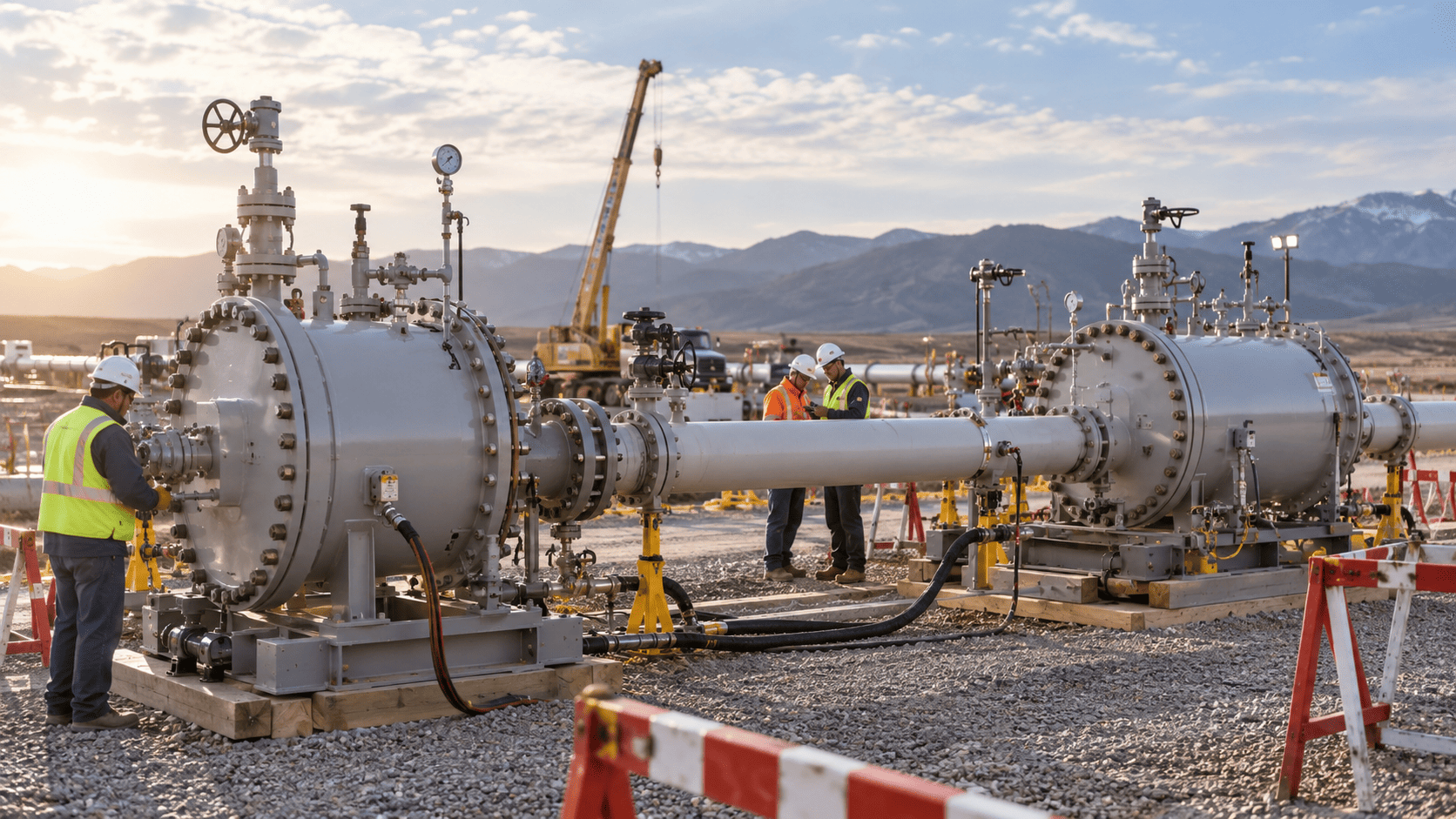
Temporary Pig Launchers And Receivers: When Are They Needed?
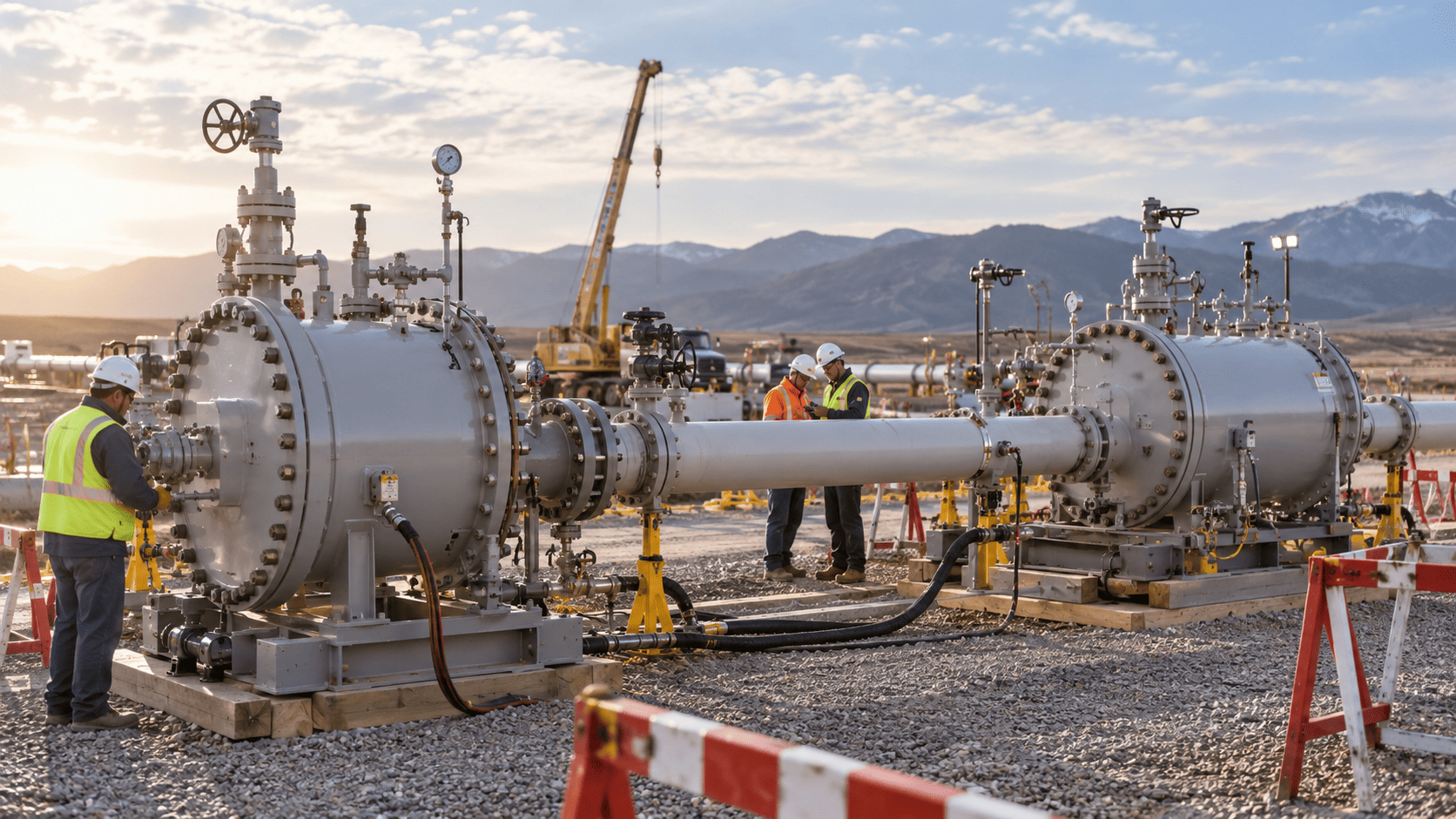
Not every pipeline is built with permanent pigging facilities. Yet operators may still need to clean the line, remove hydrotest water, verify internal geometry, or perform an inline inspection.
Temporary pig launchers and receivers provide controlled access for these projects without requiring permanent pig traps to become part of the pipeline system. They are particularly valuable during construction, pre-commissioning, maintenance, rehabilitation, and one-time inspection campaigns.
Whether a temporary setup is the right choice depends on more than project duration. Pipeline diameter, pressure, geometry, pig type, site access, and how often the line will need to be pigged all influence the decision.
What Are Temporary Pig Launchers And Receivers?
A pig launcher is an assembly that allows a pipeline pig to be safely inserted and introduced into the line. A pig receiver performs the opposite function by capturing the pig at the end of the run so it can be safely removed.
Together, these assemblies are often called pig traps. Permanent pig traps remain connected to the pipeline for recurring cleaning, inspection, or product movement. Temporary launchers and receivers are installed for a defined project and removed or disconnected once the required pigging work is complete.
Temporary systems can support cleaning pigs, foam pigs, gauge pigs, inspection tools, and other pigging applications. Their design and configuration must match the pipeline conditions and the specific tool being used.
Pipeline Experts: Inspection, Cleaning, Coating & More
Certified solutions for inspection, pre-commissioning, cleaning, internal coating, ice pigging™, mapping, and turnkey pipeline projects—maximizing safety and reliability at every stage.
Temporary Vs Permanent Pig Launchers And Receivers
Neither temporary nor permanent pigging facilities are automatically the better choice. The right approach depends on how the pipeline will be operated and maintained over its useful life.
A temporary launcher and receiver may make sense when the line requires a limited number of cleaning, testing, or inspection runs. Permanent facilities are generally more practical where pigging will become part of routine maintenance or integrity management.
For an operator planning a one-time cleaning campaign, installing full permanent infrastructure may add unnecessary complexity and cost. If the same line will be inspected and cleaned repeatedly, however, permanent facilities can provide easier access for future pigging operations.
When Are Temporary Pig Launchers And Receivers Needed?
Temporary pig traps can support several stages of pipeline construction, commissioning, maintenance, and integrity assessment. The project objective usually determines both the type of pig and the temporary setup required.
Pipeline Pre-Commissioning
New pipelines frequently need multiple internal operations before they are placed into service. Construction debris may need to be removed, the internal bore may need to be verified, and water used during testing may need to be displaced.
Temporary launchers and receivers allow pigs to move through the line during these stages without requiring permanent pigging infrastructure. APS pipeline pre-commissioning services can include cleaning, gauging, testing support, dewatering, drying, and related work needed before a system enters operation.
Once those activities are complete, the temporary equipment can be removed and the pipeline prepared for final commissioning.
Pipeline Cleaning
Existing pipelines can accumulate sediment, scale, corrosion products, liquids, and other material that affects flow and system efficiency. Some of these systems were never designed with permanent pig launchers and receivers.
Temporary pigging access can make mechanical cleaning possible without permanently modifying the system. Depending on the pipeline condition, several pigging runs may be used to progressively loosen and remove deposits rather than attempting aggressive cleaning in a single pass.
Professional pipeline cleaning services help determine the cleaning method, pig configuration, and run sequence based on actual pipeline conditions.
Hydrostatic Testing And Dewatering
Hydrostatic testing commonly introduces significant quantities of water into a pipeline. Once testing is complete, that water must often be removed before drying or placing the line into service.
Pigs can be used to displace hydrotest water toward a temporary receiver while maintaining separation between fluids. Multiple runs may be required depending on pipeline length, elevation changes, and the dryness requirements of the final system.
Temporary traps are especially useful when launch and recovery facilities are needed only during testing and commissioning rather than for long-term operations.
Inline Inspection And Smart Pigging
Some pipelines require an integrity assessment even though they were not originally built for inline inspection. Others may have existing pig traps that cannot accommodate the length or configuration of a modern inspection tool.
Temporary launchers, receivers, spool pieces, or related modifications can sometimes make these lines accessible for inspection.
APS discusses these approaches when dealing with challenging pipeline inspections, where existing line configuration may require temporary changes before an inspection tool can safely pass through the system.
Once access is established, pipeline inspection services can provide condition information that helps operators identify corrosion, wall loss, geometric changes, leaks, and other potential integrity concerns.
Pipeline Gauging And Piggability Verification
Before sending a valuable inspection tool through an unfamiliar line, operators often need to verify that the internal bore is suitable for passage.
A gauge pig can help identify restrictions, dents, bore reductions, or other geometry concerns. Temporary launchers and receivers provide the controlled access needed to perform these preliminary runs.
APS explains why pipeline gauging can be an important step before cleaning or inspection, particularly when pipeline geometry or internal conditions are uncertain.
One-Time Maintenance Or Rehabilitation
Temporary pigging systems are also useful during rehabilitation, repair, internal coating preparation, and other project-specific maintenance.
For example, an operator may need to clean a section of pipeline before additional work begins. If regular pigging is not expected afterward, temporary facilities can provide the required access without creating permanent infrastructure that may rarely be used.
What Determines Whether A Temporary Setup Will Work?
Temporary launchers and receivers still need to function as part of a complete engineered pigging operation. Several factors determine whether they are practical for a particular pipeline.
Pipeline Diameter And Geometry
Pipe diameter, bends, tees, valves, reductions, elevation changes, and other internal features influence pig selection and movement.
A pipeline that appears piggable based solely on diameter may still contain restrictions that require additional assessment before the first run.
Pig Or Inspection Tool Type
A basic foam cleaning pig may have very different space requirements from a multi-module inline inspection tool.
Smart pigs can require longer launcher and receiver barrels, additional handling space, tracking equipment, and greater control during launch and retrieval. APS smart pigging services evaluate both pipeline conditions and inspection objectives before a tool is introduced into the line.
Pressure And Flow Conditions
Pig movement depends on controlled pressure or flow behind the tool. The temporary system must be compatible with the pipeline's operating conditions and the requirements of the planned pigging procedure.
Isolation, pressure monitoring, controlled venting, and depressurization are essential parts of safe launch and recovery.
Site Access
Temporary equipment still requires physical space for installation, handling, rigging, and safe operation.
Restricted sites may affect launcher orientation, receiver placement, temporary piping, equipment access, or the ability to safely retrieve the pig after the run.
Number Of Planned Runs
Temporary systems are generally attractive for limited campaigns. If operators expect regular cleaning or inspection over many years, permanent facilities may provide greater operational value.
The expected maintenance program should therefore be considered before deciding how much temporary infrastructure to install.
When Permanent Pigging Facilities May Be Better
Temporary launchers and receivers are not the right solution for every pipeline.
Permanent pig traps may be more appropriate when cleaning is required frequently, inline inspection is part of a recurring integrity program, or pipeline operations rely on regular product displacement and batching.
The decision should consider total lifecycle requirements rather than only the cost of the immediate project. Building a temporary setup repeatedly can eventually become less efficient than incorporating properly designed permanent facilities.
Why Temporary Does Not Mean Simple
The word temporary describes how long the system will remain in place. It does not reduce the engineering, safety, or operational requirements of the pigging project.
Launching and receiving pigs can involve pressurized systems, large closures, stored energy, heavy equipment, and controlled handling of water, debris, gas, or process fluids.
A properly planned operation may require:
Isolation and pressure control
Venting and drainage
Secure supports and connections
Pressure monitoring
Pig detection and tracking
Safe depressurization before opening the receiver
Temporary assemblies on regulated pipelines must also meet applicable engineering, testing, and regulatory requirements.
How Temporary Pigging Fits Into A Complete Project
A successful temporary pigging project begins before the launcher is installed.
The team must first understand the pipeline configuration, operating conditions, cleaning or inspection objective, and the type of pig that will be used. From there, launch and recovery access can be planned around the specific system.
The pipeline may then be cleaned or gauged before the primary pigging run. During the operation, the pig can be monitored using pig tracking methods to confirm movement and identify its location along the route.
After the final pig reaches the receiver, the system is safely depressurized, the tool is recovered, and the temporary setup can be removed or reconfigured as required.
Pipeline Experts: Inspection, Cleaning, Coating & More
Certified solutions for inspection, pre-commissioning, cleaning, internal coating, ice pigging™, mapping, and turnkey pipeline projects—maximizing safety and reliability at every stage.
How American Pipeline Solutions Supports Temporary Pigging Projects
American Pipeline Solutions approaches temporary launchers and receivers as part of the overall pipeline operation, not as standalone pieces of equipment.
APS works with clients to evaluate pipeline configuration, piggability, cleaning requirements, inspection objectives, site conditions, and operational constraints before selecting the appropriate approach.
Depending on the project, that support may include conventional pigging and swabbing, cleaning, pipeline gauging, inspection, smart pigging, tracking, hydrostatic testing support, dewatering, drying, pre-commissioning, and temporary modifications needed to complete the work.
This coordinated approach helps ensure the pig can be safely introduced, tracked through the pipeline, and recovered while accomplishing the actual cleaning, testing, or integrity objective of the project.
FAQs
What Is A Temporary Pig Launcher?
A temporary pig launcher is an assembly installed for a specific pipeline project to safely introduce a cleaning, gauging, or inspection pig into the line. It is typically removed or disconnected after the required pigging work is completed.
What Is A Temporary Pig Receiver?
A temporary pig receiver captures the pig at the end of the pipeline run and provides a controlled location for retrieval. It must allow the system to be isolated, depressurized, and opened safely before the pig is removed.
What Is The Difference Between A Pig Launcher And A Pig Receiver?
The launcher introduces the pig into the pipeline, while the receiver captures it after the run. Both are designed around the pipeline diameter, pressure, pig type, and operating requirements.
Can Temporary Pig Launchers Be Used For Smart Pigging?
Yes, temporary launchers and receivers can be used for smart pigging when properly engineered for the inspection tool and pipeline conditions. Longer or multi-module ILI tools may require additional barrel length and handling space.
Can A Pipeline Without Permanent Pig Traps Be Pigged?
In some cases, yes. Temporary launchers, receivers, spool pieces, or other pipeline modifications may provide the access needed for cleaning, gauging, or inspection. The pipeline must first be evaluated for piggability and operational risk.
Are Temporary Pig Launchers Used During Pre-Commissioning?
Yes. Temporary launchers and receivers are commonly used to support cleaning, gauging, hydrostatic testing activities, dewatering, and drying before a new pipeline is placed into service.
How Are Temporary Pig Launchers And Receivers Sized?
Sizing depends on pipeline diameter, pig dimensions, inspection tool length, pressure, closure requirements, and the space needed to safely load and retrieve the pig.
When Is A Permanent Pig Launcher Better Than A Temporary One?
Permanent facilities may make more sense when a pipeline requires recurring cleaning, frequent inspection, product batching, or long-term integrity management. Temporary equipment is generally better suited to limited or project-specific pigging campaigns.

How Force Main Pigging Improves Flow Rate And Pump Efficiency
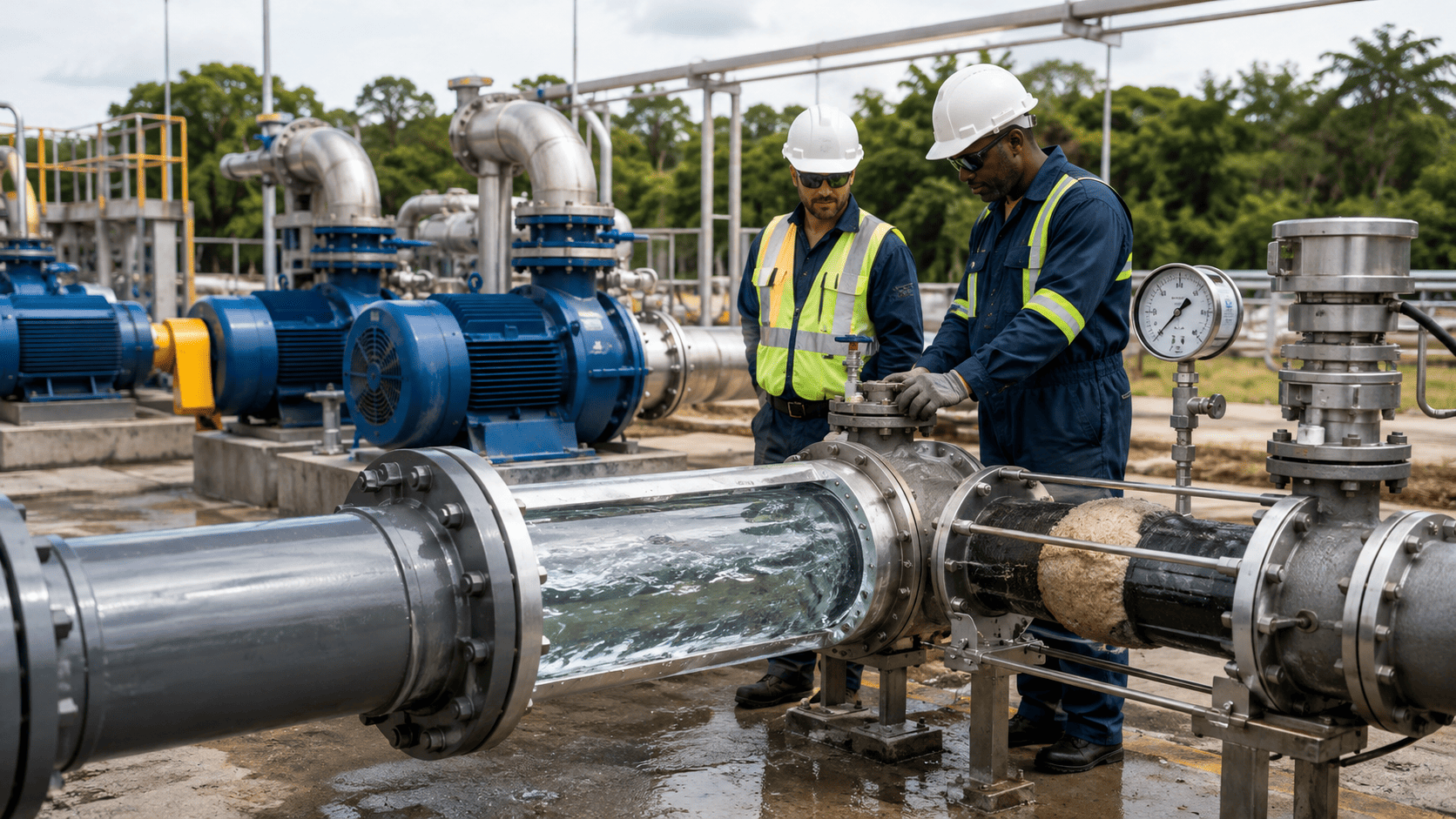
Wastewater force mains are designed to move large volumes of wastewater from lift stations to treatment facilities, but their hydraulic performance can gradually decline. Fats, oils, grease, sediment, solids, biofilm, and other deposits can accumulate along the inside of the pipe and restrict the available flow area.
As resistance increases, pumps may need to run longer to move the same volume of wastewater. Force main pigging removes these restrictions and helps restore hydraulic capacity, allowing the pipeline and pump station to operate closer to their intended performance.
Why Force Mains Lose Flow Capacity Over Time
Unlike gravity sewer lines, force mains rely on pumps to move wastewater under pressure. The condition of the pipe therefore has a direct effect on how efficiently the pump station can move flow through the system.
Over time, deposits can accumulate inside the force main. Common materials include fats, oils and grease, sediment, biological growth, scale, solids, and other wastewater debris.
Even when a force main is still moving wastewater, internal buildup can gradually reduce its effective diameter. The resulting loss of capacity may be difficult to notice at first because the pump station compensates by operating longer or under greater resistance.
Utilities may begin seeing symptoms such as:
Lower flow rates than historical operating conditions
Longer pump cycles
Increasing discharge pressure
Greater electrical consumption
Reduced wet well drawdown
Difficulty handling peak flow conditions
These changes do not automatically mean that the pumps are failing. In many cases, increasing resistance inside the force main is contributing to the problem.
Pipeline Experts: Inspection, Cleaning, Coating & More
Certified solutions for inspection, pre-commissioning, cleaning, internal coating, ice pigging™, mapping, and turnkey pipeline projects—maximizing safety and reliability at every stage.
How Buildup Affects Force Main Hydraulics
A force main depends on adequate internal flow area and manageable friction losses. When deposits form along the pipe wall, both conditions begin to change.
The buildup occupies space inside the pipe and creates a rougher internal surface. Wastewater then has less usable area through which to flow while encountering greater resistance as it moves downstream.
Reduced Effective Pipe Diameter
Even a moderate layer of material can affect hydraulic capacity when it extends for hundreds or thousands of feet.
As the usable internal diameter becomes smaller, the pipeline can no longer move the same volume of wastewater as efficiently. Pumps may need more time to complete each cycle, even though nothing has changed mechanically at the lift station.
Increased Friction And Head Loss
Deposits also increase friction between the wastewater and the pipe wall. Greater friction contributes to increased system head, meaning the pump must work against more resistance to maintain flow.
This is why cleaning is not only about removing debris. It is also about restoring the hydraulic characteristics of the force main.
How Force Main Pigging Restores Flow Rate
Force main pigging uses appropriately selected pigs to move through the pipeline and remove material attached to the pipe wall. Depending on the condition of the system, several progressively sized or configured pigs may be used to clean the line in a controlled manner.
Professional force main pigging can remove accumulated solids, grease, sediment, biofilm, and other restrictions while helping operators better understand how the line responds during cleaning.
Once deposits are removed, several hydraulic improvements may occur.
More Usable Flow Area
Cleaning restores more of the original internal diameter of the pipeline. With additional cross sectional area available, wastewater can move through the force main with less restriction.
The result may be an increase in gallons per minute without installing a larger pump or increasing the size of the pipeline.
Lower Friction Loss
A cleaner pipe wall generally creates less resistance than one covered with heavy deposits.
Reducing friction allows more of the pump's available energy to move wastewater rather than overcome unnecessary internal resistance.
Improved Hydraulic Capacity
The combined effect of increased flow area and reduced friction can restore capacity that gradually disappeared as the pipeline became fouled.
For utilities approaching peak flow limitations, recovering existing hydraulic capacity can be particularly valuable because it may postpone the need for more expensive infrastructure improvements.
How Pigging Can Improve Pump Efficiency
A pump does not operate independently from the pipeline connected to it. Its performance depends on the resistance created by the entire system.
If force main resistance increases, the pump's operating point can change. Flow may decline while runtime increases, causing the pump station to consume more energy for the same wastewater volume.
Cleaning the force main can reverse part of that problem when internal buildup is the cause.
With reduced hydraulic resistance, pumps may be able to move wastewater faster and complete pumping cycles sooner. Shorter runtime can reduce electrical demand and limit unnecessary operating hours on pumps, motors, and associated components.
This relationship is why routine pipeline cleaning should be viewed as part of system performance management, not simply as debris removal.
When The Pump Is Not Actually The Problem
Declining pump station performance often leads operators to investigate pumps, motors, check valves, and other mechanical components first. Those checks are important, but they do not always identify the underlying cause.
If pumps are operating properly but flow continues to decrease, the force main itself may be creating excessive resistance.
One useful comparison is the amount of wastewater being moved relative to pump runtime or electricity consumption. If the pumps are running longer while moving less flow, internal pipeline restrictions should be considered during troubleshooting.
Historical pressure and flow data can also help identify gradual changes. A force main that once moved significantly more wastewater under similar operating conditions may have lost capacity because of internal deposits.
Cleaning the pipeline before replacing functioning pumps can therefore prevent unnecessary capital spending when hydraulic restrictions are the real issue.
Real Results From Force Main Cleaning
Municipal projects demonstrate how significantly cleaning can affect system performance when internal buildup is severe.
In one force main cleaning project involving American Pipeline Solutions, flow increased by approximately 19 percent while pump runtime decreased by about 20 percent after Ice Pigging. Another force main in the same program experienced an approximately 20 percent flow improvement.
Results vary from system to system because the improvement depends on pipe condition, deposit volume, pipeline geometry, wastewater characteristics, and how much of the original performance loss was caused by buildup.
The important point is that force main cleaning can restore existing capacity. Operators may be able to improve performance without immediately adding pumping power or replacing infrastructure.
Signs Your Force Main May Need Pigging
Force mains do not need to reach a complete blockage before cleaning becomes worthwhile. Performance trends can provide earlier indications that deposits are affecting the system.
Utilities should consider investigating force main condition when they notice steadily declining flow, longer pumping cycles, increased discharge pressure, higher electricity usage, or reduced wet well drawdown.
Recurring buildup problems and a history of improved performance following cleaning are also useful indicators.
Where conventional pigging is being considered, evaluating internal restrictions before selecting a pig can reduce operational risk. Pipeline gauging can help confirm internal clearance and identify conditions that could affect a pigging run.
Force Main Pigging Vs Increasing Pump Capacity
Installing a larger pump may appear to be the easiest response to declining flow, but additional pumping capacity does not remove a pipeline restriction.
If deposits are creating excessive head loss, a larger pump may simply push against the same problem with greater power consumption.
Cleaning allows operators to determine how much hydraulic capacity can be recovered from the existing system before committing to major equipment or pipeline upgrades.
This makes force main maintenance particularly valuable for utilities trying to manage aging infrastructure and growing wastewater demand within limited capital budgets.
Conventional Pigging Or Ice Pigging?
The right cleaning method depends on the design and condition of the force main.
Conventional pigging can be highly effective in pipelines with suitable access, predictable geometry, and conditions that allow progressively configured pigs to travel safely through the system. It provides controlled mechanical cleaning and can remove significant amounts of accumulated material.
Ice Pigging uses a pumpable ice slurry that behaves like a semi solid plug as it moves through the pipeline. It can be particularly useful in lines with complex geometry, diameter changes, bends, or other conditions where conventional pigs may present greater operational challenges.
Neither approach is automatically better for every force main. Pipe diameter, material, layout, available access, deposit type, pressure, flow conditions, and project objectives should determine the cleaning strategy.
How Often Should Force Mains Be Pigged?
There is no universal cleaning schedule that applies to every wastewater force main.
Some systems may accumulate deposits rapidly because of wastewater characteristics, low velocities, heavy grease loading, or operating conditions. Others may maintain acceptable hydraulic performance for longer periods.
A condition based maintenance approach is generally more useful than choosing an arbitrary interval. Utilities can track flow, pressure, pump runtime, energy consumption, and previous cleaning results to identify when performance begins to deteriorate.
Regular maintenance can also help prevent severe restrictions from developing. As discussed in APS guidance on operational efficiency, maintaining cleaner pipelines can support more consistent system performance and reduce avoidable operating strain.
Pipeline Experts: Inspection, Cleaning, Coating & More
Certified solutions for inspection, pre-commissioning, cleaning, internal coating, ice pigging™, mapping, and turnkey pipeline projects—maximizing safety and reliability at every stage.
How American Pipeline Solutions Helps Restore Force Main Performance
American Pipeline Solutions works with municipalities, utilities, and industrial operators to evaluate force main conditions and determine the cleaning approach that best fits the system.
APS capabilities include conventional pigging, progressive cleaning, foam pigging, Ice Pigging™, pig tracking, pressure monitoring, launch and retrieval planning, pipeline inspection, and condition analysis. The objective is not simply to move a pig through the line, but to restore performance safely while protecting the infrastructure and maintaining service reliability.
By combining field experience with multiple cleaning technologies, APS can adapt the project around pipeline geometry, operating conditions, and the type of buildup present. This allows utilities to address hydraulic restrictions without relying on a single cleaning method for every application.
When declining flow and increasing pump runtime are caused by internal force main restrictions, the right cleaning strategy can help recover capacity, reduce unnecessary energy use, and extend the useful life of existing assets.
FAQs
Does Force Main Pigging Increase Flow Rate?
It can. When internal deposits are restricting the effective diameter or increasing friction loss, removing those deposits can restore hydraulic capacity and allow more wastewater to move through the line. The amount of improvement depends on the original condition of the force main.
How Does Force Main Buildup Affect Pump Efficiency?
Buildup increases resistance inside the pipeline. Pumps may then need to operate longer or against greater head to move the required wastewater volume, which can increase energy use and operating wear.
Can Pigging Reduce Lift Station Pump Runtime?
Yes, when excessive runtime is being caused by force main restrictions. Restoring flow capacity can allow pumps to move the required volume more quickly and complete cycles sooner.
What Builds Up Inside Wastewater Force Mains?
Common deposits include fats, oils and grease, sediment, solids, biofilm, mineral scale, and other wastewater debris. The type and rate of accumulation depend on system design and wastewater characteristics.
How Can Operators Tell Whether The Pump Or Force Main Is Causing Low Flow?
Pump condition should be evaluated alongside pressure, flow, runtime, and historical system performance. If pumps are functioning normally but flow has declined while system resistance has increased, force main restrictions may be contributing to the problem.
Can Pigging Reduce Wastewater Pumping Costs?
Potentially. When cleaning lowers pipeline resistance and reduces pump runtime, the system may consume less electricity to move the same wastewater volume. Actual savings depend on operating conditions and the severity of the original restriction.
How Often Should A Wastewater Force Main Be Cleaned?
Cleaning frequency should be based on performance trends rather than a fixed universal schedule. Flow rate, pump runtime, pressure, energy consumption, wastewater characteristics, and previous cleaning history can all help determine when another cleaning is appropriate.
Is Ice Pigging Better Than Conventional Force Main Pigging?
Each method has different advantages. Conventional pigging works well in many piggable systems, while Ice Pigging™ can be useful where geometry, access, or changing pipe conditions make traditional pigging more difficult. A pipeline assessment helps determine the best approach.

Hydrotest Water Management For Industrial Sites: Storage And Disposal

Hydrostatic testing can require a significant volume of water, especially on long or large diameter pipelines. While pressure and test duration receive much of the attention, managing that water before, during, and after the test is just as important to keeping the project on schedule.
Industrial sites need to know where test water will come from, how much temporary storage may be required, how the pipeline will be dewatered, and where the water will go afterward. Planning these steps before filling begins can reduce delays, unnecessary handling, and environmental or compliance concerns.
What Is Hydrotest Water?
Hydrotest water is the water used during hydrostatic testing to verify that a pipeline, pressure vessel, tank, or related system can withstand its required test pressure without unacceptable leakage or loss of pressure.
During pipeline hydrostatic testing, a pipeline is filled with water, stabilized, pressurized to the required level, and monitored for a specified period. Once the test is complete, the pressure is released and the water must be removed from the system.
The water leaving the pipeline may not have the same characteristics as the water that entered it. Contact with the internal surface can introduce sediment, rust, mill scale, construction debris, residual product, or other materials that affect how the water can be reused, treated, or discharged.
Pipeline Experts: Inspection, Cleaning, Coating & More
Certified solutions for inspection, pre-commissioning, cleaning, internal coating, ice pigging™, mapping, and turnkey pipeline projects—maximizing safety and reliability at every stage.
Why Hydrotest Water Management Should Start Before Testing
Water management should be part of hydrotest planning from the beginning rather than something addressed after the pressure test is finished.
Industrial projects can involve substantial volumes of water. If the site does not have enough temporary storage or an approved discharge destination, a successful hydrotest can still create scheduling problems.
The first step is understanding the pipeline itself. Diameter, length, elevation changes, test section boundaries, source water availability, and the possibility of retesting all influence how much water must be handled.
Water quality also matters. Even clean source water can change as it moves through the line, which is why disposal requirements should not be based only on where the water originally came from.
Planning The Hydrotest Water Management Process
An effective plan follows the water through the complete testing sequence, from filling the pipeline to final disposal or reuse.
Select And Manage The Water Source
Hydrotest water may come from municipal supplies or other approved sources depending on the project. Water quality, availability, required volume, and applicable environmental requirements should all be considered before filling begins.
Proper pipeline filling and filtration also helps control the test process. APS uses fill pigs propelled by the test water to reduce trapped air, which can otherwise affect stabilization and test performance.
Estimate The Required Water Volume
Pipeline diameter and test section length determine the basic volume required, but operators should also account for water transfer, temporary holding, operational losses, and the possibility that a section may need to be tested again.
Test sections should be evaluated as part of the same water management plan rather than as isolated activities. In some projects, water from one completed section may potentially be transferred for another test when water quality and project requirements allow.
Provide Adequate Temporary Storage
Temporary storage provides flexibility between testing, dewatering, treatment, reuse, and final disposal.
Storage planning should consider available site space, transfer rates, anticipated water volume, holding time, site access, and contingency capacity. The right arrangement depends on whether the water will be reused onsite, treated before discharge, transferred to another test section, or transported elsewhere.
What Can Be Found In Hydrotest Water?
The condition and previous service of a pipeline can significantly affect water quality after hydrotesting.
Possible constituents include:
Rust, iron, mill scale, and suspended solids
Soil or construction debris
Oil, grease, or residual hydrocarbons
Corrosion inhibitors or other additives
Residual chlorine from some source water
Coating or process residues
Sediment removed from the pipeline interior
Not every project will contain the same constituents. A newly constructed pipeline may present different concerns than an existing industrial or product pipeline.
EPA permits for some facilities have required hydrotest water monitoring for parameters such as suspended solids, oil and grease, pH, chlorine, and certain hydrocarbons. The exact requirements depend on the facility, discharge pathway, jurisdiction, and permit conditions.
How Hydrotest Water Is Removed From A Pipeline
Completing the pressure test is only part of the job. The next challenge is removing the bulk water from the pipeline in a controlled manner.
Pipeline dewatering commonly uses pigs driven through the line with compressed air or another approved medium. The pigs displace water toward a controlled collection, transfer, or discharge location.
Dewatering is already an important stage within APS pipeline pre-commissioning services, where cleaning, gauging, filling, pressure testing, dewatering, and drying are coordinated as part of the overall commissioning sequence.
Pipeline geometry can influence how effectively water is removed. Elevation changes, low points, restrictions, and internal conditions all need to be considered when planning the dewatering runs.
For pipelines where internal clearance needs to be confirmed before pigging or testing activities, pipeline gauging services can help identify restrictions and reduce the risk of problems during subsequent operations.
Hydrotest Water Reuse, Treatment, And Disposal Options
There is no single disposal method that fits every industrial hydrotest. The appropriate option depends on water quality, site conditions, project location, volume, and the requirements of the receiving destination.
Reusing Water For Another Test Section
When conditions allow, reusing hydrotest water can reduce fresh water demand and the total amount of water requiring final disposal.
The water may need to be filtered, sampled, or otherwise evaluated before reuse. Operators should also consider whether transferring water between sections could introduce contaminants or affect the next test.
Controlled Discharge
Some projects may allow hydrotest water to be discharged through an authorized pathway after applicable water quality and permit requirements are satisfied.
Discharge planning should consider the receiving area, flow rate, erosion potential, water quality, and any treatment or monitoring requirements. Hydrotest water should never be assumed suitable for unrestricted discharge simply because clean water was originally used to fill the pipeline.
Municipal Or Offsite Disposal
Depending on the water characteristics and location, a municipal wastewater treatment system or approved offsite facility may be an option.
Acceptance requirements should be confirmed before testing starts. Waiting until a large volume of water is already onsite can create unnecessary storage, transportation, and scheduling problems.
Dewatering And Pipeline Drying Are Not The Same
Removing the bulk test water does not necessarily mean the pipeline is ready for service.
Dewatering removes liquid water. Drying addresses moisture that remains after the primary water removal process. This distinction can be particularly important for gas systems and other applications where residual moisture can affect product quality, corrosion risk, or commissioning specifications.
APS may use foam swabs, cleaning pigs, and drying equipment during pre-commissioning to continue removing residual moisture after dewatering.
A coordinated strategy allows hydrotesting, dewatering, and drying to function as connected stages rather than separate operations.
Common Hydrotest Water Management Mistakes
Many water management problems begin before the test itself. Common planning issues include underestimating water volume, waiting too long to identify a disposal destination, providing insufficient temporary storage, and assuming the discharged water will have the same quality as the source water.
Another common mistake is failing to coordinate dewatering with the next commissioning stage. Water may be removed successfully, but residual moisture can still delay final readiness when drying specifications have not been considered.
A broader hydrostatic testing process should therefore consider filling, pressure testing, depressurization, water removal, and final pipeline readiness as one coordinated operation.
Pipeline Experts: Inspection, Cleaning, Coating & More
Certified solutions for inspection, pre-commissioning, cleaning, internal coating, ice pigging™, mapping, and turnkey pipeline projects—maximizing safety and reliability at every stage.
How American Pipeline Solutions Supports Hydrotesting And Water Removal
American Pipeline Solutions provides nationwide pipeline services for oil and gas, municipal, utility, and industrial systems, with hydrostatic testing and pre-commissioning capabilities designed around the complete pipeline workflow.
APS supports projects with pipeline cleaning, gauging, controlled filling and filtration, hydrostatic testing, depressurization, pigging, dewatering, and drying. Coordinating these services can help operators move efficiently from test preparation through final commissioning while reducing avoidable reruns and project delays.
For complex energy projects, APS also provides integrated oil and gas pipeline services that combine pre-commissioning, testing, pigging, and integrity support based on the pipeline and project requirements.
The goal is not simply to complete the pressure test. It is to help ensure the pipeline is properly prepared, tested, dewatered, and ready for the next phase of operation.
FAQs
What Is Hydrotest Water?
Hydrotest water is the water used to fill and pressurize a pipeline, tank, or pressure system during hydrostatic testing. After testing, it must be removed and managed according to the water quality, site conditions, and applicable requirements.
How Do Industrial Sites Dispose Of Hydrotest Water?
Options may include reuse for another test, authorized onsite discharge, treatment followed by discharge, acceptance by a municipal wastewater facility, or transportation to an approved offsite facility. The appropriate method depends on the project and water characteristics.
Can Hydrotest Water Be Reused?
Yes, hydrotest water may be reused for another test section when its quality and project requirements make reuse appropriate. Reuse can reduce fresh water demand and final disposal volume.
Does Hydrotest Water Need To Be Tested Before Disposal?
Testing may be required depending on the discharge method, receiving facility, permit, pipeline history, and local regulations. Water characterization can help determine whether treatment is necessary and which disposal options are appropriate.
How Much Storage Is Needed For Hydrotest Water?
Storage requirements depend on pipeline diameter, test section length, water transfer plans, disposal timing, available site space, and contingency needs. Capacity should be planned before filling begins.
How Is Hydrotest Water Removed From A Pipeline?
Bulk water is commonly displaced using pigs propelled through the line with compressed air or another suitable medium. The water is directed toward a controlled collection, storage, transfer, or discharge location.
What Is The Difference Between Dewatering And Drying?
Dewatering removes bulk liquid from the pipeline. Drying removes the residual moisture that remains afterward. Some pipelines require both processes before commissioning.
When Should Hydrotest Water Disposal Be Planned?
Water disposal should be addressed during hydrotest planning, before the pipeline is filled. Early planning allows operators to coordinate storage, sampling, treatment, permits, transportation, reuse, and final disposal without delaying the project.


