
Smart Pigging Vs Intelligent Pigging: What’s The Difference?
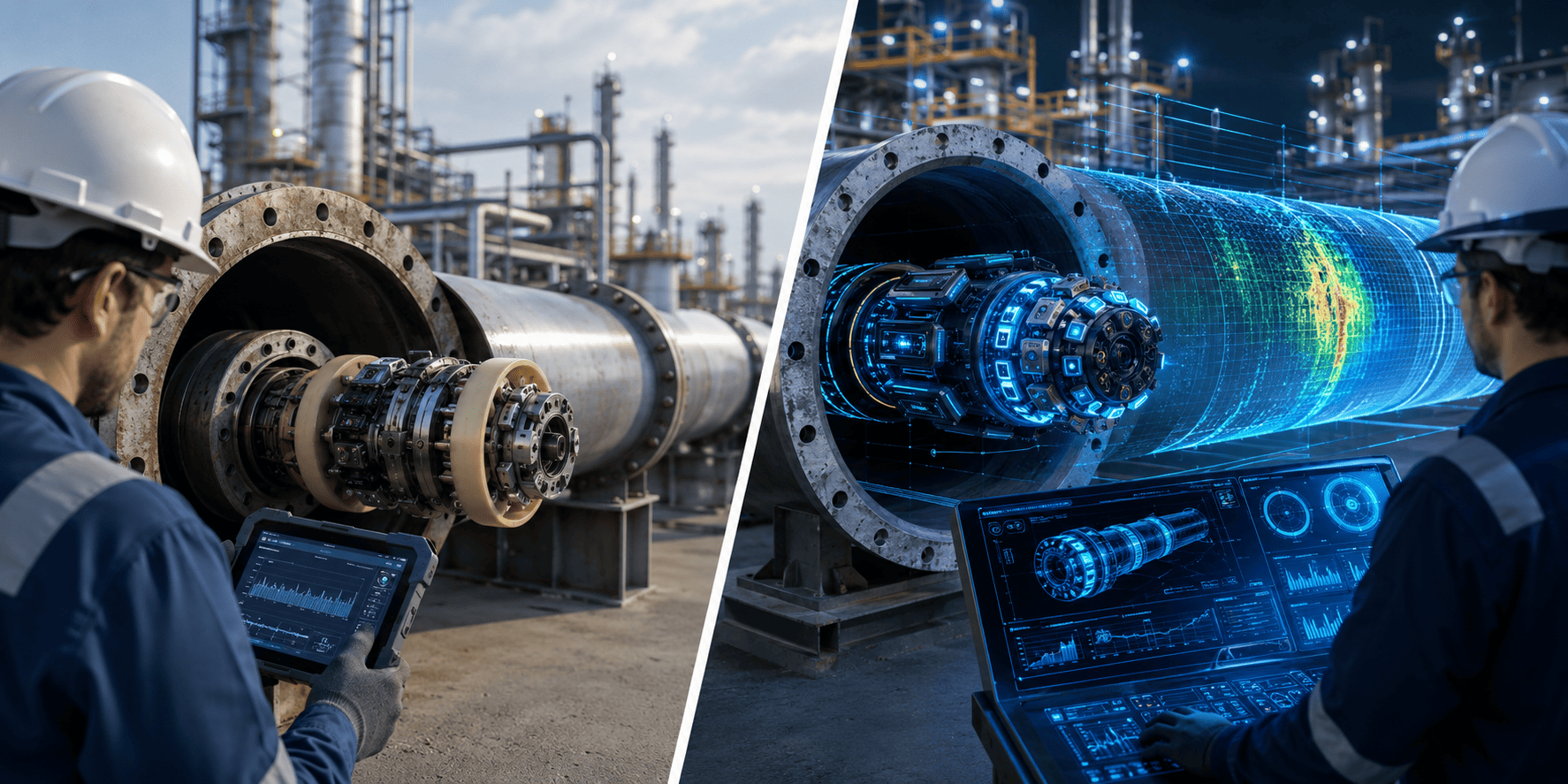
In pipeline integrity work, terminology matters. Different teams may use different language for the same inspection method, and that can create confusion when planning a project, comparing service options, or reviewing scope requirements.
Smart pigging and intelligent pigging are two terms that are often used to describe the same type of inline inspection. Both refer to the use of an instrumented pig that travels through a pipeline and collects data about the condition of the line. The inspection is designed to identify issues such as corrosion, wall loss, dents, cracks, deformation, and other anomalies that may affect pipeline integrity.
Even though the terms are commonly used interchangeably, it is still worth understanding how they are used in practice. In some cases, the wording changes depending on whether someone is talking about the tool itself, the inspection process, the service offering, or the data collected during the run.
For pipeline operators, the real priority is not choosing between two completely different methods. The priority is understanding what type of inspection is being performed, what information the tool is designed to collect, and whether the line is suitable for that inspection approach.
Why Both Terms Exist
The pipeline industry has a long history of using overlapping terminology. Smart pigging and intelligent pigging developed as different ways to describe an inline inspection process that goes beyond basic cleaning or utility pigging.
The word “smart” is often used in broader commercial and operational language because it is simple and easy to recognize. It communicates that the pig is doing more than moving through the line mechanically. It is collecting inspection data.
The word “intelligent” tends to appear more often in technical descriptions, inspection documentation, and integrity-focused discussions. It emphasizes that the pig is instrumented and capable of detecting and recording condition-related information from inside the pipeline.
In practical terms, both phrases usually point to the same category of work. The more important distinction is not smart versus intelligent. The more important distinction is what technology the tool uses and what kind of integrity questions the inspection is meant to answer.
What Smart Pigging And Intelligent Pigging Actually Mean
Both smart pigging and intelligent pigging refer to inline pipeline inspection using a pig equipped with sensors and onboard data collection capability.
As the pig moves through the pipeline, it gathers information about the internal condition and physical characteristics of the line. That data is then reviewed to identify defects, assess pipeline condition, and support decisions around maintenance, repair, rehabilitation, or further investigation.
This type of inspection is very different from conventional pigging used for cleaning, batching, gauging, or dewatering. A conventional pig performs a physical task in the pipeline. A smart or intelligent pig performs an inspection task.
That distinction is important because not every pigging run is an inspection run. Some pigs are designed to clean the line. Others are designed to measure the condition of the line. Smart pigging and intelligent pigging belong to the second category.
The Relationship Between Smart Pigging And Inline Inspection
Inline inspection, often shortened to ILI, is the broader technical term behind both smart pigging and intelligent pigging.
When an operator talks about ILI, they are generally referring to the inspection of a pipeline from within using an instrumented tool. Smart pigging and intelligent pigging are common phrases used to describe that same general concept in a more service-oriented or descriptive way.
This is why the terms often overlap in proposals, service pages, and project discussions. One team may say the line needs smart pigging. Another may describe the same scope as intelligent pigging. Another may call it an inline inspection run.
The wording may change, but the central goal remains the same. The pipeline is being inspected internally to gather condition data that cannot be confirmed through a basic visual review alone.
What These Inspection Tools Are Designed To Detect
The value of smart or intelligent pigging comes from the type of information the inspection tool can collect. Depending on the sensor package and the condition of the line, the inspection may detect a range of integrity concerns.
Corrosion And Metal Loss
One of the most common uses of smart pigging is identifying corrosion and wall loss in metallic pipelines.
This includes areas where internal or external deterioration may be reducing wall thickness and weakening the pipe over time. Early identification of corrosion allows operators to make more informed decisions before the issue develops into a leak, failure, or major repair event.
Cracks And Other Structural Defects
Certain inspection tools are also used to detect cracks, seam-related issues, or other structural anomalies that are not visible through routine operation.
These types of defects can be especially important in pipelines where pressure, product type, age, or operating conditions increase the consequences of failure.
Dents, Deformation, And Geometry Changes
Not all pipeline issues are related to corrosion. Some involve shape, geometry, or physical deformation.
A smart or intelligent pig may detect dents, ovality changes, buckles, kinks, and other geometric anomalies that could affect performance or indicate a developing integrity concern.
Mapping And Positional Data
Many modern inspection tools also support mapping and location-based analysis.
That means the inspection does not just identify an anomaly. It also helps locate where that anomaly exists along the pipeline so that operators can investigate, plan repairs, or compare findings across future runs.
The Technologies Behind Smart And Intelligent Pigging
When operators ask about smart pigging versus intelligent pigging, the more useful technical question is usually about sensor type.
Different inspection tools are built for different purposes, and the actual capabilities of the run depend on the technology being used.
Magnetic Flux Leakage
Magnetic Flux Leakage, often called MFL, is commonly used in metallic pipelines to identify metal loss and corrosion-related defects.
This method is widely used because it can generate detailed information about wall condition and help identify areas where deterioration may already be underway.
Ultrasonic Inspection
Ultrasonic inspection tools use sound-based measurement to evaluate wall thickness and detect certain types of flaws.
These tools can provide highly valuable integrity data in the right application and are often selected based on the inspection objective, line condition, and material characteristics.
Caliper And Geometry Tools
Caliper tools are used to assess physical shape and internal geometry.
They are particularly useful for detecting dents, ovality changes, restrictions, and other dimensional issues that may affect piggability or indicate mechanical damage.
IMU And Mapping Systems
Some inspection tools also include inertial measurement capability to support location tracking and mapping.
This helps connect inspection findings to physical locations in the field, which is critical for planning maintenance, excavation, verification, or long-term integrity management.
What Smart Pigging Is Not
One of the biggest sources of confusion in pigging terminology is the assumption that all pigging serves the same purpose.
Smart pigging is not the same as a routine cleaning run. It is not the same as basic swabbing, batching, or dewatering. It is not just another way to describe any pig moving through a pipeline.
Conventional pigging is primarily about performing a physical maintenance function. Smart or intelligent pigging is about collecting diagnostic information.
That is why inspection readiness matters so much. A line may need utility pigging first to remove debris, confirm piggability, or improve conditions before an inspection tool can be used effectively.
Does The Wording Ever Matter In Real Projects?
In most projects, the wording matters less than the scope. If a provider says smart pigging and another says intelligent pigging, they may be talking about the same inspection category.
Where the wording starts to matter more is in technical clarification. A proposal may need to define whether the inspection involves MFL, caliper, eddy current, ultrasonic, acoustic support, or a combination of technologies. The pipeline material, diameter, bends, fittings, debris levels, and access conditions can all influence what type of inspection is practical.
That is why operators should avoid focusing too much on the label alone. The more important questions are:
What defects is the tool intended to detect?
Is the line piggable and ready for inspection?
What data will the run produce?
How will the results be used for condition analysis or repair planning?
Those answers are what define the true value of the inspection.
Pipeline Requirements Before A Smart Or Intelligent Pig Run
Not every pipeline is immediately ready for inline inspection.
A smart or intelligent pig run often depends on the line being piggable, accessible, and sufficiently prepared. That may involve cleaning runs beforehand, confirming launcher and receiver access, reviewing bends and restrictions, and making sure the inspection tool can travel safely through the pipeline.
This preparation matters because even the most advanced inspection tool is only as effective as the conditions in which it is run. If debris interferes with sensors or the tool cannot move through the line properly, data quality and project success can both suffer.
For that reason, inspection planning should never begin and end with the pig itself. The line condition, system layout, and inspection objective all need to be evaluated together.
How American Pipeline Solutions Approaches Smart Pigging
American Pipeline Solutions approaches smart pigging as part of a broader pipeline inspection and condition analysis strategy.
The goal is not simply to run a tool through a pipeline. The goal is to match the inspection approach to the pipeline material, operating conditions, and integrity concerns so the resulting data is useful for real decision-making.
That may involve metallic pipeline inspection, geometry-based analysis, mixed-material inspection support, mapping, leak-related evaluation, or preparation work before the inspection run begins. In some cases, cleaning and readiness steps are just as important as the inspection itself.
This approach helps clients move beyond terminology and focus on what matters most: understanding pipeline condition, identifying risk early, and planning the right next step for the asset.
Final Thoughts
Smart pigging and intelligent pigging are usually two names for the same type of inline inspection process.
Both refer to the use of an instrumented pig that gathers integrity data from inside a pipeline. In most cases, the more meaningful differences are not found in the terminology itself, but in the sensor package, inspection objective, line condition, and the type of defects the run is meant to detect.
For operators evaluating inspection services, that distinction is important. A project should not be scoped around wording alone. It should be scoped around pipeline condition, integrity goals, and the kind of data needed to support maintenance or repair decisions.
When the terminology is clarified early, it becomes much easier to compare providers, define the right inspection method, and move forward with a more effective pipeline integrity strategy.
FAQs
Is Smart Pigging The Same As Intelligent Pigging?
In most pipeline inspection contexts, yes. The two terms are commonly used to describe the same type of instrumented inline inspection process.
What Is The Difference Between A Smart Pig And An Intelligent Pig?
Usually, there is no major practical difference. Both terms refer to a pig equipped with sensors and data collection capability for inspecting pipeline condition.
Is Smart Pigging The Same As Inline Inspection?
Smart pigging is generally a common industry phrase for inline inspection using an instrumented pig. Inline inspection, or ILI, is the broader technical category.
What Can Smart Or Intelligent Pigs Detect?
Depending on the tool and sensor package, they may detect corrosion, metal loss, dents, deformation, wall thickness changes, cracks, and other integrity-related anomalies.
Does Smart Pigging Require A Piggable Pipeline?
Yes. The line must be suitable for pig travel, which means geometry, access, restrictions, and operating conditions all need to be considered before the run.
Can Every Pipeline Be Inspected With Smart Pigging?
No. Some pipelines may not be piggable, may require preparation first, or may be better suited to another inspection method depending on material, layout, and operating conditions.
What Is The Difference Between A Cleaning Pig And A Smart Pig?
A cleaning pig is designed to remove debris, liquids, or buildup from the line. A smart pig is designed to inspect the condition of the pipeline and collect diagnostic data.
Why Do Some Companies Say Smart Pigging While Others Say Intelligent Pigging?
The difference is often just wording preference. Some use “smart pigging” in general service language, while others use “intelligent pigging” in more technical or formal inspection contexts.
What Matters More Than The Terminology?
The inspection technology, sensor type, pipeline readiness, and the specific integrity issues the run is meant to detect matter far more than whether the service is labeled smart pigging or intelligent pigging.
When Should A Pipeline Operator Consider Smart Pigging?
A pipeline operator should consider smart pigging when the goal is to assess internal pipeline condition, identify integrity threats, gather inspection data, and support maintenance or repair planning.


