
How Pigging Keeps Seawater Intake Pipelines Clean
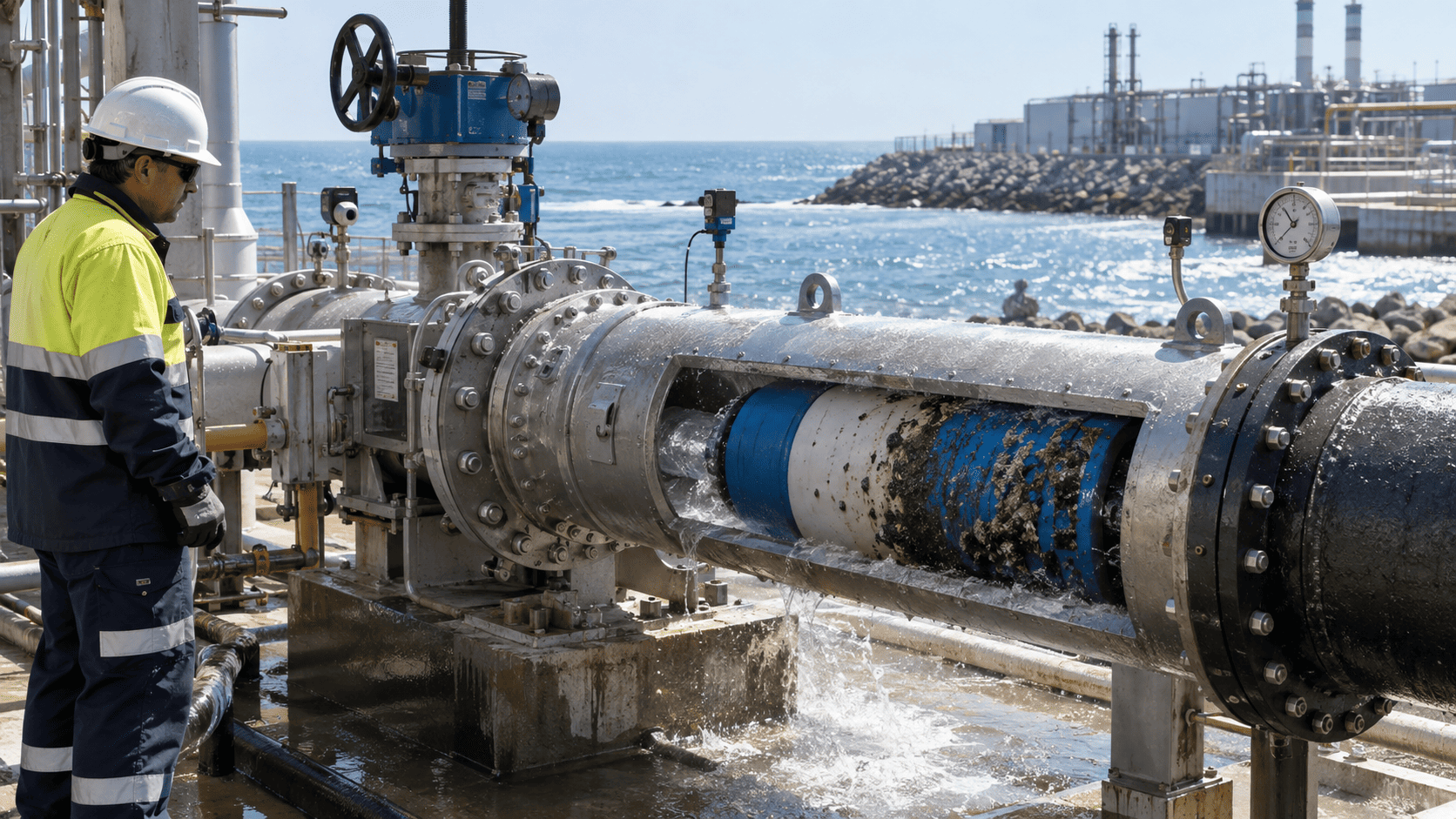
Seawater intake pipelines operate in one of the most challenging environments for pipeline maintenance. Every day, seawater carries microorganisms, marine larvae, suspended solids, sand, and other material into the intake system.
Over time, biofilm, barnacles, mussels, sediment, and other deposits can accumulate on the internal pipe wall. As that buildup grows, the usable diameter of the pipeline decreases and resistance to flow increases.
Pipeline pigging provides a mechanical way to remove these deposits and restore a cleaner internal surface. When the process is planned correctly, pigging can help improve flow, reduce hydraulic restriction, and support more reliable operation of desalination plants and other seawater intake systems.
Why Seawater Intake Pipelines Become Fouled
Seawater pipelines are continuously exposed to biological and inorganic material. Fouling can begin soon after a pipeline enters service and gradually become more severe if deposits are not controlled.
Several forms of buildup can occur at the same time.
Biofilm And Microbiological Growth
Microorganisms naturally present in seawater can attach themselves to the inner pipe surface and form a biological layer known as biofilm.
Biofilm may appear relatively thin at first, but it creates a surface where additional organisms and suspended material can attach more easily. Over time, this can contribute to increasingly dense fouling.
Barnacles, Mussels, And Marine Growth
Marine organisms can enter intake pipelines during early stages of development and attach themselves to pipe walls.
Barnacles, mussels, shellfish, and similar marine growth can eventually create significant restrictions. Heavy colonies can reduce the effective internal diameter of the pipeline and make mechanical cleaning more challenging if the buildup is allowed to develop for long periods.
Sand, Silt, And Sediment
Not all seawater pipeline fouling is biological.
Sand, silt, sediment, shells, and other suspended solids can accumulate in sections of the intake line, particularly where velocity changes or pipeline geometry allows material to settle.
A professional pipeline cleaning program must consider both biological growth and physical deposits when selecting the appropriate cleaning approach.
What Fouling Does To Pipeline Performance
A seawater intake pipeline does not need to be completely blocked before buildup becomes a problem.
As deposits reduce the effective diameter of the pipeline, water encounters more resistance as it moves through the system. Pumps may need to work harder to maintain the required intake flow.
Operators may eventually experience reduced flow capacity, higher hydraulic losses, greater pump demand, and declining plant performance.
The change may happen slowly, which can make fouling difficult to recognize until the pipeline has already lost meaningful capacity.
Routine performance monitoring combined with scheduled cleaning can help operators address buildup before it becomes a major operational restriction.
How Pigging Cleans A Seawater Intake Pipeline
Pigging removes deposits through direct mechanical contact with the inside of the pipeline. A cleaning pig travels through the line while its foam body, discs, cups, brushes, or other cleaning components loosen material from the pipe wall.
The exact process depends on the pipeline condition and cleaning objective.
Pipeline Assessment And Pig Selection
Before launching a pig, the pipeline should be evaluated carefully.
Diameter, pipe material, bends, fittings, valves, access points, flow conditions, fouling severity, and potential restrictions can all affect how a pig behaves inside the pipeline.
Pig selection should match those conditions rather than relying on a standard tool for every project. For some cleaning programs, foam pigs provide the flexibility needed to begin removing deposits while accommodating variations within the line.
Controlled Pig Propulsion
Once the system is prepared, the pig is introduced through an appropriate launching arrangement and propelled through the intake pipeline using controlled water flow or pressure.
As the pig moves forward, it maintains contact with the internal surface and begins loosening accumulated deposits.
Pressure and movement should be monitored throughout the run. Knowing where the pig is located is especially important on long or difficult pipelines, which is why pig tracking can become an important part of the cleaning operation.
Marine Growth And Sediment Removal
As the cleaning pig moves through the line, mechanical contact breaks loose biofilm, marine growth, sediment, and other deposits.
The removed material moves ahead of or around the pig depending on the cleaning method and operating conditions. Proper debris planning is therefore essential.
A successful cleaning strategy considers not only how to remove deposits from the pipe wall, but also how the resulting debris will be controlled and recovered.
Cleaning Verification
The process should not end simply because a pig reaches the recovery point.
Operators can compare flow conditions, hydraulic performance, recovered debris, and other operating data to determine whether the desired cleaning result has been achieved.
Camera inspection or additional condition assessment may also be appropriate when greater verification is required.
Why Progressive Pigging Matters For Heavily Fouled Pipelines
Sending an aggressive cleaning pig into a heavily fouled pipeline on the first run can create unnecessary risk.
Large quantities of marine growth or sediment may be released at once, potentially creating downstream restrictions or making pig movement more difficult.
Progressive pigging uses a staged approach. A softer or less aggressive pig can be run first to evaluate the condition of the line and begin removing loose material. Additional pigs can then provide progressively greater cleaning action.
Before more demanding pigging or inspection work, pipeline gauging can also help identify internal restrictions that may affect tool passage.
The goal is controlled removal rather than simply applying maximum cleaning force.
Pigging Vs. Chlorination For Seawater Intake Cleaning
Chemical treatment and mechanical pigging address fouling in different ways.
Chlorination can help control biological activity and reduce the settlement or growth of organisms in some seawater systems. Its effectiveness depends on operating conditions, dosing strategy, environmental requirements, and the nature of the fouling.
Pigging physically removes material that has already accumulated inside the pipeline.
This makes mechanical cleaning particularly valuable when thick biofilm, established marine growth, sediment, or other deposits have reduced the usable cross section of the line.
For some systems, chemical treatment and mechanical cleaning may form part of the same maintenance strategy rather than serving as competing solutions.
How Pigging Can Restore Flow And Pump Efficiency
Pipeline fouling directly affects hydraulics.
When deposits narrow the internal diameter of the pipeline, friction and resistance increase. The intake system may then require greater pumping effort to move the same volume of seawater.
Removing those deposits can restore usable pipe area and reduce unnecessary hydraulic restriction.
The exact improvement depends on the condition of the pipeline before cleaning. A heavily fouled line may show a substantial change, while a pipeline cleaned regularly may experience smaller but still important improvements in operating stability.
Pigging should therefore be viewed as part of maintaining hydraulic performance, not simply as a way to remove visible debris.
Signs A Seawater Intake Pipeline May Need Cleaning
Changes in operating performance often provide the first indication that fouling is becoming significant.
Operators should pay attention to conditions such as:
declining seawater intake flow
increasing pumping demand
rising hydraulic resistance or head loss
reduced plant throughput
repeated sediment or marine debris downstream
known seasonal marine growth
a long period since the previous cleaning
No single indicator proves that pigging is required, but changes in several operating conditions can justify a closer assessment.
How Often Should Seawater Intake Pipelines Be Pigged?
There is no universal pigging interval that works for every seawater intake pipeline.
Marine growth varies by geography, seawater temperature, season, biological activity, operating velocity, sediment concentration, and pipeline design. Two similar pipelines in different environments may develop fouling at very different rates.
Cleaning schedules should therefore be based on actual operating data and historical conditions.
Flow trends, pump performance, previous cleaning results, inspection findings, and the type of material recovered during earlier pigging runs can all help determine an appropriate maintenance interval.
Preventive cleaning is generally easier to manage than waiting until severe marine growth has already restricted the line.
Pipeline Design And Piggability Matter
Not every pipeline can accept every type of pig.
Diameter changes, tight bends, partially closed valves, internal projections, unusual fittings, or undocumented repairs can interfere with pig movement.
Safe launch and recovery access must also be considered.
This is particularly important for offshore or submerged seawater intake systems where recovering a stalled pig can be far more complex than retrieving one from an easily accessible land based pipeline.
Evaluating piggability before cleaning reduces the likelihood of an unexpected restriction becoming an operational problem.
Cleaning And Pipeline Inspection Work Together
Cleaning restores the internal surface and removes material that interferes with flow. Inspection answers a different question: what condition is the pipeline itself in?
Once deposits have been removed, operators may have a better opportunity to evaluate pipe geometry, corrosion, damage, or other integrity concerns.
A professional pipeline inspection can complement cleaning by helping operators distinguish between a performance problem caused by deposits and a condition issue affecting the pipe itself.
This combination supports better maintenance planning because operators are not limited to knowing that the line is cleaner. They can also develop a clearer understanding of the asset condition.
Professional Pigging Helps Reduce Operational Risk
Pigging a seawater intake pipeline requires more than selecting a cleaning tool and pushing it through the line.
The project must account for pipeline geometry, pig compatibility, debris volume, propulsion pressure, tracking, launch procedures, recovery, and contingency planning.
Heavy fouling makes these considerations even more important.
Experienced crews can adjust the cleaning strategy as actual pipeline conditions become clear. That ability to respond is especially valuable when historical information about the line is incomplete or the amount of marine growth is uncertain.
How American Pipeline Solutions Supports Pipeline Cleaning
American Pipeline Solutions provides pipeline pigging, cleaning, tracking, inspection, and condition assessment services for water, industrial, and other pressure pipeline systems.
Each cleaning project begins with the condition and operating requirements of the pipeline itself. APS evaluates factors such as pipe geometry, material, buildup, access, operating conditions, and project objectives before determining an appropriate strategy.
Experience with water pipeline pigging also gives APS a practical understanding of the challenges involved in restoring flow through pipelines affected by sediment, deposits, and long term buildup.
The objective is not simply to move a pig through a pipeline. It is to complete the cleaning operation safely, remove buildup effectively, and help restore reliable pipeline performance.
FAQs
What Is Seawater Intake Pipeline Pigging?
Seawater intake pipeline pigging is a mechanical cleaning process in which a specialized cleaning pig travels through the pipeline and removes biofilm, marine growth, sediment, and other deposits from the internal pipe surface.
Can Pigging Remove Barnacles And Mussels?
Yes. Properly selected cleaning pigs can remove established marine growth including barnacles, mussels, shells, and other biological deposits. Heavy fouling may require multiple progressive cleaning runs rather than one aggressive pass.
What Type Of Pig Is Used For Seawater Intake Pipelines?
The appropriate pig depends on pipeline diameter, material, geometry, fouling severity, and cleaning objectives. Foam pigs, polyurethane pigs, disc pigs, and other configurations may be considered depending on the system.
Can HDPE Seawater Intake Pipelines Be Pigged?
Many HDPE pipelines can be pigged when the geometry, fittings, access points, and operating configuration allow safe tool passage. Piggability should be evaluated before selecting the cleaning equipment.
Does Pigging Improve Seawater Intake Flow?
Pigging can improve flow when buildup is restricting the effective internal diameter of the pipeline. Removing marine growth and sediment reduces hydraulic resistance and can help restore intake capacity.
How Often Should A Seawater Intake Pipeline Be Cleaned?
Cleaning frequency depends on local marine conditions, sediment load, water temperature, operating velocity, seasonal biological activity, and historical fouling rates. Flow and pump performance should be monitored to help establish the appropriate schedule.
Is Pigging Better Than Chlorination?
The two methods serve different purposes. Chlorination can help control biological growth, while pigging mechanically removes deposits that have already accumulated. Some systems may benefit from using both approaches as part of a broader fouling management strategy.
What Happens To Debris Removed During Pigging?
Marine growth, sediment, shells, and other loosened material must be managed as part of the cleaning plan. Debris may be transported toward a designated recovery point or handled using project specific collection and disposal procedures.
How Do Operators Know The Pipeline Is Clean?
Operators can compare pre-cleaning and post-cleaning flow, pump performance, pressure conditions, and recovered debris. Camera inspection or other pipeline condition assessments can provide additional verification when required.
Can A Seawater Intake Pipeline Be Inspected After Pigging?
Yes. Cleaning can improve the conditions for subsequent pipeline inspection by removing deposits that may obstruct visual or sensor based assessment. Combining cleaning and inspection can provide a more complete picture of both pipeline performance and physical condition.


