
Data Center Piping: How Cooling Infrastructure Protects Uptime
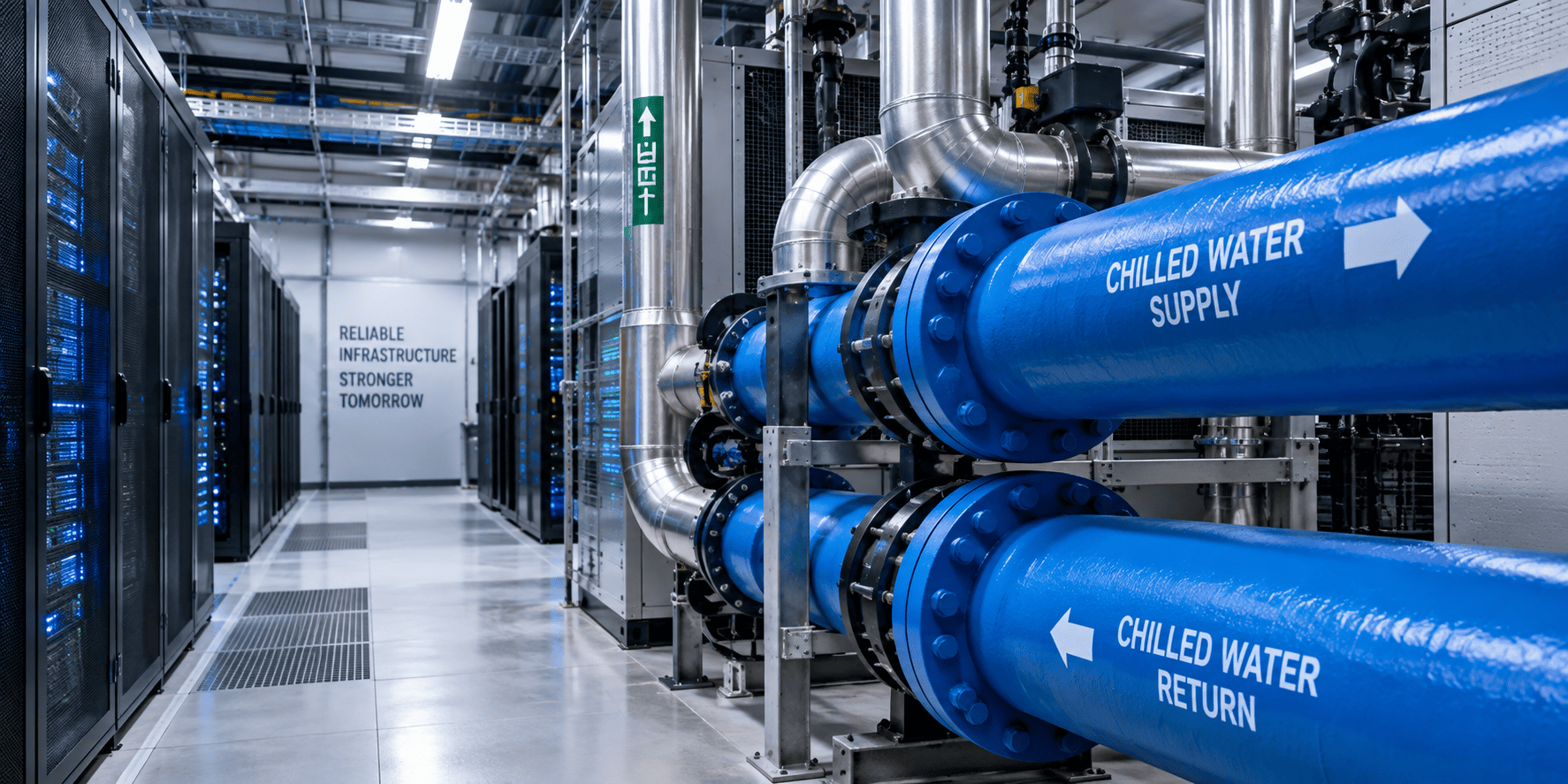
Data centers depend on more than servers and cooling equipment. Behind reliable cooling is a piping network that moves chilled water, glycol, or other fluids between IT spaces and heat-rejection equipment.
As rack densities rise and liquid cooling becomes more common, leaks, debris, corrosion, restricted flow, or poor commissioning can create avoidable downtime.
What Is Data Center Piping?
Data center piping includes the pipes, valves, fittings, pumps, manifolds, and related components that move cooling fluids throughout a facility. These systems may connect chillers, cooling towers, heat exchangers, coolant distribution units, and rack-level cooling equipment.
Some facilities rely on chilled water loops. Others use separate facility-side and technology-side loops to support direct-to-chip or other high-density cooling systems.
Why Data Center Piping Matters For Cooling And Uptime
Cooling equipment can only perform properly if the piping delivers stable flow, predictable pressure, and reliable heat transfer.
Restricted flow, leaks, corrosion, or debris can reduce cooling capacity, force part of a loop offline, or clog strainers and heat exchangers. In a mission-critical facility, these problems can affect redundancy and uptime.
How Data Center Cooling Piping Works
Most cooling systems use piping loops to move heat from IT equipment to a point where it can be rejected from the facility. The exact configuration depends on the cooling design.
Chilled Water And Condenser Water Piping
Chilled water systems circulate cooled water to air handling equipment or heat exchangers, then return warmer water to the cooling plant. Condenser water piping moves heat from chillers to cooling towers or other heat-rejection equipment.
Clean, unrestricted piping helps maintain the flow and heat-transfer performance required by both systems.
Facility Water And Technology Cooling Loops
Liquid-cooled data centers may use separate facility and technology cooling loops. Coolant distribution units help manage flow, pressure, temperature, and heat transfer between the two sides.
This becomes especially important as fluid moves closer to processors and high-density racks, where smaller passages require tighter control over cleanliness and fluid condition.
How AI And High-Density Computing Are Changing Piping
AI and high-performance computing are increasing rack-level heat loads and accelerating the use of direct-to-chip cooling, rear-door heat exchangers, and other liquid cooling systems.
These technologies increase demands on piping design, leak control, filtration, and monitoring. As coolant moves closer to IT equipment, controlling particles and corrosion products becomes increasingly important.
What Materials Are Used For Data Center Piping?
Material selection depends on coolant chemistry, pressure, temperature, pipe diameter, corrosion risk, cleanliness requirements, and project specifications.
Common systems may use carbon steel, stainless steel, copper, or approved thermoplastic materials. No single material is right for every project, so compatibility with the fluid, equipment, fittings, and long-term maintenance plan should guide the decision.
Common Data Center Piping Risks
Data center piping can experience many of the same problems found in industrial fluid systems, but the consequences may be greater because cooling reliability is tied directly to IT operations.
Common risks include:
Leaks at joints, valves, fittings, or equipment connections
Corrosion, pitting, scale, rust, or biological buildup
Construction debris left after installation
Blocked strainers, filters, or heat exchangers
Poor flow balance or unexpected pressure loss
Incompatible materials or unsuitable fluid chemistry
Cleaning, testing, and maintenance help reduce the chance that these issues remain hidden until they affect performance.
Why Clean Piping Matters Before Startup
New piping is not automatically clean. Fabrication and installation can leave behind mill scale, weld slag, oils, rust, dust, metal shavings, and other construction debris.
If those contaminants remain, they can reach pumps, valves, heat exchangers, strainers, and coolant distribution equipment, reducing flow or damaging components.
Professional pipeline cleaning services help remove unwanted material before a system enters normal operation. The cleaning method should match the pipe material, configuration, fluid, and required cleanliness level.
Flushing, Cleaning, And Filtration Serve Different Purposes
Flushing, cleaning, and filtration are related, but they are not interchangeable. Flushing uses fluid velocity to move loose debris, while specialized cleaning may be needed where residue or deposits are harder to remove.
Filtration helps capture remaining particles as the system circulates. APS pre-commissioning services can support cleaning, filling, testing, filtration, and other preparation steps before critical piping is placed into service.
Pressure Testing Before Commissioning
Before cooling piping goes into service, the system should be checked for leakage and pressure integrity according to project specifications and engineering requirements.
Hydrostatic testing uses liquid to pressurize the line and verify that it can hold the required pressure. Other projects may use controlled gas or nitrogen testing when the design, materials, and safety plan support that approach.
The correct method depends on pipe material, equipment limitations, test boundaries, and project standards.
From Installation To Reliable Operation
A reliable cooling loop depends on a controlled transition from installation to operation. The system should be clean, tight, filled correctly, and capable of maintaining required flow and pressure.
A typical sequence includes system review, debris removal, cleaning or flushing, filtration, pressure testing, filling, flow balancing, leak detection verification, controls checks, and functional commissioning.
Maintaining Data Center Piping After Startup
Cooling piping still needs attention after commissioning because fluid chemistry, pressure, temperature, and operating conditions can change.
Maintenance may include checking filters and strainers, monitoring pressure and flow, reviewing fluid chemistry, inspecting valves and joints, and watching for corrosion or leakage.
A broader pipeline maintenance strategy shows how cleaning, inspection, testing, and condition monitoring work together over time. Regular pipe cleaning can also help protect flow and operating efficiency where buildup becomes a concern.
How American Pipeline Solutions Supports Critical Piping Systems
Reliable data center cooling depends on piping that is clean, tested, leak-tight, and properly prepared for service. American Pipeline Solutions supports critical industrial and utility piping projects with specialized cleaning, testing, inspection, and pre-commissioning capabilities.
APS works with complex systems where safe execution, cleanliness, and reliable startup are essential. Where internal condition is uncertain, pipeline inspection services can provide additional information about integrity, geometry, corrosion, or other concerns.
For operators, contractors, and project teams responsible for mission-critical cooling infrastructure, the goal is not simply to complete the piping installation. It is to put the system into service with confidence that it can support reliable operation.
Frequently Asked Questions About Data Center Piping
What Is Data Center Piping?
Data center piping is the network of pipes, valves, pumps, fittings, manifolds, and related equipment used to move chilled water, condenser water, glycol, or other cooling fluids through a facility.
Why Is Piping Important To Data Center Uptime?
Piping carries the fluids that remove heat from IT environments. Leaks, restrictions, pressure loss, contamination, or poor flow can reduce cooling capacity and increase the risk of service interruptions.
Why Should Data Center Cooling Piping Be Cleaned Before Startup?
New piping can contain weld debris, scale, oils, rust, dust, and other installation contaminants. Cleaning and flushing help prevent that material from reaching pumps, heat exchangers, valves, strainers, and liquid cooling equipment.
What Is A CDU In A Data Center?
A coolant distribution unit manages heat transfer between facility-side and technology-side cooling loops. It helps control flow, pressure, and temperature while keeping the two fluid circuits properly managed.
How Is Data Center Piping Pressure Tested?
Pressure testing may use water or another approved test medium to verify system integrity before startup. The method should follow engineering requirements, equipment limitations, safety procedures, and project specifications.
How Often Should Data Center Cooling Piping Be Inspected?
There is no universal interval. Inspection frequency depends on pipe material, fluid chemistry, operating conditions, maintenance history, monitoring data, equipment requirements, and facility standards.


