
MFL Pipeline Inspection: What It Detects, What It Misses, And How To Prepare
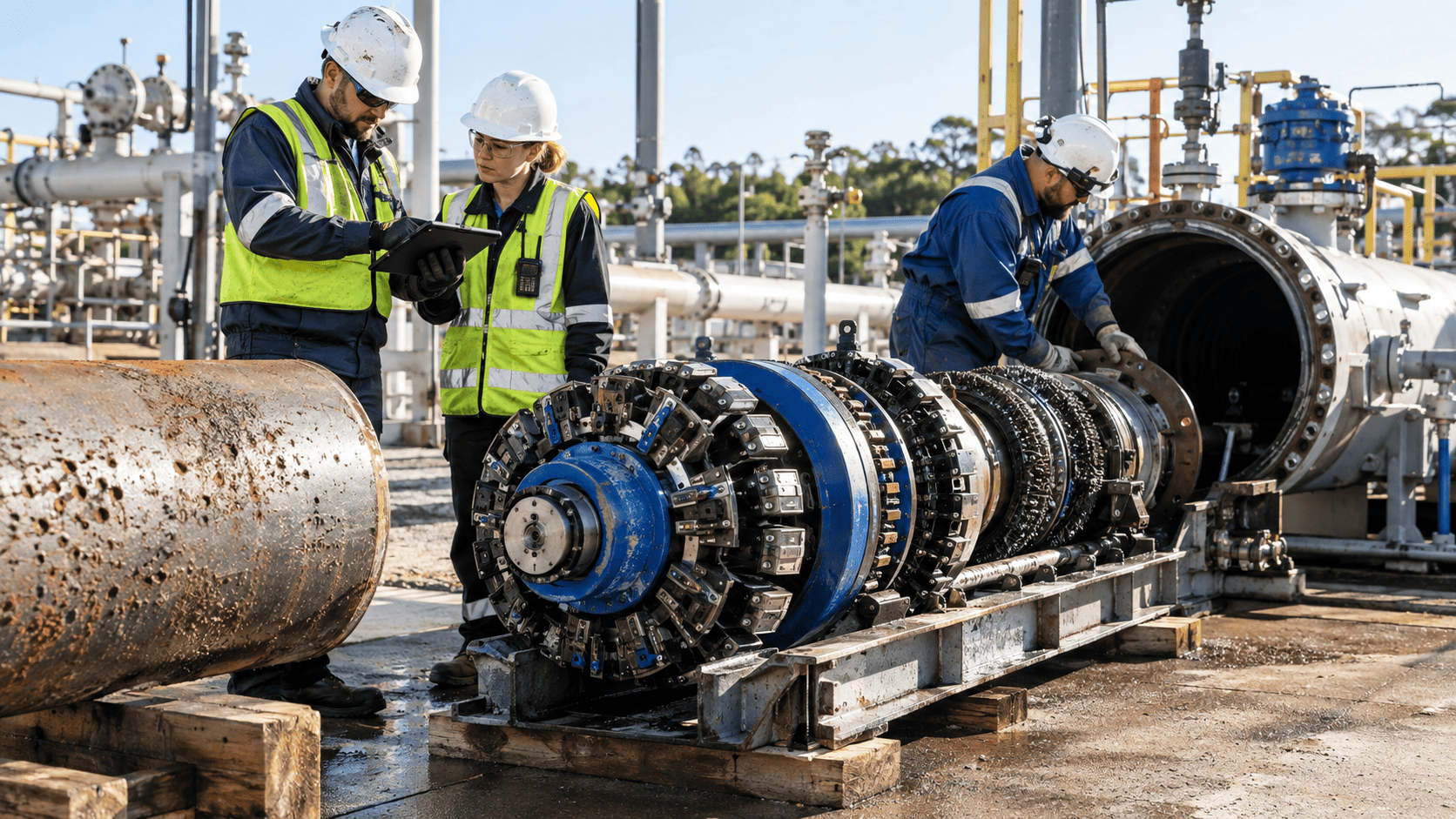
Magnetic Flux Leakage, commonly called MFL, is one of the most widely used in-line inspection technologies for evaluating corrosion and metal loss in ferromagnetic pipelines. It allows operators to examine pipe wall condition without removing the pipeline from service for direct visual inspection.
MFL is particularly valuable for identifying areas where steel has been lost through corrosion, pitting, erosion, or other forms of deterioration. However, it is not designed to identify every possible pipeline defect equally well.
Understanding what MFL can detect, where its limitations lie, and how to properly prepare the pipeline can make a significant difference in the quality and usefulness of an inspection.
What Is MFL Pipeline Inspection?
MFL pipeline inspection is a non-destructive testing method that uses magnetic fields to evaluate the condition of steel pipe walls. In pipeline applications, the technology is commonly incorporated into an in-line inspection tool, often referred to as a smart pig.
As the tool travels through the pipeline, magnets create a strong magnetic field within the steel. Areas where the pipe wall remains intact allow that magnetic field to travel through the material relatively consistently.
Where corrosion or another defect has reduced the amount of steel, part of the magnetic field leaks away from the pipe wall. Sensors on the inspection tool measure these changes and record their location and characteristics.
MFL is therefore especially useful when the inspection goal is understanding where metal has been lost and how that loss may affect pipeline integrity.
APS also uses multiple technologies as part of broader pipeline inspection and condition analysis projects, allowing the inspection method to be matched to the pipeline material, condition, and expected integrity threat.
What Does MFL Pipeline Inspection Detect?
MFL is primarily a metal loss inspection technology. Its greatest value comes from identifying areas where the steel wall has become thinner or has been physically reduced.
Common conditions that MFL can help identify include:
General corrosion and wall thinning
Localized pitting
Internal corrosion
External corrosion
Erosion related metal loss
Certain gouges and metal loss around weld areas
Areas of unusual wall loss that require further evaluation
Modern inspection systems may also provide information that helps distinguish whether an anomaly is located toward the internal or external surface of the pipe.
That distinction matters because internal and external corrosion can result from very different operating conditions. Internal corrosion may be associated with moisture, contaminants, or the transported product, while external corrosion may involve coating condition, environmental exposure, or cathodic protection performance.
MFL does not directly identify the cause of corrosion. It gives integrity teams information about where metal loss is present so those findings can be evaluated alongside operating history and other pipeline data.
For operators specifically investigating deteriorating steel infrastructure, a broader corrosion pipeline inspection strategy may combine MFL findings with other inspection and condition assessment methods.
What Can MFL Inspection Miss?
MFL is highly useful for corrosion related threats, but it should not be treated as a universal pipeline defect detector.
The effectiveness of any MFL inspection depends on the tool configuration, magnetization direction, sensor resolution, defect shape, operating conditions, and the type of anomaly being investigated.
Narrow And Crack Like Defects
Conventional corrosion focused MFL tools are generally optimized for volumetric metal loss. Very narrow cracks may produce a much different magnetic response than corrosion pits or areas of broad wall thinning.
Stress corrosion cracking, fatigue cracking, seam related cracking, and other narrow defects may therefore require specialized inspection technologies or tool configurations.
Some MFL systems are designed to improve sensitivity to specific crack orientations, but operators should not assume that every MFL tool provides the same crack detection capability.
Dents And Pipeline Geometry Changes
A dent changes the shape of the pipeline but does not necessarily remove steel. Because MFL is focused primarily on changes in metal volume, geometry problems are usually evaluated more effectively with caliper or geometry inspection systems.
These technologies can identify conditions such as dents, ovality changes, restrictions, wrinkles, and other deformation.
In many integrity programs, MFL and geometry data are used together because metal loss and deformation can sometimes occur in the same location.
Non Ferromagnetic Pipelines
MFL depends on magnetizing the pipe wall, which means conventional MFL inspection is intended for ferromagnetic materials such as carbon steel.
PVC, HDPE, and other non ferrous pipelines require different inspection methods. APS can use technologies such as caliper sensors and other condition assessment methods when inspecting systems where MFL is not suitable.
Why Defect Orientation Matters In MFL Inspection
Not all metal loss features are shaped or oriented the same way. This is one reason the specific MFL technology selected for an inspection matters.
Axial MFL
Axial MFL systems magnetize the pipeline primarily along its length. These tools are widely used for corrosion and general metal loss inspection.
They can perform well for many common corrosion morphologies but may have reduced sensitivity to some long, narrow features that follow the same general orientation as the magnetic field.
Circumferential MFL
Circumferential MFL changes the direction of magnetization around the pipe.
This orientation can improve detection of certain axially aligned features that may be more difficult for conventional axial MFL configurations to characterize.
The important point for pipeline operators is that choosing an inspection method should begin with the expected integrity threat. The tool should be selected for the defect type rather than assuming one inspection technology can identify every condition equally well.
MFL Vs Ultrasonic Pipeline Inspection
MFL and ultrasonic testing are both used for pipeline integrity assessment, but they operate differently.
MFL evaluates how magnetic fields change around areas of reduced steel. Ultrasonic inspection uses sound waves to measure material characteristics and, depending on the technology, can provide direct wall thickness measurements or specialized crack detection.
MFL is commonly used for metal loss inspection because it can operate effectively in many pipeline environments without requiring the same liquid coupling conditions associated with conventional ultrasonic tools.
Ultrasonic technologies may be preferable when the inspection requires detailed wall thickness information or when certain crack like threats are the main concern.
Neither technology is automatically the right choice for every pipeline. Inspection objectives, pipeline product, material, operating conditions, and suspected failure mechanisms should determine the method.
Why Pipeline Preparation Matters Before An MFL Run
Even a highly capable inspection tool cannot provide its best data if the pipeline is poorly prepared.
Deposits inside the line can affect sensor proximity, interfere with smooth tool movement, and create unnecessary risk during the inspection run. Black powder, scale, wax, paraffin, sand, sludge, rust, and other debris may all need to be addressed beforehand.
A controlled pipeline cleaning program can help remove deposits progressively rather than sending a sensitive inspection tool into an unknown internal environment.
Cleaning requirements vary significantly from one system to another, so preparation should be based on actual pipeline condition rather than a standard number of cleaning runs.
How To Prepare A Pipeline For MFL Inspection
Successful preparation normally involves more than simply running one cleaning pig through the line.
Review The Pipeline Configuration
Before selecting an MFL tool, operators should understand the physical characteristics of the pipeline. Important factors include diameter, wall thickness, bends, valves, tees, diameter changes, launcher and receiver arrangements, and previous pigging history.
Operating pressure, flow rate, transported product, and expected tool speed should also be considered during planning.
Clean The Line Progressively
Cleaning should remove enough material to allow the inspection tool to travel reliably while maintaining proper contact or proximity between its sensors and the pipe wall.
Different cleaning pigs may be required as debris conditions change. A pipeline with substantial deposits may require several progressively more aggressive runs rather than a single cleaning pass.
Confirm Piggability And Internal Clearance
A gauge pig can help determine whether internal restrictions, deformation, or unexpected geometry could interfere with the inspection tool.
APS has previously outlined why pipeline gauging is an important step before more sophisticated pigging operations.
Passing a gauge pig does not automatically prove that a line is completely inspection ready. It confirms important geometry and clearance information, while cleanliness and operating conditions must still be evaluated separately.
Plan Tracking And Tool Movement
Knowing where an inspection tool is throughout the run improves operational control and helps crews respond if its movement changes unexpectedly.
Professional pig tracking can confirm tool passage at key locations and support more reliable inspection execution.
What Happens After The MFL Inspection?
Completing the physical tool run is only one part of the inspection process.
After retrieval, the collected information is reviewed to confirm data quality. Analysts then evaluate recorded signals to identify and classify potential metal loss features.
Depending on the inspection system, the resulting assessment may include anomaly location, estimated dimensions, depth, orientation, and internal or external classification.
Those findings can then support decisions about direct examination, repair priorities, rehabilitation, additional testing, or future monitoring.
This is why MFL should be viewed as part of a pipeline integrity process rather than simply a tool run. The goal is to convert inspection data into practical maintenance decisions.
How American Pipeline Solutions Supports MFL Inspection Projects
American Pipeline Solutions supports operators throughout the pipeline inspection process, from initial preparation through condition assessment.
APS works with pipeline owners to evaluate line configuration, cleaning requirements, piggability, inspection objectives, and operating conditions before an advanced inspection tool is introduced.
Depending on the project, that support may include pipeline cleaning, gauging, pig tracking, smart pigging, mapping, pressure testing, and condition analysis.
APS also provides smart pigging services that combine appropriate inspection technologies with field experience and careful project planning.
The objective is not simply to complete an MFL run. It is to create an inspection strategy that produces useful data while reducing avoidable operational risk.
Frequently Asked Questions About MFL Pipeline Inspection
Can MFL Detect Internal And External Corrosion?
MFL systems can identify metal loss associated with both internal and external corrosion. Many modern systems can also help distinguish whether the anomaly is located closer to the inside or outside surface of the pipeline.
Can MFL Detect Cracks?
Some specialized MFL configurations can identify certain crack like or weld related features, but conventional corrosion focused MFL should not be treated as a universal crack detection technology. Specialized ultrasonic, EMAT, or other inspection methods may be more appropriate when cracking is the primary concern.
Can MFL Detect Stress Corrosion Cracking?
Conventional MFL may have limitations when detecting narrow, tightly closed stress corrosion cracks. Tool selection should be based on the expected threat, and another inspection technology may be required when SCC is a primary integrity concern.
Can MFL Detect Dents?
MFL may identify metal loss associated with a dent, but geometry tools such as caliper inspection are generally better suited for measuring dents, ovality, wrinkles, and changes in pipeline shape.
How Accurate Is MFL Pipeline Inspection?
There is no single accuracy percentage that applies to every MFL inspection. Performance depends on the inspection tool, sensor resolution, pipe wall thickness, anomaly type, defect orientation, cleanliness, tool speed, magnetization, and data interpretation.
Why Does A Pipeline Need Cleaning Before MFL Inspection?
Debris can increase the distance between sensors and the pipe wall, interfere with tool movement, and reduce data quality. Proper cleaning helps create conditions that allow the inspection system to perform as intended.
Is MFL The Same As Smart Pigging?
MFL is one inspection technology that can be installed on a smart or intelligent pig. Smart pigging is the broader category and may include MFL, ultrasonic, caliper, IMU, acoustic, or other sensing technologies depending on the inspection objective.
Can MFL Be Used On Plastic Pipelines?
Conventional MFL inspection cannot evaluate plastic pipe walls because plastics are not ferromagnetic. Other technologies such as caliper, acoustic, or specialized inspection methods may be used depending on the material and condition being evaluated.


