

What is Pipeline Pigging and Why It's Important
Pipelines transport various materials including oil, gas, water, and chemicals over long distances. Over time, pipelines accumulate deposits of sediment, scale, and other contaminants. The buildup of these deposits reduces a pipeline’s efficiency and increases its risk of corrosion and failure.
Pipelines transport various materials including oil, gas, water, and chemicals over long distances. Over time, pipelines accumulate deposits of sediment, scale, and other contaminants. The buildup of these deposits reduces a pipeline’s efficiency and increases its risk of corrosion and failure.
The term, “pipeline pigging,” derives directly from the pig-shaped devices designed to move through the pipeline as they clean and inspect the interior walls. “Pigs” are inserted into a pipeline through existing openings. They are propelled by the flow of the material carried by the pipeline or, in some cases, by an external energy source.

Pigs
Can be made of various materials and different designs, all based on the task they are performing.
The history of this technology dates to the early 20th century when pigs were first used to clean sections of natural gas pipelines in the United States. Through the years, smart pigging has advanced to include various types of pigs for an assortment of specific purposes. In recent years tracking and data collection systems used to monitor pipeline conditions have exponentially improved.
The following information offers an explanation of pipeline pigging and its relevance to efficient pipeline maintenance.
What Is Pigging?
Pigging is a maintenance technique where a projectile-like device called a pig is inserted into a pipeline to perform tasks such as cleaning, separating products, or inspecting the pipe's internal condition. The pig is typically made of foam, rubber, or urethane and may contain brushes, discs, or advanced sensors.
Originally developed for cleaning oil and gas pipelines, pigging has evolved into an advanced technology used across various industries, including food and beverage, pharmaceuticals, chemicals, and personal care. Pigging is also referred to as line pigging, pipeline pigging, or product recovery pigging, depending on the industry and purpose.
What is Pipeline Pigging?
The process of pipeline pigging involves inserting a “pig” into a pipeline for cleaning and inspection. The “pig” is a cylindrical or spherical-shaped tool made from a variety of materials such as rubber, polyurethane, steel, or even ice!
Several types of pigs are used in this process.
Cleaning pigs are designed to remove debris, scale, and other deposits that can accumulate in a pipeline. They typically are equipped with brushes or other scraping devices to clean the interior of the pipeline as they move.
Inspection pigs do exactly what the name implies. They inspect the pipeline interior for defects such as cracks, corrosion, or other damage. Sensors within the pig collect data and images used to assess the condition of the pipeline.
Batching pigs separate different types of materials in a pipeline. For example, in a pipeline carrying oil, batching pigs can be used to separate the grades thus preventing contamination.
Gauging pigs measure the diameter and thickness of a pipeline. They often contain magnetic or ultrasonic sensors that detect changes in wall thickness. Such changes can indicate areas of corrosion or damage.
Regardless of type, pigs are propelled through the pipeline either by the flow of the material being carried or by an external energy source such as compressed air or water. As they move through the pipeline, the pigs clean or inspect the interior while collecting and transmitting data to monitoring systems for analysis.
Pipeline Experts: Inspection, Cleaning, Coating & More
Certified solutions for inspection, pre-commissioning, cleaning, internal coating, ice pigging™, mapping, and turnkey pipeline projects—maximizing safety and reliability at every stage.
How Does Pipeline Pigging Work?
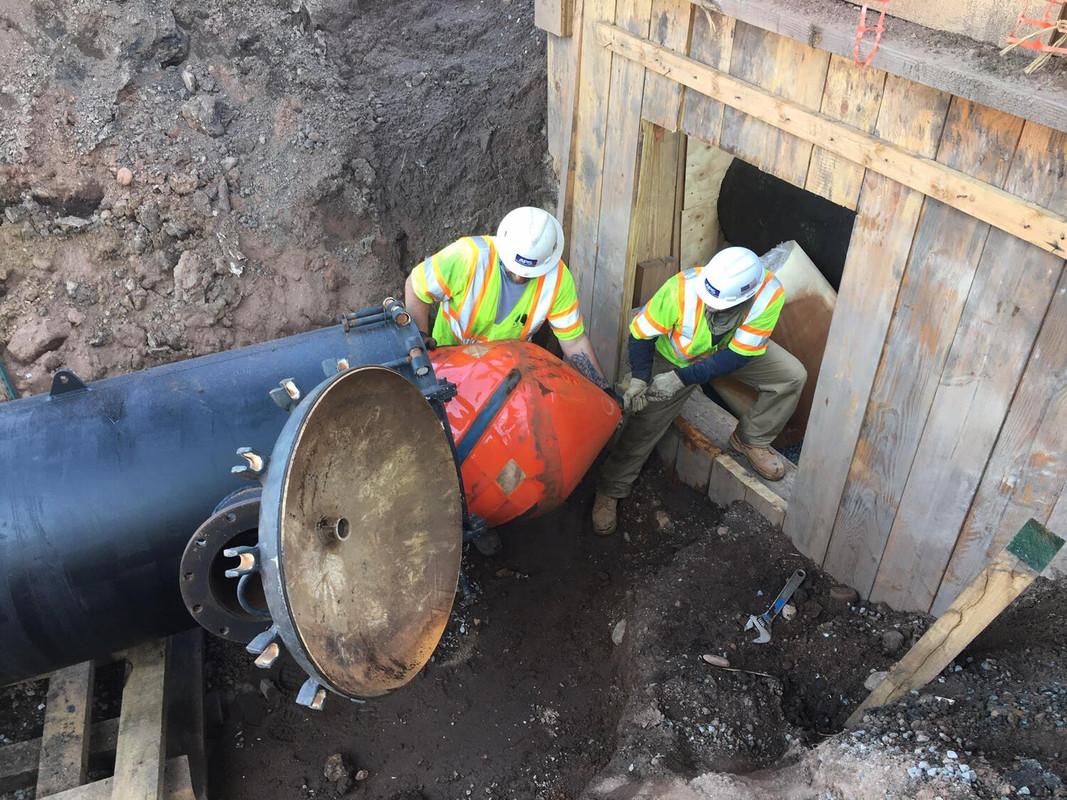
The pig is launched into the pipeline through a pig launcher and is pushed along the line by the pressure of the fluid, compressed air, nitrogen, or even the next batch of product. As the pig travels through the line, it performs its designated function—whether it’s cleaning, gauging, or inspecting the pipe. Once it reaches the end of the line, it is collected in a pig receiver.
To ensure full coverage and effectiveness, pigs are often tracked using transmitters (TX) and receivers (RX), geophones, or other sensor-based devices. These tracking systems confirm that the pig has passed through key pipeline segments and help detect if it becomes stuck or encounters resistance.
Why is Pipeline Pigging Important for Efficient Pipeline Maintenance?
Pigging contributes to the cost-efficiency and overall effectiveness of pipeline maintenance. By removing sediment, debris, and other contaminants from the interior of the pipeline, this process improves the flow of material and reduces the risk of costly blockages. Pigging also helps extend pipeline life by preventing corrosion and other damage.
Without regular maintenance, pipelines can become clogged or damaged, leading to costly shutdowns and repairs. Using pipeline pigging, operators can identify and address issues before major problems occur. This substantially reduces the need for unplanned downtime and expensive repairs.
Damaged pipelines can cause leaks or spills leading to environmental contamination. Pigging reduces these hazards by helping keep pipelines clean and in good working order.
Pipeline pigging is essential to effective pipeline maintenance. By using pigs to clean and inspect pipelines, operators can reduce the risk of downtime, extend the life of pipelines, and prevent environmental damage.
Types of Pipeline Pigs
As a pigging service provider, we utilize a range of specialized pigs—each selected for your pipeline’s specific needs. Our team determines the right type of pig for each project, whether the goal is cleaning, inspection, or product recovery. Common pig types we deploy include:
1. Cleaning Pigs
These pigs are designed to remove dirt, wax, scale, and biofilm. They may include brushes, discs, or blades to scrape and push debris forward.
2. Inspection Pigs (Smart Pigs)
These high-tech pigs are equipped with sensors to detect corrosion, cracks, dents, or changes in pipe wall thickness. They use technologies such as Magnetic Flux Leakage (MFL) or Ultrasonic Testing (UT).
3. Batching Pigs
Used to separate different products in a pipeline (e.g., between two grades of oil or chemicals) to prevent contamination.
4. Gauging Pigs
Often used before the first run of a smart pig, gauges pigs check for pipe bore obstructions and deformation.
5. Product Recovery Pigs
Common in food and sanitary industries, these pigs reclaim residual product left in the pipe, helping companies improve yield and reduce waste.
Why Is Pigging Important?
Regular pigging helps:
Maintain Optimal Flow Rates: By clearing debris and buildup.
Prevent Corrosion: By removing moisture and contaminants.
Detect Early Defects: Reducing the risk of costly failures.
Extend Pipeline Lifespan: By supporting preventive maintenance.
Enhance Environmental Safety: By reducing leaks and product waste.
Pigging is essential not just for oil and gas pipelines but also for hygienic and sanitary applications. For example, food-grade systems use pigs to recover product left in the line and reduce water and cleaning agent usage.
Components of a Pigging System
Every pipeline presents unique challenges. When you engage our pigging services, we bring and operate all required equipment—pig launchers, receivers, pigs tailored for your line, and advanced tracking systems. Our technicians handle setup, operation, and data analysis, ensuring you don’t have to worry about system components or technology.
Pigging systems can be fully automated or manual, depending on pipeline size, frequency, and industry application.
The Pipeline Pigging Process
The pigging process involves several steps to ensure proper cleaning and inspection of the pipeline.
First, the pipeline must be prepared for pigging. To prevent damage to the pig and promote its movement, the pipeline must be isolated with all appropriate valves shut or opened accordingly. Next, the pig is inserted into the pipeline using a launching station. Once installed, the pig is propelled forward by the flow of material in the pipeline or by an external energy source. During this process the pig cleans or inspects the interior of the pipeline. Special sensors and monitoring equipment track the pig’s movement. A receiving station, located at the end of the pipeline, collects the pig and any debris removed from the pipeline.
After the pig has been removed, the pipeline must be inspected to ensure it has been properly cleaned or inspected. This is accomplished by visual inspection, ultrasonic testing, or other techniques. If any issues are detected during this post-pigging inspection, further maintenance or repairs may be required before the pipeline can be put back into service.
The pigging process is designed to properly clean or inspect pipelines in order to reduce the risk of downtime, prevent leaks and spills, and extend the life of the pipeline. By following a rigorous
pigging process, pipeline operators can ensure their pipelines are operating at peak efficiency and meeting regulatory requirements.
The pigging process involves the following steps:
Step 1: Preparation
The pipeline is isolated and set up for pigging. Valves are adjusted, and launch/receive equipment is secured.
Step 2: Launching the Pig
A pig is inserted into the launcher and pushed through the pipe using fluid pressure, compressed air, or gas.
Step 3: Cleaning or Inspecting
The pig performs its task as it travels, scraping residue, separating products, or scanning pipe walls.
Step 4: Monitoring the Pig
Its location is tracked to ensure it completes the run. If it encounters issues, tracking equipment helps pinpoint its position.
Step 5: Receiving the Pig
It exists at the receiving station where the debris or data it is collected.
Step 6: Post-Run Analysis
The pipeline is inspected visually or digitally to assess cleaning effectiveness or evaluate inspection data.
This method allows pipelines to remain operational (in some cases) or be quickly returned to service after cleaning or inspection.
Industries That Use Pipeline Pigging
Pigging is not limited to oil and gas. It’s used in diverse industries:
Oil & Gas: For pipeline integrity, separation, and flow assurance.
Food and Beverage: Chocolate, dairy, sauces, beer, and juices
Personal Care: Shampoo, toothpaste, cosmetics
Household Products: Detergents, cleaning liquids
Chemical Manufacturing: Paints, resins, coatings
Pharmaceuticals: Liquid medications and sterile compounds
These industries rely on pigging to reclaim valuable products, prevent contamination, and minimize downtime between batch changes.
We serve a broad range of industries with our pigging services, customizing solutions for oil & gas, food and beverage, chemical manufacturing, pharmaceuticals, and more.
Challenges and Limitations of Pipeline Pigging
While pipeline pigging is an effective maintenance method, several challenges and limitations are associated with the process.
Pipeline design can impact the effectiveness of pigging. For example, pipelines with sharp bends or changes in diameter may require special pigs to navigate these obstacles. A limited array of pigs may be available for use in smaller-diameter pipelines. When planning to use the pigging process, operators must carefully consider the design of their pipelines. Pipelines not well suited for pigging may require modifications or the use of special equipment.
Operators must also consider the frequency of pigging. If done too infrequently, debris and contaminants can build up inside the pipeline, making cleaning more difficult. Conversely, if pigging is performed too frequently, the pipeline may be at risk for unnecessary wear and tear thereby increasing the risk of damage. To best address these challenges, operators should develop a pigging schedule adapted to the specific needs of their pipeline. The material being transported, the age of the pipeline, and the environmental conditions under which the pipeline operates, must all be considered when creating this schedule.
Challenges and limitations of pipeline pigging can be addressed through careful planning, design, and equipment selection. By working closely with experienced pigging professionals and following best practices, pipeline operators can ensure their operations are effective, efficient, and safe.
Pipeline Experts: Inspection, Cleaning, Coating & More
Certified solutions for inspection, pre-commissioning, cleaning, internal coating, ice pigging™, mapping, and turnkey pipeline projects—maximizing safety and reliability at every stage.
Conclusion
Pipeline pigging is crucial to maintaining efficient and safe pipeline operations. Regular pigging removes debris and contaminants, prevents corrosion, and detects potential issues before they become major problems. These actions help reduce the need for costly shutdowns and repairs, increase the lifespan of the pipeline, and minimize negative environmental impact.
To implement a successful pigging program, pipeline operators should work closely with experienced professionals who can provide guidance on pig selection, pigging frequency, and other best practices. Well developed pigging programs help operators ensure their pipelines are working at peak performance and are complying with regulatory requirements.
FAQs: Pipeline Pigging
What is pipeline pigging in simple terms?
Pipeline pigging is the process of sending a device called a “pig” through a pipeline to clean, separate products, or inspect the internal condition of the pipe. The pig is pushed by product flow or a driving medium (like gas, air, or water) and performs its job as it travels, then is collected at the end of the line.
What are the main types of pipeline pigs?
Common pigs include cleaning pigs, inspection pigs (smart pigs), batching pigs, gauging pigs, and product recovery pigs. Cleaning pigs scrape and push debris, smart pigs measure wall condition, batching pigs separate products, gauging pigs check for deformation or bore issues, and product recovery pigs reclaim residual product in sanitary or high-value systems.
How does a pig actually move through a pipeline?
A pig is inserted into a launcher, then driven through the pipeline by pressure from the product in the line or from a separate source such as compressed air, nitrogen, or water. As it travels, it maintains contact with the pipe wall via cups, discs, or foam, which also help it push debris forward or carry sensors for inspection.
Why is pipeline pigging important for maintenance and integrity?
Pigging removes debris, scale, and contaminants that restrict flow and contribute to corrosion. It also lets operators inspect wall condition and detect defects early. Together, that means fewer unplanned shutdowns, fewer leaks or spills, extended pipeline life, and better compliance with internal standards and regulatory requirements.
Can pigging be done while the pipeline is still in service?
In some cases, pigging can be performed while the line is operating, especially for cleaning or batching. In other situations—such as certain inspections, hydrotests, or when valves and connections must be adjusted—sections of the system may need to be isolated. The approach depends on pipeline design, operating conditions, and safety requirements.
How often should a pipeline be pigged?
There’s no single schedule that fits every system. Pigging frequency depends on factors like product type, pipeline age, internal coating condition, operating pressure and temperature, and how much debris or buildup the system tends to generate. Many operators use a preventative schedule based on performance trends and inspection data instead of waiting for a problem.
Which industries use pipeline pigging besides oil and gas?
Beyond oil and gas, pigging is widely used in food and beverage, personal care, household products, chemicals, and pharmaceuticals. In these sectors, pigs help recover valuable product from the line, prevent cross-contamination between batches, reduce water and cleaning chemical use, and shorten changeover times.
What are some common challenges with pipeline pigging?
Challenges include complex pipeline geometry (tight bends, diameter changes, tees), older lines with limited pigging provisions, choosing the right pig for the job, and setting a smart pigging frequency. Poor planning can lead to stuck pigs, incomplete cleaning, or unnecessary wear. That’s why pigging design, tracking, and post-run analysis are so important.
Can pigging damage a pipeline or its internal coating?
If the wrong pig or operating conditions are used, there’s a risk of damaging internal coatings or stressing pipeline components. Best practice is to match pig design and operating pressures to the pipe material, coating condition, and debris profile. Experienced pigging teams will adjust tools and procedures to protect the asset while achieving the cleaning or inspection goal.
Why partner with a specialist like American Pipeline Solutions for pigging?
Effective pigging requires more than just the right tool. APS designs the full program—pig selection, launch and receive procedures, tracking, safety controls, and post-run analysis. Our team brings the required equipment, certifications, and documentation to support inspection, maintenance, and regulatory needs, so your pipelines stay clean, reliable, and ready for service.
At American Pipeline Solutions, we provide end-to-end pigging services—from cleaning and inspection to internal coating, 3D mapping, and turnkey project execution.
Looking to reduce downtime, boost throughput, or improve pipeline integrity?
Contact us today to discuss how a custom pigging solution can support your operations.

Ice Pigging™ vs Water Flushing (A Comparison)
Information provided in this blog reviews the difference between Ice Pigging™ and water flushing.
All drinking water pipes, in all water distribution pipes around the world will, over time, require cleaning due to the potential build-up of sediment, biofilm, iron, manganese, and trihalomethanes (THMs). Although many forms of sediment may not initially cause any harm to the quality of the water or the end user (the general public), added to the fact that disinfection treatment can help to kill off any bad bacteria, nevertheless over time, biofilms are likely to grow exponentially, forming a slimy substance within the pipe. In turn, THMs (which are a byproduct of the use of chlorine in potable water systems) may become an issue. Depending on the source of the water supply, manganese or iron may be very prevalent in the water, causing discolored water issues and complaints.
Pipeline Experts: Inspection, Cleaning, Coating & More
Certified solutions for inspection, pre-commissioning, cleaning, internal coating, ice pigging™, mapping, and turnkey pipeline projects—maximizing safety and reliability at every stage.
For most water companies and municipalities, the preferred solution to resolve these issues, is water flushing.
Water flushing is a term used in the water sector whereby a water operator or technician will go from hydrant to hydrant, systematically opening the valves one at a time, allowing the water to discharge, usually to waste down a nearby stormwater drain. The operator will do this for a certain amount of time, usually based on the flow rate, to allow a pre-determined amount of water to be discharged in the hope that the velocity of the rushing water will be high enough to pick up any loose sediment that has built up in the line.

This is where the problem lies because the simple fact is that water alone provides a relatively low shear on the inside of the pipe wall. In other words, the scouring power is very poor, and therefore, the water must be allowed to travel at high velocity to increase the shear on the pipe wall. Quite often, though, these velocities are not achievable due to several factors, including limited system pressures, tuberculation or scale build-up restricting the flow, or simply insufficient volumes.
A technique called Uni-Directional Flushing (UDF) is an enhanced means of water flushing, often thought to be more effective than “standard” flushing. These UDF programs are designed to maximize the potential velocities and, thereby, remove greater amounts of sediment from the mains. However, the fact remains that water provides low shear (or scouring power), and so even the best thought-out UDF plan is often insufficient to remove all the sediment from the system.
Even when the velocity in a main is at an acceptable level, there is then the (very serious) factor of water wastage. It is generally thought by water consultants around the world that at least 4-5 times the volume of the pipe being cleaned needs to be flushed out of the line before the water flushing is at all effective. To put that number into perspective, that represents almost 69,000 gallons of water in just one mile of 8-inch water main (about 10 blocks), or 108,000 gallons (enough to fill 5-6 average-sized in-ground swimming pools) in a mile of 10-inch water main. Many smaller communities or municipalities don’t even have the luxury of large storage reservoirs sufficient to provide the required amount of water, and in many states in the US, severe droughts have led to heavy restrictions on the waste of precious water. In any case, ask yourself, “why would you pay to collect, store, and treat water just to flush it away before it gets to the end customer?”.
This is where a (relatively) new, advanced pipe-cleaning technique called Ice Pigging™ comes to the fore.
Ice Pigging™ uses a slush ice (or ice slurry) injected into the main, where it then flows through the line using normal system flows and pressures and is discharged out at a pre-determined point. As it flows through the main, the ice crystals pick up the sediment by scouring the pipe walls, carrying it in the body of the ice and out of the line at the discharge point, where it can be safely disposed.
Simply by turning water into ice crystals, you can achieve up to 1,000 times more shear (scour power) on the inside of the pipe wall than flushing plain water. The ice even has the ability to do this at much slower velocities than water, so for those situations where the desired velocity is not achievable, Ice Pigging™ will obtain a far superior clean.
Although it is inevitable that some water may be wasted during an Ice Pigging™ operation, it will be up to 70% less wastage than a similar flushing project, and yet the cleaning efficacy will be so much superior.
Cost?
Although Ice Pigging™ may initially appear to be more costly, a recent study carried out in Australia found that while Ice Pigging™ is more expensive on a ‘$ per foot’ basis, when using the indicator of ‘$ per lb. of sediment removed’, Ice Pigging™ is approximately 6 times cheaper. The study also found that Ice Pigging™ removed up to 17 times more sediment from the mains compared to flushing while using half the amount of water.
It is hypothesized that the superior clean achieved by Ice Pigging™ will result in less discolored water complaints and therefore lead to cost savings in the reduction of unscheduled flushing programs and the frequency of mains cleaning of water supply zones (P. Dang et al., 2014).
Another finding from the study indicated that Ice Pigging™, a water supply zone improves the penetration of chlorine residuals.
(Note: Due to the success of this study, the water company involved commenced a full-scale program to Ice Pig approximately 250 miles of water mains each year for the following five years).
Pipeline Experts: Inspection, Cleaning, Coating & More
Certified solutions for inspection, pre-commissioning, cleaning, internal coating, ice pigging™, mapping, and turnkey pipeline projects—maximizing safety and reliability at every stage.
Benefits of Ice Pigging™ over Flushing
Lower velocities required
Smaller volumes required
Superior clean
Drought Friendly (Less waste)
Shorter downtimes
Cheaper when using the indicator of $ per lb. of sediment removed
Case Study
In 2022, a comparison test was carried out at an Ice Pigging™ project for a large Idaho city. This included certain ‘problem’ areas that were flushed by means of a UDF program followed the very next day by Ice Pigging™ with the aim of determining how much additional sediment was able to be removed. You can clearly see from the photos below of samples taken at the ice discharge hydrant, how much sediment was actually removed. Note the ‘clear’ sample in each picture is a sample of the discharge before the ice arrives (essentially flushing water), then how the samples darken with the amount of sediment suspended in the ice slurry, a clear indication of the superior cleaning effect of the Ice Pig.
FAQs: Ice Pigging™ vs. Water Flushing
What is Ice Pigging™ in drinking water mains?
Ice Pigging™ is an advanced pipe-cleaning technique that uses a thick slurry of ice injected into a water main. As the ice moves through the pipe under normal system pressure, the ice crystals scour the internal walls, pick up sediment and biofilm, and carry it out to a discharge point where the slurry and debris can be safely removed.
How does Ice Pigging™ differ from standard water flushing?
Standard flushing relies on high-velocity water alone to stir up loose material from hydrant to hydrant, but water has relatively low shear on the pipe wall and often can’t generate enough scouring power. Ice Pigging™ uses ice crystals to create far higher shear at much lower velocities, removing significantly more sediment and deposits than conventional flushing or even uni-directional flushing (UDF).
Why is water flushing often not enough to clean distribution pipes?
Flushing with water alone delivers limited scouring force on the pipe wall, even when operators try to push velocity higher. System pressure limits, build-up inside the main, and available water volumes all reduce effectiveness. As a result, biofilm, iron, manganese, and other deposits can remain in the system, continuing to cause discolored water complaints and quality concerns.
How much more effective is Ice Pigging™ than flushing?
Turning water into ice crystals dramatically increases shear at the pipe wall—up to 1,000 times higher than plain water. In comparative work, Ice Pigging™ removed substantially more sediment from mains than flushing alone, even when UDF had already been performed. In one study, Ice Pigging™ removed up to 17 times more sediment while using roughly half the water.
Does Ice Pigging™ reduce water wastage compared to flushing?
Yes. Traditional flushing typically requires four to five times the pipe volume to be discharged before results are acceptable, which can translate to tens of thousands of gallons per mile of main. Ice Pigging™ can cut that wasted volume by up to 70% while still delivering a far superior clean, making it more sustainable and better suited to drought-affected or supply-limited systems.
Is Ice Pigging™ more expensive than flushing?
On a simple “dollars per foot” comparison, Ice Pigging™ can appear more expensive than standard flushing. However, when you measure cost per pound of sediment actually removed, Ice Pigging™ becomes much more economical. A study cited in the article found Ice Pigging™ to be around six times cheaper on a cost-per-pound-of-sediment basis, because it removes far more material with less wasted water.
What types of deposits can Ice Pigging™ remove from water mains?
Ice Pigging™ is designed to remove a wide range of deposits that form in potable water systems over time, including sediment, biofilm, iron, manganese, and fat, oil, and grease (FOG). By scouring the pipe walls and suspending this material in the ice slurry, the process helps reduce discolored water complaints and improve overall water quality.
How does Ice Pigging™ impact chlorine residuals and water quality?
By stripping away biofilm and sediment, Ice Pigging™ improves internal pipe cleanliness, which can help chlorine residuals penetrate further into the network. Cleaner pipes and more stable residuals support better water quality, fewer complaints, and reduced need for unscheduled flushing in problem zones.
Is Ice Pigging™ suitable for systems with limited storage or drought conditions?
Yes. Because Ice Pigging™ uses much smaller water volumes than conventional flushing to achieve a better clean, it is well suited to smaller communities, utilities with constrained storage, and regions under drought-related restrictions. The technique reduces waste while still addressing discolored water and sediment issues in distribution mains.
Can Ice Pigging™ be used after a UDF program has already been run?
It can, and that’s often where the benefits are most visible. In the Idaho case study described, a problem area was flushed using UDF one day and Ice Pigged the next. Samples taken at the discharge hydrant clearly showed how much additional sediment the ice slurry removed, even after the system had already undergone a traditional flushing program.


Unlocking the Benefits of Smart Pigging - The Future of Pipeline Maintenance
Information provided in this blog provides an overview of smart pigging: its technology, applications, and advantages, as well as its limitations.
Introduction
A. Definition of Smart Pigging:
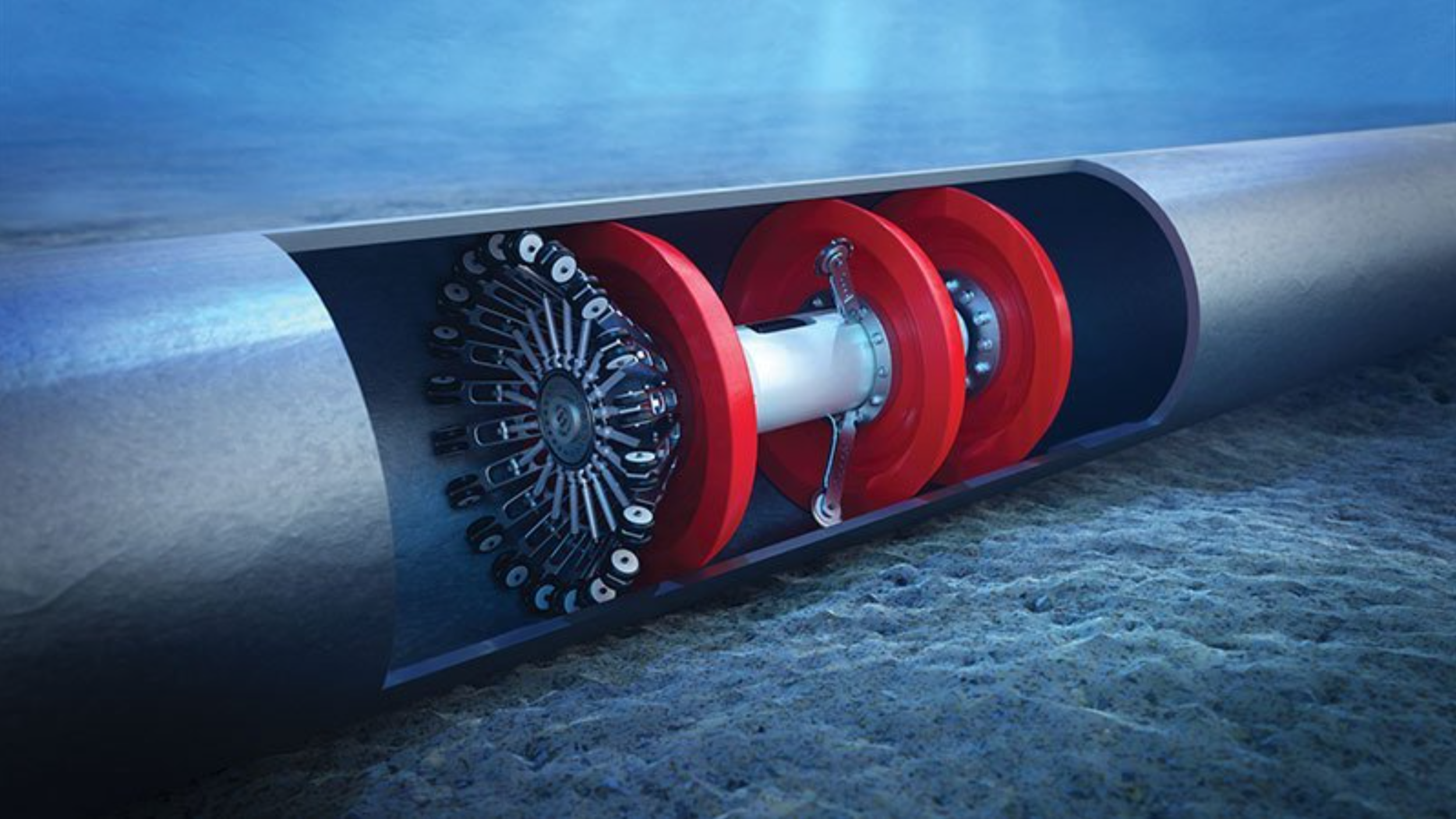
In-line inspection, commonly referred to as “smart pigging,” uses specialized tools known as “smart pigs” to inspect pipelines. The smart pigs move through the pipelines collecting data relevant to their interior condition. This non-invasive process helps ensure the reliability and safety of pipelines. The process also offers an innovative solution to the task of pipeline maintenance.
B. Purpose of the Blog:
Information provided in this blog provides an overview of smart pigging: its technology, applications, and advantages, as well as its limitations.
C. Importance of Pipeline Maintenance:
As critical components of numerous industries ( i.e. oil and gas, water and wastewater, and chemical) pipelines must be properly maintained to ensure longevity, reliability, and safety. Failure to do so risks corrosive damage leading to leaks, spills, and other dangers. By proactively addressing issues thereby preventing costly problems, smart pigging affords users a practical, efficient solution for pipeline maintenance.
Pipeline Experts: Inspection, Cleaning, Coating & More
Certified solutions for inspection, pre-commissioning, cleaning, internal coating, ice pigging™, mapping, and turnkey pipeline projects—maximizing safety and reliability at every stage.
What is Smart Pigging?
A. Technology Overview
Smart pigging technology uses specialized tools to inspect pipeline interiors. These tools are called “pigs.” Equipped with various sensors, pigs detect and measure pipeline conditions such as corrosion, wear, geometry, and wall thickness. The data collected by the pigs is stored and retrieved at the end of the pipeline run. Analysis of the data determines the condition of the pipeline and identifies any potential problems.
B. Types of Pigs
Several different kinds of pigs are used in smart pigging. Each type is designed to serve a specific inspection need. The most common types include magnetic flux leakage pigs, ultrasonic pigs, and caliper pigs.
C. How It Works
The smart pigging process starts by inserting the tool into the pipeline. The flow of the product being transported through the pipeline propels the pig. As it moves through the pipeline, the pig collects data and transmits it to the surface. Once it reaches the end of the pipeline, the pig is removed. The data collected by the pig is analyzed to determine next steps for the proper maintenance of the pipeline.
Advantages of Smart Pigging
A. Cost-Effective
The primary advantage of smart pigging is cost-effectiveness. Because they often require shutting down the pipeline, traditional methods of inspection can be time-consuming and costly. Smart pigging not only can be conducted without interruption of service, but also produces more accurate and detailed data reducing the need for additional follow-up and repairs.
B. Time-Efficient:
Additionally, smart pigging is time efficient. Pigs travel rapidly and without interruption providing quick and accurate assessments of the pipeline’s interior conditions. The company can then make better informed decisions regarding maintenance and repairs leading to less downtime and increased productivity.
C. Increased Safety
Smart pigging inspects pipelines from the inside minimizing the risks of accidents and spills associated with more invasive, traditional techniques. This safer alternative also helps companies identify and address potential hazards more quickly before they become serious problems.
D. Improved Data Collection
The comprehensive data collection provided by smart pigging allows companies to monitor pipeline conditions over time. Information about wall thickness, corrosion, wear, and pipeline geometry enables companies to address maintenance needs in a timely fashion thereby preventing more costly problems.
Applications of Smart Pigging
A. Detection of Corrosion and Wear
Smart pigging is often used to detect corrosion and wear in pipelines. Pigs equipped with magnetic flux leakage or ultrasonic sensors can detect changes in the pipeline’s magnetic field or ultrasonic wave patterns. Such changes can indicate corrosion or other weaknesses in the pipe wall. The pigs’ sensors transmit this data to the surface for further analysis. The results help determine the extent of any damage and next steps for maintenance.
B. Inspection of Pipeline Geometry
For best performance, pipelines must be assessed for any deviations from their original geometry. Using caliper sensors, smart pigs can measure the diameter of the pipeline and detect any deformities and/or distortions. Left unaddressed these deviations can cause increased friction and stress leading to leaks or ruptures.
C. Evaluation of Pipeline Cleanliness
Cleanliness is important for efficiency and safety of pipelines. Smart pigs such as American Pipeline Solutions’ Smart Foam Tool are equipped with sensors to detect debris or build-up impeding the flow of the fluid or gas transported by the pipeline. Evaluating the cleanliness of the pipeline helps protect it from blockages or reduced flow rates.
D. Measurement of Pipeline Wall Thickness
Smart pigs equipped with ultrasonic sensors can measure a pipeline’s wall thickness. This information is critical in determining the structural integrity of the pipeline. Data indicating wear corrosion or compromised wall thickness helps companies more accurately establish the maximum allowable operating pressure (MAOP).
Limitations of Smart Pigging
A. Limitations of Different Types of Pigs
Of course, as with any tool, smart pigging has limitations. For example, some smart tools may be unable to detect corrosion in pipelines made of non-ferromagnetic material. Ultrasonic pigs may have limited ability to identify corrosion in pipelines with thick coatings or heavy scale buildup. Recognizing these limitations is important when choosing the appropriate smart pigging solution for pipeline maintenance.
B. Limitations of Pipeline Configuration
Pipeline configuration also impacts the effectiveness of smart pigging. Pigs may have difficulty navigating pipelines with tight bends or numerous changes in direction. Pipelines with multiple branches or complex configurations may require more than one pig or special equipment to perform the inspection. Most smart pigs require a launcher and receiver to be deployed and recovered.
C. Limitations of Operating Conditions
Operating conditions are another factor affecting the accuracy and reliability of the data collected by this smart tool. High pressure or temperature can interfere with the sensors on the smart pig. Fluid flow and viscosity can impede its movement. Choosing a smart pigging solution requires careful consideration of the pipelines’ operating conditions.
Pipeline Experts: Inspection, Cleaning, Coating & More
Certified solutions for inspection, pre-commissioning, cleaning, internal coating, ice pigging™, mapping, and turnkey pipeline projects—maximizing safety and reliability at every stage.
Smart Pigging in Pipeline Inspection and Diagnostics
Smart pigging plays a critical role in modern pipeline integrity management. It enables operators to inspect pipelines from the inside, without interrupting flow, and provides data that informs both immediate decisions and long-term asset planning. In new pipeline installations, smart pigging establishes a performance baseline, while in older systems, it helps track aging and wear over time.
One of the key advantages is its ability to perform pipeline condition assessments through trend comparisons of successive inspection runs. These comparisons make it possible to detect gradual deterioration, such as increasing corrosion or wall thinning, and address it before it escalates into a major issue.
Smart pigging is also used for pressure pipe inspection, helping operators confirm the Maximum Allowable Operating Pressure (MAOP). By providing accurate internal measurements and identifying anomalies, smart pig data supports regulatory compliance and safe operations.
Another major application is in corrosion monitoring. Smart pigs can detect and track corrosion rates over time, giving operators the ability to assess how quickly corrosion is progressing in different sections of the pipeline.
All this data feeds directly into risk-based maintenance planning. Rather than relying on fixed maintenance schedules, operators can make informed decisions based on quantifiable defect data—prioritizing resources where they are most needed and extending the service life of infrastructure safely.
Industries That Use Smart Pigging
Smart pigging is not limited to a single industry. Its benefits are recognized across a wide range of sectors that depend on pipeline infrastructure for critical operations.
In the oil and gas industry, smart pigging is widely used in both crude and natural gas transmission pipelines. It helps detect early-stage corrosion, metal loss, and geometric deformities that could compromise flow or lead to leaks.
Water utilities employ smart pigs for the inspection of both potable water and wastewater pipelines. These tools allow for non-invasive diagnostics that identify sediment build-up, blockages, and structural issues—all while keeping the water supply operational.
In the chemical processing sector, pipelines often carry corrosive substances under pressure. Smart pigging is essential for monitoring internal conditions, ensuring product purity, and detecting potential leakage points that could lead to safety hazards or environmental violations.
The energy and power industries, especially those involving high-pressure steam or hydrogen delivery, use smart pigs to validate the integrity of their pipelines under extreme conditions. This prevents system failure and ensures continuity in power generation.
Lastly, industrial manufacturing facilities depend on pipeline systems within their plants for efficient operations. Smart pigging helps verify pipeline health, clean internal surfaces, and maintain system reliability across various processes and production lines.
Conclusion
Future of Smart Pigging
Smart pigging is a rapidly evolving technology with a bright future. The demand for efficient, cost-effective pipeline maintenance continues to grow. Smart pigging offers an innovative and reliable solution. Advancements in sensors and data analysis will lead to even greater accuracy, efficiency, and safety of this technology.
Importance of Pipeline Maintenance
Pipeline maintenance is essential to the safe and efficient operation of pipelines. Smart pigging is a powerful tool for achieving this goal. By providing accurate analyses of pipeline conditions, smart pigging enables companies to proactively address issues before they become serious problems.
Final Thoughts
Smart pigging is a powerful and innovative technology changing the way companies approach pipeline maintenance. By providing a more accurate view of pipeline conditions, this smart tool reduces costs, improves efficiency, and increases safety. Clearly, the future is bright for smart pigging as an indispensable component of pipeline maintenance.
Frequently Asked Questions
How often should pipelines be smart pigged?
Run intervals depend on fluid type, operating conditions, and regulations. Annual to biennial runs are common for critical systems; less frequent use is possible for lower-risk lines.
Is smart pigging necessary for all pipelines?
Pipelines transporting hazardous fluids or under high pressure greatly benefit from smart pigging. Newer or low-risk systems may require less frequent inline inspection.
What is the difference between smart pigging and pipe inspection?
Smart pigging is a form of pipe inspection, specifically in-line inspection using specialized tools. It covers more than geometry; smart pigs also collect pressure-related, metal-loss, and corrosion data.

Pipeline Effects on Environment: Enhancing Sustainability
Learn about pipeline effects on the environment and how American Pipeline Solutions is enhancing sustainability through eco-friendly pigging.
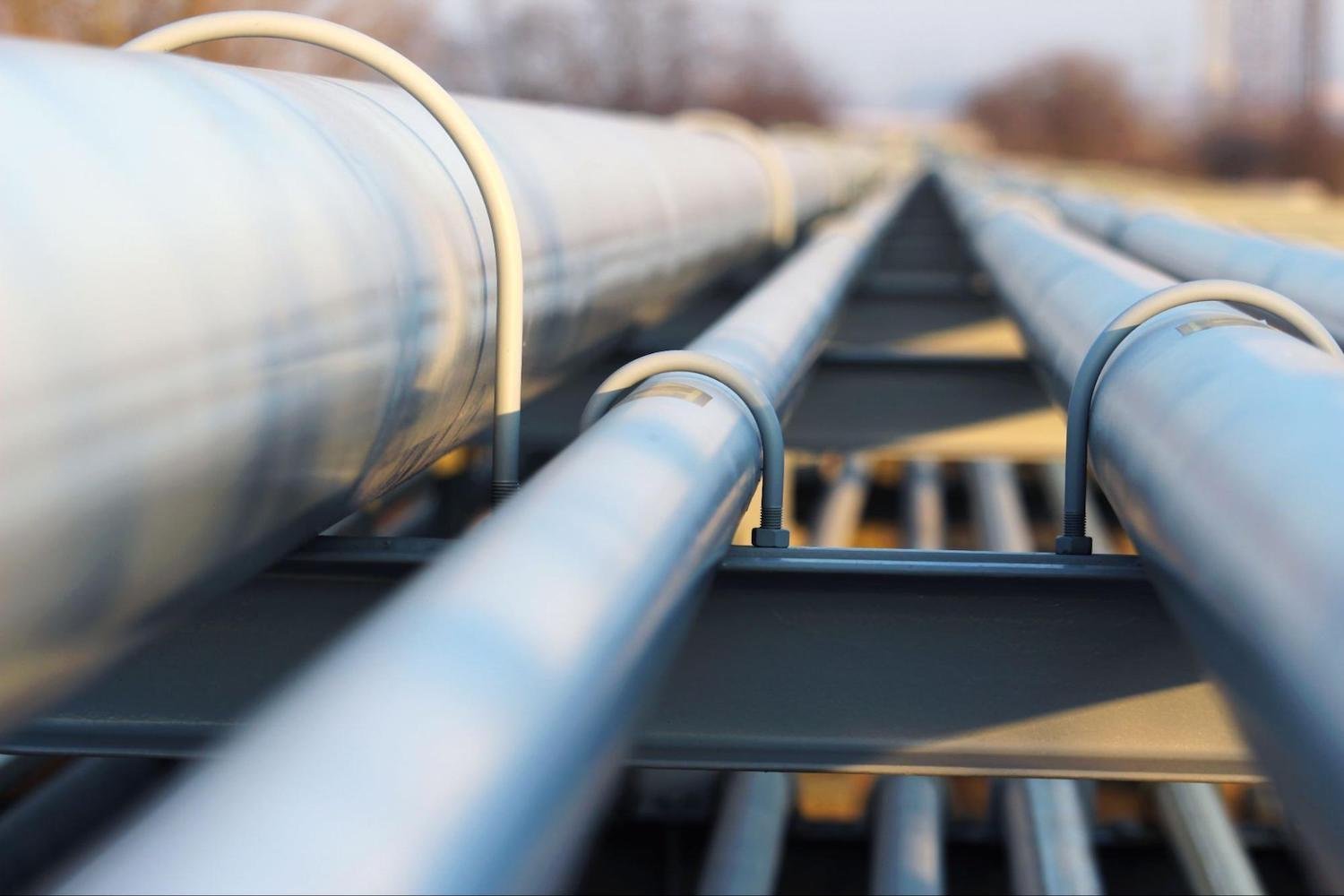
Pipeline effects on the environment are a serious concern for many governments, businesses, and homeowners. Yet many still don't realize the significant negative effects the construction and placement of pipelines can have on surrounding environments, ecosystems, and habitats.
Pipeline contractors and operators are tasked with finding solutions that allow them to lessen the harm done to environments while meeting environmental codes and regulations. It's challenging for companies to continue running efficient and cost-effective pipelines while considering environmental impacts.
Luckily, there are several ways that companies can offset or avoid the environmental impact of pipeline construction and placement. Our team at American Pipeline Solutions discusses how pipelines affect the environment. We also talk about how the harmful effects of pipeline construction and procedures can be reduced, as well as the environmental benefits of pipeline pigging.
After all, pipeline pigging is one of the best innovations to clean pipelines and mitigate environmental harm once they have been placed.
Pipeline Experts: Inspection, Cleaning, Coating & More
Certified solutions for inspection, pre-commissioning, cleaning, internal coating, ice pigging™, mapping, and turnkey pipeline projects—maximizing safety and reliability at every stage.
How Does the Construction and Placement of a Pipeline Affect the Environment?
There are numerous ways that the construction and placement of a pipeline affect the environment. Below we have broken down a few ways pipelines negatively affect our environment.
Products Carried Through Pipelines Cause Damage When Released
It is believed that when the products are transported through pipelines like sewerage, water, oil, and gas, the environment can be impacted, property damages can occur, and injuries or fatalities can arise.
How hazardous a pipeline leak or rupture is to the environment can depend on many factors, including the pipeline's size, the product it carries, the population and natural resources near the pipeline, and the operating pressure. Look below to see how certain products or materials harm the environment when there is a leak or rupture in the pipeline.
1. Habitat Loss and Fragmentation
One of the most immediate consequences of pipeline construction is habitat destruction. Clearing large stretches of land disrupts ecosystems and fragments habitats, making it harder for wildlife to migrate, reproduce, or access food and water. In sensitive areas, this can lead to population declines or even endangerment of certain species.
2. Erosion and Water Quality Degradation
Excavation and construction activities disturb soil and vegetation, increasing the risk of erosion. Sediment runoff can enter nearby streams, rivers, and wetlands, reducing water clarity and carrying pollutants that harm aquatic ecosystems. This sedimentation can also smother fish eggs, destroy spawning grounds, and disrupt the food chain.
3. Air Pollution
Compressor stations and maintenance operations along pipelines can emit methane and other volatile organic compounds (VOCs). These emissions not only degrade local air quality but also contribute to the formation of ground-level ozone, which is harmful to both humans and wildlife.
4. Greenhouse Gas Emissions
Methane, the primary component of natural gas, is over 25 times more potent than carbon dioxide in trapping heat over 100 years. Even small leaks from pipelines contribute to global greenhouse gas emissions, intensifying climate change. While carbon dioxide from combustion is widely known, methane emissions from pipeline leaks are often overlooked yet highly significant.
5. Spills and Leaks
It is believed that when the products are transported through pipelines like sewerage, water, oil, and gas, the environment can be impacted, property damages can occur, and injuries or fatalities can arise.
How hazardous a pipeline leak or rupture is to the environment can depend on many factors, including the pipeline's size, the product it carries, the population and natural resources near the pipeline, and the operating pressure. Look below to see how certain products or materials harm the environment when there is a leak or rupture in the pipeline.
Between the two, a pipeline leak is far more common than a pipeline rupture because a leak is a slow release of a product, while a rupture is a sudden occurrence. Pipeline leaks also cause less damage than pipeline ruptures.
According to experts, pipeline incidents have numerous causes. The most common causes are material welding and equipment failure, corrosion, excavation damage, and natural force damage.
How Can the Harmful Impact of the Construction and Placement of a Pipeline Be Reduced?
Fortunately, there are numerous ways that the harmful impact of construction and placement of pipelines can be reduced. We have briefly listed these ways below.
Offset habitat loss: It's true that, at times, habitat loss, emissions, and other negative environmental impacts are unavoidable when constructing and placing a pipeline. Yet, in these instances, a company or organization can prioritize offsetting the damages to the environment. For example, companies and governments can create replanting tree initiatives or donate to local nature reserves.
Better planning of pipeline routes: One of the best ways to reduce the harmful impact of pipeline construction and its impact on the environment is to insist on better planning of pipeline routes. If a pipeline route is planned properly, many environmental problems can be avoided. For example, a company will avoid laying pipes over vital ecosystems if a pipeline route is planned correctly.
Remember, even if the pipeline structure isn't the problem, the heavy equipment and excavation involved will likely cause environmental damage. So, try to avoid environmental areas of deep concern and instead plan a pipeline route along previously disturbed areas while also using already established roads to avoid unnecessary construction damages.
Maintain pipelines: It's crucial that once pipelines have been constructed and placed that they are maintained to ensure further harm is not caused to the surrounding environment. If pipelines are not maintained with innovative solutions like pipeline pigging, leaks, build-up, and other pipeline problems could destroy vegetation, harm wildlife, and compound air and water pollution problems. Alongside pigging solutions offered by American Pipeline Solutions, operators should also perform routine maintenance checks and services.
Eco-friendly coatings and corrosion protection:
Using environmentally friendly pipeline coatings is a proactive way to reduce long-term environmental risk. These coatings help protect pipeline surfaces from rust, corrosion, and chemical degradation — all of which can lead to leaks. By choosing low-VOC (volatile organic compound) or biodegradable coatings, operators can enhance sustainability without compromising durability.
Emergency response plans:
No matter how careful the planning and construction, spills and leaks can still occur. That’s why having a well-defined emergency response plan is essential. These plans should include rapid containment strategies, training for local personnel, and coordination with environmental agencies to minimize the damage caused by pipeline incidents.
Technological advancements:
Drones, AI, and satellite-based monitoring systems are revolutionizing pipeline oversight. These technologies allow for real-time inspections, early leak detection, and faster issue resolution — all while minimizing the need for disruptive ground-based inspections. Leveraging such tools ensures pipelines are monitored more frequently and with greater accuracy.
Horizontal directional drilling (HDD):
HDD is a trenchless method that enables pipelines to be installed beneath rivers, wetlands, and other environmentally sensitive areas. By avoiding surface excavation, HDD dramatically reduces soil disturbance, erosion, and damage to natural habitats. It’s one of the most environmentally conscious construction techniques available today.
What Are the Environmental Benefits of Pigging?
As we mentioned above, pipeline pigging is crucial to pipeline maintenance. Without routine pipeline pigging, many problems could arise. Fortunately, pigging has many environmental benefits depending on the specific pigging method chosen for a pipeline.
For example, the ice pigging environmental impact is low. This is one of the most environmentally-friendly pipeline cleaning solutions because it uses up to 50% less water than other cleaning options.
Additionally, ice pigging pipelines don't need to be excavated or dug up if a pig gets stuck because it will simply melt. Other pigging solutions also offer enhanced efficiency without utilizing harmful cleaning agents.
With pigging (depending on the type), there won't be the risk of corrosion or accidental hazardous chemical leakage into oceans, rivers, lakes, and surrounding environments. Moreover, with pigging, there is less waste which means fewer carbon monoxide emissions and more product recovery.
Pipeline Experts: Inspection, Cleaning, Coating & More
Certified solutions for inspection, pre-commissioning, cleaning, internal coating, ice pigging™, mapping, and turnkey pipeline projects—maximizing safety and reliability at every stage.
Common Environmental Regulations for Pipelines
Pipeline construction and operation in the U.S. is governed by a range of environmental regulations designed to minimize harm to ecosystems and public health. The Environmental Protection Agency (EPA) sets federal standards that cover everything from water discharge permits to spill response planning.
Operators must also comply with the Clean Water Act, Clean Air Act, and National Environmental Policy Act (NEPA), which requires thorough environmental impact assessments before new pipelines are approved. On the state level, additional permitting and monitoring requirements may apply, depending on the pipeline’s location and the sensitivity of the surrounding environment.
Long-Term Environmental Risks of Aging Pipelines
As pipelines age, their risk of failure increases. Older infrastructure is more susceptible to corrosion, material fatigue, and joint failure, all of which can lead to chronic leaks or sudden ruptures. These incidents don’t just pose immediate safety risks — they often result in long-term environmental degradation. Leaked oil or gas can seep into soil, contaminate groundwater, and kill off plant and animal life over time.
In addition, many older pipelines were installed before modern environmental regulations were in place, meaning they may lack adequate protections or monitoring systems. Regular inspection and phased replacement are essential to mitigating these long-term risks.
How Pipeline Monitoring Technology Enhances Sustainability
Modern technology plays a key role in making pipeline systems more sustainable and environmentally responsible. Smart pigging devices — specially designed tools that travel through the pipeline — can detect internal corrosion, cracks, and deformations before they become major problems. IoT (Internet of Things) sensors installed along the pipeline provide real-time data on pressure, temperature, and flow rates, alerting operators to anomalies that could signal a leak.
In some systems, AI-driven analytics are used to predict potential failure points based on historical and live data, enabling preventative maintenance and reducing the risk of environmental incidents. These technologies not only protect ecosystems but also help pipeline operators stay compliant and efficient.
Speak With an APS Representative Today To Find the Best Pipeline Pigging Solution for You
It's evident that pipeline construction and placement have numerous harmful impacts on the environment. Yet, fortunately, there are ways to enhance sustainability and mitigate some of the harm environments face, like replanting trees and maintaining pipelines with pigging solutions.
Should you want to learn more about the pipeline pigging methods available for different types of pipelines, you can speak with us at American Pipeline Solutions. We offer various pipeline pigging solutions to suit the needs of varying projects.
FAQs:
How do pipelines affect the environment during construction?
Pipeline construction disturbs land, vegetation, and wildlife habitats. Activities such as trenching, excavation, and heavy-equipment movement can lead to soil erosion, habitat fragmentation, and water pollution from sediment runoff. APS emphasizes sustainable planning—using existing rights-of-way and directional drilling—to minimize surface disruption and protect sensitive ecosystems.
What are the main environmental risks of pipeline leaks or ruptures?
Leaks and ruptures release the transported product—oil, gas, water, or chemicals—into surrounding soil and waterways. This can contaminate groundwater, harm wildlife, and release greenhouse gases. APS helps operators prevent incidents through regular maintenance, integrity assessments, and pipeline pigging programs that keep systems clean and corrosion-free.
How can pipeline companies reduce environmental impact?
Companies can reduce impact by planning routes that avoid sensitive habitats, applying eco-friendly coatings, maintaining lines with inspection and integrity support, and using technologies like drones, AI monitoring, and leak-detection sensors. APS integrates these practices to help clients stay compliant with EPA and state environmental regulations.
What are the environmental benefits of pipeline pigging?
Pipeline pigging improves environmental performance by preventing leaks, corrosion, and product loss. Modern techniques—such as Ice Pigging™—use up to 50% less water and eliminate chemical cleaning agents. APS’s pigging services minimize waste, reduce emissions, and support sustainability goals for operators across oil, gas, and water systems.
How does Ice Pigging™ support sustainability?
Ice Pigging™ uses a slurry of ice and water to clean pipelines non-abrasively. The ice conforms to internal pipe geometry, removes buildup, and then melts—leaving no solid waste. It’s energy-efficient, water-conserving, and safer for the environment compared with traditional flushing or chemical cleaning methods.
Why is pipeline maintenance essential for environmental protection?
Regular maintenance prevents corrosion, pressure loss, and leaks that can release pollutants. Programs that include inspection, cleaning, and pigging keep pipelines operating within safe parameters. APS helps clients establish maintenance schedules that extend asset life, lower environmental risk, and meet federal compliance requirements.
How do modern technologies improve pipeline sustainability?
Smart pigs, IoT sensors, and AI analytics detect early signs of wear or leaks, allowing proactive repairs. Satellite monitoring and drones reduce the need for disruptive ground inspections. APS combines these innovations with field-proven maintenance to enhance safety, efficiency, and environmental responsibility.
What regulations govern pipeline environmental safety in the U.S.?
Pipeline operations fall under EPA oversight and must comply with the Clean Water Act, Clean Air Act, and National Environmental Policy Act (NEPA). Operators are required to perform environmental impact assessments and maintain spill-response plans. APS aligns its procedures with these federal and state regulations to ensure compliance and sustainability.
What are the long-term environmental risks of aging pipelines?
Aging pipelines face higher risks of corrosion, joint failure, and undetected leaks. These can cause chronic soil and water contamination. APS mitigates such risks through regular inspection and integrity support and replacement planning, helping operators modernize systems before environmental damage occurs.
How does APS help clients enhance pipeline sustainability?
APS delivers service-only solutions—inspection, cleaning, pigging, and maintenance—that reduce emissions, prevent spills, and extend pipeline life. Our approach combines proven field methods with advanced technologies to protect ecosystems while keeping clients compliant and operationally efficient.

Ice Pigging™ Cost Guide for Water & Sewer Mains
What does Ice Pigging™ cost for water and sewer main cleaning? Read this guide from American Pipeline Solutions to find out the associated costs.

Eventually, all water and sewer mains will need to be cleaned as part of a maintenance or rehabilitation program. This is because, with water mains, biofilm develops along the walls of water pipelines, and manganese and iron buildup flake off into portable water that is fed to businesses and homes. Grit and sediment are other problems with water mains.
In sewer mains, flow often becomes restricted because of corners, bends, and depressed sections that collect deposits. When these buildups occur, a reduction in water flow happens, leading to an inadequate water supply.
To clean water and sewer mains, pigging has been a viable solution. Yet, in recent years more municipalities are turning toward Ice Pigging™. This type of pigging is a method that utilizes an ice slurry instead of a solid “pig” to clean pipelines and mains. It is a popular choice because it is known as one of the most cost-effective water and sewer main cleaning solutions.
In our guide, we will tell you the average Ice Pigging™ cost and the factors that influence the cost of this type of pigging procedure. Our team at American Pipeline Solutions also shares why Ice Pigging™ is generally regarded as a cheaper alternative to other pipeline cleaning methods.
Pipeline Experts: Inspection, Cleaning, Coating & More
Certified solutions for inspection, pre-commissioning, cleaning, internal coating, ice pigging™, mapping, and turnkey pipeline projects—maximizing safety and reliability at every stage.
What Is the Average Cost of Ice Pigging™ for Water and Sewer Mains?
It can be challenging to determine the average cost of Ice Pigging™ for water and sewer mains because every project is unique. In most instances, the larger the project, the more expensive it will be. Before we give the average Ice Pigging™ cost, let's discuss the process more in-depth.
Interestingly, Ice Pigging™ was originally designed for portable water mains and later adapted for sewer force mains. This type of pigging procedure has been designed to clean any material pipe, so it's an excellent cleaning solution for municipality water and sewer mains. Yet, not every municipality will be able to afford Ice Pigging™, and this pigging solution isn't suitable for every situation.
For example, ice pigs cannot and should not be used for gravity-fed sewers because ice pigs need the force that pumped water provides to be suitably driven forward along a sewer or water main. Additionally, Ice Pigging™ cannot remove tubercles, hard water deposits, and heavy corrosion, nor can it rehabilitate pipes. Yet Ice Pigging™ can put off rehabilitation costs by removing organic matter, loose materials, and mineral buildup.
So what are the costs of Ice Pigging™ compared to other pigging methods? According to an AWWA webinar, Ice Pigging™ is one of the cheaper water and sewer main cleaning methods. For example, Ice Pigging™ costs an estimated $1.70 to $5.50 per linear foot, while swabbing costs between $5.70 and $9.10 per linear foot, and traditional pigging between $16.10 and $21.00 per linear foot.
As we mentioned previously, the cost of Ice Pigging™ will largely depend on the size of the project. To give a realistic expectation of how much an Ice Pigging™ project could cost a municipality, we want to share a real-world example.
Real-World Ice Pigging™ Municipality Cost Example
In 2014 in Bethlehem, New York, an Ice Pigging™ project clean-up occurred. An Ice Pigging™ procedure cleaned 10,000 linear feet of Bethlehem’s most problematic water mains during this clean-up.
During this project, several neighborhoods with ongoing water problems were attended to. Needless to say, after Ice Pigging™ was completed on the water mains in this area, the waterlines were much clearer.
According to the company involved in this project, Ice Pigging™ costs between $1 and $8 per foot of pipe. So it's unsurprising that a 10,000 linear foot Ice Pigging™ project cost the Bethlehem municipality $30,000. This cost is still less than other traditional pigging methods. If you want to know more about how much an Ice Pigging™ project could cost a municipality, you can talk with us at American Pipeline Solutions.
What Are the Notable Factors That Influence the Cost of Ice Pigging™?
Every Ice Pigging™ project will have a different cost based on different factors. Below are a few reasons why Ice Pigging™ could cost more for a municipality's water or sewer mains cleaning project.
The bigger diameter water and sewer mains will need more ice slurry, which could affect the cost. (Note that Ice Pigging™ is not suitable for larger sized diameters of more than 24 inches)
Ice slurry is not as good at detecting obstructions, and this could become costly if an obstruction is not dealt with early on. However, usually, if there is a full blockage or a closed valve, an ice pig can detect this kind of obstruction.
Why Is Ice Pigging™ Less Expensive Than Other Pigging Methods?
There are multiple reasons why Ice Pigging™ is less expensive than other pigging methods. Below you will find more information on some of the reasons why this pigging solution is often the preferred choice for municipalities needing to clean water or sewer mains.
Unlike other pigging solutions, Ice Pigging™ uses up to 50% less water which means municipalities pay less on water costs.
With Ice Pigging™, usually, no excavation is needed, so there are no digging costs or need for pipelines to be exposed or dug up (partly because ice pigs cannot get stuck).
Since Ice Pigging™ is the best at removing large amounts of sediment with one procedure, it is usually significantly more cost-effective than other pigging methods.
Ice Pigging™ lowers the chances of structural damage occurring, saving municipalities money as no repairs will need to be undertaken because of the pigging procedure used.
Pipeline Experts: Inspection, Cleaning, Coating & More
Certified solutions for inspection, pre-commissioning, cleaning, internal coating, ice pigging™, mapping, and turnkey pipeline projects—maximizing safety and reliability at every stage.
Get in Touch With an Ice Pigging™ Expert From American Pipeline Solutions Today!
It's evident that Ice Pigging™ is a cost-effective solution for cleaning water and sewer mains. If you would like to learn more about how the Ice Pigging™ process works and how much it would cost, you can speak with us at American Pipeline Solutions. Our company has years of experience completing high-quality Ice Pigging™ projects that are cost-effective. You can contact us here, and we will be in touch.
FAQs:
What is Ice Pigging™ and how does it work?
Ice Pigging™ is a pipeline cleaning method that uses an ice slurry instead of a solid pig. The semi-solid ice mixture is pumped through the line to scour and remove biofilm, sediment, and mineral deposits. As it moves, it conforms to the pipe shape, cleaning effectively without damaging the walls. When complete, the ice simply melts and is flushed away.
How much does Ice Pigging™ cost per linear foot?
The cost of Ice Pigging™ typically ranges between $1.70 and $5.50 per linear foot, depending on factors such as line diameter, condition, and project scope. For comparison, swabbing may cost $5.70–$9.10, and traditional pigging can reach $16–$21 per foot, making Ice Pigging™ one of the most cost-effective options for water and sewer mains.
What factors influence the cost of Ice Pigging™?
Several elements affect pricing — mainly pipe diameter, length, condition, and accessibility. Larger mains require more ice slurry, which increases production and pumping costs. Projects that involve locating blockages, valves, or restricted sections may also cost more due to additional setup and verification procedures.
Is Ice Pigging™ suitable for all types of pipelines?
No. Ice Pigging™ is best suited for pressurized water and sewer force mains. It is not recommended for gravity-fed sewers or pipelines larger than approximately 24 inches in diameter. APS evaluates each system’s configuration to confirm if Ice Pigging™ is the safest and most effective method for that line.
Why is Ice Pigging™ cheaper than traditional pigging?
Ice Pigging™ reduces total project costs by using up to 50% less water, requiring no excavation or pipeline exposure, and minimizing the risk of pigs getting stuck. It can remove large amounts of sediment in a single pass, and it does not cause structural damage — saving municipalities on post-cleaning repairs and downtime.
What kind of debris does Ice Pigging™ remove?
Ice Pigging™ is highly effective for removing biofilm, iron, manganese deposits, and loose sediment. It can also eliminate organic buildup and suspended materials that cause discoloration or reduced flow. However, it cannot remove hard scale, tubercles, or heavy corrosion — those require mechanical or chemical cleaning.
Can Ice Pigging™ delay the need for pipe rehabilitation?
Yes. By removing organic and mineral deposits, Ice Pigging™ can significantly extend the service life of aging water and sewer mains. It restores internal diameter, improves flow, and delays more expensive rehabilitation or replacement projects, making it an excellent maintenance strategy for municipalities.
How long does an Ice Pigging™ project take?
Most Ice Pigging™ projects are completed within a single day, depending on pipeline length and site conditions. Because the process requires minimal setup and cleanup — and no excavation — downtime is much shorter than with traditional pigging or swabbing.
Is Ice Pigging™ environmentally friendly?
Yes. The process uses water, salt, and energy-efficient equipment, leaving behind no chemical waste or abrasive residue. The melted ice slurry is safely flushed and disposed of through standard wastewater systems, making it a sustainable and environmentally responsible cleaning solution.
How can municipalities request an Ice Pigging™ service quote?
Municipalities and utility operators can contact American Pipeline Solutions directly to request a project evaluation and quote. APS provides a detailed cost estimate based on line data, system configuration, and target cleaning outcomes. Contact APS via Cleaning & Conditioning or our contact form for Ice Pigging™ consultation.

How Does Ice Pigging™ Work? Pipe Cleaning Method
Wondering how Ice Pigging™ works? Learn about the Ice Pigging™ procedure from the experts at American Pipeline Solutions today.

Since its development in 2001 by Professor Joe Quarini at the University of Bristol, Ice Pigging™ has transformed how utilities and industries clean pipelines. Unlike traditional methods, which often require heavy equipment, chambers, or chemicals, Ice Pigging™ combines the cleaning strength of a solid pig with the flexibility of a liquid. The result is a powerful, cost-effective, and environmentally friendly pipe cleaning solution that delivers up to 1,000 times more shear force on internal pipe walls than conventional flushing.
Today, municipalities, water companies, and industrial facilities around the world rely on Ice Pigging™ to restore water quality, extend asset life, and improve pumping efficiency — all with minimal downtime and disruption.
But what exactly is Ice Pigging™, and how does the process work in practice? Below, you’ll find a step-by-step guide to the Ice Pigging™ process, along with answers to common questions and insights into why this innovative method is becoming the preferred choice for pipeline cleaning.
What Is Ice Pigging™?
Ice Pigging™ is a pipeline cleaning process that uses a semi-solid ice slurry. This slurry, made of countless small ice crystals suspended in water, forms what is known as the ice pig™.
Unlike traditional mechanical pigs, which are rigid objects, the ice pig behaves like a liquid during insertion but acts like a solid plug once inside the pipe. As it moves, it applies extremely high shear stress to the internal pipe walls, dislodging sediment, biofilm, iron, manganese, and other deposits.
Because the slurry is flexible, it can adapt to bends, diameter changes, and valves without risk of damage or blockage. And if the ice pig ever stops moving, it simply melts, leaving the pipe clear.
Pipeline Experts: Inspection, Cleaning, Coating & More
Certified solutions for inspection, pre-commissioning, cleaning, internal coating, ice pigging™, mapping, and turnkey pipeline projects—maximizing safety and reliability at every stage.
A Step-By-Step Guide To Ice Pigging™: How It Works
Below is a breakdown of how Ice Pigging™ is carried out in real-world applications. Each step is carefully managed to ensure safety, efficiency, and water quality compliance.
Step One: Isolating the Pipeline
Technicians begin by isolating the main pipeline section. This involves closing upstream and downstream valves, as well as any connecting intersections. Once isolated, the ice slurry — delivered via a specialized tanker — is pumped into the system using 2.5” fire hoses connected to hydrant posts.
Step Two: Controlled Injection
As the slurry enters the pipeline, operators carefully monitor both flow and pressure. This ensures the cleaning process is forceful enough to dislodge fouling but safe enough to avoid pipe damage. Once the section is filled, the upstream valve is opened to push the ice pig through the main using system pressure.
Step Three: Cleaning in Action
The ice pig then travels through the pipeline, scraping away accumulated material such as sediment, biofilm, manganese, and iron deposits. These contaminants are carried within the slurry itself and directed to an exit point, where they are discharged into tankers or a sanitary sewer for proper disposal.
Step Four: Flushing and Return to Service
After the ice pig has exited the system, the pipeline is flushed with clean water until both ice remnants and debris are removed. This ensures the pipe meets strict water quality standards. Because the process requires no harsh chemicals, there is no need for disinfection, and the pipeline can be safely returned to service almost immediately.
What Are the Common Reasons for Ice Pigging™?
Now that we have discussed the step-by-step procedure of Ice Pigging™, it's time to look at the common reasons why municipalities choose Ice Pigging™. Have a look below to learn more.
Ice Pigging™ uses a fraction of the water that flushing and conventional pigging does, making it more environmentally friendly.
Ice Pigging™ can be used for decommissioning cleaning when pipework needs to be cleaned of all residue sediment before it is dismantled.
Ice Pigging™ can be completed when a pipe needs to be cleaned because its use will be changed or if a new product will be used in conjunction with the original piping.
Ice Pigging™ is used to aid with asset management by extending the life of a pipeline to ensure capital spent on pipes and pumps is kept to a minimum.
Ice Pigging™ is perfect for removing accumulations of sediment, biofilm, and foreign objects that are affecting water quality. For example, to improve odor, taste, and lower turbidity levels as well as improve chlorine residuals.
Ice Pigging™ can be employed when a major piping overhaul is planned, and a deep clean of a pipe network is required.
Ice Pigging™ is ideal for improving a sewer force main pumping efficiency by reducing back pressure and increasing flows.
Why Do Municipalities and Industries Use Ice Pigging™?
Ice Pigging™ is chosen over other pipe cleaning methods for several compelling reasons:
Water efficiency – requires only a fraction of the water compared to conventional flushing.
Environmental benefits – avoids harsh cleaning chemicals and reduces wastewater volume.
Asset management – extends pipeline life, helping utilities and industries defer costly replacements.
Improved water quality – enhances taste, odor, and chlorine residuals while lowering turbidity levels.
Operational flexibility – can be performed quickly with minimal system downtime.
Hydraulic performance – reduces back pressure, increases flow, and improves pump efficiency.
Change of use cleaning – prepares pipes for new products or operational changes.
Pre-commissioning or de-commissioning – ensures pipelines are free of debris before use or dismantling.
Beyond municipal water networks, Ice Pigging™ is also widely applied in industries where clean, efficient pipe systems are critical:
Food & Beverage – to eliminate product residues and biofilms safely.
Pharmaceutical & Healthcare – for sterile, contamination-free pipelines.
Chemical & Manufacturing – for process line preparation and maintenance.
District Heating & Cooling – to improve energy efficiency and reduce fouling.
How Is Ice Pigging™ Different from Traditional Pigging?
Despite what many might believe, Ice Pigging™ is different from traditional pigging. Unlike traditional pigging, Ice Pigging™ carries much less risk because it is inserted and removed via existing pipeline fittings. There is an increased chance for risk and disruptions to a pipeline with conventional and foam pigging.
For example, there are installation and launching chambers required, and if the pig or swab gets stuck, a team will have to spend time to locate it then reverse the flow to move it back to the launcher or in the worst case dig it up. In contrast, if the ice pig were to get stuck in a pipeline, the ice would simply melt without causing any problems to a pipeline's infrastructure.
Ice Pigging™ is a far less disruptive pipe cleaning method because a pipeline outage will only take a few hours compared to a few days with other pipe cleaning methods. This means water is restored faster with Ice Pigging™. Interestingly, Ice Pigging™ doesn’t require a lengthy chlorination process, so a pipeline can be returned to service immediately after being cleaned.
Pipeline Experts: Inspection, Cleaning, Coating & More
Certified solutions for inspection, pre-commissioning, cleaning, internal coating, ice pigging™, mapping, and turnkey pipeline projects—maximizing safety and reliability at every stage.
What Are the Limitations of Ice Pigging™?
Although highly effective, Ice Pigging™ does have some limitations:
Pipe size restrictions – most effective in pipelines up to 24 inches in diameter.
Sediment hardness – not ideal for removing very hard, calcified deposits.
Distance limits – typically effective for cleaning up to 2.5 miles of 6-inch pipe in a day.
For these reasons, professional evaluation is essential to determine whether Ice Pigging™ is the right solution for a specific project.
Get In Touch With American Pipeline Solutions for Your Ice Pigging™ Needs
Ice Pigging™ is a sophisticated process that requires specialized equipment and expertise. At American Pipeline Solutions, we are the only company in the United States currently offering Ice Pigging™ services. Our team has extensive experience performing this method for municipalities and industries, helping clients improve water quality, extend asset life, and reduce operational costs.
If you’re considering Ice Pigging™ for your pipelines, we’d be happy to discuss your needs. Contact us directly at paul@americapipe.com, or complete our project questionnaire and include supporting maps so we can assess your system in detail.
FAQs:
What is Ice Pigging™ in simple terms?
Ice Pigging™ is a pipe cleaning method that uses a semi-solid ice slurry instead of a rigid foam or mechanical pig. The slurry behaves like a liquid during injection and like a solid plug while moving through the pipe. As it travels, it scrapes and carries away sediment, biofilm, iron, manganese, and other deposits with very high shear force.
How does Ice Pigging™ actually clean a pipeline?
During Ice Pigging™, a controlled volume of ice slurry is injected into an isolated section of pipe and then pushed through using system pressure. The ice pig conforms to the pipe’s shape, applying intense shear stress to the internal walls. Dislodged material is trapped in the slurry and discharged at a designated exit point before the pipeline is flushed and returned to service.
What types of deposits can Ice Pigging™ remove?
Ice Pigging™ is highly effective at removing soft and semi-hard deposits such as sediment, biofilm, iron and manganese buildup, and organic material that affects water quality. It is also useful for clearing foreign objects and residues left from normal operation or product changes. Very hard, calcified deposits may require additional or alternative cleaning methods.
Where is Ice Pigging™ commonly used?
Ice Pigging™ is widely used by municipalities and water utilities to restore water quality, reduce turbidity, and improve chlorine residuals. It is also applied in industrial networks where clean, reliable flow is critical, including food and beverage, pharmaceutical, chemical, and district heating and cooling systems. In many cases, it supports asset management and pre-commissioning or de-commissioning activities.
How is Ice Pigging™ different from traditional pigging?
Traditional pigging relies on rigid foam or mechanical pigs that require launching and receiving chambers and can get stuck if conditions are not ideal. Ice Pigging™ uses an ice slurry that can be injected and removed through existing fittings, navigate bends and diameter changes more easily, and simply melt if it stops. This significantly reduces the risk of blockages, excavation, and prolonged outages.
What are the main advantages of Ice Pigging™ for utilities and industries?
Ice Pigging™ typically uses much less water than conventional flushing, does not require harsh cleaning chemicals, and produces less wastewater. It can often be completed in hours rather than days, minimizing downtime and disruption. At the same time, it improves water quality, boosts pump efficiency, reduces back pressure, and helps extend pipeline life as part of an overall asset management strategy.
Are there size or distance limits for Ice Pigging™?
Yes. Ice Pigging™ is most effective in small to medium diameters, typically up to around 24 inches, and over defined distances per cleaning run. For example, a common reference point is cleaning up to a few miles of 6-inch main in a day. Larger diameters or very long sections may require alternative methods or a combination of techniques.
Is Ice Pigging™ environmentally friendly?
Ice Pigging™ is considered an environmentally friendly pipe cleaning method because the ice slurry is made from water and a small amount of salt, with no harsh chemicals. It uses significantly less water than traditional flushing and generates a lower volume of wastewater. Once the process is complete, the remaining ice simply melts, leaving no additional residues in the system.
How quickly can a pipeline be returned to service after Ice Pigging™?
In most cases, a pipeline can be returned to service soon after Ice Pigging™. Once the ice pig has exited the system, the line is flushed with clean water until ice remnants and debris are removed and water quality standards are met. Because no aggressive chemicals are used, there is usually no need for lengthy disinfection steps, which shortens downtime.
When should I choose Ice Pigging™ over other cleaning methods?
Ice Pigging™ is an excellent choice when you need high cleaning performance with minimal disruption, especially in water networks and sensitive or complex piping systems. It is ideal when water conservation, reduced chemical use, faster return to service, and lower blockage risk are priorities. A professional evaluation can determine whether Ice Pigging™ or a combined cleaning approach is best for a particular pipeline.

No-Des Process vs. Ice Pigging™: Real Results Compared
Learn about two different water main flushing procedures and how they compare head to head. American Pipeline Solutions provides top notch Ice Pigging™ services.

For years, many private water companies and municipalities have debated whether a No-Des process or Ice Pigging™ is the best pipe cleaning solution. Both of these water main flushing procedures have their advantages and disadvantages, but it's evident that one method is better than the other.
If you're a private water company or a municipality representative considering these two methods, you’ve come to the right place. In this article, we're going to discuss everything you need to know about these pipe cleaning processes to determine which is the best solution for your pipeline cleaning needs.
To help you decide, we have not only spoken about their differences. We have also outlined why Ice Pigging™, the process offered by American Pipeline Solutions, is the better pipeline cleaning procedure by citing real results comparing these water main flushing procedures.
Pipeline Experts: Inspection, Cleaning, Coating & More
Certified solutions for inspection, pre-commissioning, cleaning, internal coating, ice pigging™, mapping, and turnkey pipeline projects—maximizing safety and reliability at every stage.
Water Main Flushing Procedures: No-Des vs. Ice Pigging™
Below, we will compare No-Des vs. Ice Pigging™ so you can decide which is the best option for your project.
No-Des Flushing
Discharge Elimination System (No-Des) is a pipeline flushing method that was developed in the United States to clean pipelines. This pipeline cleaning method is one of the most eco-friendly methods (like Ice Pigging™) that has been created in recent years.
Unlike traditional flushing, methods No-Des allows for minimal water wastage. Additionally, this pipeline cleaning process is effective at removing sediments but not as effective as Ice Pigging™.
Interestingly, the No-Des process is very different from Ice Pigging™. It is also different from traditional pipeline flushing methods involving letting water discharge onto a street after being flushed by opening fire hydrants.
This technology involves pumping water at an incredibly high speed around a section of a water supply network that has been closed off to remove sediment. To do this, a temporary above-ground loop is created by attaching a hose to two fire hydrants.
This water is also pumped through filters that are mounted on the back of a utility truck. Additionally, the No-Des truck that pumps water also adds chlorine to it to ensure a safe level of disinfection is maintained during the pipeline cleaning process.
Ice Pigging™
Ice Pigging™ is a more popular method of cleaning pipelines than No-Des. Although Ice Pigging™ may waste a little more water than No-Des, this method still typically uses 50% less water than traditional flushing methods.
Additionally, Ice Pigging™ is far more effective at removing sediment from pipelines, especially when compared to the No-Des process. This is simply because of the fact that the ice pig offers up to 1,000 x more shear on the inside of the pipe wall. It is also more cost-effective for water companies and municipalities.
With Ice Pigging™, the process is more involved than No-Des, which is another reason why it's more effective at removing sediment. This process utilizes a unique ice slurry mixture known as an "ice pig."
Before an ice pig can be pushed into a pipeline to remove sediment, a pipeline water main must be isolated. Once a section of the main has been isolated, a specialist technician will pump the ice slurry into the pipeline via hoses.
After the slurry (ice pig) has been pumped and while it's being monitored, an upstream valve will be opened to create pressure that will allow the ice pig to move through the pipeline and remove the sediment in its way.
Once the ice pig has made its way to the exit point, it will be discharged into a local sanitary sewer or picked up and deposited into a tanker before it is carefully disposed of safely so as to be no harm to the environment. Ice Pigging™ is often safer than No-Des as it is adaptable to pipe topology and provides a reduced risk of pipeline damage.
Is No-Des or Ice Pigging™ More Expensive?
One of the most significant questions many ask is if the No-Des process of pipeline cleaning is more or less expensive than Ice Pigging™. This question is complex because which process is more expensive will depend on the factors surrounding the pipeline cleaning that needs to be undertaken.
According to experts, the No-Des process will pay for itself over time, which means it has a higher initial cost than Ice Pigging™ for municipalities. So although No-Des is cost-effective, this is a long-term benefit that isn't immediate. However, you should note that the No-Des flushing system has been proven to cost approximately 50% less than unidirectional flushing.
In contrast, many believe Ice Pigging™ to be one of the most cost-efficient pipeline cleaning methods available at present –– even more so than the No-Des process. For example, in 2012, at an AWWA distribution system webinar, Ice Pigging™ was estimated to cost between $1.70 and $5.50 per linear foot. On the other hand, traditional pigging was estimated to cost between $16.10 and $21.00 per linear foot, swabbing between $5.70 and $9.10 per linear foot.
No-Des vs. Ice Pigging™ Real Results Compared: Which Is Better?
It's no secret that the No-Des process has a few benefits, but in many situations, Ice Pigging™ is the better pipe cleaning method. When a real-world comparison was performed, the results revealed that Ice Pigging™ is a better pipeline cleaning solution in many areas. We have discussed the results of this comparison below.
Ice Pigging™ is a cross between flushing and pigging, while the No-Des process is a strictly flushing method using an in-line pipe, making Ice Pigging™ preferable.
The No-Des process has less water usage at up to 1 times the pipe volume, whereas Ice Pigging™ has a water usage volume of 1.25 times the pipe volume. Yet unlike the No-Des method; there is no leaking with Ice Pigging™.
It's been proven that the No-Des method has less daily coverage than Ice Pigging™. The No-Des method has daily coverage of up to approximately 1.24 miles per day, while Ice Pigging™ can impressively cover up to 3 miles of pipe cleaning per day.
Unlike Ice Pigging™ which has a pipe range of between 1 to 42 inches, the No-Des process can only clean pipes that are below 12 inches in size.
In most instances, a water supply will only be interrupted for between 1 to 4 hours during an Ice Pigging™ procedure. In contrast, the No-Des method could require a pipeline interruption for an entire day. Ice Pigging™ also has no other interruptions to its process, while the No-Des process could cause driveway and traffic interruptions.
One of the biggest benefits of Ice Pigging™ is that there is a very low chance of resuspension of sediments, while the No-Des process has a medium to high chance.
Unlike the No-Des method, which can only be utilized for water pipelines, Ice Pigging™ has water plus sewer force mains and siphon applications.
Pipeline Experts: Inspection, Cleaning, Coating & More
Certified solutions for inspection, pre-commissioning, cleaning, internal coating, ice pigging™, mapping, and turnkey pipeline projects—maximizing safety and reliability at every stage.
Speak With An Expert At American Pipeline Solutions About Our Ice Pigging™ Process
It's evident that Ice Pigging™ is the better pipeline solution when compared to the No-Des process. Ice Pigging™ is an attractive option for many with more applications and benefits. If you would like to learn more about Ice Pigging™ and why it's the perfect pipeline cleaning solution for your project, you can speak to one of the experts at American Pipeline Solutions. Contact us and we will gladly answer any questions you may have.
FAQs: No-Des Process vs. Ice Pigging™
What is No-Des flushing and how does it work?
No-Des (Discharge Elimination System) is a pipeline flushing method that circulates water at high velocity through a closed section of the water network. The water is pumped through filters mounted on a truck, with chlorine added to maintain disinfection. This process removes sediment with minimal water discharged to waste, making it more eco-friendly than traditional hydrant flushing.
What is Ice Pigging™ and how does it work?
Ice Pigging™ uses a thick ice slurry (“ice pig”) to clean pipelines. After isolating a section of main, a specialist pumps the slurry into the pipe and uses upstream pressure to push it through. The ice pig conforms to the pipe, applies very high shear to the wall, and scrapes out sediment as it travels. The slurry is then discharged and safely disposed of, often via sanitary sewer or tanker.
Which method removes more sediment: No-Des or Ice Pigging™?
Both methods outperform traditional flushing, but Ice Pigging™ is generally more effective at removing sediment. Because the ice pig applies up to 1,000 times more shear on the pipe wall than conventional flushing, it can dislodge and carry out deposits that No-Des may leave behind. In real-world comparisons, Ice Pigging™ has shown better cleaning performance and lower risk of resuspending sediment.
Which process uses more water: No-Des or Ice Pigging™?
No-Des typically uses less water, with usage around one pipe volume. Ice Pigging™ usually operates at about 1.25 times the pipe volume, so it uses slightly more water than No-Des. However, Ice Pigging™ still uses significantly less water than traditional unidirectional flushing and can deliver better cleaning results, which often offsets the marginal increase in water use.
Is Ice Pigging™ more expensive than No-Des?
Cost depends on project scope, pipe size, and network layout, but Ice Pigging™ is often considered one of the most cost-efficient advanced cleaning methods available. Industry estimates have placed Ice Pigging™ in the range of roughly $1.70–$5.50 per linear foot, compared with much higher costs for traditional pigging and higher long-term setup costs for some No-Des systems. For many utilities, Ice Pigging™ offers strong value for performance.
How much pipeline can Ice Pigging™ and No-Des clean per day?
Ice Pigging™ has been shown to clean up to about 3 miles of pipe per day under suitable conditions. The No-Des process typically achieves lower daily coverage, around 1.24 miles per day. For utilities and municipalities looking to maximize cleaning progress within limited shutdown windows, this higher daily coverage is a key advantage of Ice Pigging™.
What pipe sizes can each method handle?
No-Des systems are generally limited to smaller diameters, typically below 12 inches. Ice Pigging™, by contrast, can be used on a much wider range of pipe sizes, from approximately 1 inch up to 42 inches. This makes Ice Pigging™ more suitable for mixed networks or larger transmission and trunk mains where diameter varies across the system.
How do No-Des and Ice Pigging™ impact customer service interruptions?
Ice Pigging™ usually requires shorter interruption windows—often around 1 to 4 hours for the affected area—before normal service is restored. No-Des cleaning can require a longer disruption, sometimes lasting most of the day, and may also introduce traffic or driveway interruptions around the flushing setup. For customer impact and scheduling, Ice Pigging™ tends to be more flexible.
Which method has a higher risk of resuspending sediment?
Ice Pigging™ is designed to carry sediment out of the pipeline in a controlled way, and it has a very low chance of re-suspending material once cleaning is complete. The No-Des process, while effective, has a medium to high risk of resuspension, meaning loosened particles can be stirred back into the water if conditions are not ideal.
Where can Ice Pigging™ be used compared to No-Des?
No-Des is mainly limited to potable water pipelines. Ice Pigging™ has a broader range of applications, including water mains, sewer force mains, and siphons. This flexibility makes Ice Pigging™ a strong choice for utilities and municipalities managing mixed networks or complex system layouts.
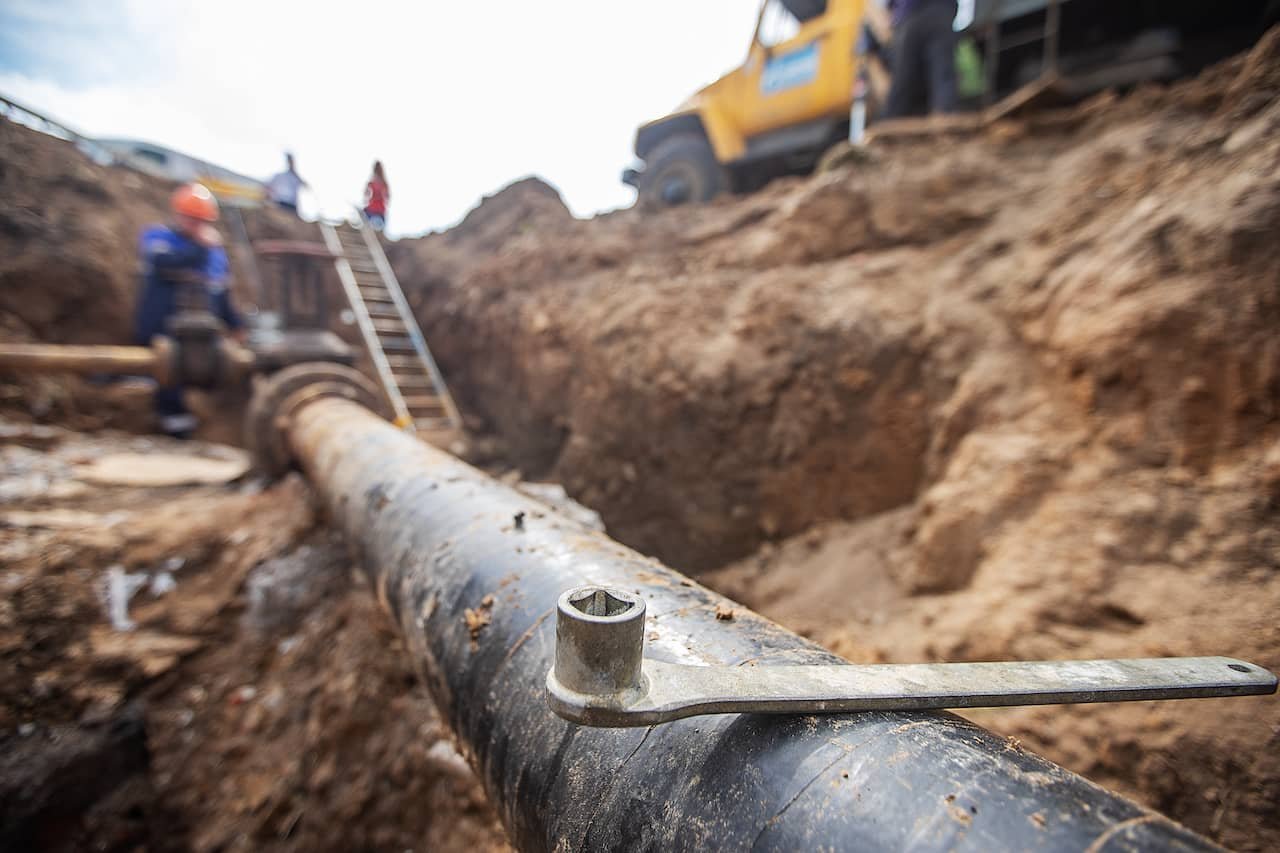
Pigging Municipal Water Mains: Process & Benefits
What is the process of pigging water lines? Learn how pigging water mains works from the experts at American Pipeline Solutions today.

It’s essential for municipal pipelines to be cleaned routinely to ensure the quality of water people receive meets health and safety standards. Yet, even though many realize the importance of pipeline cleaning, not many know how pipelines and municipal water mains are cleaned.
One of the most reliable and popular methods of cleaning municipal pipelines involves a process called pigging. Many municipalities use this technique because it removes tuberculation, biofilm and other sediment very effectively; much more so than flushing.
There are numerous benefits involved with pigging water lines, and luckily at American Pipeline Solutions, we understand this process. In this article, we will discuss these benefits alongside the process involved with pigging water mains for municipalities. This article will also look at the latest development in pigging technology, Ice Pigging™.
Pipeline Experts: Inspection, Cleaning, Coating & More
Certified solutions for inspection, pre-commissioning, cleaning, internal coating, ice pigging™, mapping, and turnkey pipeline projects—maximizing safety and reliability at every stage.
What Is the Process of Pigging Water Mains?
The exact process of pigging water mains will depend on the type of pigging chosen, yet there is a generalized process that many pigging procedures use. Initially, a “prover pig,” which can be equipped with a location device, will be deployed into the water pipeline to determine if there is an obstruction. The material of this pig is very light in density, so if it does encounter a solid obstacle, it will break apart and not become lodged inside the pipe.
After this has been done, and based on the condition of the prover pig, a specialized cleaning pig will be inserted, where it will travel to remove sediment while being propelled by pressure to the exit access endpoint. The sediment and pigging material will be removed and safely discarded at the endpoint.
Below we have given a detailed step-by-step look into how pigging a municipal water main (above was a summary) is done so that you can understand the process better.
A thorough municipal pipeline system evaluation and performance baseline will be completed.
A team of experts will work together using their evaluation and performance baseline to develop a work and contingency plan.
After the work and contingency plan have been done, the next step will be to isolate the municipal water line to be cleaned.
Once the pipeline has been isolated, a “prover pig” will be inserted and run through the water line to prove flow.
When the “prover pig” has been run through the waterline, a team will examine it and decide the size and type of cleaning pigs based on the “prover pig’s” condition. They will also take into account the conditions of the pipeline.
After the pig type has been chosen, it will be run through the municipal water pipeline. After each subsequent run, the condition of the cleaning pig will be visually analyzed. Based on the condition of the pig, a similar one may be run, or the next size/material type of pig will be run; this is known as the progressive pigging method.
Once our team has determined that a pipeline is clean based on the condition of the most recent pig or the amount of dirty water accompanying the pig, the water line will be flushed so that any loose debris is removed.
If the water supply needed to be cut, it would be restored after the line had been flushed. The team will ensure the system is fully operational after the restored water flow.
Usually, the last step in confirming a municipal water main has been cleaned successfully is to document the results and compare them to the baseline performance results. Depending on the comparison of the results, it might be necessary to run a secondary pigging operation.
Factors To Consider Before Pigging Water Mains
Although, for the most part, the pigging process is straightforward, several factors need to be considered before pigging can commence. Below we have briefly discussed these factors to further help you understand the process of pigging water lines. We have briefly touched on some of what we mentioned below in the above section.
1. Planning
Planning is the most important part of the pigging process. Before a municipal pipeline can be pigged, workers must determine the fittings and pipe design. The workers at American Pipeline Solutions know that the overall design of the water main will affect the insertion and retrieval points. For many water mains, pigs can be launched and retrieved through fire hydrants, limiting the need for holes to be dug.
Additionally, securing data on the water main will help workers learn if there are any obstructions that might block the pig from completing its task, such as a half-opened valve.
2. Pig Selection
Besides planning, it’s crucial to determine the type of pig needed and the required length (usually 1.5 times the length of the pipe section being cleaned). The types of pigs used will be based on the type and age of the pipe, current flow rates, type of debris in pipe (biofilm, tuberculation, etc), and many other variables.
3. Type of Pigs Needed
There are many different types of pigs that can be used to clean municipal water mains and pipelines. Below we have briefly listed the types of pigs that could be needed when cleaning a municipal water main.
A prover pig: Light in density, these are used due to their ability to break apart when met with an immovable obstacle
Durafoam pig: Medium density and usually coated, these pigs are used in majority of cleaning and are effective at removing most types of debris
Wire brush pig: Heavier density pig wrapped in wire brushes used to remove heavier debris such as tuberculation
Ice pigs: See Ice Pigging™ service page
Pipeline Experts: Inspection, Cleaning, Coating & More
Certified solutions for inspection, pre-commissioning, cleaning, internal coating, ice pigging™, mapping, and turnkey pipeline projects—maximizing safety and reliability at every stage.
What Are the Benefits of Pigging Water Lines?
There are several benefits of pigging municipal water mains. For example, when a municipal water main line is pigged, mud, sediment, calcium carbonate, scale, manganese iron, bacteria, biofilms, and other contaminants are removed.
In addition to this, traditional pigging can navigate a short radius, most valve types, and tees to ensure every inch of a pipe is cleaned to restore pressure and optimal water flow and ensure better water quality.
The pigging process is also incredibly effective at restoring a water main to almost its original conditions. Furthermore, traditional hydraulic pigging is still often preferred because one of its most significant benefits is that it can clean a wide range of pipeline diameters of up to 95 inches.
Notable Mention: Ice Pigging™ Benefits
Although traditional pigging processes are useful for cleaning municipal water mains, Ice Pigging™ has become a popular choice in recent years. This is because Ice Pigging™ is incredibly cost-effective and uses up to 50% less water.
Additionally, Ice Pigging™ has the added benefit of never getting stuck in a pipeline during cleaning. If it encounters an obstacle, it will simply melt. This is why Ice Pigging™ also causes no infrastructure damage.
Moreover, Ice Pigging™ has numerous applications. This pigging process also has an impressive three-mile daily coverage limit, has a short water interruption timeframe (1-4 hours), and is highly effective at removing sediment.
How Often Should Municipal Water Mains Be Pigged?
The frequency of pigging municipal water mains depends on several factors, including the age of the pipeline, water quality goals, and local environmental conditions. In general, many municipalities benefit from routine pigging every 3 to 5 years to prevent buildup, maintain flow efficiency, and avoid long-term issues like biofilm formation or corrosion.
If a city is dealing with frequent water discoloration complaints, reduced flow, or sediment issues, more frequent pigging may be recommended. In new developments or systems recently upgraded, pigging may also be part of the commissioning process to clear debris before the lines go fully online.
Municipalities often combine pigging with regular pipe inspection programs to determine the ideal cleaning intervals. Inspection data helps assess sediment rates, internal corrosion, and flow resistance — all of which can inform a more targeted pigging schedule.
Why Municipal Water Mains Get Clogged — and Why Cleaning Matters (new section)
Municipal water mains are critical to supplying clean water to homes, schools, businesses, and hospitals — but over time, these pipelines can develop buildup that affects both water quality and flow.
So, what causes the clogging?
Even treated water can carry small particles like sand, silt, or rust from aging pipes. Over time, these particles settle along the inside of the mains, forming a layer of sediment. Add to this the potential for biofilm (a slimy bacterial layer) and mineral scale, and you get serious flow restriction.
Other causes of clogging include:
Corrosion flakes from older metal pipes
Residual construction debris from pipeline installations or repairs
Organic growth in low-flow sections of the system
If not addressed, these deposits can lead to:
Discolored or foul-smelling water
Reduced pressure and flow rates
Strain on pumping systems and valves
Higher long-term maintenance costs
That’s where pigging comes in.
Pigging provides a mechanical way to clear out these deposits without using chemicals or cutting into the pipe. It restores flow, improves water clarity, and extends the usable life of the system — all with minimal disruption.
Challenges in Pigging Municipal Water Mains
While pigging is an effective cleaning method, it’s not without challenges — especially in large-scale municipal systems. Older infrastructure, unknown pipe layouts, dead ends, and limited pig launching points can complicate the process. Flow must also be carefully managed to ensure the pig moves at the right speed and avoids stalling or damaging the system.
Understanding these challenges helps municipalities plan better, budget accurately, and choose the right pigging equipment and inspection techniques.
Get In Touch With American Pipeline Solutions To Discuss Your Pigging Needs
The pigging process is somewhat involved but is not challenging to complete if a professional team manages the pipeline cleaning project. Should you want to learn more about the pigging solutions available for municipal water mains, don’t hesitate to speak with the professionals at American Pipeline Solutions. We know the benefits and pigging processes and can advise you accordingly on the best pigging process for your needs. To speak with us, you can contact us here.
FAQs:
What is pigging in municipal water mains?
Pigging is a mechanical cleaning process that uses pipeline tools called “pigs” to remove sediment, biofilm, and mineral buildup inside municipal water mains. A pig is propelled through the pipe by water pressure, scraping and dislodging debris as it moves. This restores pressure, improves water quality, and helps utilities maintain compliance with health and safety standards.
How does the pigging process work in municipal pipelines?
The process begins with a “prover pig” to confirm the line is clear. Then, cleaning pigs of various densities are run through the main to remove deposits. Each pass is analyzed for cleanliness, and progressive pigging continues until the line meets the desired condition. APS technicians finish by flushing the line, restoring flow, and documenting performance improvements.
What types of pigs are used for cleaning municipal water mains?
Different pig types are chosen based on pipe material, condition, and debris. Common examples include prover pigs (for flow checks), durafoam pigs (for general cleaning), and wire brush pigs (for tuberculation or heavy scale). Ice pigs are an advanced option made of ice slurry, offering a non-abrasive and highly efficient cleaning alternative.
What are the main benefits of pigging municipal water lines?
Pigging removes rust, biofilm, calcium carbonate, manganese, and sediment, improving flow and water clarity. It helps utilities meet water-quality standards, extend asset lifespan, and reduce long-term maintenance costs. Because pigging can navigate valves, bends, and short radii, it provides a full-system cleaning with minimal service interruption for customers.
How does Ice Pigging™ differ from traditional pigging methods?
Ice Pigging™ replaces solid pigs with a thick ice slurry that behaves like a semi-solid cleaner. It’s safe for aging or complex systems because it won’t get stuck—if an obstacle is encountered, the ice simply melts. This method uses up to 50% less water, reduces cleaning time, and leaves no physical debris behind.
How often should municipal water mains be pigged?
Many municipalities benefit from pigging every 3 to 5 years, depending on pipe age, water quality goals, and sediment buildup. Systems with frequent discoloration, reduced flow, or corrosion issues may require more frequent cleaning. APS can help utilities establish a maintenance schedule based on inspection data and performance trends.
What factors must be considered before starting a pigging operation?
Key considerations include system layout, pipe diameter, fittings, valve positions, and insertion points. A detailed evaluation and baseline performance study help determine the best pig type, cleaning pressure, and recovery method. APS emphasizes careful planning and pig selection to ensure safe operation and complete debris removal.
Can pigging damage municipal water infrastructure?
When performed by trained technicians using the correct pigs and pressure controls, pigging is safe and non-destructive. APS evaluates every system’s material, coating, and flow conditions before deployment. Ice Pigging™ adds further protection because it is soft and meltable, eliminating the risk of pigs getting stuck or scraping internal surfaces.
What causes municipal water mains to clog over time?
Clogs develop from sediment, corrosion flakes, or biofilm buildup that restricts flow and reduces water quality. Even treated water can leave behind fine particles that accumulate over time. Pigging removes these deposits mechanically—without chemicals—helping utilities restore hydraulic efficiency and improve water clarity for consumers.
How can APS help municipalities maintain their pipelines?
American Pipeline Solutions provides full-service pipeline cleaning and inspection support, including traditional pigging, Ice Pigging™, and maintenance programs. APS designs and executes customized cleaning sequences, manages flow control, and documents all results for compliance and performance tracking. Municipalities rely on APS for reliable, cost-effective, and safe pipeline maintenance nationwide.

Pipeline Pigging Problems & How to Address Them
Why do pigs get stuck in the pipeline? Learn the answer to this question and about common pigging limitations from American Pipeline Solutions today.

There are many advantages associated with pipeline pigging. Additionally, in many instances, pipeline pigging is utilized when pre-commissioning or decommissioning a pipeline is needed. Companies like American Pipeline Solutions use pigs to clean out debris, water, or oil and execute corrective or preventive maintenance.
Without pigging, many pipelines would degrade, environmental issues would arise, and water quality would be affected (municipal water lines), thus endangering the lives of many. However, there are pigging limitations and problems can occur with pipeline pigging.
Many challenges are associated with foam pigs, ice pigs, mechanical pigs, and the other commonly used pigging types. These challenges could result in expensive problems or prevent a pigging procedure from getting underway.
Since pigging is crucial to pipeline maintenance and repair, it’s important that pigging pipeline problems are addressed. In our article, we will examine the question, “Why do pigs get stuck in the pipeline?” and discuss the possible solutions to common pipeline problems.
Pipeline Experts: Inspection, Cleaning, Coating & More
Certified solutions for inspection, pre-commissioning, cleaning, internal coating, ice pigging™, mapping, and turnkey pipeline projects—maximizing safety and reliability at every stage.
What Are the Three Common Pipeline Pigging Problems?
There are other pigging issues besides pigs getting stuck in a pipeline. Below, we will discuss this common problem and two others you need to be aware of if you’re considering using a pigging method.
1. Pigs Getting Stuck In a Pipeline
Although pigs getting stuck in a pipeline is rare in this modern day and age, it does happen often enough with certain pig types to be a common problem. If a pig has failed to reach its destination and complete its job, there is often a logical reason for it.
For example, some of the reasons for a pig getting stuck include faults with the pipeline, lack of propellant pressure, an obstruction like a closed valve in front of a pig, and leakage from a faulty pipe connection.
Additionally, a pig could also get stuck if worn or damaged, or the incorrect pig for the type of pipeline being serviced.
How Is This Pigging Problem Addressed?
To address a pigging problem like this, it’s best to consider preventative measures like choosing an experienced pigging company like American Pipeline Solutions for your pipeline pigging needs. An experienced and professional pigging company has the skills and knowledge to complete a pipeline pigging project.
In addition, the issue of pigs getting stuck in a pipeline can be avoided if routine maintenance is completed and if a worn or damaged pig is never used.
2. Pigs That Cannot Travel Both Directions or Navigate Sharp Bends
Many pigs cannot travel in both directions or navigate sharp bends. This is a problem for pipeline cleaning projects with sharp bends as effective product recovery rates cannot be achieved, meaning a pipeline cannot be cleaned properly.
One directional pigs are not efficient. This is because they can involve complex return loops that require operators to manually remove the pig and return it to its proper housing after completing a project. This is often incredibly time-consuming, but it also poses a significant risk to operator safety. One directional pigs are also not sanitary, which poses risks of its own.
Additionally, problems can occur when a pig is unable to navigate a bend. This is especially true when pipeline maintenance or repair needs to be done on complex piping at industrial sites that have bends. Pigs that are unable to navigate bends cannot achieve a good recovery rate, which makes the pigging solution less effective overall.
How Is This Pigging Problem Addressed?
Generally, this pigging problem can be addressed by utilizing pipeline pigging products and equipment that is suitable for bends and complex pipeline systems.
For example, Ice Pigging™ could be utilized instead of less effective traditional pigging methods. At American Pipeline Solutions, we have an array of pigging options available that are ideal for pipelines with bends while ensuring excellent recovery rates.
3. Pig Product Bypass Issues
Another common problem is product bypass problems that occur from utilizing pigs that feature assembled pieces like caps and fins. Often when pigs with caps, fins, or other assembled pieces are used, it is almost impossible to guarantee effective cleaning between these assembled pieces in a pipeline.
Assembled pieces like fins on pigs will allow a small amount of product to get past, and throughout the project, this could cause a build-up. When significant build-up occurs, it causes a significant problem because it can considerably hamper product recovery rates.
In addition, another issue with using pigs with fins or other assembled parts is that they are usually far more likely to have parts break or rip off. When this occurs, contamination issues could arise.
Moreover, pigs with assembled parts are often not as robust as other pigging types, which means they might need to be replaced more often, and this could drive up costs on maintenance or repair pipeline pigging projects.
Pipeline Experts: Inspection, Cleaning, Coating & More
Certified solutions for inspection, pre-commissioning, cleaning, internal coating, ice pigging™, mapping, and turnkey pipeline projects—maximizing safety and reliability at every stage.
How Is This Pigging Problem Addressed?
Generally, these issues can be addressed by ensuring the pigging on your pipelines is not completed with pigs with assembled parts like fins and caps. Instead, a pipeline pigging company should opt to use one-piece pigs with a full-contact design that are more versatile and robust.
Speak With a Professional from American Pipeline Solutions Today
Now you know the common pipeline pigging problems and how they can be addressed. If you want your pipeline maintained or repaired, you should consider pipeline pigging to prevent or counteract these issues. At American Pipeline Solutions, we can help you with your pipeline pigging needs. To speak to one of our pigging professionals, you can contact us here.
FAQs:
Why do pigs get stuck in pipelines?
Pigs can get stuck if the line has obstructions such as closed valves, dents, or buildup that restrict movement. It can also happen when the wrong pig type is used, or when the pig is worn, damaged, or improperly sized for the pipeline’s diameter and medium. Routine inspection, proper pig selection, and experienced operators help prevent these issues.
How can pipeline pigging companies prevent stuck pigs?
Prevention begins with thorough planning and system assessment. Experienced companies like American Pipeline Solutions evaluate diameter changes, product type, and operating pressure to select the right pig and propellant. Regular maintenance, cleaning sequences, and tracking systems further reduce the risk of a pig stalling mid-line.
What happens if a pig gets stuck in the line?
If a pig stops mid-line, operations may be paused for safety. Crews typically use tracking data to locate the pig and assess causes like low pressure, blockage, or equipment failure. In many cases, pressure adjustments, back-pushing, or specialized retrieval tools can safely remove it without damaging the pipeline.
Why can’t some pigs travel in both directions or through sharp bends?
Most conventional pigs are one-directional and rigid, which limits flexibility through tight turns or dual-direction runs. In contrast, methods like Ice Pigging™ allow safe cleaning through bends because the semi-solid ice slurry conforms to the pipe’s geometry, ensuring efficient cleaning even in complex piping systems.
What are product bypass issues in pigging?
Product bypass occurs when fluid slips past the pig instead of being displaced ahead of it. This typically happens with multi-piece pigs that use fins, cups, or caps, leaving small gaps between parts. Over time, these gaps reduce cleaning efficiency, create buildup, and lower recovery rates. One-piece, full-contact pigs are more effective in avoiding bypass.
Can pig parts or fins break off during cleaning?
Yes, pigs with multiple assembled parts can experience fin or cap separation, especially in high-pressure or abrasive environments. Detached pieces can contaminate the line or obstruct flow. APS minimizes this risk by using durable, one-piece pig designs suitable for the line’s product and operating conditions.
What’s the safest way to handle pipelines with sharp bends?
Pipelines with complex bends require flexible pigging methods or non-abrasive technologies such as Ice Pigging™, which can safely navigate curvature without getting stuck or causing wall damage. Proper pressure control and accurate tracking are also critical for safe execution.
How does APS ensure efficient pigging performance?
APS conducts pre-job evaluations, designs customized pigging sequences, and uses modern tracking and monitoring equipment to verify movement. Our technicians document every run, ensuring that pigs achieve full travel, optimal recovery rates, and compliance with maintenance and inspection standards.
What type of pigs does APS use for maintenance or cleaning?
APS deploys a variety of pig types—foam, mechanical, brush, magnetic, and Ice Pigging™ solutions—depending on pipeline conditions and objectives. Each type serves a specific role, from removing debris and liquids to conditioning lines before inspection or commissioning.
When should a pipeline be pigged?
Pipelines should be pigged during pre-commissioning, maintenance, or inspection preparation to remove debris, prevent corrosion, and maintain flow efficiency. Regular pigging schedules vary depending on the product, system design, and regulatory requirements. APS helps operators design safe, cost-effective pigging programs that align with their operational goals.

3 Most Common Issues in Force Main Sewer Lines
Proper maintenance of your sewer system is important. Learn about these common force main problems and how American Pipeline Solutions can help you address them.
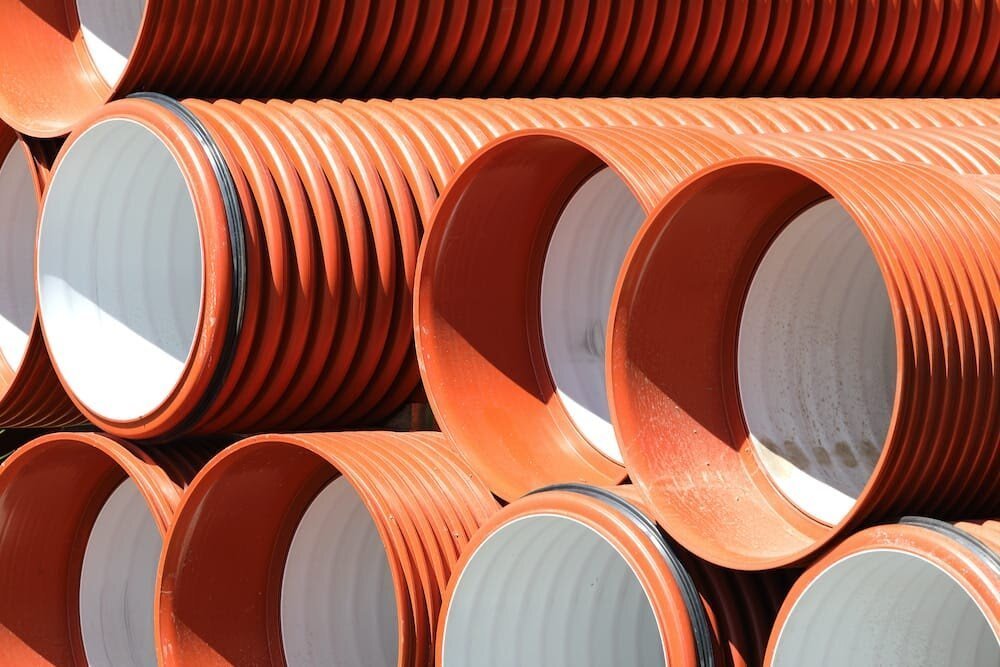
A functional sewer system plays an integral part in a city’s waste management processes. As a sewer system ages, its pipes begin to show signs of wear. Without proper maintenance, a pipe can become severely damaged to the point where it must be replaced.
The first step in your wastewater pipeline maintenance strategy is assessing the conditions of the sewer system. Typically, the processes differ depending on the type of sewer pipeline examined. In the end, these processes will determine what cleaning and maintenance method is most effective for your pipelines. One important area to cover in your maintenance is your sewer system’s force mains.
At American Pipeline Solutions, our goal is to help you understand the issues your pipeline faces and how to properly address it. This article outlines some common force main problems to help you identify these issues in your systems.
Pipeline Experts: Inspection, Cleaning, Coating & More
Certified solutions for inspection, pre-commissioning, cleaning, internal coating, ice pigging™, mapping, and turnkey pipeline projects—maximizing safety and reliability at every stage.
3 Common Force Main Problems
1. Buildup in the Pipeline
Even if you don’t see any telltale signs of pipeline blockage, buildup in your force main can still cause issues. An example of this is the accumulation of solid deposits along the bottom of your pipeline.
As wastewater flows through your pipes, heavier particles can accumulate in a solid deposit. Depending on the type of particles, this results in a flow regime with a sliding bed or a stationary bed. A sliding bed can cause abrasion of the pipe’s interior, which wears away at the pipe’s interior wall. Conversely, a stationary bed reduces the cross-sectional area available in the pipe. By and large, both types of solid deposits can cause long-term force main problems to occur if left unaddressed.
2. Corrosion of Pipeline’s Interior
Corrosion force main problems are unique due to the presence of hydrogen sulfide in the pipeline. Hydrogen sulfide is a naturally occurring gas in low-lying, enclosed spaces such as the sewer. Not only is this gas dangerous to inhale, but it can also cause damage to a sewer’s pipelines.
Internal corrosion caused by hydrogen sulfide occurs in two ways. The primary cause of internal corrosion is known as an acid attack. An acid attack occurs when hydrogen sulfide gas converts to sulphuric acid when the gas is in the presence of moisture. Another internal corrosion mechanism is hydrogen sulfide having a direct chemical reaction to the metal in a pipe’s interior, such as iron.
3. Loss of Structural Integrity in the Force Main
Damage caused by force main problems like buildup or corrosion can lead to the loss of a pipe’s structural integrity. For example, abrasion caused by buildup in a pipeline can grind away at a pipe’s interior surface. This weakens the pipeline and, thus, shortens the pipeline’s longevity.
Corrosion causes a more immediate concern due to the increased likelihood of a leak occurring. A localized acid attack in a pipe can result in a hole appearing in the pipe’s wall. This hole leads to leakage of the pipe’s sewage, which then causes environmental damage.
Pipeline Experts: Inspection, Cleaning, Coating & More
Certified solutions for inspection, pre-commissioning, cleaning, internal coating, ice pigging™, mapping, and turnkey pipeline projects—maximizing safety and reliability at every stage.
Protect and Prevent Damage to Your Force Mains
This is by no means an exhaustive list of every issue that might occur in your force mains. Nevertheless, these issues clearly show why routine force main maintenance is necessary.
One way to achieve this is by contacting experts like American Pipeline Solutions to perform force main inspections. Visual inspection of your pipeline by American Pipeline Solutions can quickly identify issues such as pipeline blockage.
All in all, American Pipeline Solutions combines quality inspection equipment with years of industry experience to identify and address a client’s needs.
Frequently Asked Questions
What is a force main sewer line?
A force main is a pressurized pipeline that moves wastewater from a lower to a higher elevation using pumps. Unlike gravity sewer lines, force mains require constant pressure to push flow through the system, which makes them more vulnerable to buildup, corrosion, and pressure-related wear over time.
What causes buildup inside a force main?
Buildup typically forms when heavier solids in wastewater settle along the pipe’s bottom and accumulate into a stationary or sliding bed. These deposits reduce flow efficiency and can cause abrasion that weakens the pipe wall. Regular cleaning and inspection prevent long-term damage and maintain hydraulic capacity.
Why is hydrogen sulfide dangerous to sewer pipelines?
Hydrogen sulfide (H₂S) gas is common in enclosed wastewater systems. When combined with moisture, it converts into sulfuric acid, which aggressively attacks pipe walls. It can also chemically react with metals such as iron, leading to corrosion and leaks. Controlled ventilation and routine monitoring reduce this risk.
How does corrosion affect a force main’s integrity?
Corrosion thins the pipe wall, creates pitting, and can eventually form holes that leak sewage into the environment. It not only shortens the system’s lifespan but can also trigger costly repairs or replacement. Early inspection and interior coatings can slow or stop corrosion before structural failure occurs.
What are the signs of structural failure in a force main?
Reduced pressure, recurring blockages, visible leakage, or ground subsidence above a line can all indicate a loss of structural integrity. These symptoms suggest internal abrasion or corrosion damage that needs immediate evaluation by a qualified inspection team such as American Pipeline Solutions.
How often should force mains be inspected or cleaned?
Most municipalities and facility operators inspect force mains annually or bi-annually, depending on flow rates and material type. Regular inspection allows early detection of buildup and corrosion, reducing the likelihood of leaks and extending the line’s operational life.
What maintenance methods protect force mains from damage?
Preventive programs often include routine cleaning, corrosion monitoring, interior coatings, and periodic pressure testing. Partnering with specialists like APS ensures the right procedures and equipment are applied safely and efficiently for each pipeline’s condition.
How does American Pipeline Solutions help maintain force mains?
APS performs visual and instrument-assisted force main inspections to detect corrosion, deposits, and structural issues early. Combining advanced cleaning and conditioning tools with decades of field experience, APS helps clients protect infrastructure, maintain compliance, and avoid costly emergency repairs.
Are you looking to improve your wastewater pipeline maintenance strategy?
Contact American Pipeline Solutions today to partner with a team that has 100 years of combined experience in the pipeline industry.

Force Main Inspections: How They Work & When to Do Them
A critical part of maintaining your sewer system inspecting your pipes. Learn about force main inspections, what to expect, and how often they should occur.

A functioning sewer system is essential for sanitation and public health. Force Main Inspections play a vital role in maintaining these pipelines, helping detect pipeline flow problems, blockages, and corrosion before they escalate into costly failures. Over time, sewer pipelines face challenges such as pipeline deterioration, blockages, and corrosion, making routine sewer system maintenance critical. By implementing proactive force main pipeline inspection programs, municipalities and property managers can extend the life of their pipelines and reduce environmental risks.
The first step in maintaining wastewater pipelines is to assess the condition of the sewer system. This examination varies depending on the sewer system pipelines. The primary purpose of these examinations is to determine the best pipeline cleaning and maintenance method for a sewer system.
In this article, we focus on a particular type of sewer system pipeline: the force main. Keep reading to learn what a force main sewer pipe is and what to expect from force main inspection.
Pipeline Experts: Inspection, Cleaning, Coating & More
Certified solutions for inspection, pre-commissioning, cleaning, internal coating, ice pigging™, mapping, and turnkey pipeline projects—maximizing safety and reliability at every stage.
Force Main Pipe Inspections: What to Know?
What is a Force Main Pipe?
A sewer system typically consists of pipes running from buildings to a central processing or treatment area. While most sewer lines rely on gravity to move wastewater, there are scenarios where wastewater must be transported from a lower elevation to a higher elevation. In such cases, a standard gravity pipeline is ineffective.
This is where a force main sewer pipe comes into play. A force main uses lift stations and pumps to move wastewater uphill, ensuring the system operates efficiently. Because these pipelines operate under pressure, they require specialized attention during maintenance and inspection, making force main inspections essential to the longevity and reliability of the sewer system.
Why Force Main Inspections Are Important?
Force Main Inspections are a critical component of sewer system maintenance. Over time, these pipelines can experience issues such as pipeline flow problems, internal corrosion, force main pipe blockages, or pipeline leakage. Without regular inspection, these issues may go unnoticed, potentially resulting in environmental contamination, public safety hazards, and expensive repairs.
A comprehensive sewer pipe inspection service ensures that any irregularities or potential failures are identified early. This proactive approach helps maintain pipeline integrity, improves performance, and ensures compliance with local and federal regulations.
Force Main Inspection Methods
Cities and utilities employ several pipeline inspection methods to evaluate the condition of force main sewer pipes. These methods include both visual inspections and advanced pipeline testing:
1. Visual Inspection Using CCTV
One common method is a sewer pipe camera inspection or CCTV inspection. During this process, a camera pig is sent through the pipeline to capture real-time footage of the pipe interior. This allows inspection teams to detect:
Force main pipe blockages
Cracks or signs of deterioration
Sediment buildup or obstructions
After reviewing the footage, teams can recommend pipeline cleaning or maintenance strategies to restore optimal flow.
2. Pipeline Integrity Testing
While CCTV provides visual data, it may not detect internal corrosion or subtle structural issues. This is where pipeline integrity testing becomes essential. At American Pipeline Solutions, specialized tools such as i2i smart devices can detect:
Metal loss
Circumferential cracking
Internal corrosion
Minor leaks or weaknesses
By combining visual inspections with pipeline integrity testing, utilities can implement a more comprehensive maintenance program for their force main sewer pipes.
3. Force Main CCTV Inspection for Condition Assessment
A targeted force main CCTV inspection is particularly valuable for pressurized pipelines. These inspections allow teams to:
Track pipeline leakage
Identify force main pipe blockages
Assess sewer pipe corrosion detection
Evaluate pipeline flow problems
This dual-approach ensures that no defect goes unnoticed and facilitates precise planning for maintenance and repairs.
Common Issues Found During Force Main Inspections
When conducting force main inspections, several recurring issues are often detected:
Pipeline flow problems such as reduced capacity or sluggish wastewater movement.
Force main pipe blockages, often caused by debris, mineral buildup, or root intrusion.
Sewer pipe corrosion, which can weaken walls and compromise structural integrity.
Pipeline leakage inspection findings, where leaks are identified before they escalate into catastrophic failures.
Detecting these issues early allows municipalities, property managers, and engineers to take preventive action. By resolving minor problems promptly, you can extend the pipeline’s lifespan, avoid costly emergency repairs, and protect surrounding environments from contamination.
How Often Should Force Main Sewer Pipes Be Inspected?
One of the most common questions we hear is: “How often should I conduct a sewer force main inspection?”
Newer pipelines: At least once every five years.
Older pipelines: Inspection frequency varies depending on pipeline age, usage levels, and existing condition reports.
Routine wastewater pipeline inspections are critical for preventive maintenance. A well-timed inspection schedule ensures uninterrupted service, reduces the likelihood of sudden blockages, and helps utilities manage costs more effectively.
Maintain Your Sewer System Pipelines With Routine Inspections
A common question from municipalities and property managers is: “How often should I perform force main inspections?”
The frequency depends on factors such as pipe age, material, and historical performance. General recommendations include:
Newer force main pipelines: every 5 years
Older force main pipelines: case-by-case assessment, often more frequent
Regular inspections are key to mitigating pipeline deterioration and preventing sudden pipeline flow problems or catastrophic failures.
Benefits of Routine Force Main Inspections
Investing in force main inspections provides several long-term benefits:
Prevent costly failures: Early detection of leaks or corrosion reduces repair costs.
Maintain optimal pipeline flow: Ensures pipeline flow problems do not disrupt wastewater transportation.
Extend pipeline lifespan: Proactive inspection reduces wear and tear.
Improve environmental compliance: Prevents spills and contamination.
Streamline maintenance planning: Provides actionable data for sewer pipe inspection services.
Partnering With Pipeline Inspection Experts
Implementing a successful force main pipeline inspection program requires experienced professionals and state-of-the-art equipment. At American Pipeline Solutions, our team combines decades of expertise with advanced tools to provide:
Sewer pipe inspections using CCTV and smart pigs
Pipeline integrity testing for pressurized force mains
Comprehensive wastewater pipeline inspection reports
Recommendations for maintenance and preventive measures
By collaborating with experienced sewer pipeline inspection companies, cities and property managers can ensure their force main systems operate efficiently, safely, and with minimal risk of failure.
Pipeline Experts: Inspection, Cleaning, Coating & More
Certified solutions for inspection, pre-commissioning, cleaning, internal coating, ice pigging™, mapping, and turnkey pipeline projects—maximizing safety and reliability at every stage.
Contact American Pipeline Solutions
Are you looking for expert force main inspections or comprehensive pipeline inspection services? Contact American Pipeline Solutions today to schedule a consultation and protect your wastewater infrastructure from costly damage and environmental risks.
What is a force main inspection?
A force main inspection is a specialized evaluation of pressurized sewer pipelines that move wastewater uphill using pumps. Unlike gravity systems, force mains operate under constant pressure and are prone to corrosion, leaks, and blockages. Inspections use tools such as CCTV cameras or smart devices to detect early signs of deterioration and ensure safe, continuous operation.
Why are force main inspections important?
Force main inspections prevent unexpected pipeline failures by identifying flow restrictions, corrosion, and leaks before they cause costly damage. Early detection helps utilities and property managers plan maintenance efficiently, maintain regulatory compliance, and protect surrounding environments from contamination and overflow events.
How often should main sewer pipes be inspected?
Newer force mains should be inspected at least once every five years, while older or high-use systems may require more frequent assessments. Inspection frequency depends on pipe material, age, usage patterns, and previous condition reports. A consistent inspection schedule helps reduce emergency repairs and maintain long-term system reliability.
What inspection methods are used for force mains?
APS employs several force main inspection methods, including CCTV camera inspections for visual data and pipeline integrity testing using smart devices. These tools detect corrosion, cracks, and internal weaknesses that visual inspection alone may miss. Combining both methods ensures comprehensive assessment and accurate maintenance planning.
What issues are commonly found during force main inspections?
Typical findings include reduced flow, debris buildup, internal corrosion, root intrusion, and minor leaks. These problems can lead to performance loss or environmental hazards if left unaddressed. Routine inspections allow APS to detect and correct these issues early, extending pipeline lifespan and preventing major system disruptions.
What’s the difference between a gravity sewer and a force main?
A gravity sewer relies on natural slope to move wastewater, while a force main uses pumps and pressure to lift wastewater to higher elevations. Because of this pressurized environment, force mains require specialized inspection and maintenance techniques to monitor internal conditions and ensure structural integrity.
How does CCTV help during a force main inspection?
CCTV (closed-circuit television) inspection involves inserting a camera-equipped device into the pipeline to capture real-time footage of its interior. The video helps identify cracks, corrosion, and blockages. At APS, this footage is reviewed by trained technicians who provide detailed reports and maintenance recommendations.
What are the benefits of routine force main inspections?
Regular inspections help prevent catastrophic failures, maintain consistent flow, extend pipeline service life, and ensure compliance with environmental regulations. They also provide data that supports proactive maintenance scheduling, reducing downtime and emergency response costs for municipalities and industrial clients.
Can force main inspections be performed without interrupting service?
Yes. Many inspection tools, including smart pigs and inline sensors, can operate while the pipeline remains in service. APS evaluates system pressure, flow conditions, and safety requirements before selecting the most efficient, non-disruptive inspection method for each project.
Who should perform a force main inspection?
Force main inspections should be performed by qualified pipeline service providers with experience in pressurized sewer systems. APS technicians are trained in CCTV operation, smart device testing, and pipeline integrity evaluation, ensuring accurate results and actionable recommendations for utilities and property managers.
Are you looking for an expert to help you inspect the integrity of your force main pipes?
Contact American Pipeline Solutions by calling (201) 525-0088 or online to find the best pipeline solution.

How Zebra & Quagga Mussel Removal Works with Pigging
Properly maintaining a city’s water intakes is vital. Learn more about quagga & zebra mussel removal and find an appropriate project solution.
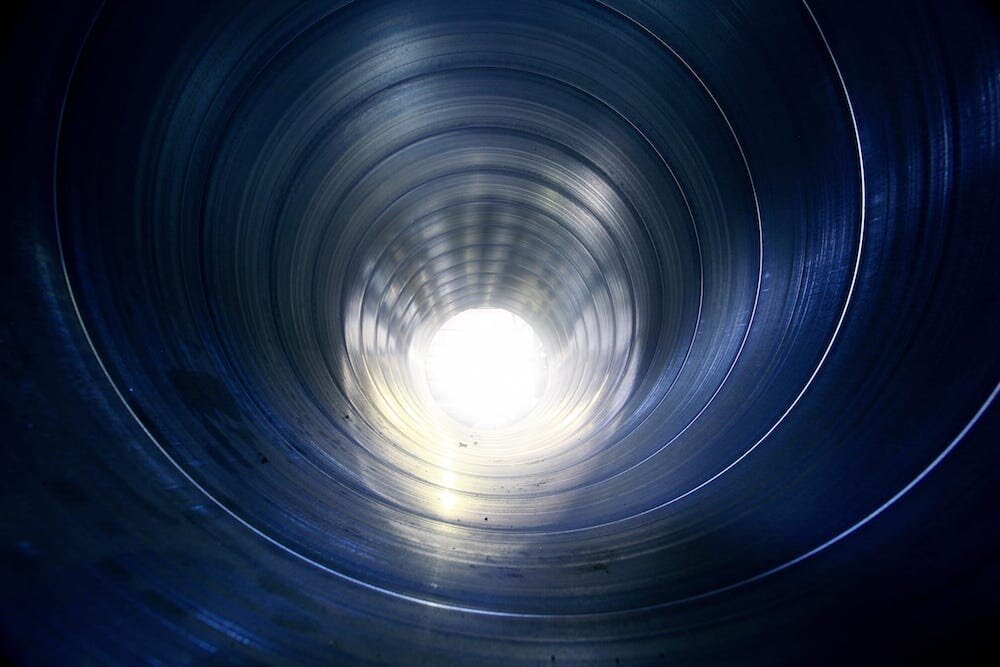
Ensuring that a city’s water pipelines operate at top system performance levels is critical. Without the proper cleaning method, a pipeline’s performance can decrease.
A unique factor that some cities and towns face is the presence of invasive species, such as the quagga and zebra mussels. While native parts of Eastern Europe such as Ukraine, these aquatic hitchhikers made their way into Toronto’s Great Lakes.
The damage that these invasive species cause is without question. Tom Nalepa, an emeritus research biologist and recognized expert on the species, stated that “the quagga mussel represents the greatest threat to the Great Lakes of any invasive species.”
Past quagga and zebra mussel removal methods have used various chemicals, such as chlorine. However, these methods have failed to present effective solutions to control increasing biofouling growth.
An interesting alternative to dealing with the presence of these two mollusk species is hydraulic pigging.
This article illustrates how pigging works to remove quagga and zebra mussels. Below, examine a project completed by American Pipeline Solutions in Toronto to address quagga mussel build-up.
Pipeline Experts: Inspection, Cleaning, Coating & More
Certified solutions for inspection, pre-commissioning, cleaning, internal coating, ice pigging™, mapping, and turnkey pipeline projects—maximizing safety and reliability at every stage.
Quagga & Zebra Mussel Removal: City of Toronto, 2018
The Issue Caused by Quagga & Zebra Mussels in Toronto’s Water Intakes
In the fall of 2018, Toronto found that the hydraulic capacity of its three water intakes at the Island Water Treatment Plant had reduced after 14 years of use.
Quagga mussel build-up inside the deep-water pipelines caused the reduced hydraulic capacity. Quagga mussels adhere to submerged surfaces, such as pipes, and subsist on plankton in the nearby water.
The accumulation of quagga mussels within Toronto’s intakes is known as biofouling or aquatic fouling. When an organism like the quagga mussel accumulates within water intakes, it can lead to structural or functional defects.
This organism also has a major impact on the surrounding ecosystem.
In addition, quagga mussels and their cousin, the zebra mussel, propagate quickly. Quagga mussels displace existing native species and alter the food chain, resulting in less game and commercial fish.
American Pipeline Solutions’ Scope of Work
American Pipeline Solutions was contacted because the team had successfully pigged Cornell University’s 60-inch HDPE deep water intake in Lake Cayuga.
After examining the Cornell project results, the City of Toronto engineers assessed the criteria, specifications, and required budget for hydraulic pigging to restore flow capacity at the Toronto Island WTP.
In preparation for the project, American Pipeline Solutions partnered with Galcon Marine Ltd., a local contractor with local offshore expertise. Galcon provided support with island transport, barge delivery, ROV (remote operated vehicle) operation, and other marine operations.
Project preparation also included the specification of the scope-of-work, which was defined as the following:
Design and manufacturing of a pig launcher and structural supports that would fit the intake valve chamber and piping system at the WTP.
Provide documentation of the process and design for hydraulic pigging procedures. These procedures were created for quagga and zebra mussel removal in all three WTP intakes.
Obtain any necessary regulatory permits and approvals for work.
Perform an inspection via ROV (remote operated vehicle) for all three water intakes before pigging.
Pigging for quagga and zebra mussel removal in water intake pipes.
Retrieval/salvage of all used pigs.
During the project, American Pipeline Solutions was responsible for the overall hydraulic layout, the launcher's design, and the hardware designation. Additionally, American Pipeline Solutions handled pig design, the sequence of pigs used, tracking the pigs, and pig recovery procedures.
Hydraulic Pigging Procedures Used in Quagga & Zebra Mussel Removal Method
1. Determine Proper Pig Sequence
Before the pigging process, American Pipeline Solutions assessed the pipe to determine the pig sequence.
This sequence matters for most pigging procedures because the process must be completed as quickly as possible. Additionally, these procedures must be performed conservatively to avoid any pressure surges or a delay caused by a “stuck pig.”
2. Load and Launch the First Pig
While most pigs used for cleaning are larger than the internal diameter of a pipe, the first pig used in Toronto was not. The Toronto WTP pipelines had internal diameters measuring around 61 inches. The first pig that was used was only 58 inches in diameter.
A smaller-sized pig was used first to create enough bypass flow to start the initial cleaning process. However, the pig needed to be small enough, so it wouldn’t adhere to the pipe wall or have its movement restricted.
3. Monitor Pig Movement & Mussel Debris Build-up
After a quagga and zebra removal project begins, it is important to monitor the building debris. As the pig moves through the pipeline, the mussel debris can accumulate ahead of the pig, slowing or stopping the pig.
The volume of the displaced quagga mussels was monitored as the pig moved through the pipe. This was done in real-time, using submerged cameras aboard an ROV at the intake’s mouth.
When using foam pigs, such as those used in Toronto, this debris can be controlled, depending on the pig design. Foam pigs can be designed to channel some of the water, propelling the pig towards the pig's front. When this happens, displaced mussels are suspended in the moving water flow ahead of the pig. This prevents the pig from slowing or stopping because of mussel debris.
4. Launch Second and Third Pigs
Thanks to the real-time documentation of the mussel debris and the pipe’s pressure profile, American Pipeline Solutions was able to determine the next pig’s characteristics.
Typically, the foam density and diameter of a pig will increase with each subsequent run. The last pig that is run tends to be larger than the internal diameter of the pipe itself.
For the City of Toronto project, the last pig was a full-size pig with embedded plastic bristles. These bristles thoroughly cleaned the pipe walls of quagga mussels.
5. Assess the Cleaning Project’s Results
Once all three pigs were run through the water intakes, the Hazen-Williams C-Factor for all three pipes was measured. This factor determined the smoothness of the interior walls of the pipes after cleaning. In addition, the results would determine if a fourth pig run was necessary.
The C-Factor results improved, and after the initial three pig runs, the water intake’s hydraulic condition was better than when the pipes were installed.
Pipeline Experts: Inspection, Cleaning, Coating & More
Certified solutions for inspection, pre-commissioning, cleaning, internal coating, ice pigging™, mapping, and turnkey pipeline projects—maximizing safety and reliability at every stage.
A perfect C-Factor is 150+. When built in 2004, the C-Factor for these pipes was estimated to be 137 to 140. Prior to cleaning, the pipes measured a C-Factor of approximately 110. After pigging was completed, all three intakes had C-Factors ranging from 149 to 152.
In the end, these results proved that the project’s pigging process was a complete success.
The process was able to clear the quagga mussels from the pipes and any additional debris. The project’s success shows that hydraulic pigging as a quagga and zebra mussel removal method is reliable.
FAQs:
What are quagga and zebra mussels and why are they a problem in pipelines?
Quagga and zebra mussels are invasive freshwater mussels that attach to submerged surfaces and rapidly multiply. Inside water intakes and deep-water pipelines, they create heavy biofouling, restrict hydraulic capacity, increase energy costs, and can damage infrastructure. They also disrupt local ecosystems by outcompeting native species and altering the food chain.
How does pigging remove quagga and zebra mussels from water intakes?
Pigging uses specially designed foam or mechanical pigs that are propelled through a pipeline by water or another driving medium. As the pig travels, it scrapes, dislodges, and carries mussel colonies and debris out of the line. In the Toronto project, a sequence of pigs with increasing density and cleaning power restored the internal smoothness and hydraulic capacity of the intakes.
Why was hydraulic pigging chosen over chemical treatments like chlorine?
Chemical treatments such as chlorine have been used for mussel control, but they often struggle to keep up with rapid biofouling growth and can raise environmental and regulatory concerns. Hydraulic pigging offers a targeted, mechanical solution that physically removes mussels and debris from the pipe walls without relying on long-term chemical dosing.
What is a pig sequence and why does it matter for mussel removal?
A pig sequence is the planned order and design of pigs run through a pipeline during cleaning. For quagga and zebra mussel removal, APS starts with smaller or softer pigs to establish flow and manage debris, then follows with larger or stiffer pigs to thoroughly clean pipe walls. A well-designed sequence limits pressure surges, avoids stuck pigs, and delivers a predictable cleaning result.
How did APS monitor mussel debris and pig movement during the Toronto project?
APS used submerged cameras on an ROV (remote operated vehicle) at the intake mouths to watch pig progress and monitor displaced mussel volume in real time. This live feedback, combined with pressure profiles, allowed the team to adjust pig design and sequencing on the fly, ensuring safe passage and effective debris removal throughout the cleaning program.
What role do foam pigs play in quagga and zebra mussel removal?
Foam pigs are flexible, lightweight tools that can be sized just under the pipe’s internal diameter to allow controlled bypass flow. In the Toronto case, foam pigs were designed to channel water toward the front face, suspending dislodged mussels in the flow so debris moved ahead of the pig instead of blocking it. This helped prevent slowing, plugging, or pig stalls.
How was the success of the mussel removal project measured?
APS evaluated the cleaning results using the Hazen–Williams C-Factor, which measures the smoothness of the pipe’s internal surface. Before cleaning, the intakes had C-Factors near 110. After three pig runs, all three lines achieved C-Factors between 149 and 152—better than their estimated condition when installed in 2004—confirming that hydraulic capacity and internal smoothness were fully restored.
Can hydraulic pigging for mussel removal be adapted to other water systems?
Yes. While this case study focused on Toronto’s Island Water Treatment Plant, hydraulic pigging can be tailored to other raw water intakes, deep-lake lines, and large-diameter conveyance systems affected by biofouling. APS scopes each project individually, considering pipe diameter, material, access, and regulatory requirements before designing pig launchers, sequences, and tracking procedures.
What does APS provide as part of a mussel removal pigging program?
For quagga and zebra mussel projects, APS handles hydraulic layout, pig launcher design, pig engineering, sequencing, tracking, and recovery procedures. The team also supports permitting, ROV inspections, and full process documentation. This combination of engineering, field execution, and reporting gives utilities confidence that their lines are clean, safe, and operating near design capacity.
Are you looking for a way to solve your quagga and zebra mussel removal problem?
Contact American Pipeline Solutions at (201) 525-0088 to receive a comprehensive pigging solution that is crafted around your project’s unique needs.

2 Most Common Issues in Water Mains Pipes
Finding the right solution for your water mains pipes is crucial. We take a look at past water mains pipes projects to show you common issues and the solutions that the APS team used.

Water distribution systems are the backbone of cities and towns. Without proper maintenance of the system and its components, pipeline issues can build up over long term use, a city’s residents would be left without water.
Pipe maintenance addresses current pipe issues as well as takes preventative measures against potential issues.
At American Pipeline Solutions, it is our goal to help you maintain your water mains. Below, we’ve taken a closer look at three water mains projects to show you common pipe issues and their solutions.
Pipeline Experts: Inspection, Cleaning, Coating & More
Certified solutions for inspection, pre-commissioning, cleaning, internal coating, ice pigging™, mapping, and turnkey pipeline projects—maximizing safety and reliability at every stage.
2 Most Common Issues in Water Main Pipes
Introduction
Water distribution systems are the backbone of cities and towns. Without consistent maintenance of the pipelines and their components, small issues can develop into serious problems over time—leaving entire communities without reliable water access.
Routine pipe maintenance not only resolves existing problems but also prevents future failures that could lead to costly disruptions. At American Pipeline Solutions (APS), our mission is to help municipalities and utility providers maintain the health and performance of their water mains through precise inspection, cleaning, and rehabilitation services.
Below, we take a closer look at two of the most common issues found in water main pipes and how our team has successfully solved them in the field.
2 Main Issues in Water Main Pipes
Even though each distribution system has unique challenges, two issues appear more frequently than any others: internal clogging that restricts flow and discoloration caused by sediment or corrosion. Understanding how these problems develop—and how to correct them—helps utilities prevent major disruptions and avoid costly pipe replacement.
Issue 1: Clogged or Restricted Pipelines
Can your pipelines be restricted even if there are no visible signs of water shortage? The answer is yes.
Pipeline blockages often develop slowly over decades, caused by the gradual buildup of corrosion and mineral deposits along the interior walls. Because this process happens gradually, many systems continue to operate with reduced efficiency for years before any noticeable symptoms—such as discoloration or pressure drop—appear.
One project completed by American Pipeline Solutions in Montgomery County, Maryland, illustrates this well. The county’s water supply lines, composed primarily of cast iron, had become severely clogged after more than 60 years of service. The pipes were heavily tuberculated—a condition where hard, rust-like deposits accumulate along the interior surface.
Tuberculation not only reduces internal diameter but also compromises the structural integrity of the pipe. As buildup increases, flow is restricted, pressure requirements rise, and energy costs for pumping water climb significantly. In Montgomery County’s system, the buildup was so severe that flow rates had dropped from the standard 800 gallons per minute to just 130 gallons per minute in some sections.
To address this, the APS team implemented a dual-stage cleaning process combining high-pressure jetting at 8,000 PSI with foam pigging. This method effectively removed deposits and restored normal flow coefficients. Importantly, it also saved the county from having to undertake a costly and disruptive full pipe replacement.
Pipeline Experts: Inspection, Cleaning, Coating & More
Certified solutions for inspection, pre-commissioning, cleaning, internal coating, ice pigging™, mapping, and turnkey pipeline projects—maximizing safety and reliability at every stage.
Issue 2: Dirty or Discolored Water
If a water main begins to deliver dirty or discolored water, it is often an indication of sediment buildup, corrosion, or intrusion within the system. While temporary discoloration can occur after new construction or repairs—such as when a building is connected to the network—persistent dirty water signals a deeper problem.
Over time, sediment, rust, and biological growth accumulate on the pipe walls. As flow conditions change or the system experiences fluctuations in pressure, this debris can loosen and enter the distribution stream, resulting in cloudy or reddish water.
The American Pipeline Solutions team encountered such a problem in South Carolina, where sediment accumulation had led to significant discoloration. Using a traditional foam pig, we were able to safely and effectively clean the pipeline interior. The results were immediate—improved clarity, consistent flow, and restored water quality.
In many cases, a simple pigging operation can remove years of buildup, returning the line to near-original condition and reducing the need for chemical flushing or replacement.
Other Common Water Main Issues You Should Know
While restricted flow and dirty water are the two issues most frequently encountered in municipal systems, there are several other conditions that can threaten the integrity of water mains if left unaddressed.
Low or Inconsistent Pressure can indicate narrowing due to corrosion, valve obstructions, or leaks in the supply line. A sudden drop in pressure across multiple service areas may suggest a break or severe blockage that requires immediate attention.
Leaks and Pipe Breaks are another common concern, often caused by joint fatigue, external damage, or soil movement. Even small leaks can erode surrounding material, leading to sinkholes or infrastructure damage if not quickly repaired.
Corrosion and Erosion affect older metallic pipes, particularly cast iron and steel. Over time, chemical reactions between the pipe surface and water chemistry create scaling or pitting that weakens the structure.
Root Intrusion and External Infiltration occur when nearby tree roots or shifting soil find their way into joints or cracks, reducing flow and potentially introducing contaminants.
Hydraulic Surges and Water Hammer are pressure spikes that occur when valves close too quickly or pumps shut down suddenly. These rapid pressure changes stress older mains and can accelerate fatigue or cause ruptures.
Recognizing these issues early is essential. APS helps utilities monitor and manage these risks using pipeline inspection, mapping, and cleaning technologies designed to identify early signs of deterioration before they escalate.
How APS Tackles Water Main Challenges
At American Pipeline Solutions, we take a comprehensive approach to maintaining and rehabilitating water mains. Our team combines inspection and condition analysis with advanced pigging and cleaning methods to ensure pipelines operate at maximum efficiency.
Techniques like Ice Pigging™, high-pressure jetting, and conventional foam pigging allow us to remove deposits and biofilms without the need for costly excavation. We also offer internal pipe coating services, which extend the life of existing infrastructure by applying protective epoxy linings that resist corrosion and restore hydraulic performance.
From detailed inspections and mapping to turnkey pipeline rehabilitation, APS provides a single-source solution for maintaining clean, efficient, and reliable water systems.
When Replacement Becomes Necessary
While cleaning and rehabilitation can restore most pipelines, there are cases where replacement becomes the most practical long-term solution. Severe corrosion, structural cracking, or repeated leaks can indicate that the pipeline’s service life is nearing its end.
APS assists clients in making informed decisions by providing data-driven assessments that compare the cost and longevity benefits of rehabilitation versus full replacement. This ensures that every project delivers both technical reliability and financial efficiency.
Conclusion
Water mains face a variety of challenges, from internal corrosion to sediment buildup and pressure fluctuations. Among them, restricted pipelines and dirty water remain the most common—and the most easily preventable—with the right maintenance strategy.
At American Pipeline Solutions, we specialize in identifying, cleaning, and restoring aging water systems. Through cutting-edge pigging technologies, condition analysis, and preventive maintenance, we help cities and utilities extend the life of their infrastructure and ensure safe, efficient water delivery.
Contact APS today to learn more about our water main inspection and cleaning services, and see how our solutions can restore performance while saving on costly replacements.
FAQs:
What are the most common issues found in water main pipes?
The two most frequent water main problems are restricted flow caused by internal clogging and dirty or discolored water from sediment or corrosion. Both conditions develop gradually but can lead to major service interruptions if not addressed through routine inspection and cleaning.
What causes clogged or restricted pipelines?
Clogging in water mains is typically caused by tuberculation—hard, rust-like buildup that forms as metallic pipes corrode internally. Over time, this reduces the pipe’s internal diameter, raises pumping pressure requirements, and increases energy costs until normal flow is severely limited.
How does American Pipeline Solutions clean blocked water mains?
APS restores flow using dual-stage cleaning methods such as high-pressure water jetting and foam pigging. These processes safely remove corrosion, scale, and mineral deposits without excavation, restoring hydraulic performance and extending pipeline life.
Why does dirty or discolored water occur in water mains?
Discolored water often signals sediment, rust, or biological buildup inside the pipes. Pressure fluctuations or system disturbances can release these materials into the flow. Persistent discoloration means a deeper issue that requires professional cleaning or inspection.
What solutions does APS use to fix water discoloration problems?
APS uses foam pigging and Ice Pigging™ to remove internal deposits that cause cloudy or rusty water. These methods are non-abrasive, environmentally safe, and provide immediate improvement in water clarity and system performance.
Can regular maintenance prevent most water main problems?
Yes. Routine inspection and cleaning reduce corrosion, control sediment buildup, and prevent pressure loss. APS maintenance programs help municipalities detect early deterioration before it escalates into leaks or costly replacements.
When is pipeline replacement better than cleaning or coating?
Replacement is recommended when a pipe shows severe corrosion, cracking, or recurring leaks that compromise structural integrity. APS provides data-driven evaluations comparing the cost and longevity of rehabilitation versus full replacement so utilities can make informed decisions.
What other water main issues should utilities monitor?
Besides clogging and discoloration, utilities should watch for low pressure, leaks, corrosion, root intrusion, and water hammer. Early detection through APS’s inspection and mapping services helps mitigate these risks and protect surrounding infrastructure.
How does internal pipe coating extend water main life?
APS applies protective epoxy linings inside cleaned pipes to seal surfaces against future corrosion and scaling. This process restores hydraulic efficiency and can significantly extend the useful life of existing assets without excavation.
How can APS help cities maintain reliable water systems?
APS delivers end-to-end solutions—inspection, cleaning, coating, and condition analysis—to keep municipal and utility pipelines safe, efficient, and compliant. Our approach minimizes downtime while maximizing performance and long-term infrastructure health.

How to Choose an Industrial Pipeline Cleaning Method
Are you looking for the right method to maintain your pipelines? Learn more about pipeline cleaning methods to find the best solution for your needs.
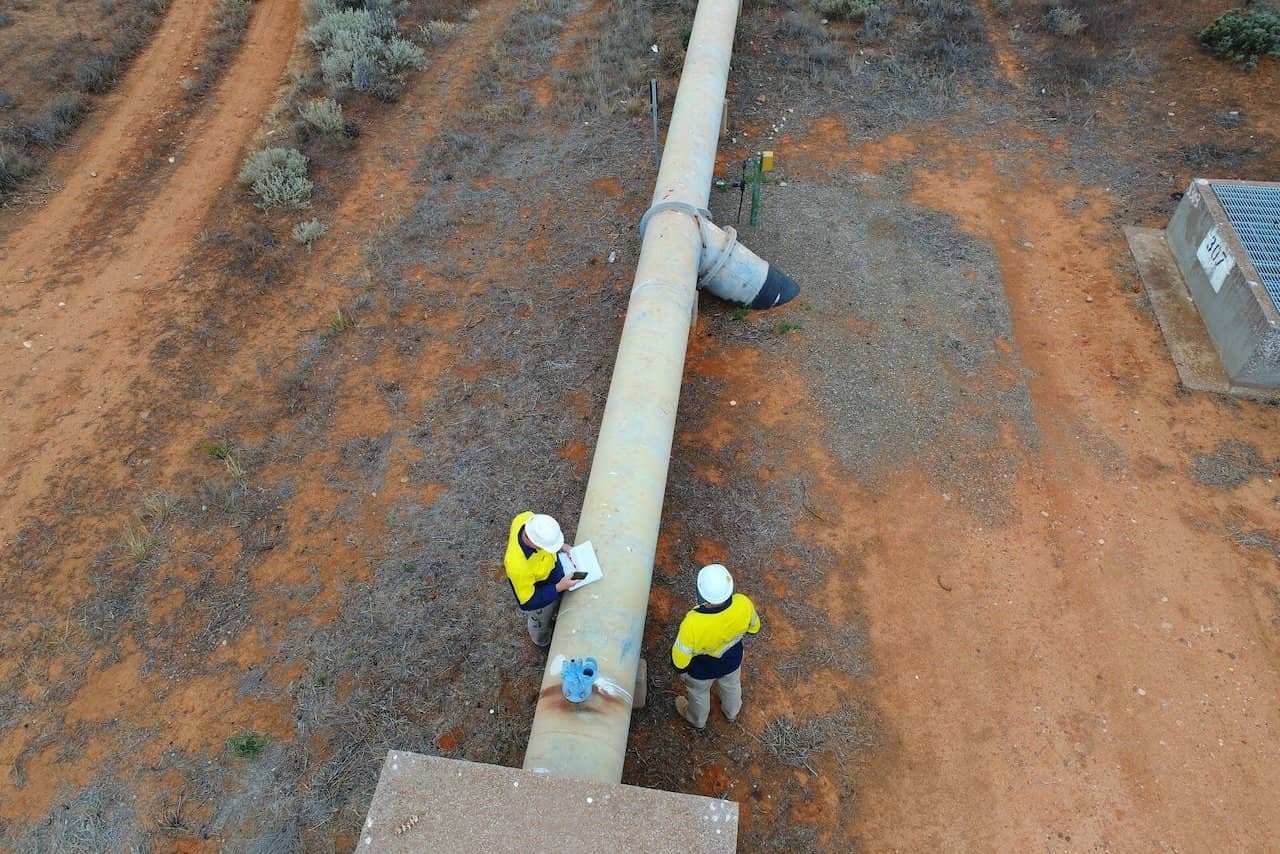
When a city is tasked with the maintenance of its water pipelines, ensuring top system performance is crucial. Naturally, there are various factors that can impact the performance of municipal water pipelines throughout their use.
Factors, such as the cleanliness of the pipeline, can result in changes in the overall system performance of water and force mains. In other words, you might experience low flow or changes in water quality when your pipelines begin to build up debris.
When dealing with issues such as these, you want to find the right pipeline cleaning methods that are effective and reasonably priced. In this case, you want to learn if pigging, for example, is the right solution that fits your needs and your budget.
By and large, knowing how to choose a cleaning method can seem daunting due to the many solution options available.
To help you get started, we’ve put together key information on how to choose an industrial pipe cleaning method that’s right for you.
Pipeline Experts: Inspection, Cleaning, Coating & More
Certified solutions for inspection, pre-commissioning, cleaning, internal coating, ice pigging™, mapping, and turnkey pipeline projects—maximizing safety and reliability at every stage.
How Do You Know When a Pipeline Needs Cleaning?
It might not always be obvious when your pipelines are due for cleaning, but the signs tend to build up over time. One of the earliest indicators is reduced flow or water pressure, which often points to accumulating debris inside the system.
You may also notice unusual odors or a change in water taste—both signs that organic material or biofilm could be present. Visible sediment or blockages, especially near outlets or access points, are another red flag. If you observe corrosion or wear on the pipes, it's a clear indication that the internal condition of your pipeline is deteriorating.
Additionally, system alerts or increased strain on pumps should not be ignored, as they often reflect underlying performance issues. Altogether, these signs suggest your system’s efficiency is compromised and that pipeline cleaning is the next necessary step.
How to Choose a Pipeline Cleaning Method
Identify Your Problem
It may seem simple, but your first step needs to be identifying your problem. This doesn’t necessarily mean you need all the finer details of your problem at this point.
Let’s use one of our previous scenarios of a pipe that has low flow as an example. Originally, the flow of your pipeline was at a certain level. Now, the flow is much lower than normal.
In this scenario, the issue of low flow is likely being caused by something obstructing the flow in your pipelines.
Now that you know your pipelines are dirty, which is likely causing your low flow, you want to get that flow back up.
Analyze Different Pigging & Pipeline Cleaning Methodologies
As we shared before, there are a plethora of different pipeline cleaning methods. While there is only one way to pig, there are other cleaning methods that aren’t pigging but use the term.
Each method for industrial pipe cleaning has different pros and cons to consider.
However, to illustrate how to choose a cleaning method, we will cover the three main approaches you’ll likely see.
1. Flushing
This methodology is one of the more basic ways of cleaning your pipelines. In fact, this is a method you can do on your own.
As the name suggests, flushing your pipes is when you turn your water pumps up, pumping out the maximum amount of water.
This method is used to knock loose general debris that might be in a pipe.
While this method can help with less difficult debris, it can’t tackle solidified dirt and debris, which can be the case.
So, if you’ve tried flushing out your pipes and it didn’t solve your issue, you’re next option is likely pigging.
2. Ice Pigging™
This type of cleaning is a newer form of technology that has become more common.
Instead of the typical solid foam pig, this pigging method uses an ice slurry. As this slurry goes through your pipes, it tackles lighter debris.
Ice Pigging™ is appropriate for cleaning out debris, like built-up biofilm, that doesn’t need a tougher cleaning method.
While Ice Pigging™ is faster than traditional pigging, it is not the ideal solution for most major issues in your pipeline. Thus, if you use Ice Pigging™, you’ll likely end up using it more often, which will cost you more in the long run.
3. Traditional Pigging and Swabbing
The traditional pigging and swabbing method, unlike the previously described pipeline cleaning methods, uses a solid foam pig.
By and large, traditional pigging is the most comprehensive methodology when it comes to tackling tough pipeline debris.
Why?
First, your pipelines are swabbed. Swabbing is an important initial step in pigging because it helps determine the degree of debris in the pipeline.
The initial swabbing pig is a soft, sponge-like foam pig that is extremely malleable. This malleability is beneficial for the pig as it makes its way through your pipes. Not only can the pig bend as needed through your pipes, but it also helps prevent the pig from becoming lodged.
As this initial pig encounters the debris in your pipe, it’ll either bend around the debris or break apart in more difficult cases.
When the initial pig comes out of the pipeline, it is known as a “prover pig.” Essentially, this prover pig lets your pigging experts know how tough the debris in the pipeline is.
Next, the pigs that go into your pipeline slowly progress towards denser foam pigs. As the pig gets denser, it is better able to tackle debris that has solidified or adhered to your pipeline.
This process is continued until your pipelines are free from debris.
4. Hydro-Jetting
Hydro-jetting uses high-pressure water jets to blast away buildup inside the pipeline. It’s highly effective when paired with specialized nozzles or rotating heads that can target debris more precisely.
This method is best used for grease, mineral scaling, and other tough internal deposits. It’s often applied to short or medium-length pipeline sections and is suitable for pipes that can handle high water pressure. However, hydro-jetting is not recommended for older or more fragile pipelines, as the intensity of the pressure could cause damage if not carefully controlled.
5. Chemical Cleaning
Chemical cleaning involves injecting specialized solutions—typically acids or alkaline agents—into pipelines to dissolve and remove buildup. Agents like phosphoric acid are used for rust removal, while caustic soda may be employed for organic deposits.
This method is often chosen when dealing with rust, internal scaling, or heavily compromised pipelines that require a deep clean. However, chemical cleaning requires strict environmental compliance and expert handling to prevent harm to the pipeline and the surrounding environment. It also tends to be more time-consuming and costly than other approaches.
6. Steam Blowing
Steam blowing is a process where high-pressure steam is forced through the pipeline to clean and sterilize its interior. This technique is generally reserved for high-temperature industrial applications.
It’s commonly used in oil and gas systems, heavy industrial pipelines, and systems that require sterilization before use, particularly during pre-commissioning of new lines. Despite its effectiveness, steam blowing demands a significant amount of energy, involves complex equipment, and requires experienced technicians to carry out the procedure safely and successfully.
Factors to Consider When Choosing a Cleaning Method
With several industrial pipeline cleaning methods available, choosing the right one can feel overwhelming. However, making an informed decision starts with understanding the specific needs of your system. Below are the key factors to evaluate before selecting a method.
Pipeline Material
The composition of your pipeline plays a major role in determining the appropriate cleaning approach. For metal pipelines—such as those made from steel or iron—methods like pigging, hydro-jetting, or chemical cleaning can be highly effective. These materials are typically more durable and can withstand the intensity of more aggressive cleaning methods. In contrast, plastic or composite pipelines are generally less tolerant of harsh treatment. In these cases, lower-pressure solutions like Ice Pigging™ or precisely calibrated hydro-jetting offer safer and more controlled results.
Pipeline Diameter
The size of your pipeline is another important factor. Large-diameter pipelines often benefit from techniques like pigging or steam blowing, which can cover a wider internal surface and handle large volumes of debris. For smaller-diameter pipelines, methods such as flushing or Ice Pigging™ are typically more effective. These approaches provide targeted cleaning without overwhelming the system or risking unnecessary pressure buildup.
Type of Debris
Different cleaning methods are designed to address different types of debris. If your system is affected by softer buildup—such as biofilm or loose sediment—methods like flushing or Ice Pigging™ may be sufficient. For tougher deposits like grease, mineral scale, or rust, you’ll likely need more intensive methods such as traditional pigging, hydro-jetting, or chemical treatments. Matching the cleaning technique to the nature of the debris ensures both effectiveness and efficiency.
The Pipeline Cleaning Process: What to Expect
To get a clearer idea of what pipeline cleaning involves, here’s a quick breakdown of the four main steps:
Inspection: Use video inspection or ultrasonic tools to assess buildup.
Method Selection: Choose the method that matches your pipeline’s needs.
Cleaning Execution: Shut down and isolate sections if needed, then deploy pigs, jets, or chemicals.
Post-Cleaning Verification: Re-inspect to confirm results. Repeat if debris remains.
Why Work With American Pipeline Solutions?
With over 100 years of combined experience, American Pipeline Solutions is North America’s longest-standing continuous pigging company. Our team has supported municipalities, industrial clients, and water districts with expert pipeline cleaning solutions designed for lasting impact.
We offer:
Proven pigging and swabbing solutions
Consulting to help you identify the right method
Full-service cleaning for water mains, wastewater systems, and more
Compliance with all safety and environmental guidelines
Need help assessing your pipeline’s condition or unsure which method fits best? Let’s talk.
Pipeline Experts: Inspection, Cleaning, Coating & More
Certified solutions for inspection, pre-commissioning, cleaning, internal coating, ice pigging™, mapping, and turnkey pipeline projects—maximizing safety and reliability at every stage.
Consult With Top Industry Experts at American Pipeline Solutions
With over 100 years of combined experience, American Pipeline Solutions is North America’s oldest continuous pigging company.
In those 100 years, American Pipeline Solutions has provided clients with comprehensive services for their water mains, wastewater, and overall pipeline integrity needs.
In addition to these services, we at American Pipeline Solutions offer consulting services to clients in need. When called in, we assess the client’s problems and use our expertise to recommend the best pigging solution.
Final Thoughts
Debris buildup in pipelines may seem like a small issue, but if left unaddressed, it can lead to major problems—reduced efficiency, safety hazards, or expensive downtime. Whether it’s light sediment or hardened scale, there’s a method that’s right for your system.
If you’re ready to improve performance and extend the lifespan of your pipelines, reach out to American Pipeline Solutions for expert support and a customized cleaning plan that works for your system and your budget.
FAQs:
How often should industrial pipelines be cleaned?
Cleaning frequency depends on the product, flow rate, and buildup potential. Most municipal and industrial systems benefit from scheduled cleaning every 6 to 12 months, or whenever flow or water quality declines. APS helps operators monitor pressure changes and debris patterns to determine an evidence-based cleaning interval that prevents costly downtime.
What are the main types of industrial pipeline cleaning methods?
Common techniques include flushing, Ice Pigging™, traditional foam pigging and swabbing, hydro-jetting, chemical cleaning, and steam blowing. Each method targets different deposit types—from soft biofilm to hardened scale. APS evaluates line diameter, material, and operating pressure to select the safest and most effective cleaning procedure for your system.
How do I know which pipeline cleaning method is right for my system?
Choosing a method starts with understanding your pipeline’s material, diameter, debris type, and operating conditions. For example, tougher debris may require mechanical pigging or hydro-jetting, while smaller or plastic lines respond better to Ice Pigging™. APS engineers analyze these variables and recommend the most efficient, compliant, and cost-effective solution.
What are the signs that my pipeline needs cleaning?
Reduced flow or water pressure, discolored water, unpleasant odors, or visible sediment near outlets often signal internal buildup. Corrosion, increased pump strain, or inconsistent pressure readings are additional warning signs. If these occur, schedule an inspection and cleaning assessment to avoid performance loss or system damage.
Is Ice Pigging™ safe for all types of pipelines?
Ice Pigging™ is gentle and effective for systems that can’t tolerate aggressive mechanical cleaning, including plastic or composite lines. The ice slurry conforms to pipe geometry and melts afterward, leaving no residue. APS uses Ice Pigging™ for water, wastewater, and industrial applications where traditional pigs may be too abrasive or risky.
What’s the difference between hydro-jetting and traditional pigging?
Hydro-jetting uses pressurized water to cut through grease or mineral scale, while traditional pigging relies on solid foam pigs that mechanically push and remove deposits. Pigging typically covers longer runs and provides deeper cleaning, whereas hydro-jetting is ideal for shorter, high-buildup segments. APS combines both when a hybrid approach yields the best results.
Can chemical cleaning damage my pipelines?
Chemical cleaning is effective for dissolving rust and internal scale but must be executed carefully. Using the wrong concentration or chemical agent can harm coatings or joints. APS applies chemical cleaning only under controlled conditions, following strict environmental and safety standards to ensure both pipeline integrity and compliance.
Why should I hire a professional pipeline services company instead of cleaning in-house?
Professional crews like APS bring specialized tools, field experience, and safety protocols that ensure a thorough, documented cleaning. In-house flushing often removes only light debris, while professional pigging or hydro-jetting addresses deeper contamination and verifies results through inspection. Partnering with APS minimizes risk, improves long-term flow, and extends asset life.
Contact American Pipeline Solutions today to request a quote and learn more about the pigging services we can provide.

Ice Pigging™ vs Traditional Pigging: Pros and Cons
Ice Pigging™ and traditional pigging are perhaps two of the most well-known cleaning technologies. Learn each cleaning solution's pros and cons and determine which is appropriate for you.
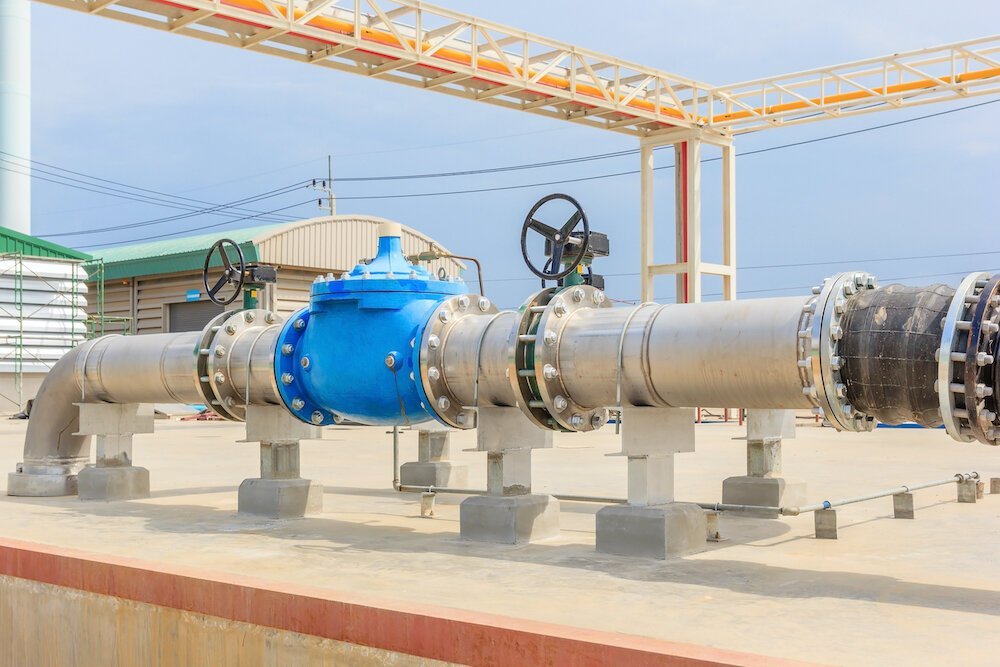
Municipal and industrial water pipelines encounter numerous challenges throughout their lifespan. Sediment, biofilms, and mineral deposits can accumulate inside mains, reducing capacity, affecting water taste and odor, increasing pumping costs, and ultimately shortening the life of the infrastructure. To maintain performance and avoid costly disruptions, cleaning is essential.
Two of the most widely used pipeline cleaning methods are traditional hydraulic pigging and the more innovative Ice Pigging™ technique. Both are effective but in different ways, and the choice often depends on the size of the pipe, the type of deposits present, and the balance between cost, risk, and downtime.
Traditional Pigging: Advantages and Disadvantages
Traditional hydraulic pigging has been used for decades as a trusted pipeline cleaning method. The process typically begins with a “prover pig” equipped with a location device to check for obstructions. Once the line is confirmed clear, a series of specialized cleaning pigs are propelled by system pressure through the pipeline, scraping away sediment and scale while restoring flow.
Pipeline Experts: Inspection, Cleaning, Coating & More
Certified solutions for inspection, pre-commissioning, cleaning, internal coating, ice pigging™, mapping, and turnkey pipeline projects—maximizing safety and reliability at every stage.
Advantages
Effective for long runs and large diameters
Traditional pigging is highly versatile and can handle a broad range of pipe diameters—up to 96 inches. It is also capable of cleaning longer continuous segments than Ice Pigging™, although the ice method can still achieve 2–3 miles in smaller pipes.
Low likelihood of pigs getting stuck
While one concern with foam pigs is the risk of them becoming lodged, this occurs rarely in practice. In American Pipeline Solutions’ 100+ years of combined experience, stuck pigs have only been an issue when severe obstructions were present. When this happens, tracking technology helps locate the obstruction so it can be removed and flows restored. By contrast, an ice pig cannot become permanently stuck, as it will simply melt.
Ability to navigate complex geometries
With the right pig materials and sizing, traditional pigs can move through short-radius elbows, tees, and a variety of valve types without issue.
Restores pipelines to near-original condition
When applied correctly, hydraulic pigging can return pipelines close to their original capacity and performance, extending asset life.
Smart pigging for integrity assessments
Beyond cleaning, pigging technology can also diagnose problems. SmartFoam Tools are cost-effective for evaluating cast iron, ductile, and steel mains, identifying cracks, corrosion, and wall anomalies with less disruption than conventional inspections.
Disadvantages
More complex setup requirements
Traditional pigging requires launcher and receiver chambers, which often means excavation and installation work before cleaning can even begin. This increases project time and cost compared to Ice Pigging™, which can use existing fittings.
Higher water consumption
Traditional pigging consumes significantly more water than Ice Pigging™—often 50% more during a typical operation. By comparison, uni-directional flushing can use up to five times more water, making both pigging and Ice Pigging™ preferable from a sustainability perspective.
Ice Pigging™: Benefits and Limitations
Ice Pigging™ is a relatively new cleaning technology that uses a dense slurry of ice crystals suspended in water to scour the interior of pipelines. The slurry behaves like a solid while retaining the flexibility of a liquid, which allows it to move smoothly through bends, diameter changes, and valves such as butterfly valves without issue.
Advantages
Minimal disruption and simple setup
Unlike traditional pigging, Ice Pigging™ can be introduced and removed using existing fittings such as hydrants, washouts, or air valves. This eliminates the need for launching and receiving chambers, reducing excavation, installation costs, and community disruption.
Exceptionally low risk of blockage
Because the pig is made of ice, it cannot become permanently stuck. If the slurry encounters an obstruction, it simply melts away—removing one of the major risks associated with traditional or foam pigging.
Faster turnaround and immediate return to service
An ice pig can often be injected into a pipe in less than twenty minutes, and the entire process typically lasts only a few hours. Once cleaning is complete, the line can be returned to service immediately without the need for lengthy flushing or chlorination.
Reduced water consumption and environmental impact
Ice Pigging™ uses less than half the water required for conventional swabbing. This reduction not only cuts operational costs but also makes the method more sustainable, a growing priority for municipalities and utilities.
Limitations:
Less aggressive cleaning power
While very effective at removing sediment, deposits, and biofilms, Ice Pigging™ cannot match the force of a hard pig. It is less effective against hardened tuberculation or calcified fats, oils, and grease.
Limited to small and medium pipe diameters
The technique is most effective for pipes ranging from about 1.5 to 24 inches in diameter. For larger mains, traditional pigging is usually the better choice, provided the system does not contain too many tight bends or obstacles.
No diagnostic or tracking capability
Unlike foam or smart pigs, the ice slurry cannot be tracked as it moves through the pipeline. This means it cannot provide diagnostic data or pinpoint obstructions. While a completely closed valve or severe blockage will be discovered during injection, smaller anomalies may go unnoticed.
Cost Considerations
Cost is one of the most important deciding factors. Ice Pigging™ is generally less expensive because it avoids excavation and reduces downtime. Labor costs are lower since systems are usually back online within hours, not days. Reduced water consumption also lowers disposal and treatment costs.
Traditional pigging, however, may be more cost-effective for very large pipelines or when severe obstructions require aggressive cleaning that ice slurry cannot provide.
Downtime and Operational Disruption
For municipalities and industries, downtime is often the most disruptive aspect of pipeline maintenance. Ice Pigging™ minimizes this issue, as pipes can be cleaned and returned to service within the same shift. Traditional pigging, by contrast, may require extended outages, excavation, and post-cleaning disinfection, which can stretch into several days. This difference often makes Ice Pigging™ more attractive when maintaining service continuity is critical.
Environmental Impact
Sustainability is becoming an increasingly important factor in pipeline maintenance. Ice Pigging™ is the more environmentally friendly option, consuming less water—often less than half that of swabbing—and generating less wastewater for disposal. The reduced need for excavation also means less disruption to the surrounding environment. Traditional pigging, while effective, is more resource-intensive.
When to Choose Each Method
Ice Pigging™ is usually the preferred choice for small- to medium-diameter mains where biofilm, sediment, or minor deposits are the primary concern. It is quick, cost-effective, and environmentally efficient, making it ideal for municipal water networks that prioritize customer service and minimal disruption.
Traditional pigging is still the method of choice for large-diameter pipelines, heavily obstructed mains, or situations where a full mechanical cleaning is required. It is also the better option when diagnostic information on pipeline integrity is needed, thanks to smart pigging technology.
Pipeline Experts: Inspection, Cleaning, Coating & More
Certified solutions for inspection, pre-commissioning, cleaning, internal coating, ice pigging™, mapping, and turnkey pipeline projects—maximizing safety and reliability at every stage.
Learn more about the best solution to solve your pipeline flow issues
American Pipeline Solutions is North America’s oldest continuous pigging company with over 100 years of combined experience. We have pigged and restored over two million feet of pipeline to near original conditions.
Contact American Pipeline Solutions to learn more about our institutional expertise and to request a quote.
FAQs:
What is the main difference between Ice Pigging™ and traditional pigging?
Traditional pigging uses solid or foam pigs that physically scrape pipeline walls, while Ice Pigging™ uses a semi-solid slurry of ice and water to clean more gently. Both remove sediment and deposits, but Ice Pigging™ requires less setup, less water, and eliminates the risk of pigs becoming stuck.
What is the main difference between Ice Pigging™ and traditional pigging?
Traditional pigging uses solid or foam pigs that physically scrape pipeline walls, while Ice Pigging™ uses a semi-solid slurry of ice and water to clean more gently. Both remove sediment and deposits, but Ice Pigging™ requires less setup, less water, and eliminates the risk of pigs becoming stuck.
How does Ice Pigging™ work?
Ice Pigging™ injects an ice slurry into a pipeline through existing fittings. The slurry behaves like a solid, scouring internal surfaces, yet remains flexible enough to move through bends and valves. Once cleaning is complete, the ice melts and the line can immediately return to service.
When should Ice Pigging™ be used instead of traditional pigging?
Ice Pigging™ is best for small- to medium-diameter lines (1.5–24 inches) with moderate sediment or biofilm buildup. It’s ideal for systems that cannot afford long shutdowns or excavation. Traditional pigging remains better for large-diameter mains, heavy scale, or when diagnostic inspection is required.
Can Ice Pigging™ damage pipelines or coatings?
No. The ice slurry is non-abrasive and gentle on internal coatings, which makes it suitable for aging infrastructure or sensitive materials. Traditional hard pigs can exert more force and may not be suitable for fragile coatings unless properly assessed.
Does Ice Pigging™ use less water than traditional pigging?
Yes. Ice Pigging™ typically uses less than half the water required for hydraulic pigging, reducing both consumption and wastewater disposal costs. It’s also more sustainable and environmentally friendly for municipal and industrial systems.
Can Ice Pigging™ be tracked or monitored during cleaning?
Not in the same way as traditional pigging. Ice Pigging™ cannot be tracked magnetically or electronically because it lacks a solid transmitter. However, the process is short, controlled, and monitored through flow, pressure, and discharge observation.
Which method cleans pipelines more thoroughly?
For soft debris, biofilm, and sediment, both methods are effective. Traditional pigging provides more mechanical cleaning power and is better for hardened scale or thick deposits. Ice Pigging™ provides comprehensive cleaning for lighter buildup while minimizing risk and downtime.
How long does an Ice Pigging™ operation take?
In most cases, injection takes less than 20 minutes and the entire cleaning can be completed in a few hours. Because the process uses existing fittings, pipelines can return to service the same day—often within the same shift.
Is Ice Pigging™ more cost-effective than traditional pigging?
For smaller and medium pipelines, yes. Ice Pigging™ eliminates the need for launcher/receiver installation, reduces labor, water, and downtime costs, and minimizes community disruption. Traditional pigging can be more cost-effective for large-diameter or heavily fouled pipelines requiring aggressive cleaning.
Does APS provide both Ice Pigging™ and traditional pigging services?
Yes. APS designs and delivers both methods depending on line conditions, diameter, and project goals. Our team evaluates pipe material, flow history, and buildup type to recommend the most effective, safe, and cost-efficient cleaning approach.

When Are Pipelines Unpiggable? Possible Solutions
When are pipelines unpiggable? We explore the scenarios when pigging is not feasible and the possible solutions to address them.

Pipeline maintenance and integrity testing are checks that should be performed regularly to ensure the optimal functioning of your pipeline system. Although pipelines are made of heavy-duty metal or plastic materials, they are still prone to wear and tear from years of use. At some point in your pipeline's operation, when it experiences low flow or stops functioning completely, you will have to apply various pigging solutions to clear out debris that might have accumulated.
However, simply cleaning out your pipelines doesn't always work out seamlessly. When a pipeline becomes ridden with tuberculation or the blockage is too huge, it becomes unpiggable, requiring more complex solutions.
In this article, we discuss the different scenarios that make a pipeline unpiggable and how they can be addressed.
Pipeline Experts: Inspection, Cleaning, Coating & More
Certified solutions for inspection, pre-commissioning, cleaning, internal coating, ice pigging™, mapping, and turnkey pipeline projects—maximizing safety and reliability at every stage.
When Are Pipelines Unpiggable?
If there is too much tuberculation or a total blockage in the line, it can become unpiggable. Most line issues can be pigged, but sometimes, steps need to be taken first to make pigging feasible. One such approach is jetting the pipeline first, which involves using high-pressure water jets to remove clogs, buildup, and debris. Hydro jetting is an eco-friendly way of clearing your pipes or preparing them prior to pigging.
If it has been a while since your pipeline was last maintenanced, total blockage and tuberculation can be expected. In this instance, your pipeline could be rendered unpiggable, even with pre-jetting. Below are some scenarios when pigging might not be possible.
Tuberculation in the Pipeline
Tuberculation happens when mounds of rust accumulate on the inside of your metal pipe, thus making it resistant to the flow of water. It is caused by the combination of bacteria and oxygen and can become so large and hardened that it obstructs water movement, rendering your pipeline eventually useless.
There are many ways to address tuberculation, but one of the most effective is the Picote cleaning process. In this procedure, a camera is used to inspect the pipeline and determine its readiness for a cleanout. When the extent of the debris is identified, a section of the pipeline is removed, usually along the 90-degree bend, and the Picote machine is attached to begin the process.
However, not all tuberculated pipelines are piggable; those built in the 70s, and earlier, usually need to be replaced completely. Minor tuberculation issues can still be addressed through pipe descaling, but when the problem has become so large on a pipe that's well past its lifespan, it's more practical to declare it unpiggable.

Pig is Blocked From Passing Through the Pipeline
If a pipeline is completely blocked, it becomes unpiggable. In order to travel through a line, the flow should be present by at least 30% to facilitate movement. In this scenario, the best alternative to pigging pipelines would be to remove the section that contains the blockage and clear it externally or replace the entire area.
Unconventional Valve Structures
Another reason why a pipeline could become unpiggable is the structure of the valves themselves. Eccentric plug valves and butterfly valves are uniquely designed that pigging equipment isn’t able to pass through. To clean this area, specialists would have to pig between the valves or take them out and replace them with full port units to allow for pig passage; however, Ice Pigging™ (another APS service offering) is another viable alternative to this specific problem.
Short Diameter Pipes
When your pipes are small and short, measuring 10 inches or less, pigging might not be a practical cleanout option. To pig effectively, you need a good launch location and a retrieval location, which isn't possible with a short pipe. Although unpiggable, the site can still be cleaned out using the Picote process.
Pipeline Experts: Inspection, Cleaning, Coating & More
Certified solutions for inspection, pre-commissioning, cleaning, internal coating, ice pigging™, mapping, and turnkey pipeline projects—maximizing safety and reliability at every stage.
Next Steps for Unpiggable Pipelines
With the advancements in pipeline cleaning and maintenance technology, the term "unpiggable" has started to lose its finality. Pipeline experts argue that there's no such thing as unpiggable pipelines, only those that are tricky to manage and will require unique interventions.
APS provides pigging solutions for pipelines of any size, structure, and issue. We have several options based on the problem and why the pipe needs to be pigged (or cleaned out using alternative techniques). Using our smart solutions, let us help you track the problem at the source and find the most efficient and safe cleanout strategies that will keep your pipelines in top condition for many years to come.
Contact American Pipeline Solutions and learn more about our unique pipeline pigging and cleanout solutions.
FAQs
What does it mean when a pipeline is “unpiggable”?
A pipeline is often called “unpiggable” when conventional pigging tools can’t safely or effectively pass through it. This can be due to heavy tuberculation, total blockages, small or short pipe runs, or restrictive features like eccentric plug or butterfly valves. In practice, “unpiggable” usually means the line needs extra preparation or alternative cleaning methods before pigging becomes feasible.
What are the most common reasons a pipeline becomes unpiggable?
Pipelines typically become unpiggable when there is severe tuberculation, complete blockage, complex or unconventional valves, or short pipe sections that don’t allow proper launching and receiving of pigs. Long periods without maintenance increase the likelihood of heavy buildup and obstructions that standard pigging tools cannot safely navigate.
Can an unpiggable pipeline ever be pigged again?
In many cases, yes. The pipeline may first need pre-cleaning (such as high-pressure jetting), localized repairs, valve changes, or alternative cleaning methods like Picote tools or Ice Pigging™. Once restrictions are reduced and suitable launch/receive points exist, a line that was considered unpiggable can often be transitioned back to piggable status with the right plan.
How does tuberculation make a pipeline unpiggable?
Tuberculation creates hardened mounds of rust on the inside of metal pipes. Over time, these mounds restrict flow, catch debris, and can physically block pigs from passing through. On older lines, especially those near or past their expected service life, tuberculation may be so extensive that full replacement is more practical than attempting pigging or descaling.
What are the options when a pig can’t pass because of a total blockage?
When a pig is blocked by a complete obstruction, operators usually have to locate the blocked section, isolate it, and either mechanically clear it from the outside or replace that segment of pipe. In some cases, pre-jetting or specialized cleaning tools can reduce the blockage, but if flow cannot be restored to a minimum level, conventional pigging is not a safe option.
Why do certain valves prevent pigging, and what can be done about them?
Valves like eccentric plug valves and butterfly valves have internal shapes that pigs can’t safely pass through. To clean these areas, crews may pig between the valves, remove and replace them with full port valves, or use alternative methods such as Ice Pigging™ that can navigate complex internals without solid pigs needing to pass through the valve body.
Why are short or small-diameter pipes often considered unpiggable?
Short runs of small-diameter pipe (for example, 10 inches or less with limited length) rarely provide enough space for a proper launcher, receiver, and safe pig control. In these cases, traditional pigging is impractical. Instead, techniques like Picote cleaning, high-pressure jetting, or other specialized tools are used to remove buildup and restore function.
How do Picote tools help with unpiggable lines?
Picote equipment uses rotating tools inserted from access points to mechanically descale and clean the pipe interior. For heavily tuberculated or short sections where pigs cannot be launched, Picote tools allow targeted removal of rust and buildup. They are particularly useful for older lines or small-diameter pipelines that would otherwise be considered unpiggable.
How can APS help if my line has been labeled unpiggable?
APS evaluates why the line is considered unpiggable—whether it’s tuberculation, blockage, valve design, or layout—and then recommends a combination of jetting, Picote cleaning, Ice Pigging™, sectional replacement, or valve changes. The goal is to restore flow safely and, where appropriate, return the pipeline to a condition where pigging and routine maintenance are once again possible.

Reasons for a Failed Fire Pump Test & Next Steps
Looking to fix your fire line’s low flow? Learn about tuberculation in fire lines and how American Pipeline Solutions can clean and prevent tuberculation.
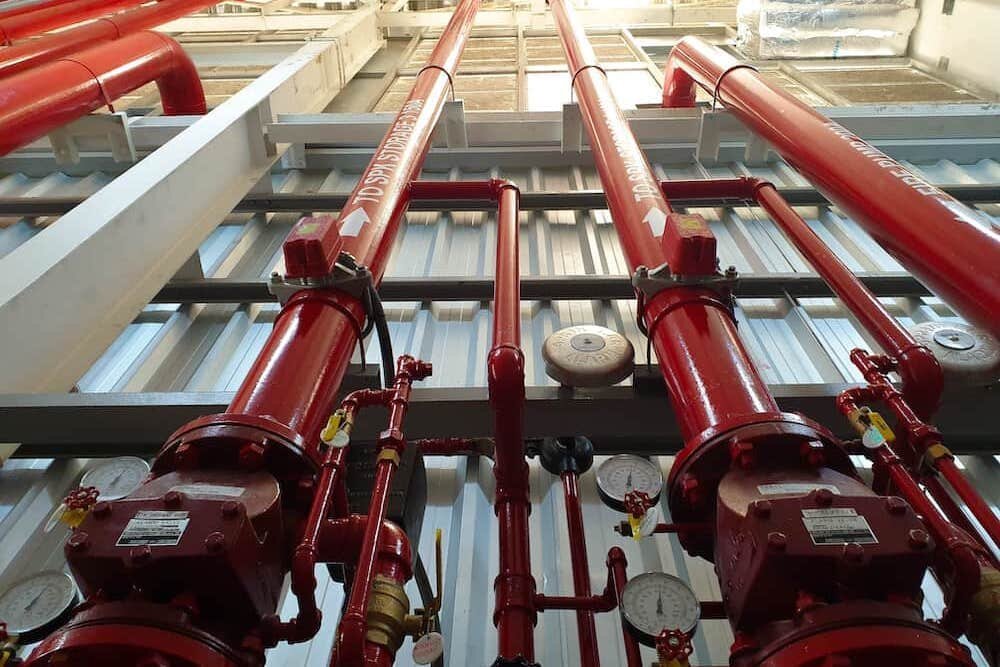
Each year, fire suppression systems must undergo a fire pump flow test to ensure compliance with industry standards. This test evaluates the flow rate of the fire line being tested. A low flow rate increases the likelihood of a failed test, which can compromise building safety and code compliance.
Several factors can contribute to a fire line’s low flow, including the type of fire line system, the pipeline material, and the substances transported. Most fire line systems are constructed from metallic pipes, with cast iron being the most common material. The primary cause of low flow in these pipes is tuberculation, a buildup inside the pipe that restricts water movement.
Keep reading to learn more about fire line tuberculation, how to detect it, and how American Pipeline Solutions can restore and maintain optimal fire line performance.
What Causes Tuberculation in Fire Lines?
Tuberculation occurs primarily in metallic pipelines, including cast iron and ductile iron pipes. It is caused by chemical reactions between bacteria in the fire line water and the iron in the pipe’s interior. Over time, this reaction creates a buildup, known as pipe scale or tuberculation, which narrows the pipeline and disrupts flow.
Left untreated, tuberculation can significantly reduce the efficiency of your fire suppression system and increase the risk of a failed fire pump test.
Pipeline Experts: Inspection, Cleaning, Coating & More
Certified solutions for inspection, pre-commissioning, cleaning, internal coating, ice pigging™, mapping, and turnkey pipeline projects—maximizing safety and reliability at every stage.
How to Detect Tuberculation?
The most common indicator of tuberculation in a fire line is low flow during a fire pump test. Additional signs may include uneven pressure readings or water discoloration.
At American Pipeline Solutions, we begin by performing a visual inspection of the fire line to determine the severity and location of the buildup. This inspection allows our team to assess the thickness of the tuberculation and plan the most effective cleaning approach.
Determining the Best Cleaning Approach
While replacing your fire line can remove tuberculation, it is often not cost-effective. Moreover, without proper prevention measures, new pipes can develop the same issue over time.
APS offers targeted solutions to clean and restore your existing fire lines. Our approach includes reviewing as-builts and fire line drawings, conducting a site visit, and creating a comprehensive proposal that outlines the recommended fire line descaling method.
Fire Line Descaling Methods
APS addresses tuberculation using a combination of:
Pigging
Rotary head technology
Picote mechanical equipment
The method chosen depends on the characteristics of the fire line.
Pigging is not typically the first choice for heavy-scale buildup, as foam pigs can break apart instead of removing the scale. Instead, APS often relies on Picote mechanical equipment, which applies stronger force to remove pipe scale efficiently. This method uses less water than pigging or rotary head technology while effectively cleaning the fire line.
Preventing Future Scale Build-Up and Low Flow
After cleaning, your fire line’s flow rate will return to optimal levels. To maintain this performance, fire lines should be cleaned approximately every five years. Without routine maintenance, tuberculation will reoccur, potentially leading to another failed flow test.
Epoxy coating offers a long-term solution to prevent future tuberculation. Unlike repiping, which can take several weeks and disrupt system operation, epoxy coating is a cost-effective, trenchless solution. Coating your cleaned pipelines can prevent tuberculation for up to 50 years, extending the life of your fire line while minimizing downtime.
Why Choose APS for Fire Line Cleaning and Prevention?
With extensive experience in fire line descaling and epoxy coating, APS provides reliable, industry-standard solutions that restore flow, improve efficiency, and ensure fire line compliance. Our team specializes in:
Fire line cleaning and tuberculation removal
Pipe descaling for metallic pipelines
Long-term prevention with epoxy pipe coating
Maintaining optimal flow rates for fire suppression systems
Take the Next Step
If your fire line has low flow or has failed a fire pump test, don’t wait for issues to worsen. Contact American Pipeline Solutions today to schedule a fire line inspection and learn more about our tuberculation cleaning and prevention services.
Pipeline Experts: Inspection, Cleaning, Coating & More
Certified solutions for inspection, pre-commissioning, cleaning, internal coating, ice pigging™, mapping, and turnkey pipeline projects—maximizing safety and reliability at every stage.
FAQs Reasons for a Failed Fire Pump Test & Next Steps
What are the most common reasons a fire pump flow test fails?
A fire pump test usually fails when the fire line can’t deliver the flow and pressure required by design or code. In metallic fire mains, the most common culprit is tuberculation—internal scale buildup that narrows the pipe. Other contributing factors include aging pipe, poor maintenance history, partial blockages, or restrictions at valves, fittings, and backflow devices that reduce effective internal diameter.
What is tuberculation in a fire line and why is it a problem?
Tuberculation is a form of internal corrosion scale that develops on metallic pipes such as cast iron and ductile iron. It’s caused by reactions between iron in the pipe wall and bacteria or minerals in the water. Over time, these “mounds” of corrosion products grow into the flow path, narrowing the pipe, disrupting hydraulics, and reducing the flow available during a fire pump test or emergency event.
How can I tell if tuberculation is causing my fire pump test to fail?
The clearest sign is low flow or low pressure during the annual fire pump test compared to the system’s design values. You might also see uneven pressure readings at different test points or notice discolored water during testing or flushing. To confirm, American Pipeline Solutions performs visual inspections where possible, reviews as-built drawings, and targets segments most likely to be heavily scaled for more detailed assessment.
Do I need to replace my fire main if it fails a fire pump test?
Not always. Full replacement is expensive, disruptive to the building, and doesn’t prevent new tuberculation from forming in fresh pipe. In many cases, APS can restore performance by mechanically descaling the existing fire line, verifying improved flow, and then applying an internal epoxy coating. This approach often costs less than repiping, can be completed faster, and extends the useful life of the existing fire main.
How does APS clean and descale a tuberculated fire line?
APS starts with an engineering review of your fire line drawings and a site visit to confirm layout, access, and condition. Based on what we find, we select a descaling method such as pigging, rotary head technology, or Picote mechanical tools. For heavy, stubborn scale, Picote equipment is often preferred because it applies strong mechanical force directly to the deposits while using less water than traditional pigging or purely hydraulic methods.
Why isn’t pigging always the best choice for heavy scale in fire mains?
Pigging can work well in some fire systems, but foam or soft pigs tend to deform or break apart when pushed through severe tuberculation. Instead of cutting and removing the deposits, they may simply squeeze around them or leave pieces behind. In heavily tuberculated metallic mains, APS often prioritizes Picote mechanical descaling or rotary heads, which can physically cut and remove thick scale more reliably, especially in older cast iron lines.
How often should fire lines be cleaned to maintain acceptable flow?
A good baseline for many facilities is to clean the fire line approximately every five years, but the ideal interval depends on water quality, pipe age, and system design. Some systems with aggressive water chemistry or older infrastructure may need more frequent attention. APS helps building owners and facility managers set a cleaning and inspection schedule that supports both fire pump test performance and long-term reliability.
How does internal epoxy coating help prevent future tuberculation?
After the fire line is mechanically cleaned and properly dried, APS can apply an internal epoxy coating to seal the pipe interior. This coating creates a barrier between the water and the iron surface, which slows or prevents the reactions that cause new tuberculation. Compared to repiping, epoxy coating is trenchless and less disruptive, and when applied correctly, it can help protect the system for decades while keeping flows closer to original design levels.
Is epoxy coating always better than replacing the fire line?
It depends on the structural condition of the pipe. If the fire main is structurally sound but restricted by internal scale, epoxy coating after descaling is often more cost-effective and less disruptive than full replacement. In cases of severe wall loss, leaks, or structural failure, replacement may still be required. APS evaluates each system individually and recommends the most practical option based on condition, budget, and risk tolerance.
Why should I choose American Pipeline Solutions for fire line flow and tuberculation issues?
American Pipeline Solutions combines fire line descaling, mechanical cleaning, and epoxy coating under one roof, so you don’t have to coordinate multiple contractors. We focus on restoring flow, improving fire pump test performance, and extending the life of metallic fire mains with minimal disruption to building operations. Our process includes upfront assessment, clear proposals, field-proven cleaning methods, and long-term prevention strategies tailored to your facility.
Looking to improve the low flow of your fire line?
Contact American Pipeline Solutions today to learn about our fire line tuberculation cleaning and prevention solutions.

What is Epoxy Pipe Lining & When to Use It
Are you in need of an efficient way to maintain your pipeline? Learn about epoxy pipe lining, the benefits of internal pipe coating and more.

When it comes to maintaining pipelines, keeping them efficient, durable, and safe is always the top priority. Issues such as tuberculation, corrosion, and leaks can reduce pipeline performance and eventually lead to costly failures. Many property managers and facility operators assume replacement is the only solution — but full repiping is expensive, disruptive, and time-consuming.
Epoxy pipe lining, also known as epoxy pipe coating or internal pipe coating, offers a reliable, long-lasting alternative. By applying an epoxy layer to the inside of your pipeline, you can extend its lifespan, improve flow, and prevent future damage — all without the cost and downtime of replacement.
Keep reading to learn about internal pipe coating, when it use it and the pros and cons of epoxy pipe lining.
What is Epoxy Pipe Lining?
Epoxy pipe lining is a trenchless rehabilitation method that involves coating the interior of pipelines with a liquid epoxy resin that hardens to form a protective barrier. This barrier prevents corrosion, reduces tuberculation buildup, and restores the pipe’s original flow capacity.
Epoxy coatings are widely used across different industries, including water lines, fire suppression systems, wastewater and sewer lines, and industrial feed pipes. Once cured, the epoxy coating can last up to 30–50 years, helping operators avoid repeated cleaning or early replacement.
What is Epoxy Pipe Coating: What to Know
When Do I Need Epoxy Pipe Coating?
Pipelines face different challenges depending on what they transport — water, gas, wastewater, or other substances — and what they’re made from. Common situations where epoxy pipe coating is needed include:
Tuberculation in cast iron fire lines: Low flow during annual fire suppression tests often indicates scale buildup. After cleaning, epoxy lining ensures the issue doesn’t return.
Corrosion in metallic pipes: Leaks and breaks caused by corrosion can be sealed and prevented with an epoxy barrier.
Aging infrastructure: Older pipelines with recurring issues benefit from lining instead of repeated spot repairs.
Signs that your system may need pipe lining services include: reduced water pressure, discolored water, frequent leaks, or the need for frequent descaling.
What Pipes Can Be Lined?
To ensure that a pipeline receives the proper solution, the pipeline must be evaluated. At American Pipeline Solutions, we perform a visual inspection of a pipeline to determine the pipeline issue. This inspection is necessary to determine the appropriate cleaning solution for the pipeline, which must be done before lining the pipeline.
Before applying epoxy, pipelines must undergo a visual inspection and cleaning to ensure proper adhesion. At American Pipeline Solutions, we evaluate your pipe to determine the best preparation and coating method.
Pipelines and systems that can be lined include:
Pipeline materials:
Cast iron
Ductile iron
Copper
Steel
HDPE
PVC* (PVC requires sanding before lining to ensure epoxy bonds properly)
Pipeline systems:
Water lines
Fire lines
Wastewater and sewer lines
Clarifier drains
Feed pipes
Drain lines
This is not a complete list — if you have a pipeline not listed above, our team can assess whether internal epoxy coating is an option.
How the Epoxy Pipe Lining Process Works
The epoxy lining process involves several precise steps to ensure a long-lasting and reliable result:
Inspection – Our team performs a pipeline inspection to identify scale, corrosion, or leaks.
Cleaning – Using methods such as pigging, rotary heads, or Picote mechanical equipment, we remove buildup and prepare the pipe interior.
Drying – Moisture must be eliminated to allow epoxy to adhere properly.
Epoxy Application – The liquid epoxy is evenly applied to the interior pipe walls.
Curing – Once cured, the epoxy forms a durable, corrosion-resistant barrier.
Final Testing – Pressure testing and inspection confirm that the coating is properly applied and the pipeline is ready for service.
This process is faster, cleaner, and more cost-effective than traditional pipe replacement.
Epoxy Pipe Lining vs. Pipe Replacement
When deciding between epoxy lining vs. repiping, consider the following:
Cost: Epoxy lining is usually more affordable than replacement, especially when factoring in downtime and labor.
Time: Pipe coating can often be completed in days, while repiping may take weeks.
Disruption: Repiping may require excavation or structural modifications. Epoxy is a trenchless solution.
Prevention: Replacement removes existing corrosion but doesn’t prevent future problems. Epoxy creates a barrier that resists corrosion and tuberculation for decades.
In short, epoxy pipe lining helps you save money, reduce downtime, and improve long-term pipeline performance.
How Much Does Epoxy Pipe Lining Cost?
One of the most common questions we hear is: how much does epoxy pipe lining cost?
The cost depends on several factors:
Pipe diameter and length
Pipe material (cast iron, steel, copper, etc.)
Level of corrosion or buildup
Accessibility of the pipeline
Whether additional cleaning or preparation is required
While exact costs vary, epoxy lining is typically 30–40% less expensive than full repiping and offers long-term savings by extending pipeline life up to 50 years.
For an accurate estimate, American Pipeline Solutions provides pipeline inspections and customized quotes based on your specific system.
Pros and Cons of Epoxy Pipe Lining
Advantages:
Extends pipeline lifespan by decades
Prevents corrosion, leaks, and tuberculation
Reduces downtime compared to repiping
Cost-effective long-term solution
Safe and compliant for potable water and fire suppression systems
Limitations:
Not suitable for collapsed or severely damaged pipes
Requires thorough cleaning and preparation
May not be applicable to all pipeline materials without modification (e.g., PVC)
Protect Your Pipeline with Epoxy Coating
Pipeline replacement isn’t always necessary. With epoxy pipe lining services, you can restore flow, prevent future damage, and extend the life of your infrastructure without the cost and hassle of repiping.
Contact American Pipeline Solutions today to schedule a pipeline inspection and find out if epoxy coating is the right solution for your system.
FAQs:
What is epoxy pipe lining?
Epoxy pipe lining is a trenchless rehabilitation method where a liquid epoxy resin is applied to the inside of an existing pipe. Once cured, it forms a hard, smooth barrier that protects against corrosion, tuberculation, and leaks while restoring the pipe’s original flow capacity. This allows many systems to be renewed without full repiping or major structural disruption.
When should I consider epoxy pipe coating instead of pipe replacement?
Epoxy pipe coating is a strong option when you’re dealing with recurring leaks, visible corrosion, scale or tuberculation, low flow during testing, or aging infrastructure that still has basic structural integrity. If your system is constantly needing repairs but the pipe is not collapsed or severely deformed, internal epoxy coating can often solve the underlying issues without the cost and downtime of full replacement.
Which types of pipes can be lined with epoxy?
Epoxy can be used on a wide range of pipeline materials, including cast iron, ductile iron, steel, copper, and certain plastics. At American Pipeline Solutions, we inspect and clean the pipe first, then determine whether epoxy will bond properly. In some cases, materials like PVC must be mechanically prepared, such as sanding the interior, to ensure the coating adheres and performs as designed.
What kinds of pipeline systems are good candidates for epoxy lining?
Typical candidates include water distribution lines, fire suppression and fire loop piping, wastewater and sewer lines, clarifier drains, feed lines, and various industrial drain or process pipes. The key is that the line is accessible for cleaning and coating and still structurally sound. APS evaluates each system individually to confirm whether internal epoxy coating is a practical and safe solution.
How long does epoxy pipe lining last?
When properly designed, cleaned, and applied, an internal epoxy coating can last 30–50 years. The coating helps isolate the pipe wall from corrosive water or wastewater, slows tuberculation, and reduces the need for frequent descaling. That extended lifespan is a major reason many facility owners choose lining over repeated spot repairs or early pipe replacement.
How does the epoxy pipe lining process work?
The process starts with inspection to identify corrosion, scale, or leaks. APS then performs thorough mechanical cleaning using methods such as pigging, rotary heads, or Picote equipment, followed by drying to remove moisture. The liquid epoxy is applied to the interior walls, allowed to cure, and then verified with testing and inspection. Once complete, the pipeline is ready to return to service with a new protective barrier.
Is epoxy pipe lining cheaper than repiping?
In many projects, epoxy lining is 30–40% less expensive than full repiping once labor, demolition, reconstruction, and downtime are factored in. Because the method is trenchless, it often avoids excavation, slab removal, or extensive ceiling and wall work. APS provides inspections and project-specific quotes so you can compare the cost and disruption of lining versus replacement for your system.
Are there situations where epoxy pipe lining is not recommended?
Yes. Epoxy is not suitable for pipes that are collapsed, severely deformed, or structurally unsound. It also requires thorough cleaning and preparation to perform correctly, and certain materials or configurations may need additional surface prep. During the inspection phase, APS evaluates wall condition, materials, and access to determine whether lining is safe, effective, and compliant for your application.
Is epoxy pipe lining safe for potable water and fire suppression systems?
When the correct epoxy formulation is chosen and applied according to specification, internal coatings are designed to be safe and compliant for potable water and fire protection piping. At American Pipeline Solutions, we pair epoxy products with the appropriate system type and follow strict preparation, application, and testing procedures to help ensure performance, safety, and code compliance.
Looking to protect your pipeline systems?
Contact American Pipeline Solutions to learn how epoxy pipe lining can help.

How to Clean and Prevent Tuberculation in Cast Iron Pipes
You shouldn’t have to live with restricted flow caused by a tuberculated pipe. Learn about tuberculation in cast iron pipes and how to clean & prevent buildup.
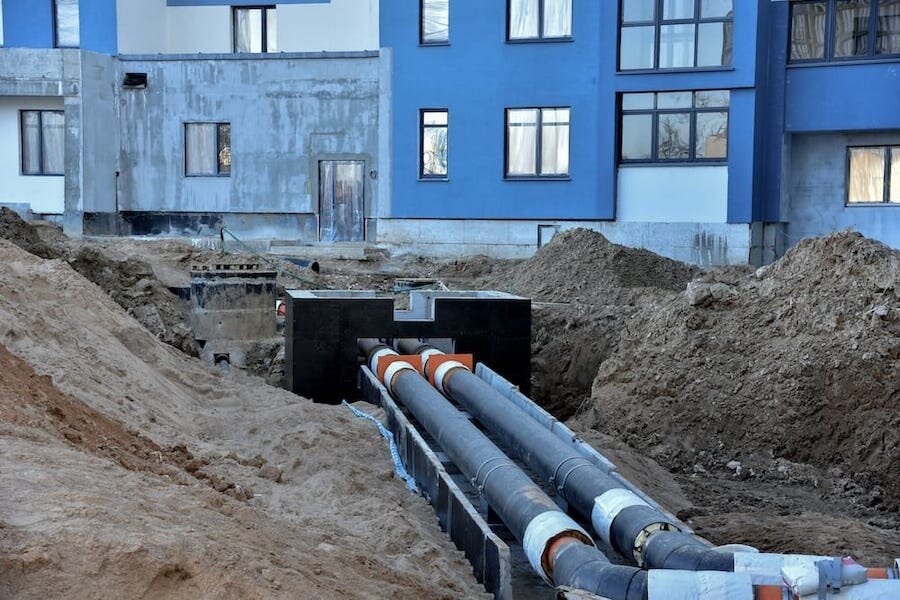
Cast iron pipes are trusted for their strength and long lifespan, which is why they remain a standard in many condos, apartments, and office buildings. But even durable systems develop issues over time. One of the most common problems in older cast iron pipelines is tuberculation—a buildup of rust and bacteria that narrows the inside of pipes, disrupts flow, and threatens water quality.
If you’ve noticed signs of tuberculation, you might assume full pipe replacement is your only option. Fortunately, replacement isn’t always necessary. With the right inspection, cleaning, and prevention methods, you can restore your system and protect it for decades.
Keep reading to learn what causes tuberculation, the warning signs to watch for, and how American Pipeline Solutions (APS) cleans and prevents it with proven, long-term solutions.
What is Tuberculation?
Tuberculation is a corrosive buildup inside cast iron and ductile iron pipes. It occurs when bacteria in water interact with the iron in the pipe wall, leading to iron oxide (rust) deposits that gradually thicken and form rough, tubercle-like formations.
Over time, this buildup reduces the internal diameter of the pipe, restricting flow and increasing pressure. In some cases, tuberculation can also contribute to leaks or pipe failure.
How to Clean & Prevent Tuberculation in Cast Iron Pipes
What Causes a Tuberculated Pipe?
Several factors can lead to tuberculation in cast iron pipes:
Water chemistry: Low pH, high oxygen, or chlorine content can accelerate corrosion.
Bacteria: Microorganisms react with iron to create rust deposits.
Age: Cast iron pipelines installed in the 1950s–70s are now reaching the age where tuberculation is common.
Low water velocity: Slow-moving water makes it easier for deposits to settle and grow.
Lack of protective lining: Older pipes were rarely coated internally, leaving them vulnerable.
Pipeline Experts: Inspection, Cleaning, Coating & More
Certified solutions for inspection, pre-commissioning, cleaning, internal coating, ice pigging™, mapping, and turnkey pipeline projects—maximizing safety and reliability at every stage.
The Signs of Pipe Tuberculation
Tuberculation isn’t always obvious at first. Some of the most common warning signs include:
Discolored or rusty water: Reddish-brown staining in sinks, tubs, or toilets.
Low water pressure: Reduced flow at fixtures due to narrowed pipes.
Unexplained leaks: Corrosion can weaken pipe walls, leading to frequent repairs.
Poor fire system performance: Fire suppression lines may fail flow tests because of restricted gallons per minute.
Bad taste or odor: Metallic or musty water can result from corrosion byproducts.
Cleaning and Prevention Solutions for a Tuberculated Pipe
Pipe replacement is a guaranteed solution—but it’s expensive, disruptive, and unnecessary in many cases. APS offers cost-effective cleaning and prevention options to restore and protect existing pipelines.
Step 1: Mechanical Cleaning
APS uses advanced cleaning methods to remove tuberculation buildup:
Picote Mechanical Equipment – Applies powerful, controlled force to remove heavy deposits while using less water than other methods.
Rotary Head Technology – Effective for loosening and clearing debris in certain conditions.
Pigging – Foam pigs push through pipelines to clear deposits, though it’s often less effective on severe buildup.
Ice Pigging™ – An innovative solution using ice slurry that is highly effective and eco-friendly.
Step 2: Epoxy Coating for Long-Term Prevention
Once pipes are cleaned, APS applies a thin epoxy coating to the interior walls. This protective lining:
Prevents further tuberculation for up to 50 years.
Is NSF-61 certified safe for drinking water.
Reduces maintenance costs and downtime.
Is trusted by industries worldwide—including experts at NASA.
With proper coating, property owners avoid recurring cleanings every 5 years and extend the life of their infrastructure significantly.
Pipeline Experts: Inspection, Cleaning, Coating & More
Certified solutions for inspection, pre-commissioning, cleaning, internal coating, ice pigging™, mapping, and turnkey pipeline projects—maximizing safety and reliability at every stage.
The Risks of Ignoring Tuberculation
Delaying action on tuberculation can have costly and even dangerous consequences:
Health risks – Rust particles and bacteria can compromise water safety.
Fire protection risks – Restricted fire suppression systems may fail inspections.
Financial risks – Emergency repairs or full replacement are far more expensive than preventative maintenance.
Operational risks – Low water pressure and frequent leaks lead to tenant complaints and higher maintenance budgets.
How American Pipeline Solutions Handles Tuberculation Projects
APS provides end-to-end pipeline services that maximize reliability and safety:
Inspection & Assessment – Video inspection and flow testing to diagnose the extent of tuberculation.
Cleaning – Selecting the right method (Picote, rotary, pigging, ice pigging™).
Epoxy Coating – Applying a certified lining for long-term protection.
Testing & Quality Control – Ensuring your system is fully restored and compliant.
With APS, property managers get a turnkey solution that saves money and prevents future issues.
FAQs:
What is tuberculation in cast iron pipes?
Tuberculation is a corrosion process that creates rough, rust-colored nodules inside iron pipelines. It forms when naturally occurring bacteria react with the pipe’s iron wall, producing iron oxide deposits. Over time, these buildups restrict flow, increase pressure, and may lead to leaks or pipe failure.
What causes tuberculated pipes?
Tuberculation develops due to a combination of water chemistry, bacteria, and age. Low pH or high oxygen levels accelerate corrosion, while microorganisms convert iron into rust deposits. Older, unlined cast iron systems are most vulnerable, especially where water moves slowly or stagnates.
How does American Pipeline Solutions clean tuberculated cast iron pipes?
APS restores flow and surface integrity using advanced mechanical cleaning and Ice Pigging™ technology. Depending on severity, methods may include Picote mechanical descaling, rotary heads, foam pigging, or ice slurry pigging. These approaches safely remove iron buildup without damaging the host pipe.
Is full pipe replacement necessary once tuberculation appears?
Not always. Replacement is costly and disruptive, but most pipelines can be renewed with inspection, cleaning, and internal epoxy coating. APS removes deposits, dries the line, and applies a thin NSF-61-certified epoxy barrier that stops further corrosion and extends service life up to 50 years.
How does epoxy coating prevent future tuberculation?
After cleaning, APS applies an internal epoxy lining that seals the pipe’s surface from water and oxygen exposure. This coating eliminates the conditions bacteria need to produce rust, protecting potable water quality and drastically reducing future maintenance requirements.
What are the signs that my cast iron pipes have tuberculation?
Common indicators include rusty or discolored water, low pressure, metallic taste, or recurrent leaks. In buildings with fire systems, tuberculation may cause failed flow tests. An inspection from APS can confirm the condition and recommend appropriate cleaning or coating solutions.
What happens if tuberculation is ignored?
Neglecting tuberculation can lead to clogged or burst pipes, compromised water safety, and reduced fire-protection performance. Over time, emergency repairs and replacements cost far more than preventive cleaning and coating. APS helps property owners address corrosion early to avoid these risks.
How long does the cleaning and coating process take?
Most small to medium building systems can be inspected, cleaned, and coated within a few days, depending on pipe length and access points. APS plans each project to minimize downtime and restore service as quickly as possible.
Is APS’s epoxy coating safe for drinking water systems?
Yes. The epoxy products APS applies are NSF/ANSI-61 certified, meaning they are approved for use in potable water lines. They are widely trusted across municipalities, commercial buildings, and even NASA facilities for their long-term safety and durability.
Are you looking for an efficient solution to your tuberculated pipe?
Contact American Pipeline Solutions and learn about our unique pipeline tuberculation solutions.

Common Pipeline Pigging Terminology to Know
Curious about the pipeline and pigging industry? Check out this list of key pipeline terminology defined by our experts at American Pipeline Solutions.

The pigging pipeline process is a unique one. If you’ve ever found yourself curious about various pigging and pipeline terminology, you aren’t alone. When looking to maintain your pipelines, obtaining key information about various pigging terms can provide beneficial insights.
What types of pipeline corrosion should I know about? What’s the difference between a caliper pig and a configuration pig? What do dents in my pipeline look like, exactly?
By and large, the art of pigging can best be understood by examining various pigging and pipeline terminology.
To give you an idea of what pigging is all about, we’ve defined the following pigging and pipeline terminology.
Pipeline Experts: Inspection, Cleaning, Coating & More
Certified solutions for inspection, pre-commissioning, cleaning, internal coating, ice pigging™, mapping, and turnkey pipeline projects—maximizing safety and reliability at every stage.
What Is a Pipeline Pig?
A pipeline pig is a self-contained tool that travels inside a pipeline to perform cleaning, inspection, or other mechanical functions. These tools help maintain pipeline efficiency and ensure safe operation, especially in oil, gas, water, and industrial systems.
Pigs are categorized broadly into:
Utility pigs: Perform cleaning, separating, or gauging functions.
Instrumented pigs (also called smart pigs): Used for internal inspection and data collection.
Configuration pigs: Specialized pigs that gather pipeline condition data without advanced inspection sensors.
Modern pigs are used for more than cleaning—they’re vital for diagnostics, corrosion detection, and structural analysis in pipeline inspection and pressure pipe inspection workflows.
Pigging and Pipeline Terminology to Know
Camera pig: A camera pig is a configuration pig. The configuration pg uses a camera and light sources inside a pipe to photograph the pipe’s inner surface.
Caliper pig: A caliper pig is similar to a gauging pig. A caliper pig tool is a pig designed with mechanical sensors or arms on the pig’s body. These mechanical sensors record the internal structure of the pipeline.
Cleaning Pig: The purpose of running a cleaning pig is to remove debris or build-up inside a pipeline. Running a cleaning pig increases cleaning efficiency.
Configuration Pig: A configuration pig is a pig that is used to gather data about the internal pipeline wall. There are several types of configuration pigs, such as a camera pig.
Corrosion: There are several types of pipeline corrosion, which are defined as the following:
External: External corrosion of a pipeline is a chemical or electrochemical reaction of a pipeline’s metal to the surrounding environment. When corrosion of a pipeline occurs on the pipe’s external surface, it is external corrosion. Rust, or the formation of iron oxides, is a common electrochemical corrosion process.
Internal: Similar to external corrosion, internal corrosion differs due to the location of the corrosion.
Pit, or Pitting Corrosion: A pit in a pipeline is caused by a process known as pitting corrosion. This is a localized form of corrosion that can occur on the internal or external surface of a pipeline. A pit, also referred to as a cavity, is the result of localized corrosion process.
Selective Seam Weld Corrosion: Another form of localized corrosion is selective seam weld corrosion. This type of corrosion is selective because it affects the weld metal instead of the pipe’s base metal.
Stress Corrosion Cracking: Within a corrosive environment, cracks can occur. This is referred to as stress corrosion cracking. These cracks can be the cause of a pipe’s sudden failure due to pressure on the pipe.
Cracks: In pipeline terminology, there are three types of cracks:
Fatigue: Fatigue of a pipeline occurs when the pipeline’s material is weakened. The weakening of a pipeline’s material is the result of regular use. Accordingly, the pipeline experiences localized structural damage, and cracks begin to grow in the pipe.
Girth Weld Crack: A girth weld is a type of arc welding that joins together a pipeline. When a pipeline has cracks along its girth weld, it is known as girth weld cracks.
Seam Weld Crack: A seam weld is another type of arc welding that joins together a pipeline. Similar to girth weld cracks, when a pipe has cracks along its seam weld, it is seam weld cracks.
Dent: When a pipeline’s surface has a depression, typically the result of mechanical damage, it is known as a dent. A dent is identified partly by the fact that it does not reduce the wall thickness of the pipeline.
Fill Pig: A fill pig is a type of pig run through a pipeline during various testing processes. Specifically, the fill pig is used during a pipeline filling procedure. The pig is propelled by a column of test water, ensuring that air in the pipeline is eliminated.
In-Line Inspection (ILI): In-line inspection is when a pipeline is inspected through processes that examine the interior of a pipeline.
In-Line Inspection Tool: The tool used in in-line inspections is known as an in-line inspection tool. This device is also referred to as a “smart” pig or an “intelligent” pig. The focus of this tool is the inspection of a pipeline’s walls.
Instrumented Pig: An instrumented pig is a tool equipped with instruments such as sensors or records, to examine a pipe’s interior. There are two main types of instrumented pigs: configuration pigs and in-line inspection tools.
Mapping Pig: One type of configuration pig is a mapping pig. A mapping pig uses technology, often inertia sensing, to produce a plan view of a pipeline’s route.
Metal Loss: Metal loss refers to numerous types of pipeline anomalies. These anomalies are identified by the loss of metal in a pipeline’s surface. This metal loss can be the result of pipeline corrosion or gouging.
Obstructions: Any foreign objects or general restriction that reduces a pipe’s flow is an obstruction. Obstructions can be identified through the visual inspection of a pipeline’s interior.
Pig: A pig is a universal term referring to a device used in pipeline pigging procedures. A pig tends to be self-contained, such as an instrumented pig like a configuration pig. The general purpose of using a pig is to clean, inspect, or measure a pipeline.
Swab: The first pig used in a pigging process is often referred to as a swab. A swab tends to be made of soft foam and is meant to be malleable, as it must navigate potential pipeline obstructions. Once a swab arrives at a pipeline receiver, it is known as a “prover pig.” The condition in which this pig emerges indicates the internal condition of a pipeline.
Trap: A pipeline trap is used for either a pig launcher or a pig receiver. The use of these devices is integral to pigging procedures.
Launcher: A launcher, or pig launcher, is part of a pig trap used to introduce a pig into a pipeline. A pig is forced into a pipeline without interrupting the pipeline’s flow with a launcher. A pig can also be inserted from a launcher into a pipeline by towing it with a device or cable.
Receiver: A pipeline receiver is used alongside a pig launcher. The receiver is used to remove a pig from a pipeline. The receiver is important because examining the pig, such as a prover pig, can help identify the next steps of the pigging process.
Why Pigging Matters for Pipeline Inspection
Pigging plays a crucial role in pipeline inspection and pressure pipe inspection because it allows operators to:
Detect early signs of corrosion or damage
Verify the integrity of pipeline welds and joints
Measure internal buildup and blockage
Map pipeline routes and conditions without excavation
This proactive approach helps extend pipeline life, ensure environmental safety, and prevent unplanned shutdowns.
Need Help with Pigging or Pipeline Inspection?
At American Pipeline Solutions, we offer advanced pigging services, pipeline inspection, and pressure pipe diagnostics using industry-standard and custom solutions. Whether you're inspecting a new line or diagnosing a flow issue, we help you get clarity inside your pipelines—without guesswork.
Pipeline Experts: Inspection, Cleaning, Coating & More
Certified solutions for inspection, pre-commissioning, cleaning, internal coating, ice pigging™, mapping, and turnkey pipeline projects—maximizing safety and reliability at every stage.
What does “pigging” mean in pipeline maintenance?
Pigging is the process of running a specialized tool, called a pig, through a pipeline to clean, inspect, or perform other mechanical tasks without interrupting flow. It helps maintain internal cleanliness, verify integrity, and support accurate in-line inspection (ILI).
What is a pipeline pig?
A pipeline pig is a self-contained device that travels inside the pipeline to clean, inspect, or measure internal conditions. Pigs range from simple foam pigs for cleaning to advanced smart pigs equipped with sensors that collect detailed inspection data.
What are the main types of pipeline pigs?
Pipeline pigs are generally classified into three categories:
Utility pigs for cleaning, separating, and gauging.
Instrumented (smart) pigs for inspection and data collection.
Configuration pigs for collecting geometric and wall condition data.
Each type serves a distinct role in pipeline maintenance and inspection.
What is the difference between a caliper pig and a configuration pig?
A caliper pig uses mechanical sensors or arms to record a pipeline’s internal structure, identifying dents, ovality, or restrictions.
A configuration pig gathers broader geometry or condition data — sometimes using cameras, mapping sensors, or light sources — to visualize the pipeline interior.
What is in-line inspection (ILI) in pipelines?
In-line inspection (ILI) is a non-intrusive method of assessing a pipeline’s internal condition using inspection tools that travel through the line. These smart pigs detect corrosion, cracks, or metal loss to verify integrity and guide maintenance planning.
What causes corrosion in pipelines?
Pipeline corrosion occurs when metal reacts with its environment. It can be external, caused by moisture and soil chemistry, or internal, caused by contaminants or water in the transported product. Left unchecked, corrosion weakens pipelines and can lead to leaks or failure.
What is pitting corrosion?
Pitting corrosion is a localized type of corrosion that creates small cavities or pits on the pipeline’s surface. These pits can occur internally or externally and may grow over time, reducing the pipe’s wall thickness and structural strength.
What is the purpose of a launcher and receiver in pigging?
A launcher (pig trap) inserts the pig into the pipeline safely without halting flow, while a receiver collects it at the end of the run. Together, they enable controlled pig deployment and retrieval for cleaning or inspection operations.
Why is pigging important for pipeline inspection?
Pigging allows operators to clean and inspect pipelines internally without excavation or shutdown. It helps detect corrosion, confirm weld integrity, measure buildup, and verify system readiness—key steps in maintaining reliability, safety, and environmental compliance.
Are you wondering how pipeline services can be implemented within your industry?
Contact the team of experts at American Pipeline Solutions to discover a personalized pipeline and pigging solution today.


