
Ice Pigging™ vs Water Flushing (A Comparison)
All drinking water pipes, in all water distribution pipes around the world will, over time, require cleaning due to the potential build-up of sediment, biofilm, iron, manganese, and trihalomethanes (THMs). Although many forms of sediment may not initially cause any harm to the quality of the water or the end user (the general public), added to the fact that disinfection treatment can help to kill off any bad bacteria, nevertheless over time, biofilms are likely to grow exponentially, forming a slimy substance within the pipe. In turn, THMs (which are a byproduct of the use of chlorine in potable water systems) may become an issue. Depending on the source of the water supply, manganese or iron may be very prevalent in the water, causing discolored water issues and complaints.
Pipeline Experts: Inspection, Cleaning, Coating & More
Certified solutions for inspection, pre-commissioning, cleaning, internal coating, ice pigging™, mapping, and turnkey pipeline projects—maximizing safety and reliability at every stage.
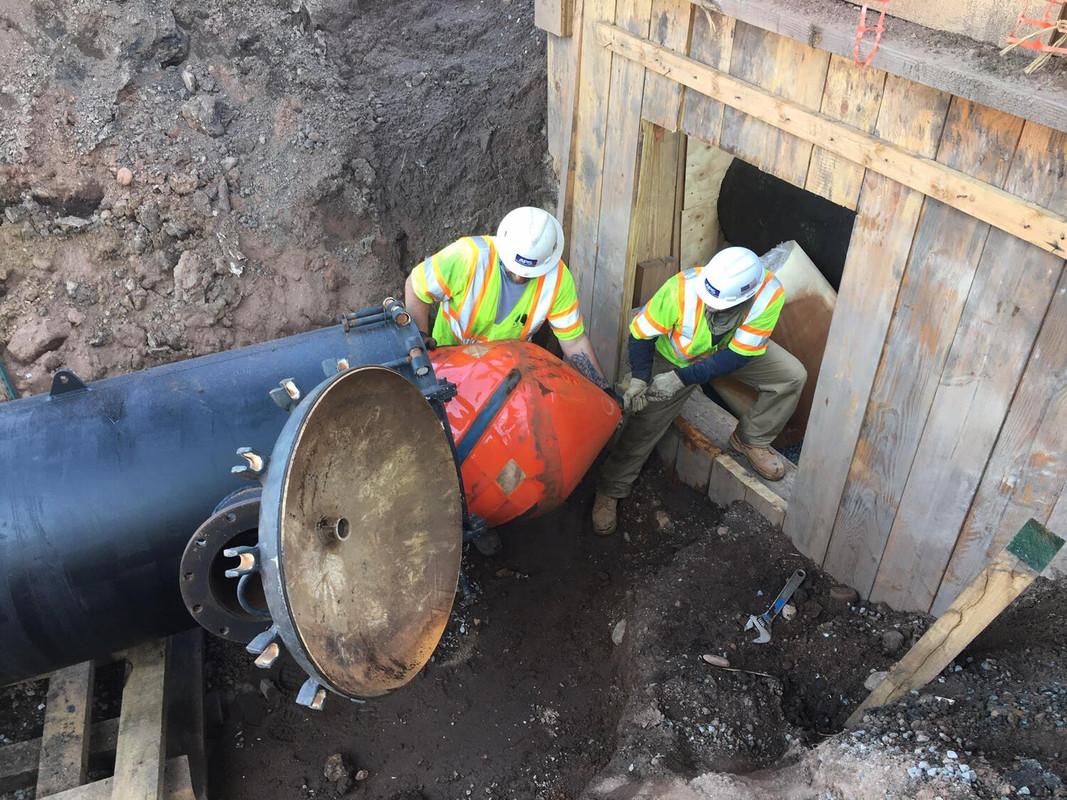
For most water companies and municipalities, the preferred solution to resolve these issues, is water flushing.
Water flushing is a term used in the water sector whereby a water operator or technician will go from hydrant to hydrant, systematically opening the valves one at a time, allowing the water to discharge, usually to waste down a nearby stormwater drain. The operator will do this for a certain amount of time, usually based on the flow rate, to allow a pre-determined amount of water to be discharged in the hope that the velocity of the rushing water will be high enough to pick up any loose sediment that has built up in the line.

This is where the problem lies because the simple fact is that water alone provides a relatively low shear on the inside of the pipe wall. In other words, the scouring power is very poor, and therefore, the water must be allowed to travel at high velocity to increase the shear on the pipe wall. Quite often, though, these velocities are not achievable due to several factors, including limited system pressures, tuberculation or scale build-up restricting the flow, or simply insufficient volumes.
A technique called Uni-Directional Flushing (UDF) is an enhanced means of water flushing, often thought to be more effective than “standard” flushing. These UDF programs are designed to maximize the potential velocities and, thereby, remove greater amounts of sediment from the mains. However, the fact remains that water provides low shear (or scouring power), and so even the best thought-out UDF plan is often insufficient to remove all the sediment from the system.
Even when the velocity in a main is at an acceptable level, there is then the (very serious) factor of water wastage. It is generally thought by water consultants around the world that at least 4-5 times the volume of the pipe being cleaned needs to be flushed out of the line before the water flushing is at all effective. To put that number into perspective, that represents almost 69,000 gallons of water in just one mile of 8-inch water main (about 10 blocks), or 108,000 gallons (enough to fill 5-6 average-sized in-ground swimming pools) in a mile of 10-inch water main. Many smaller communities or municipalities don’t even have the luxury of large storage reservoirs sufficient to provide the required amount of water, and in many states in the US, severe droughts have led to heavy restrictions on the waste of precious water. In any case, ask yourself, “why would you pay to collect, store, and treat water just to flush it away before it gets to the end customer?”.
This is where a (relatively) new, advanced pipe-cleaning technique called Ice Pigging™ comes to the fore.
Ice Pigging™ uses a slush ice (or ice slurry) injected into the main, where it then flows through the line using normal system flows and pressures and is discharged out at a pre-determined point. As it flows through the main, the ice crystals pick up the sediment by scouring the pipe walls, carrying it in the body of the ice and out of the line at the discharge point, where it can be safely disposed.
Simply by turning water into ice crystals, you can achieve up to 1,000 times more shear (scour power) on the inside of the pipe wall than flushing plain water. The ice even has the ability to do this at much slower velocities than water, so for those situations where the desired velocity is not achievable, Ice Pigging™ will obtain a far superior clean.
Although it is inevitable that some water may be wasted during an Ice Pigging™ operation, it will be up to 70% less wastage than a similar flushing project, and yet the cleaning efficacy will be so much superior.
Cost?
Although Ice Pigging™ may initially appear to be more costly, a recent study carried out in Australia found that while Ice Pigging™ is more expensive on a ‘$ per foot’ basis, when using the indicator of ‘$ per lb. of sediment removed’, Ice Pigging™ is approximately 6 times cheaper. The study also found that Ice Pigging™ removed up to 17 times more sediment from the mains compared to flushing while using half the amount of water.
It is hypothesized that the superior clean achieved by Ice Pigging™ will result in less discolored water complaints and therefore lead to cost savings in the reduction of unscheduled flushing programs and the frequency of mains cleaning of water supply zones (P. Dang et al., 2014).
Another finding from the study indicated that Ice Pigging™, a water supply zone improves the penetration of chlorine residuals.
(Note: Due to the success of this study, the water company involved commenced a full-scale program to Ice Pig approximately 250 miles of water mains each year for the following five years).
Pipeline Experts: Inspection, Cleaning, Coating & More
Certified solutions for inspection, pre-commissioning, cleaning, internal coating, ice pigging™, mapping, and turnkey pipeline projects—maximizing safety and reliability at every stage.
Benefits of Ice Pigging™ over Flushing
Lower velocities required
Smaller volumes required
Superior clean
Drought Friendly (Less waste)
Shorter downtimes
Cheaper when using the indicator of $ per lb. of sediment removed
Case Study
In 2022, a comparison test was carried out at an Ice Pigging™ project for a large Idaho city. This included certain ‘problem’ areas that were flushed by means of a UDF program followed the very next day by Ice Pigging™ with the aim of determining how much additional sediment was able to be removed. You can clearly see from the photos below of samples taken at the ice discharge hydrant, how much sediment was actually removed. Note the ‘clear’ sample in each picture is a sample of the discharge before the ice arrives (essentially flushing water), then how the samples darken with the amount of sediment suspended in the ice slurry, a clear indication of the superior cleaning effect of the Ice Pig.
FAQs: Ice Pigging™ vs. Water Flushing
What is Ice Pigging™ in drinking water mains?
Ice Pigging™ is an advanced pipe-cleaning technique that uses a thick slurry of ice injected into a water main. As the ice moves through the pipe under normal system pressure, the ice crystals scour the internal walls, pick up sediment and biofilm, and carry it out to a discharge point where the slurry and debris can be safely removed.
How does Ice Pigging™ differ from standard water flushing?
Standard flushing relies on high-velocity water alone to stir up loose material from hydrant to hydrant, but water has relatively low shear on the pipe wall and often can’t generate enough scouring power. Ice Pigging™ uses ice crystals to create far higher shear at much lower velocities, removing significantly more sediment and deposits than conventional flushing or even uni-directional flushing (UDF).
Why is water flushing often not enough to clean distribution pipes?
Flushing with water alone delivers limited scouring force on the pipe wall, even when operators try to push velocity higher. System pressure limits, build-up inside the main, and available water volumes all reduce effectiveness. As a result, biofilm, iron, manganese, and other deposits can remain in the system, continuing to cause discolored water complaints and quality concerns.
How much more effective is Ice Pigging™ than flushing?
Turning water into ice crystals dramatically increases shear at the pipe wall—up to 1,000 times higher than plain water. In comparative work, Ice Pigging™ removed substantially more sediment from mains than flushing alone, even when UDF had already been performed. In one study, Ice Pigging™ removed up to 17 times more sediment while using roughly half the water.
Does Ice Pigging™ reduce water wastage compared to flushing?
Yes. Traditional flushing typically requires four to five times the pipe volume to be discharged before results are acceptable, which can translate to tens of thousands of gallons per mile of main. Ice Pigging™ can cut that wasted volume by up to 70% while still delivering a far superior clean, making it more sustainable and better suited to drought-affected or supply-limited systems.
Is Ice Pigging™ more expensive than flushing?
On a simple “dollars per foot” comparison, Ice Pigging™ can appear more expensive than standard flushing. However, when you measure cost per pound of sediment actually removed, Ice Pigging™ becomes much more economical. A study cited in the article found Ice Pigging™ to be around six times cheaper on a cost-per-pound-of-sediment basis, because it removes far more material with less wasted water.
What types of deposits can Ice Pigging™ remove from water mains?
Ice Pigging™ is designed to remove a wide range of deposits that form in potable water systems over time, including sediment, biofilm, iron, manganese, and fat, oil, and grease (FOG). By scouring the pipe walls and suspending this material in the ice slurry, the process helps reduce discolored water complaints and improve overall water quality.
How does Ice Pigging™ impact chlorine residuals and water quality?
By stripping away biofilm and sediment, Ice Pigging™ improves internal pipe cleanliness, which can help chlorine residuals penetrate further into the network. Cleaner pipes and more stable residuals support better water quality, fewer complaints, and reduced need for unscheduled flushing in problem zones.
Is Ice Pigging™ suitable for systems with limited storage or drought conditions?
Yes. Because Ice Pigging™ uses much smaller water volumes than conventional flushing to achieve a better clean, it is well suited to smaller communities, utilities with constrained storage, and regions under drought-related restrictions. The technique reduces waste while still addressing discolored water and sediment issues in distribution mains.
Can Ice Pigging™ be used after a UDF program has already been run?
It can, and that’s often where the benefits are most visible. In the Idaho case study described, a problem area was flushed using UDF one day and Ice Pigged the next. Samples taken at the discharge hydrant clearly showed how much additional sediment the ice slurry removed, even after the system had already undergone a traditional flushing program.


