
Common Pipeline Pigging Terminology to Know

Pipeline pigging has its own technical language. Terms such as utility pig, gauge plate, ILI, launcher, receiver, MFL, and pig tracking can quickly become confusing when planning pipeline cleaning, inspection, maintenance, or pre-commissioning work.
Understanding common pipeline pigging terminology makes it easier to communicate with contractors, evaluate a proposed pigging plan, and understand what is happening during a project.
This glossary covers the common pigs, inspection technologies, equipment, operating terms, and pipeline conditions operators are likely to encounter.
Pipeline Experts: Inspection, Cleaning, Coating & More
Certified solutions for inspection, pre-commissioning, cleaning, internal coating, ice pigging™, mapping, and turnkey pipeline projects—maximizing safety and reliability at every stage.
What Is Pipeline Pigging?
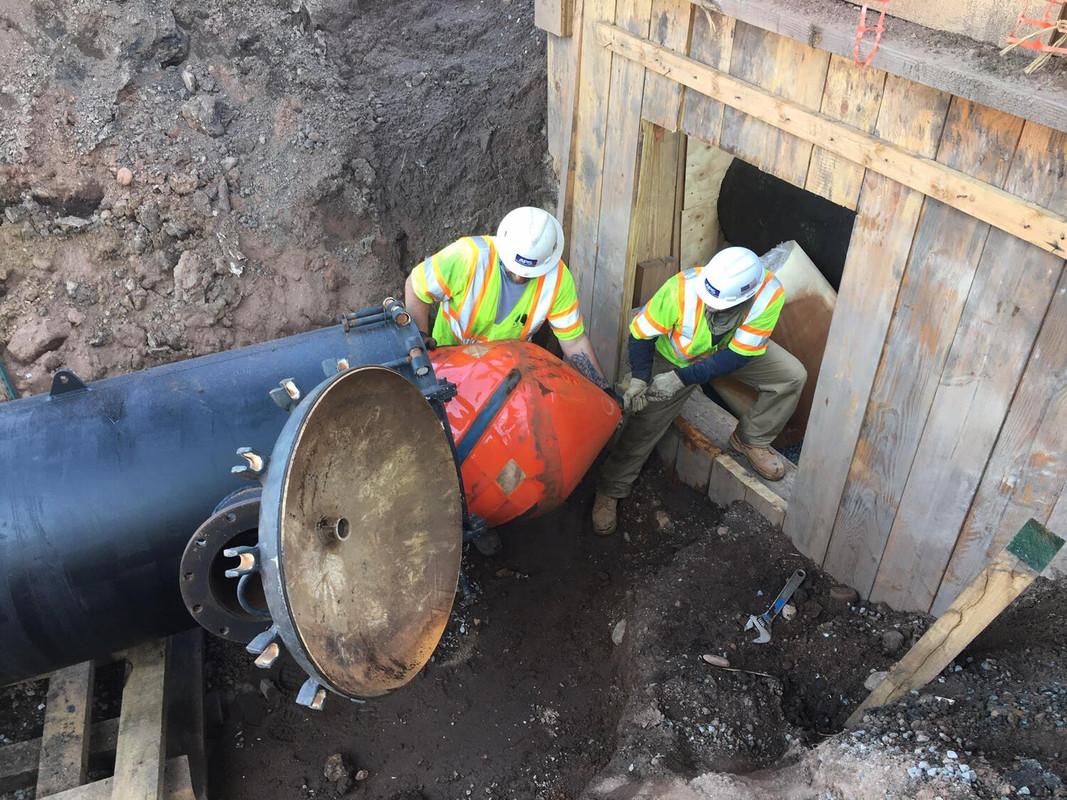
Pipeline pigging is the process of sending a device called a pig through a pipeline to perform a specific task. Depending on the application, pigs can remove debris, displace liquids, separate products, check internal clearance, collect inspection data, or help prepare a line for another service.
The right pipeline pigging method depends on pipe material, diameter, geometry, operating conditions, buildup, and the desired result.
Below are the terms commonly used throughout a pigging project.
Core Pipeline Pigging Terms
These foundational terms describe the pigging process and the equipment used to launch, move, and recover a pig.
Pipeline Pig
A pipeline pig is a device that travels through the inside of a pipeline using pressure, flow, or another means of propulsion. Different pigs are designed for cleaning, liquid displacement, gauging, inspection, batching, and other operations.
Pigging
Pigging refers to the overall process of moving a pig through a pipeline to perform a specific maintenance, cleaning, inspection, or operational task.
Pig Run
A pig run is one complete passage of a pig through a designated pipeline section, typically from a launcher to a receiver.
Some cleaning projects require multiple runs using different pig configurations before the desired level of cleanliness is achieved.
Piggability
Piggability describes whether a pipeline can safely and effectively accommodate a pig.
Factors such as pipe diameter, bend radius, valves, tees, internal restrictions, diameter changes, and launcher and receiver access can affect whether a line is piggable.
Pig Trap
A pig trap is a general term for the pressure rated equipment used to insert or remove pigs from a pipeline. Pig traps normally function as either launchers or receivers.
Pig Launcher
A pig launcher is the section of equipment used to safely introduce a pig into a pressurized pipeline.
The launcher provides enough space to load the pig, isolate the section, equalize pressure, and release the pig into the line under controlled conditions.
Pig Receiver
A pig receiver captures and allows the safe removal of a pig after it completes the run.
Receivers also provide operators with an opportunity to examine the pig and any debris collected during the operation.
Common Types Of Pipeline Pigs
Pipeline pigs are designed around different maintenance and operational goals. Some are simple cleaning tools, while others carry sensors and collect detailed pipeline condition data.
Utility Pig
A utility pig performs physical pipeline tasks rather than detailed inspection. Typical applications include cleaning, batching, dewatering, and displacement.
Utility pigs include many foam, cup, disc, brush, and mandrel designs.
Cleaning Pig
A cleaning pig removes deposits or liquids from the pipeline interior.
Depending on the application, cleaning pigs may be equipped with brushes, scrapers, magnets, cups, discs, or other components designed to remove material from the pipe wall.
Professional pipeline cleaning may use several pig types in sequence when deposits are heavy or internal conditions are uncertain.
Foam Pig
A foam pig is made primarily from flexible polyurethane foam. Its flexibility allows it to travel through pipeline configurations that may be difficult for more rigid pig designs.
Foam pigs can be used for light cleaning, drying, sweeping, proving, and removing loose debris.
Swab Pig
A swab pig is generally used to remove liquids, moisture, or loose material from a pipeline.
Swabbing is common during dewatering and drying operations where removing residual liquid is an important step before commissioning or returning the line to service.
Brush Pig
A brush pig uses wire or other specialized brushes to remove deposits adhering to the internal pipe wall.
These pigs may be used for rust, scale, wax, or other deposits when a more aggressive cleaning action is required.
Cup Pig
A cup pig uses flexible sealing cups to maintain contact with the pipe wall.
The seal allows differential pressure to propel the pig through the pipeline, making cup pigs useful for cleaning, batching, displacement, and liquid removal.
Disc Pig
A disc pig uses circular sealing discs rather than cups.
Disc configurations can provide effective sealing and scraping while allowing the pig design to be adapted for different pipeline geometries and operating conditions.
Batching Pig
A batching pig separates different fluids or products moving through the same pipeline.
The pig creates a physical barrier that helps minimize mixing between product batches.
Sphere Pig
A sphere pig is a spherical device commonly used for liquid removal, batching, or controlling liquids in certain pipeline systems.
Its shape allows it to pass through some bends and fittings while maintaining contact with the pipe wall.
Gauge Pig
A gauge pig checks the internal clearance of a pipeline before more complex equipment is introduced.
It normally carries a thin gauge plate that can bend or become marked if the pig encounters an internal restriction. Pipeline gauging can help identify clearance concerns before an inspection or advanced pigging run.
Pipeline Inspection And Smart Pigging Terms
Pipeline inspection uses instrumented pigs and related technologies to collect information that cannot be obtained from ordinary cleaning pigs.
In-Line Inspection
In-line inspection, commonly abbreviated as ILI, is the inspection of a pipeline from inside the line using an instrumented tool.
ILI can help operators identify corrosion, metal loss, deformation, cracks, and other conditions that may affect pipeline integrity.
ILI Tool
An ILI tool is an instrumented device designed to collect pipeline condition data while traveling through the line.
Different ILI tools use different sensor technologies depending on the pipeline material and the defects being investigated.
Smart Pig
A smart pig is an instrumented pipeline pig equipped with sensors and data collection capabilities.
Unlike a conventional cleaning pig, a smart pig can measure and record pipeline characteristics throughout the run. APS uses smart pigging to support detailed pipeline condition assessment.
Intelligent Pig
Intelligent pig is another commonly used term for a smart pig or ILI tool.
The term refers to a pig that carries sensors and records information rather than simply performing a mechanical task.
Instrumented Pig
An instrumented pig carries sensors, electronic systems, data storage, or measurement devices.
Smart pigs, geometry pigs, mapping pigs, and many ILI tools fall within this broader category.
Configuration Pig
A configuration pig measures or identifies changes in pipeline geometry.
These tools can detect conditions such as dents, ovality, restrictions, or changes in internal diameter.
Geometry Pig
A geometry pig measures the internal shape of the pipeline.
It is commonly used to identify dents, buckles, ovality, restrictions, and other geometric features that may interfere with flow or affect structural condition.
Caliper Pig
A caliper pig uses mechanical arms or sensors to measure changes in internal pipeline diameter.
Caliper data can identify dents, deformation, ovality, and other geometric anomalies.
Camera Pig
A camera pig carries imaging equipment through a pipeline to provide visual information about internal conditions.
Camera inspection can help identify visible deposits, obstructions, coating damage, or other conditions, although it does not replace sensor based inspection when measurements of wall condition are required.
Mapping Pig
A mapping pig collects positional data that helps determine the pipeline's route and geometry.
Advanced pipeline mapping can provide XYZ coordinates that support asset records, condition analysis, construction planning, and integrity management.
Common Pipeline Inspection Technologies
The sensors carried by an inspection pig determine the type of pipeline information the tool can collect.
Magnetic Flux Leakage
Magnetic Flux Leakage, or MFL, is an inspection technique commonly used to detect metal loss in ferrous pipelines.
The tool magnetizes the pipe wall and measures changes in the magnetic field that can indicate corrosion or material loss.
Ultrasonic Testing
Ultrasonic Testing, or UT, uses high frequency sound waves to evaluate pipe wall thickness and other characteristics.
UT technology can provide detailed information about corrosion, wall loss, cracking, and material condition when the inspection environment is suitable.
Eddy Current
Eddy current inspection uses electromagnetic fields to evaluate conductive materials.
Changes in the electromagnetic response can reveal wall loss, pitting, delamination, or other anomalies in metallic pipelines.
Inertial Measurement Unit
An Inertial Measurement Unit, or IMU, measures movement, orientation, and changes in direction as an inspection tool travels through the line.
IMU data can be used to calculate pipeline coordinates and identify changes in alignment or geometry.
Pipeline Cleaning And Operational Terms
Understanding these terms is important when cleaning is part of maintenance, inspection preparation, or pipeline commissioning.
Debris Loading
Debris loading refers to the amount of material being moved or collected by a pig during a cleaning run.
Heavy debris loading may require a staged cleaning approach to avoid accumulating too much material ahead of the pig.
Dewatering
Dewatering is the removal of water from a pipeline, commonly after hydrostatic testing or construction activities.
Pigs can push bulk water toward a receiver before additional drying procedures begin.
Drying
Drying removes residual moisture that remains after dewatering.
Drying requirements vary depending on the pipeline service and the acceptable moisture or dew point specification.
Batching
Batching uses pigs to separate different fluids or products while they travel through the same pipeline.
The pig helps limit mixing at the interface between the two batches.
Pre-ILI Cleaning
Pre-ILI cleaning prepares a pipeline for an in-line inspection tool.
Cleaning before inspection helps remove debris that could interfere with sensors, affect data quality, damage the tool, or increase the likelihood of a failed run.
Differential Pressure
Differential pressure is the pressure difference between the front and rear of a pig.
This pressure difference helps propel the pig through the pipeline. Monitoring it can provide useful information about pig movement and possible restrictions.
Pig Velocity
Pig velocity is the speed at which a pig travels through the pipeline.
Maintaining suitable velocity can be especially important for inspection tools because excessively high or inconsistent speeds may affect data quality.
Bypass
Bypass refers to fluid or gas flowing around or through a pig rather than pushing entirely against it.
Some pigs are intentionally designed with bypass to control speed, improve cleaning, or move debris more effectively.
Pig Tracking Terms
Knowing where a pig is during a run is important for project control and can become critical if the pig unexpectedly stops.
Pig Tracking
Pig tracking refers to locating and monitoring a pig as it moves through the pipeline.
Professional pig tracking helps crews confirm passage, estimate arrival times, and respond when the tool does not progress as planned.
Pig Transmitter
A pig transmitter is a device mounted on or inside the pig that emits a detectable signal.
Crews can use compatible locating equipment above ground to determine when the pig passes specific locations.
Above Ground Marker
An Above Ground Marker, often called an AGM, is positioned along the pipeline route to detect or record the passage of an inspection tool or pig.
AGMs can also help correlate pipeline location with inspection data.
Pig Signaler
A pig signaler is a device installed on or near a pipeline that indicates when a pig passes a particular point.
Signalers may be mechanical or electronic depending on the system.
Stuck Pig
A stuck pig is a pig that stops moving and cannot complete its planned journey through the pipeline.
Restrictions, excessive debris, incorrect pig selection, inadequate pressure, damaged pipe, geometry changes, or unexpected internal conditions can contribute to a stuck pig. Effective planning and tracking can reduce risk and support faster stuck pig recovery when problems occur.
Pipeline Experts: Inspection, Cleaning, Coating & More
Certified solutions for inspection, pre-commissioning, cleaning, internal coating, ice pigging™, mapping, and turnkey pipeline projects—maximizing safety and reliability at every stage.
Pipeline Defect And Condition Terminology
Inspection reports often contain terms describing defects, anomalies, or geometric conditions found in the pipe.
Corrosion
Corrosion is the deterioration of pipeline material caused by chemical or electrochemical reactions with the surrounding environment or transported product.
It can occur internally or externally and may eventually reduce wall thickness or structural strength.
Internal Corrosion
Internal corrosion develops on the inside surface of the pipeline.
Moisture, chemicals, contaminants, microorganisms, or transported products can contribute to internal material loss.
External Corrosion
External corrosion occurs on the outside surface of the pipeline.
Coating damage, moisture, soil conditions, or inadequate corrosion protection can contribute to external deterioration.
Pitting Corrosion
Pitting is highly localized corrosion that creates small cavities or holes in the pipe wall.
Although individual pits may appear small, deep pitting can significantly reduce remaining wall thickness.
Stress Corrosion Cracking
Stress Corrosion Cracking, often abbreviated SCC, is cracking caused by the combined effects of tensile stress and a corrosive environment.
SCC can develop as groups of small cracks and may require specialized inspection methods to detect and evaluate.
Metal Loss
Metal loss refers to a reduction in pipeline wall material caused by corrosion, erosion, mechanical damage, or another deterioration mechanism.
Inspection tools can measure the extent, depth, and location of metal loss.
Dent
A dent is a localized deformation that changes the normal shape of the pipe wall without necessarily removing material.
Its significance depends on depth, location, associated stresses, and whether other defects are present.
Buckle
A buckle is a more significant deformation of the pipeline caused by excessive stress, bending, pressure, or external loading.
Buckles can reduce internal clearance and may prevent a pig or inspection tool from passing safely.
Gouge
A gouge is mechanical damage that removes material from the pipeline surface.
Gouges may be caused during construction, excavation, or contact with external equipment.
Ovality
Ovality describes the degree to which a circular pipe has become oval or out of round.
Changes in ovality can affect flow, structural behavior, and the passage of pigs through the system.
Obstruction
An obstruction is any internal condition that restricts pig movement or reduces available pipeline clearance.
Examples include debris, partially closed valves, fittings, deposits, deformation, and unexpected changes in diameter.
How These Terms Fit Together During A Pigging Project
These terms become easier to understand when viewed as parts of the same workflow.
A project may begin by evaluating the piggability of the line. The operator and pigging contractor review pipeline diameter, bends, valves, operating conditions, and known restrictions before selecting a pig.
A foam pig or other utility pig may then be used for an initial proving or cleaning run. If more aggressive cleaning is necessary, subsequent runs may use brush, cup, disc, or other configurations.
Before an advanced inspection, a gauge pig can help identify restrictions. Once the line is adequately prepared, an ILI tool or smart pig may be launched to collect information about corrosion, metal loss, dents, ovality, and other conditions.
Throughout the project, pig tracking helps confirm passage at key locations. The resulting cleaning observations, tracking records, or inspection data can then support maintenance, repair, rehabilitation, or integrity planning.
Understanding how the terminology connects to an actual pipeline project is more useful than memorizing individual definitions.
How American Pipeline Solutions Supports Pipeline Pigging
American Pipeline Solutions provides specialized pipeline services for oil, gas, municipal water, industrial, and other critical pipeline systems across the United States.
APS capabilities include conventional pigging and swabbing, pipeline cleaning, Smart Pig inspection, pipeline condition analysis, pig tracking, gauging, mapping, dewatering, pre-commissioning, internal pipe coating, and related integrity services.
Each project is evaluated according to pipeline material, geometry, operating conditions, access, and the required outcome. This allows APS to develop a pigging or inspection strategy around the actual system rather than applying the same approach to every pipeline.
Whether the objective is improving flow, preparing for inspection, evaluating pipeline condition, or supporting commissioning, proper planning and field execution remain central to a successful project.
Frequently Asked Questions About Pipeline Pigging Terminology
What Does Pigging Mean In Pipeline Operations?
Pigging is the process of sending a device through the inside of a pipeline to perform cleaning, liquid displacement, batching, gauging, inspection, mapping, or another maintenance task. The pig typically moves using pressure or product flow and is recovered at a receiver downstream.
What Is A Pipeline Pig?
A pipeline pig is a device designed to travel internally through a pipeline. Different types are used for cleaning, removing liquids, separating products, checking clearance, collecting inspection data, or measuring pipeline geometry.
What Are The Main Types Of Pipeline Pigs?
Common categories include utility pigs for cleaning and operational work, configuration pigs for evaluating pipeline geometry, and instrumented or smart pigs for collecting inspection data. Individual designs include foam pigs, cup pigs, disc pigs, brush pigs, gauge pigs, geometry pigs, and smart pigs.
What Is The Difference Between A Cleaning Pig And A Smart Pig?
A cleaning pig physically removes debris, deposits, or liquids from the pipeline. A smart pig contains sensors that collect information about pipeline condition, such as corrosion, metal loss, geometry changes, or other anomalies.
Cleaning is often performed before smart pigging so inspection sensors can collect higher quality data.
What Does ILI Mean In Pipeline Pigging?
ILI means in-line inspection. It involves sending an instrumented inspection tool through a pipeline to collect information about the condition of the pipe wall and other internal characteristics.
What Is A Gauge Pig Used For?
A gauge pig is used to check whether a pipeline has sufficient internal clearance for another pig or inspection tool. A gauge plate mounted on the pig may become bent or marked when it contacts a restriction.
What Is The Difference Between A Pig Launcher And Receiver?
A pig launcher is used to safely introduce a pig into the pipeline. A pig receiver captures the pig at the end of the run so crews can isolate, depressurize, and remove it safely.
How Is A Pipeline Pig Tracked?
Pipeline pigs can be tracked using transmitters, above-ground detection equipment, pig signalers, and other monitoring systems. Tracking confirms pig passage and helps crews determine the likely location if a pig slows down or stops.
What Does Piggability Mean?
Piggability describes whether a pipeline can safely accommodate a pig. Diameter, bends, valves, tees, restrictions, geometry changes, access, pressure, and launcher and receiver arrangements can all affect piggability.
What Causes A Pipeline Pig To Get Stuck?
A pig can become stuck because of excessive debris, internal restrictions, deformation, partially closed valves, diameter changes, inadequate pressure, unsuitable pig selection, or other unexpected pipeline conditions. Pre-run evaluation, gauging, cleaning, and tracking help reduce this risk.
Are you wondering how pipeline services can be implemented within your industry?
Contact the team of experts at American Pipeline Solutions to discover a personalized pipeline and pigging solution today.


