
What Is Dew Point In Piping And Why Does It Matter?
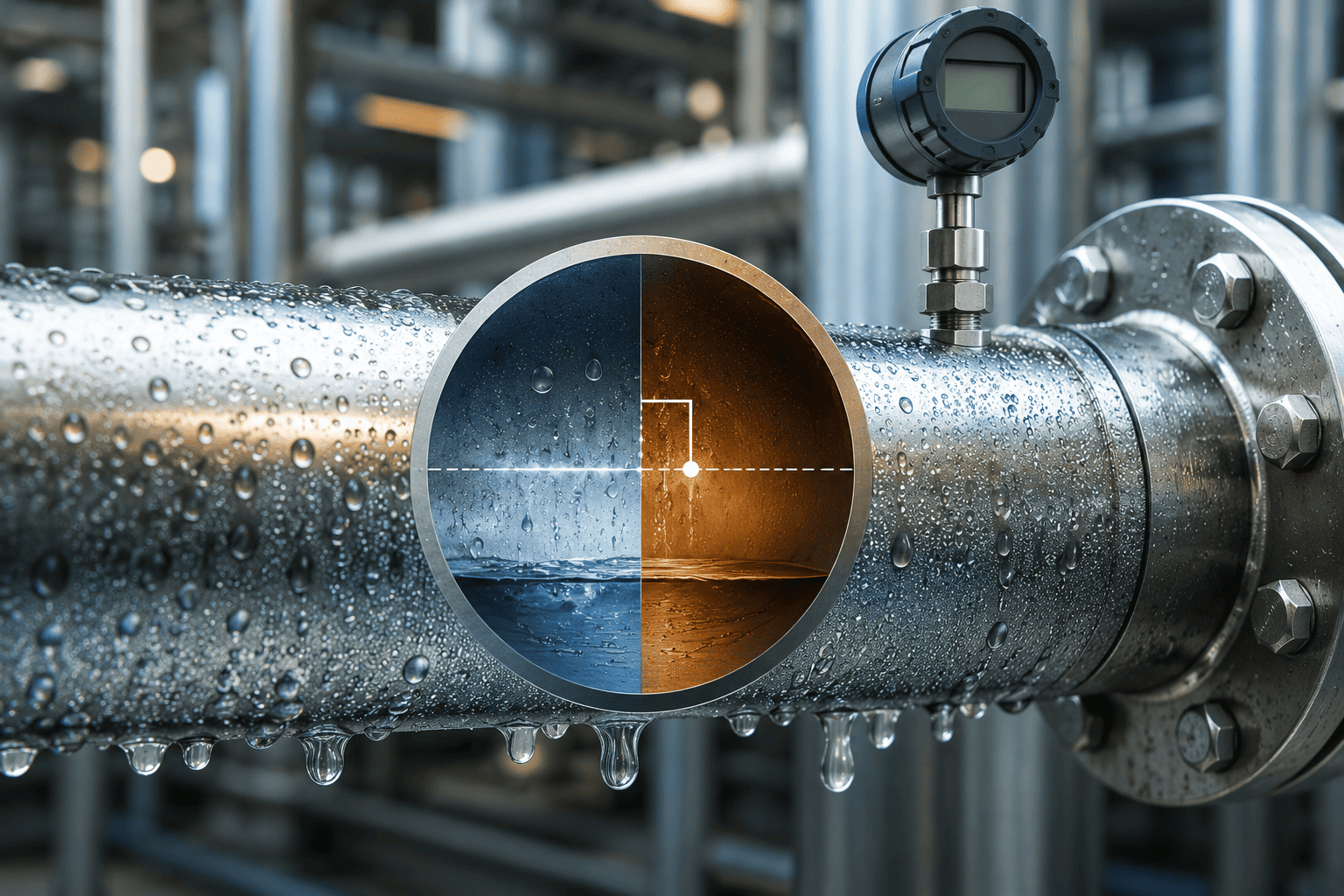
Dew point in piping is the temperature at which water vapor or certain hydrocarbons in a gas stream begin to condense into liquid under specific pressure conditions. When the temperature of the gas or pipe wall falls to the dew point, moisture can begin forming inside the pipeline.
For pipeline operators, dew point is more than a temperature reading. It helps determine whether a pipeline is sufficiently dry, whether condensation may occur during operation, and whether moisture could contribute to corrosion, hydrate formation, contamination, or equipment problems.
Understanding and controlling dew point is especially important after hydrostatic testing and during pipeline pre-commissioning.
What Does Dew Point Mean Inside A Pipeline?
Gas can hold a certain amount of water vapor depending on its temperature and pressure. As the gas cools, its ability to keep that moisture in vapor form decreases.
Once the gas reaches its dew point, water vapor can begin turning into liquid water. If a pipeline section becomes colder than the dew point, condensation may develop along the internal pipe wall or accumulate at low points.
For example, if the water dew point of the gas inside a line is 40°F and a section of the pipe cools to 35°F, conditions are favorable for condensation.
The relationship between temperature, moisture, and pressure is why dew point is an important measurement during pipeline drying and commissioning.
Pipeline Experts: Inspection, Cleaning, Coating & More
Certified solutions for inspection, pre-commissioning, cleaning, internal coating, ice pigging™, mapping, and turnkey pipeline projects—maximizing safety and reliability at every stage.
Why Dew Point Matters In Pipeline Systems
Controlling moisture helps protect both the pipeline and the equipment connected to it. Excessive moisture can create several operational and integrity concerns.
Internal Corrosion
Free water inside a metallic pipeline can contribute to internal corrosion. The risk can become more significant when water is present with corrosive compounds or contaminants.
Maintaining the required dew point helps reduce the likelihood that water vapor will condense under expected operating conditions. This makes proper drying an important part of protecting pipeline integrity before the system enters service.
Hydrate And Freezing Risks
In natural gas systems, free water can combine with gas components under certain low temperature and high pressure conditions to form hydrates. These ice-like solids can restrict or block flow.
Water can also freeze in valves, regulators, instrumentation, and other pipeline components. Reducing residual moisture before commissioning helps lower these risks.
Product And Gas Quality
Moisture can affect the quality of the product being transported. Natural gas transmission systems, industrial processes, and other applications may have defined moisture or dew point requirements that must be met before operation.
A properly dried pipeline reduces the chance that residual water will contaminate the transported product or interfere with downstream processing.
Downstream Equipment Protection
Compressors, meters, valves, regulators, and instrumentation are designed to operate within specific conditions. Unwanted liquid carryover can affect performance and increase maintenance requirements.
Controlling pipeline moisture before startup helps create more predictable operating conditions throughout the system.
Water Dew Point Vs Hydrocarbon Dew Point
Pipeline professionals may encounter two different dew point measurements, particularly in natural gas systems. They describe different types of condensation and should not be treated as interchangeable.
Water Dew Point
Water dew point is the temperature at which water vapor begins to condense into liquid water at a given pressure.
This is the dew point most closely associated with pipeline drying, post-hydrotest moisture removal, and commissioning readiness. The goal is to reduce residual water vapor enough to meet the project's required dryness specification.
Hydrocarbon Dew Point
Hydrocarbon dew point refers to the temperature at which heavier hydrocarbon components in a gas mixture begin condensing into a liquid phase.
This measurement is particularly important in natural gas transmission and processing because hydrocarbon liquid dropout can affect product quality, equipment performance, and operating conditions.
Water dew point addresses moisture. Hydrocarbon dew point addresses condensable hydrocarbons. A pipeline project may need to consider one or both depending on the service.
What Is Pressure Dew Point?
Dew point is affected by pressure, which makes measurement conditions important when working with compressed gases and pressurized pipelines.
A dew point measured at pipeline pressure may not be equivalent to a reading taken after the gas has been reduced to atmospheric pressure. As pressure changes, the relationship between moisture concentration and condensation conditions also changes.
That is why operators should understand the pressure at which a dew point specification applies. Sampling conditions, gas pressure, temperature, and the project requirement all need to be considered when interpreting a reading.
A dew point number without the proper operating context may provide an incomplete picture of pipeline dryness.
What Does A Lower Dew Point Mean?
For water vapor, a lower dew point generally means the gas contains less moisture.
If the pipeline's expected operating temperature remains well above the water dew point, the likelihood of moisture condensing into free water is reduced.
The basic relationship is:
Pipeline temperature above the dew point: Moisture generally remains in vapor form.
Pipeline temperature at or below the dew point: Condensation may occur.
This is why operators do not simply look for a pipeline that appears dry. They verify that the remaining moisture level meets the required dew point before commissioning.
What Dew Point Should A Pipeline Be Dried To?
There is no single dew point requirement that applies to every pipeline.
The required target depends on the product being transported, pipeline pressure, expected operating temperature, owner specifications, commissioning requirements, and the risks associated with moisture in that particular system.
For natural gas pipelines and many similar applications, specifications around -40°F dew point are common. However, that number should not be treated as a universal requirement. The project's approved specification determines the final drying target.
APS's pipeline drying services are planned around the actual pipeline conditions and required acceptance criteria rather than applying one drying target to every system.
How Is Dew Point Measured In A Pipeline?
Dew point should be measured using instruments suited to the expected moisture range, operating conditions, and required accuracy.
Chilled Mirror Hygrometers
A chilled mirror instrument cools a reflective surface until condensation forms. The temperature at which that condensation appears is used to determine dew point.
This method provides a direct measurement and is often used where precise moisture verification is required.
Electronic Dew Point Sensors
Electronic sensors can provide fast field measurements and continuous moisture monitoring. Depending on the technology, they may use capacitance or other sensing principles to determine moisture levels in the gas.
Regardless of the instrument used, measurement location matters. Pressure, sample temperature, flow conditions, and the stability of the reading can all affect how results should be interpreted.
Why Dew Point Is Important After Hydrostatic Testing
Hydrostatic testing intentionally fills a pipeline with water so the system can be pressure tested. Once the test is complete, that water must be removed before many pipelines can safely enter service.
Removing the bulk hydrotest water is only the beginning.
Water can remain in low points, cling to internal pipe surfaces, or remain present as vapor. APS's approach to pipeline dewatering focuses on removing this bulk water so the line can move into the final drying stage.
A typical post-hydrotest sequence may include dewatering, pigging or swabbing, dry air or nitrogen drying, and final dew point verification.
Dewatering And Pipeline Drying Are Not The Same
Dewatering removes bulk liquid water from the pipeline. Drying addresses the residual moisture that remains after most visible water has been removed.
This distinction is important because a pipeline can stop discharging water and still contain enough moisture to exceed the required dew point.
Effective dewatering after hydrostatic testing creates the foundation for final drying, but the drying process must continue until the specified moisture condition has been verified.
That final verification helps determine whether the pipeline is actually ready for commissioning.
How Pipelines Are Dried To The Required Dew Point
The right drying method depends on the pipeline geometry, length, diameter, moisture level, required dew point, and available access.
Pigging And Swabbing
Pigs and foam swabs can remove standing water and moisture from internal surfaces before final drying begins.
Proper pipeline pigging can significantly reduce the amount of water that must later be removed through dry gas circulation.
Dry Compressed Air
Oil-free compressed air combined with desiccant drying equipment can introduce very dry air into the pipeline. The dry air absorbs moisture as it moves through the line and carries it toward the discharge point.
Nitrogen Drying
Dry nitrogen can also be used when project requirements call for an inert drying medium. Nitrogen is particularly useful in applications where oxygen control or inerting is part of the broader commissioning plan.
The same gas may also support nitrogen purging once moisture removal and commissioning activities progress.
Dew Point Verification
Drying continues until outlet readings stabilize at or below the required project specification. This final measurement confirms that moisture removal has reached the required condition.
What Affects Pipeline Drying Time?
Pipeline drying time can vary significantly from one project to another.
Several factors influence how quickly the required dew point can be achieved, including:
Pipeline length and diameter
Internal surface area
Amount of water remaining after dewatering
Low points and elevation changes
Pipe and ambient temperature
Drying gas flow rate
Moisture content of the drying medium
Required final dew point
Careful dewatering before drying can reduce the amount of moisture that the drying gas must remove and improve overall project efficiency.
Pipeline Experts: Inspection, Cleaning, Coating & More
Certified solutions for inspection, pre-commissioning, cleaning, internal coating, ice pigging™, mapping, and turnkey pipeline projects—maximizing safety and reliability at every stage.
How American Pipeline Solutions Supports Pipeline Dew Point Control
Achieving the required pipeline dew point is rarely a single-step process. It requires proper planning from hydrostatic testing through dewatering, drying, moisture measurement, and final commissioning.
American Pipeline Solutions provides integrated support for pipeline pigging, dewatering, swabbing, dry air drying, nitrogen services, dew point verification, and pipeline pre-commissioning.
APS evaluates pipeline configuration, operating requirements, moisture conditions, and the project's acceptance criteria before determining the appropriate drying strategy. This helps operators reach the required condition efficiently while protecting pipeline integrity and preparing the system for service.
If your pipeline requires dewatering, drying, or dew point verification after hydrostatic testing, APS can develop a project-specific approach based on your system and commissioning requirements.
FAQs
What Is Dew Point In A Pipeline?
Dew point is the temperature at which water vapor or other condensable components in a pipeline gas begin turning into liquid at a given pressure. For pipeline drying, water dew point is used to evaluate how much moisture remains in the system.
Why Is Dew Point Important In Piping?
Dew point helps operators determine whether condensation could occur inside the pipe. Excess moisture can contribute to corrosion, hydrate formation, freezing, product contamination, and problems with downstream equipment.
What Happens If Pipeline Temperature Falls Below The Dew Point?
If pipeline or gas temperature falls below the dew point, water vapor can begin condensing into liquid. The resulting free water may collect on pipe surfaces or at low points in the system.
What Is The Difference Between Water Dew Point And Hydrocarbon Dew Point?
Water dew point identifies when water vapor begins condensing. Hydrocarbon dew point identifies when heavier hydrocarbon components begin forming liquids. Both can matter in natural gas systems, but they measure different conditions.
Does Pipeline Pressure Affect Dew Point?
Yes. Dew point depends on pressure, so measurement and specification pressure should be understood when interpreting a reading. A pressure dew point measurement may differ from a reading taken after the gas has been expanded to a lower pressure.
What Dew Point Should A Natural Gas Pipeline Be Dried To?
The required value depends on the project and operator specification. Around -40°F is a common target for many natural gas applications, but it is not a universal standard for every pipeline.
Why Is Dew Point Checked After Hydrostatic Testing?
Hydrostatic testing introduces water into the pipeline. Even after bulk water has been removed, residual moisture can remain on pipe surfaces and in the gas. Dew point measurement helps confirm that final drying has reached the specified level.
Is Dewatering The Same As Pipeline Drying?
No. Dewatering removes bulk liquid water, while drying removes the residual moisture that remains afterward. Both stages may be necessary before the pipeline achieves the required dew point.
How Does Nitrogen Help Dry A Pipeline?
Dry nitrogen has a very low moisture content, allowing it to absorb residual water vapor as it moves through the pipeline. It can also provide an inert environment for certain commissioning applications.
How Do You Know When Pipeline Drying Is Complete?
Pipeline drying is complete when dew point measurements meet the project's required acceptance criteria and remain stable under the specified measurement conditions. The final requirement should always be based on the applicable project or operator specification.


