
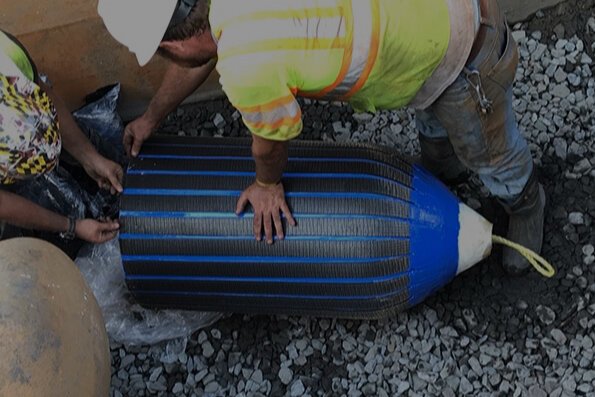
Pigging & Drying
Pigging and drying are essential steps in the pipeline pre-commissioning process, ensuring that new or refurbished pipelines are free of debris, moisture, and contaminants before they are placed into service. These processes protect the integrity of the system, reduce long-term maintenance costs, and ensure compliance with industry and safety standards.
At American Pipeline Solutions (APS), we provide reliable pigging and drying services that prepare your pipelines for safe, efficient operation.
Pigging: Preparing the Pipeline for Service
The first step in pre-commissioning is pipeline pigging, which involves running specialized devices (known as pigs) through the line to remove construction debris, mud, scale, and standing water.
APS utilizes a variety of cleaning pigs equipped with transmitters, allowing our team to monitor their progress and ensure complete coverage throughout the line. These pigs are carefully selected based on pipeline size, material, and the type of debris present. Common pig types include:
Foam pigs for removing residual water and soft debris
Brush pigs for scraping scale and tougher deposits
Bi-directional pigs for cleaning pipelines where flow may be reversed
Tracking pigs for accurate location monitoring
This step is critical to prevent future flow restrictions and to prepare the system for effective drying.
The first step in the pre-commissioning process is to run cleaning pigs through the line to remove construction debris. APS utilizes various types of cleaning pigs equipped with transmitters to clean not only construction debris but also mud, scale, and standing water.
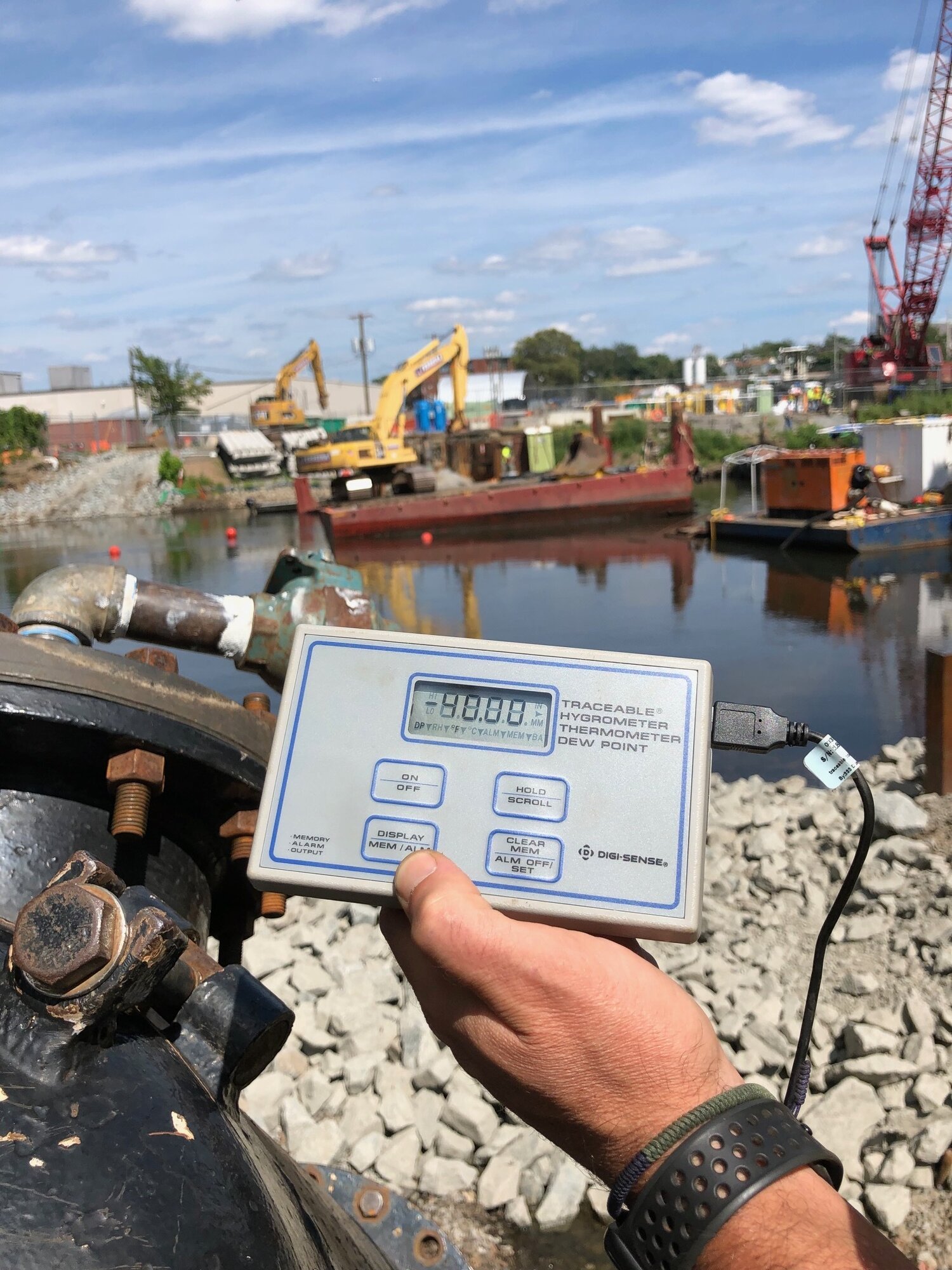
After the de-watering phase is complete the process of pipeline drying can begin. Another series of cleaning pigs and soft foam swabs are sent through the line until all standing water and scale is removed. The line is then dried to the required dew point utilizing oil free compressors and desiccant dryers or nitrogen. Pipeline drying normally specifies a -40° dew point, which is an indication of how much moisture the pipeline will contribute to the flow of gas.
What Are Pipeline Pigging And Drying Services?
Pipeline pigging is the process of running specialized pigs through the line to remove construction debris, mud, scale, sediment, standing water, and loose deposits. This prepares the pipeline for dewatering, drying, inspection, or commissioning.
Pipeline drying removes residual moisture after pigging and dewatering are complete. Even when bulk water has been removed, small amounts of moisture can remain on the pipe wall, in low points, or inside complex sections of the system.
A typical pre-commissioning sequence may include:
Pigging and debris removal
Dewatering after hydrostatic testing
Swabbing and moisture removal
Dry air or nitrogen drying
Dew point monitoring
Final closeout documentation
When each step is completed properly, the pipeline is better prepared for safe operation and long-term reliability.
Pipeline Drying: Achieving the Correct Dew Point
Once pigging and de-watering are complete, pipeline drying begins. APS deploys a sequence of soft foam swabs and drying pigs until no residual water remains. The line is then dried using advanced methods such as:
Oil-free compressors – ensuring clean, moisture-free air flow
Desiccant dryers – removing trace humidity to achieve precise dew points
Nitrogen drying – introducing an inert atmosphere to displace moisture and protect against oxidation
The industry standard for natural gas and many other systems is a -40° dew point. Achieving this target ensures that no excess moisture will be introduced into the product flow, helping to prevent corrosion, hydrate formation, and downstream equipment damage.
Pipeline Dewatering: Removing Bulk Water After Hydrotesting
After hydrostatic testing or pipeline filling, bulk water must be removed before final drying can begin. This dewatering phase is a critical bridge between testing and commissioning.
APS uses controlled pigging, swabbing, air movement, nitrogen, or displacement methods depending on the pipeline design and project requirements. The goal is to remove standing water from the line, including low points where moisture can collect.
Dewatering must be performed carefully. Uncontrolled pig speed, pressure swings, or poor discharge planning can create safety risks and delay the project. APS plans the sequence so the line can move from hydrotest completion to drying readiness with greater control.
Pipeline Drying: Achieving The Required Dew Point
Once pigging and dewatering are complete, pipeline drying can begin. APS sends soft foam swabs and drying pigs through the line until visible water, residual moisture, and remaining scale are removed as much as possible.
The line is then dried using the method that fits the project specification. Depending on the application, APS may use oil-free compressors, desiccant dryers, nitrogen, or a combination of drying methods.
For natural gas pipelines and many similar systems, a -40° dew point is commonly specified. This target helps confirm that the pipeline will not contribute significant moisture once it enters service.
Oil-Free Compressor Drying
Oil-free compressors provide clean airflow for drying without introducing oil contamination into the pipeline. This is important when the line must be prepared for sensitive service conditions or downstream equipment protection.
APS uses compressor-based drying as part of a controlled process designed to reduce moisture and support final dew point achievement.
Desiccant Dryer Support
Desiccant dryers remove humidity from the air used during the drying process. This helps lower the dew point and remove trace moisture that pigging and swabbing alone cannot eliminate.
Desiccant dryer support is often used when a pipeline must meet a specific dryness requirement before commissioning.
Nitrogen Drying
Nitrogen drying can help displace moisture and oxygen while creating an inert atmosphere inside the pipeline. This can be especially useful for systems where oxidation, moisture control, or product compatibility are major concerns.
APS may recommend nitrogen drying when the project requires a dry, stable, and controlled internal environment before startup.
What Happens If Pigging And Drying Are Rushed?
Skipping or rushing pigging and drying can create serious problems after startup. Even small amounts of debris or moisture can affect flow, damage equipment, or accelerate internal deterioration.
Common risks include corrosion from residual moisture, hydrate formation in gas systems, blockages from construction debris, scale left in low points, reduced throughput, and higher operating costs.
Rushed drying can also delay commissioning if the pipeline fails to meet the required dew point. In many cases, correcting the issue later is more expensive than completing the process properly the first time.
Why Pigging and Drying Matter?
Skipping or rushing these steps can result in serious operational challenges. Common risks include:
Corrosion and scale buildup from residual moisture
Blockages caused by leftover construction debris
Hydrate formation in natural gas systems
Flow inefficiencies that reduce throughput and increase energy costs
Proper pigging and drying not only extend pipeline life but also help operators avoid costly repairs, downtime, and compliance issues.
APS’s Expertise in Pigging & Drying
With years of experience in pipeline pre-commissioning services, APS has the equipment and technical knowledge to handle projects of varying size and complexity. Our crews are trained to work with:
Large-diameter pipelines requiring extended pigging runs
Complex systems with multiple low points and moisture traps
A variety of materials, including steel, ductile iron, HDPE, and PVC (with surface preparation when needed)
By combining transmitter-equipped pigs, reliable drying equipment, and proven procedures, APS ensures your pipeline is cleaned and dried to exact specifications—ready for safe and efficient operation.
Contact APS for Pigging & Drying Services
If you’re preparing a pipeline for commissioning, trust American Pipeline Solutions to deliver complete pigging and drying services that meet industry standards. Contact our team today to discuss your project requirements and ensure your pipeline is ready for service.
The APS Pigging And Drying Process
APS uses a structured approach to help operators move from construction, testing, or rehabilitation to service-ready pipeline operation. Each step is planned around the pipeline and the required outcome.
Step 1: Project Review And Drying Requirements
APS begins by reviewing pipeline size, length, route, access points, service type, hydrotest history, low points, discharge options, and required dew point.
This allows our team to understand the project goal before choosing the pigging and drying sequence.
Step 2: Pig Selection And Run Planning
The right pig selection is critical. APS chooses pigs and swabs based on pipe type, internal condition, debris profile, moisture level, and drying objective.
Run planning also accounts for tracking, launcher and receiver setup, pressure control, and field safety.
Step 3: Pigging And Debris Removal
APS runs cleaning pigs through the line to remove construction debris, mud, scale, sediment, loose deposits, and standing water. Transmitter-equipped pigs may be used when tracking and progress confirmation are needed.
This step helps create a cleaner internal surface before dewatering and final drying begin.
Step 4: Dewatering And Swabbing
After major debris and bulk water are removed, APS uses soft foam swabs and drying pigs to push remaining liquid out of the pipeline.
This step is especially important in pipelines with low points, long runs, or complex layouts where moisture can collect.
Step 5: Dry Air Or Nitrogen Drying
APS then applies oil-free compressors, desiccant dryers, nitrogen, or a combination of methods to reduce internal moisture.
The drying method is selected based on the required dew point, pipeline service, project timeline, and operating constraints.
Step 6: Dew Point Monitoring And Closeout
Drying continues until the required dew point is reached and confirmed. APS documents results and provides closeout information that supports commissioning readiness.
This documentation helps operators confirm that the pipeline has been cleaned, dried, and prepared according to project requirements.
FAQs:
What is pigging in pipeline pre-commissioning?
Pigging is the process of running specialized devices, called pigs, through a pipeline to remove construction debris, mud, scale, and standing water before the line goes into service. In pre-commissioning, pigging sets the foundation for drying and inspection by clearing the internal bore. APS selects pig types based on pipeline size, material, and the nature of the debris present.
Why do pipelines need drying after pigging and de-watering?
Even after pigging and de-watering, small amounts of moisture can remain on the pipe wall or in low points. Pipeline drying removes this residual water to reach a specified dew point, often -40°. This level of dryness helps prevent internal corrosion, hydrate formation in gas systems, and damage to downstream equipment once the line is in operation.
What dew point is typically required for a dried pipeline?
For natural gas and many similar systems, a -40° dew point is commonly specified. This target indicates that the pipeline will not contribute significant additional moisture to the product flowing through it. APS designs drying procedures to meet the required dew point and documents the results as part of pre-commissioning closeout.
What types of pigs does APS use for cleaning and drying?
APS uses a range of cleaning pigs equipped with transmitters so their progress can be monitored along the line. Foam pigs are used for removing residual water and soft debris, brush pigs help scrape scale and tougher deposits, and bi-directional pigs are used where flow may be reversed. Soft foam swabs and drying pigs are then deployed to remove remaining moisture before final drying.
How does APS dry pipelines after pigging and de-watering?
Once pigging and de-watering are complete, APS sends additional cleaning pigs and soft foam swabs through the line until visible water and scale are removed. The line is then dried using oil-free compressors, desiccant dryers, or nitrogen, depending on project requirements. These methods work together to achieve the specified dew point and a stable, dry internal environment.
What happens if pigging and drying are skipped or rushed?
Skipping or rushing pigging and drying can leave debris and moisture inside the pipeline. Over time, this can lead to corrosion, scale buildup, hydrate formation in gas systems, and blockages that restrict flow. Operators may face reduced throughput, increased energy costs, unplanned downtime, and potential compliance or safety issues.
Which types of pipelines can APS support with pigging and drying?
APS works on a wide range of pipeline systems used for gas, liquids, and industrial applications. Our teams handle large-diameter cross-country lines as well as complex facility piping with multiple low points and moisture traps. We adapt our pigging and drying procedures to each system’s layout, operating conditions, and material.
What pipeline materials can be cleaned and dried by APS?
APS has experience working with steel, ductile iron, HDPE, and PVC pipelines, adjusting techniques and surface preparation as needed. The choice of pigs, swabs, and drying methods is matched to the material to achieve effective cleaning and drying without unnecessary risk. Our goal is to meet specifications while protecting the asset’s internal surfaces.
Why are transmitters used on cleaning pigs?
Transmitters embedded in pigs allow APS crews to track the pig’s position as it moves through the line. This ensures complete coverage, helps identify potential slow zones or obstructions, and confirms that each pass reaches the intended receiver. Accurate tracking supports both operational control and project documentation.
How do pigging and drying support long-term pipeline integrity?
By removing debris and moisture before a pipeline enters service, pigging and drying reduce the conditions that promote internal corrosion and blockages. This improves flow efficiency, supports accurate future inspections, and extends the overall service life of the asset. For operators, it means fewer unplanned interventions and more predictable maintenance planning.


