
Pipeline Drying Methods After Hydrotesting: Nitrogen Vs Dry Air Vs Vacuum Drying
Hydrostatic testing helps verify that a pipeline can safely withstand its required operating pressure, but completing the pressure test is not the end of the pre-commissioning process. Once the test water is removed, moisture can remain along the pipe wall, in low points, around valves, and in other parts of the system.
That residual moisture needs to be addressed before many pipelines enter service. If it remains inside the line, it can contribute to internal corrosion, hydrate formation, freezing, product contamination, and commissioning problems.
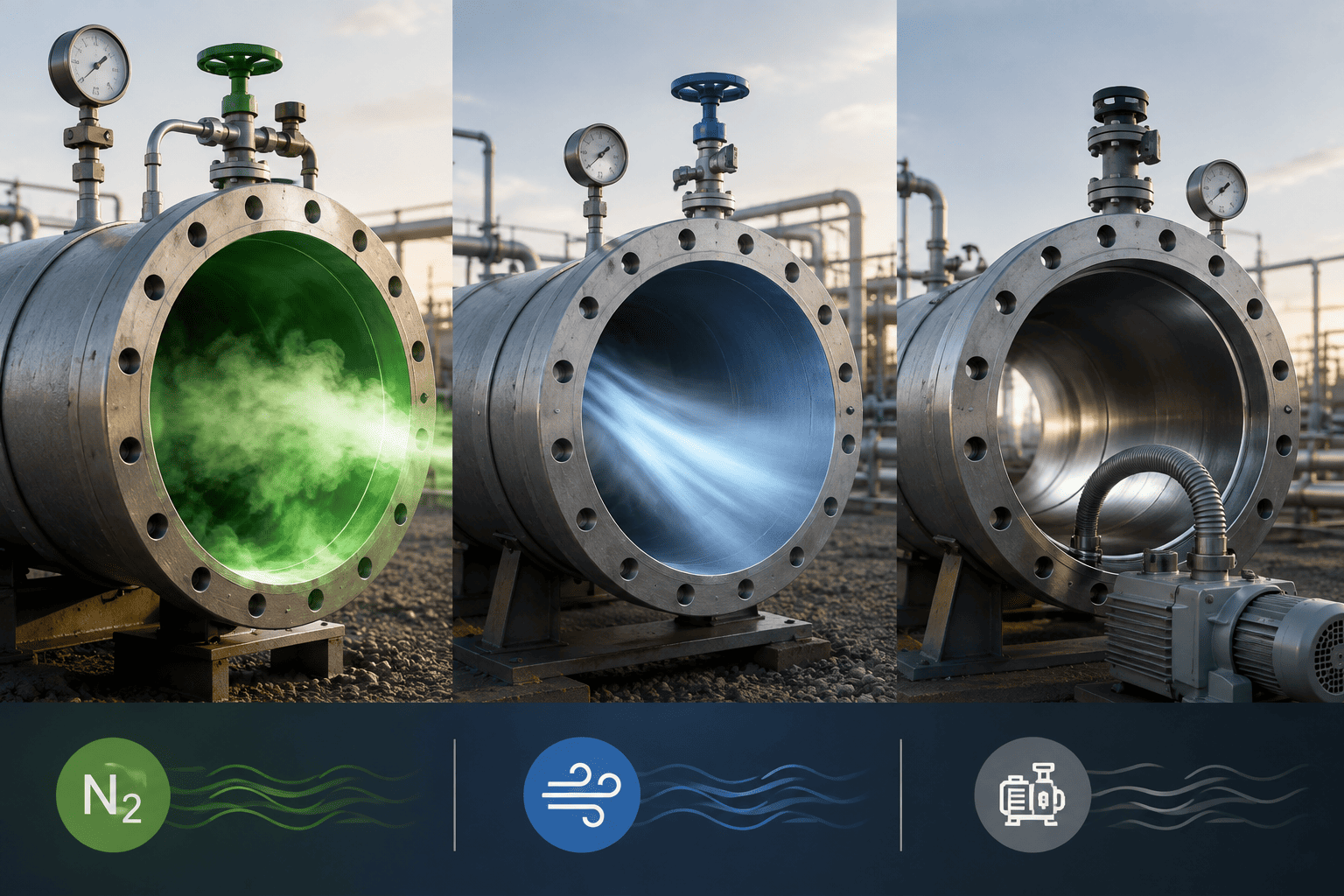
Nitrogen, dry air, and vacuum drying are three common methods used to bring a pipeline to its required moisture condition. Each works differently, and the best choice depends on the pipeline's configuration, future service, required dew point, schedule, and project specifications.
Dewatering And Drying Are Not The Same Step
Pipeline dewatering removes the majority of free water left behind after a hydrostatic test. Drying goes further by removing residual moisture and water vapor until the pipeline reaches the required acceptance condition.
A pipeline can therefore be successfully dewatered without being sufficiently dry for commissioning.
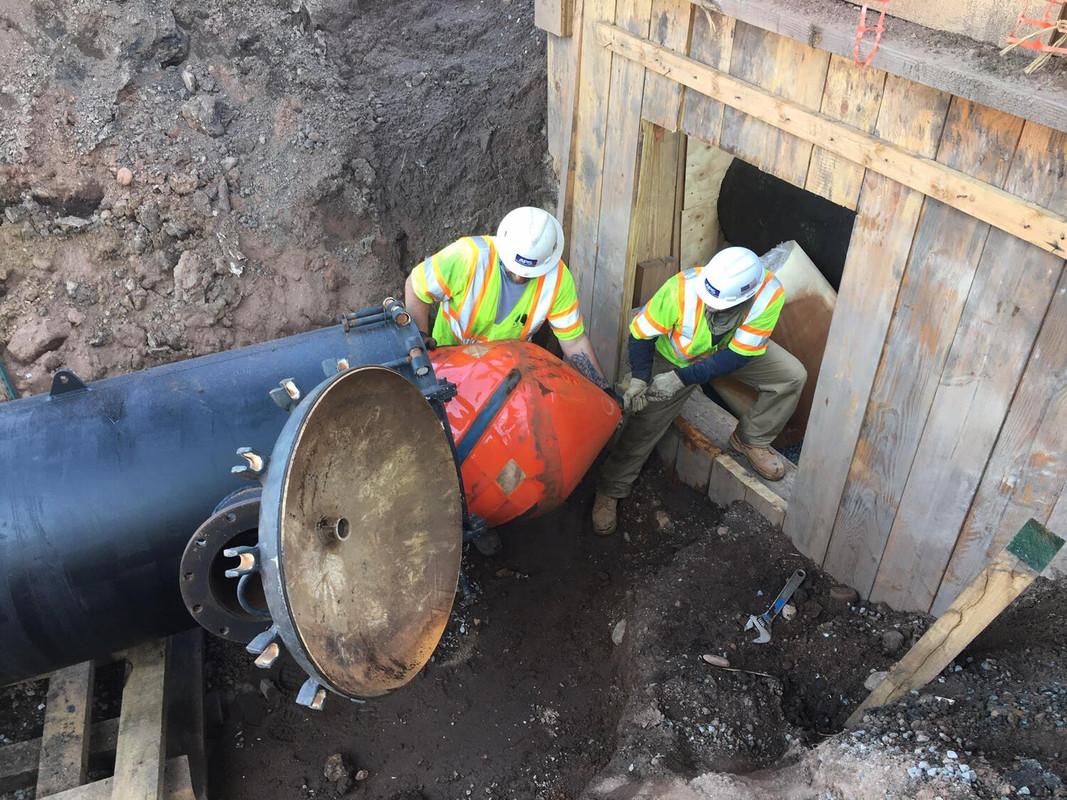
Following hydrostatic testing, pigs and foam swabs may be used to remove standing water before the final drying process begins. Effective dewatering reduces the amount of moisture that the selected drying method must handle.
APS's pipeline drying process can include additional pigging and soft foam swabbing followed by dry air or nitrogen, depending on project requirements.
Pipeline Experts: Inspection, Cleaning, Coating & More
Certified solutions for inspection, pre-commissioning, cleaning, internal coating, ice pigging™, mapping, and turnkey pipeline projects—maximizing safety and reliability at every stage.
Nitrogen Vs Dry Air Vs Vacuum Drying
The three methods achieve the same broad goal but rely on different mechanisms.
| Factor | Nitrogen Drying | Dry Air Drying | Vacuum Drying |
|---|---|---|---|
| Primary Method | Dry inert gas sweep | Continuous dry airflow | Reduced pressure evaporation |
| Oxygen Exposure | Very low | Present | Reduced during evacuation |
| Typical Equipment | Nitrogen supply or generator | Compressor and desiccant dryer | Vacuum pumps |
| Main Advantage | Drying plus inert atmosphere | Efficient and scalable | Useful for suitable complex systems |
| Main Limitation | Nitrogen volume and logistics | Oxygen remains in pipeline | Requires a vacuum-suitable, leak-tight system |
| Best Fit | Hydrocarbon and sensitive service | Large, accessible pipelines | Selected complex piping configurations |
How Nitrogen Pipeline Drying Works
Nitrogen drying introduces dry nitrogen into the pipeline and moves it through the system so it can displace moist air and carry water vapor toward the discharge point.
Because nitrogen is inert and non-combustible, it is particularly useful when operators want to reduce oxygen inside a pipeline before hydrocarbon service. The same project may use nitrogen for drying followed by purging, inerting, or maintaining a controlled internal atmosphere.
Advantages Of Nitrogen Drying
Nitrogen provides several benefits where atmosphere control is important. It reduces oxygen exposure while creating conditions that are compatible with many gas and hydrocarbon commissioning requirements.
Dry nitrogen can also support low dew point specifications when the system is properly prepared and sufficient flow is maintained.
The main advantages include:
An inert and non-combustible atmosphere
Reduced oxygen inside the pipeline
Compatibility with later nitrogen packing or purging
Effective moisture removal when properly applied
APS also uses nitrogen purging when pipelines require controlled removal of oxygen, moisture, or unwanted gases during commissioning and maintenance activities.
Limitations Of Nitrogen Drying
Nitrogen requirements can become significant on long or large diameter pipelines. Supply, generation, transportation, vaporization, and venting all have to be considered when planning the project.
Nitrogen also creates an oxygen deficient atmosphere, so ventilation, monitoring, and safe work procedures are critical wherever gas could accumulate around personnel.
How Dry Air Pipeline Drying Works
Dry air drying typically uses oil free compressors together with desiccant dryers to continuously move very dry air through the pipeline. The air absorbs moisture from internal surfaces and transports that moisture out of the line.
This method can be particularly practical for long pipelines where high volume airflow can be established. Pigging and foam swabbing beforehand can make the process more efficient by removing as much standing water as possible.
Advantages Of Dry Air Drying
Air is readily available, making dry air systems scalable for many pipeline projects. Large compressors can deliver the airflow needed for bulk drying without requiring the continuous supply of an external gas.
Dry air can also be economical when the pipeline is straightforward, piggable, and well dewatered before drying begins.
Limitations Of Dry Air Drying
Unlike nitrogen, dry air contains oxygen. If significant moisture remains or the drying process is poorly controlled, oxygen exposure can contribute to flash rusting or oxidation on susceptible metallic surfaces.
Pipeline geometry also matters. Dead legs, branches, low points, valve cavities, and changing elevations can retain moisture even when outlet air appears dry. This is why drying should be confirmed against project criteria rather than judged only by elapsed time.
How Vacuum Pipeline Drying Works
Vacuum drying removes moisture through pressure reduction rather than relying primarily on a continuous gas sweep.
When pressure inside a sealed pipeline is lowered, the boiling point of water also decreases. Residual liquid can therefore evaporate at much lower temperatures, allowing vacuum equipment to remove the resulting water vapor.
This can make vacuum drying useful for selected piping networks where pigging or continuous airflow is difficult.
Advantages And Limitations Of Vacuum Drying
Vacuum drying can work well in complex systems and can help reach demanding moisture specifications when the pipeline is suitable for the process. It may also reduce dependence on large volumes of nitrogen or compressed air.
However, the pipeline must be sufficiently leak tight and capable of safely handling the required vacuum conditions. Pipeline length, diameter, valves, equipment, temperature, and system geometry all affect whether vacuum drying is practical.
It should therefore be selected based on engineering conditions rather than simply because a low final dew point is required.
Which Pipeline Drying Method Is Best?
The right drying method depends on what the pipeline needs to achieve before entering service.
Nitrogen drying is often a strong choice when the pipeline will carry hydrocarbons, oxygen needs to be minimized, or nitrogen will also be used during the final purging or commissioning stage.
Dry air drying can be highly effective for long, reasonably straightforward pipelines where high airflow is available and oxygen exposure is acceptable.
Vacuum drying may be appropriate for selected complex systems where conventional airflow or pigging cannot efficiently reach all parts of the network.
Some projects benefit from combining methods. Dry air may handle the majority of moisture removal before nitrogen establishes the final internal atmosphere, for example.
Pipeline Geometry Can Change The Drying Strategy
Two pipelines of similar length can require very different drying plans.
Diameter, internal volume, elevation profile, low points, bends, valves, branches, dead legs, ambient conditions, and piggability all influence how moisture moves through the line.
Effective pipeline gauging can also provide useful information about internal restrictions before pigging and other pre-commissioning activities proceed.
This is why drying method selection should occur as part of overall project planning rather than after dewatering has already begun.
How Dew Point Confirms Pipeline Dryness
Dew point is one of the most important measurements used during pipeline drying. In simple terms, it indicates how much moisture remains in the gas inside the pipeline.
As drying progresses, the outlet dew point generally drops. Technicians monitor these measurements to determine whether the pipeline is approaching the required moisture condition.
The final target should always be based on the project's specifications, pipeline service, transported product, and commissioning requirements. There is no single dew point that should be applied universally to every pipeline.
Some projects also require a soak period or additional verification after airflow or nitrogen flow stops. This helps determine whether trapped moisture remains in locations that were not reflected in the initial outlet reading.
A Typical Post Hydrotest Drying Sequence
Drying works best when it is treated as part of a coordinated pre-commissioning process.
A typical sequence may include:
Complete the hydrostatic pressure test.
Depressurize the pipeline under controlled conditions.
Remove bulk hydrotest water.
Run dewatering pigs and foam swabs where appropriate.
Confirm that standing water has been minimized.
Begin nitrogen, dry air, vacuum, or combined drying.
Monitor moisture, dew point, pressure, flow, or vacuum conditions.
Verify that the project acceptance criteria have been achieved.
Purge, preserve, or commission the pipeline as required.
These stages form part of broader pipeline pre-commissioning, where cleaning, gauging, pressure testing, dewatering, drying, and final preparation work together to make the pipeline ready for service.
Pipeline Experts: Inspection, Cleaning, Coating & More
Certified solutions for inspection, pre-commissioning, cleaning, internal coating, ice pigging™, mapping, and turnkey pipeline projects—maximizing safety and reliability at every stage.
Pipeline Drying With American Pipeline Solutions
Successful pipeline drying starts before the drying equipment is connected. Hydrotest water must be removed effectively, pipeline geometry must be understood, and the final commissioning requirements need to be established before selecting a method.
American Pipeline Solutions supports pipeline operators, utilities, contractors, and industrial facilities through the complete pre-commissioning process. Services can include cleaning, pigging, hydrostatic testing, dewatering, drying, nitrogen testing, and other preparation work required before a pipeline enters service.
APS evaluates factors such as pipeline diameter, length, internal configuration, remaining moisture, future product, required dew point, and project schedule before determining the appropriate approach.
Whether a project calls for dry compressed air, nitrogen, vacuum drying, or a combination of methods, the objective remains the same: deliver a clean, dry pipeline that is ready for safe and reliable commissioning.
Frequently Asked Questions
Why Must A Pipeline Be Dried After Hydrotesting?
Hydrotesting leaves residual moisture inside the pipeline even after bulk water has been removed. Drying helps reduce the risk of internal corrosion, hydrate formation, freezing, product contamination, and commissioning problems.
What Is The Difference Between Pipeline Dewatering And Drying?
Dewatering removes free and standing water. Pipeline drying removes the residual moisture and water vapor that remain afterward until the specified final moisture or dew point condition is reached.
Is Nitrogen Better Than Dry Air For Pipeline Drying?
Not necessarily. Nitrogen is valuable when an inert, oxygen reduced atmosphere is required, while dry air can be economical and effective for many well prepared pipelines. The best option depends on service conditions and project requirements.
When Is Vacuum Drying Used For Pipelines?
Vacuum drying can be considered for suitable sealed systems, complex configurations, or situations where conventional gas flow and pigging are difficult. The system must be evaluated for vacuum suitability before the method is selected.
What Dew Point Should A Pipeline Reach After Hydrotesting?
The required dew point depends on the pipeline's future service, operator specifications, transported product, and commissioning requirements. A universal dew point should not be assumed for every project.
How Long Does Pipeline Drying Take?
Drying time varies based on pipeline diameter, length, remaining water, ambient temperature, geometry, airflow or nitrogen flow, vacuum performance, and the required final moisture condition.
Can Nitrogen And Dry Air Be Used Together?
Yes. Some projects use dry air for the primary drying stage and nitrogen afterward to achieve final atmosphere control, inerting, or commissioning requirements.
Does Pigging Come Before Pipeline Drying?
For piggable pipelines, dewatering pigs and foam swabs are commonly used before final drying. Removing as much standing water as possible reduces the moisture load and can make the drying process faster and more effective.


