

Hydrostatic testing can require a significant volume of water, especially on long or large diameter pipelines. While pressure and test duration receive much of the attention, managing that water before, during, and after the test is just as important to keeping the project on schedule.
Industrial sites need to know where test water will come from, how much temporary storage may be required, how the pipeline will be dewatered, and where the water will go afterward. Planning these steps before filling begins can reduce delays, unnecessary handling, and environmental or compliance concerns.
What Is Hydrotest Water?
Hydrotest water is the water used during hydrostatic testing to verify that a pipeline, pressure vessel, tank, or related system can withstand its required test pressure without unacceptable leakage or loss of pressure.
During pipeline hydrostatic testing, a pipeline is filled with water, stabilized, pressurized to the required level, and monitored for a specified period. Once the test is complete, the pressure is released and the water must be removed from the system.
The water leaving the pipeline may not have the same characteristics as the water that entered it. Contact with the internal surface can introduce sediment, rust, mill scale, construction debris, residual product, or other materials that affect how the water can be reused, treated, or discharged.
Pipeline Experts: Inspection, Cleaning, Coating & More
Certified solutions for inspection, pre-commissioning, cleaning, internal coating, ice pigging™, mapping, and turnkey pipeline projects—maximizing safety and reliability at every stage.
Why Hydrotest Water Management Should Start Before Testing
Water management should be part of hydrotest planning from the beginning rather than something addressed after the pressure test is finished.
Industrial projects can involve substantial volumes of water. If the site does not have enough temporary storage or an approved discharge destination, a successful hydrotest can still create scheduling problems.
The first step is understanding the pipeline itself. Diameter, length, elevation changes, test section boundaries, source water availability, and the possibility of retesting all influence how much water must be handled.
Water quality also matters. Even clean source water can change as it moves through the line, which is why disposal requirements should not be based only on where the water originally came from.
Planning The Hydrotest Water Management Process
An effective plan follows the water through the complete testing sequence, from filling the pipeline to final disposal or reuse.
Select And Manage The Water Source
Hydrotest water may come from municipal supplies or other approved sources depending on the project. Water quality, availability, required volume, and applicable environmental requirements should all be considered before filling begins.
Proper pipeline filling and filtration also helps control the test process. APS uses fill pigs propelled by the test water to reduce trapped air, which can otherwise affect stabilization and test performance.
Estimate The Required Water Volume
Pipeline diameter and test section length determine the basic volume required, but operators should also account for water transfer, temporary holding, operational losses, and the possibility that a section may need to be tested again.
Test sections should be evaluated as part of the same water management plan rather than as isolated activities. In some projects, water from one completed section may potentially be transferred for another test when water quality and project requirements allow.
Provide Adequate Temporary Storage
Temporary storage provides flexibility between testing, dewatering, treatment, reuse, and final disposal.
Storage planning should consider available site space, transfer rates, anticipated water volume, holding time, site access, and contingency capacity. The right arrangement depends on whether the water will be reused onsite, treated before discharge, transferred to another test section, or transported elsewhere.
What Can Be Found In Hydrotest Water?
The condition and previous service of a pipeline can significantly affect water quality after hydrotesting.
Possible constituents include:
Rust, iron, mill scale, and suspended solids
Soil or construction debris
Oil, grease, or residual hydrocarbons
Corrosion inhibitors or other additives
Residual chlorine from some source water
Coating or process residues
Sediment removed from the pipeline interior
Not every project will contain the same constituents. A newly constructed pipeline may present different concerns than an existing industrial or product pipeline.
EPA permits for some facilities have required hydrotest water monitoring for parameters such as suspended solids, oil and grease, pH, chlorine, and certain hydrocarbons. The exact requirements depend on the facility, discharge pathway, jurisdiction, and permit conditions.
How Hydrotest Water Is Removed From A Pipeline
Completing the pressure test is only part of the job. The next challenge is removing the bulk water from the pipeline in a controlled manner.
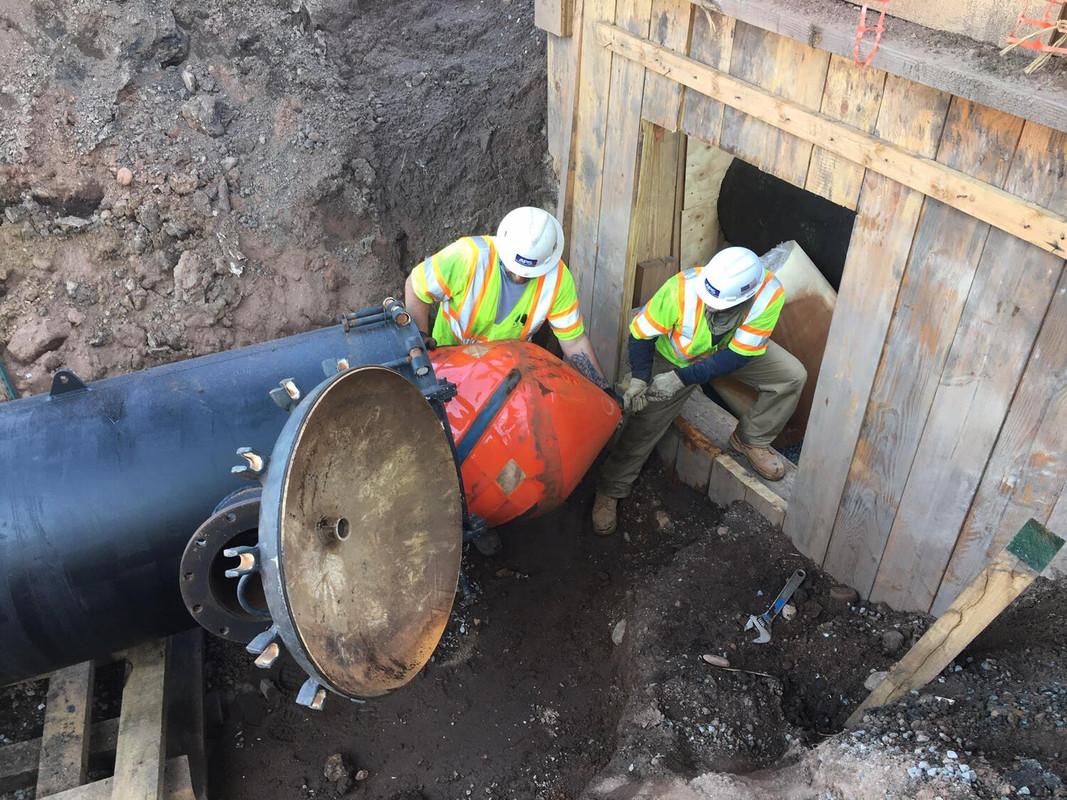
Pipeline dewatering commonly uses pigs driven through the line with compressed air or another approved medium. The pigs displace water toward a controlled collection, transfer, or discharge location.
Dewatering is already an important stage within APS pipeline pre-commissioning services, where cleaning, gauging, filling, pressure testing, dewatering, and drying are coordinated as part of the overall commissioning sequence.
Pipeline geometry can influence how effectively water is removed. Elevation changes, low points, restrictions, and internal conditions all need to be considered when planning the dewatering runs.
For pipelines where internal clearance needs to be confirmed before pigging or testing activities, pipeline gauging services can help identify restrictions and reduce the risk of problems during subsequent operations.
Hydrotest Water Reuse, Treatment, And Disposal Options
There is no single disposal method that fits every industrial hydrotest. The appropriate option depends on water quality, site conditions, project location, volume, and the requirements of the receiving destination.
Reusing Water For Another Test Section
When conditions allow, reusing hydrotest water can reduce fresh water demand and the total amount of water requiring final disposal.
The water may need to be filtered, sampled, or otherwise evaluated before reuse. Operators should also consider whether transferring water between sections could introduce contaminants or affect the next test.
Controlled Discharge
Some projects may allow hydrotest water to be discharged through an authorized pathway after applicable water quality and permit requirements are satisfied.
Discharge planning should consider the receiving area, flow rate, erosion potential, water quality, and any treatment or monitoring requirements. Hydrotest water should never be assumed suitable for unrestricted discharge simply because clean water was originally used to fill the pipeline.
Municipal Or Offsite Disposal
Depending on the water characteristics and location, a municipal wastewater treatment system or approved offsite facility may be an option.
Acceptance requirements should be confirmed before testing starts. Waiting until a large volume of water is already onsite can create unnecessary storage, transportation, and scheduling problems.
Dewatering And Pipeline Drying Are Not The Same
Removing the bulk test water does not necessarily mean the pipeline is ready for service.
Dewatering removes liquid water. Drying addresses moisture that remains after the primary water removal process. This distinction can be particularly important for gas systems and other applications where residual moisture can affect product quality, corrosion risk, or commissioning specifications.
APS may use foam swabs, cleaning pigs, and drying equipment during pre-commissioning to continue removing residual moisture after dewatering.
A coordinated strategy allows hydrotesting, dewatering, and drying to function as connected stages rather than separate operations.
Common Hydrotest Water Management Mistakes
Many water management problems begin before the test itself. Common planning issues include underestimating water volume, waiting too long to identify a disposal destination, providing insufficient temporary storage, and assuming the discharged water will have the same quality as the source water.
Another common mistake is failing to coordinate dewatering with the next commissioning stage. Water may be removed successfully, but residual moisture can still delay final readiness when drying specifications have not been considered.
A broader hydrostatic testing process should therefore consider filling, pressure testing, depressurization, water removal, and final pipeline readiness as one coordinated operation.
Pipeline Experts: Inspection, Cleaning, Coating & More
Certified solutions for inspection, pre-commissioning, cleaning, internal coating, ice pigging™, mapping, and turnkey pipeline projects—maximizing safety and reliability at every stage.
How American Pipeline Solutions Supports Hydrotesting And Water Removal
American Pipeline Solutions provides nationwide pipeline services for oil and gas, municipal, utility, and industrial systems, with hydrostatic testing and pre-commissioning capabilities designed around the complete pipeline workflow.
APS supports projects with pipeline cleaning, gauging, controlled filling and filtration, hydrostatic testing, depressurization, pigging, dewatering, and drying. Coordinating these services can help operators move efficiently from test preparation through final commissioning while reducing avoidable reruns and project delays.
For complex energy projects, APS also provides integrated oil and gas pipeline services that combine pre-commissioning, testing, pigging, and integrity support based on the pipeline and project requirements.
The goal is not simply to complete the pressure test. It is to help ensure the pipeline is properly prepared, tested, dewatered, and ready for the next phase of operation.
FAQs
What Is Hydrotest Water?
Hydrotest water is the water used to fill and pressurize a pipeline, tank, or pressure system during hydrostatic testing. After testing, it must be removed and managed according to the water quality, site conditions, and applicable requirements.
How Do Industrial Sites Dispose Of Hydrotest Water?
Options may include reuse for another test, authorized onsite discharge, treatment followed by discharge, acceptance by a municipal wastewater facility, or transportation to an approved offsite facility. The appropriate method depends on the project and water characteristics.
Can Hydrotest Water Be Reused?
Yes, hydrotest water may be reused for another test section when its quality and project requirements make reuse appropriate. Reuse can reduce fresh water demand and final disposal volume.
Does Hydrotest Water Need To Be Tested Before Disposal?
Testing may be required depending on the discharge method, receiving facility, permit, pipeline history, and local regulations. Water characterization can help determine whether treatment is necessary and which disposal options are appropriate.
How Much Storage Is Needed For Hydrotest Water?
Storage requirements depend on pipeline diameter, test section length, water transfer plans, disposal timing, available site space, and contingency needs. Capacity should be planned before filling begins.
How Is Hydrotest Water Removed From A Pipeline?
Bulk water is commonly displaced using pigs propelled through the line with compressed air or another suitable medium. The water is directed toward a controlled collection, storage, transfer, or discharge location.
What Is The Difference Between Dewatering And Drying?
Dewatering removes bulk liquid from the pipeline. Drying removes the residual moisture that remains afterward. Some pipelines require both processes before commissioning.
When Should Hydrotest Water Disposal Be Planned?
Water disposal should be addressed during hydrotest planning, before the pipeline is filled. Early planning allows operators to coordinate storage, sampling, treatment, permits, transportation, reuse, and final disposal without delaying the project.


