
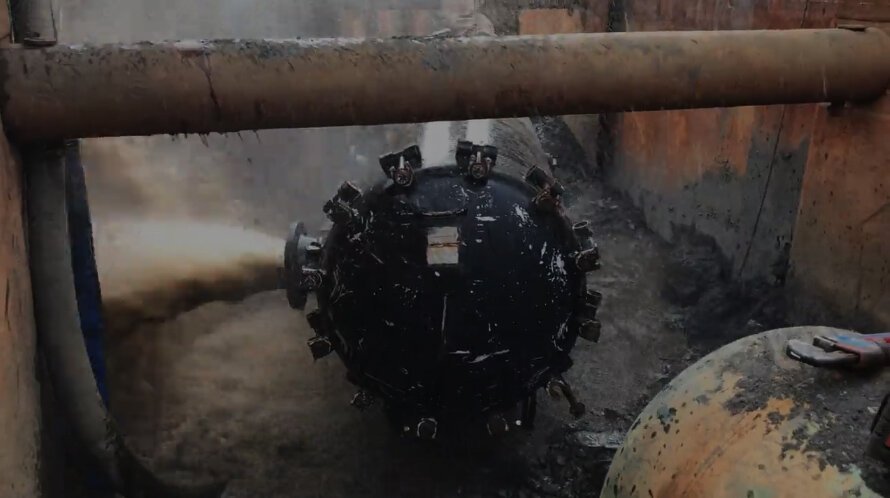
Dewatering
Pipeline dewatering is one of the most important and technically challenging steps in preparing a pipeline for service. After hydrostatic testing, every drop of water must be removed to prevent corrosion, protect product quality, and ensure the line is safe for inspection and operation. At American Pipeline Solutions (APS), we perform dewatering with precision, safety, and efficiency, drawing on decades of experience and advanced pigging technology.
What Is Pipeline Dewatering?
Pipeline dewatering is the process of expelling water from the inside of a pipeline, typically after hydrotesting or construction. During a hydrotest, the line is filled with water and pressurized to confirm strength and integrity. Once this step is complete, water must be displaced and safely discharged.
Unlike other fluids, water cannot be compressed. When compressed air is used to drive a pig through the line, pockets of air form ahead of the pig, creating sudden and forceful discharges at the receiving end. This makes dewatering one of the highest-risk procedures in pre-commissioning. APS technicians are trained to anticipate these risks and apply strict safety controls so the process is completed without incident.
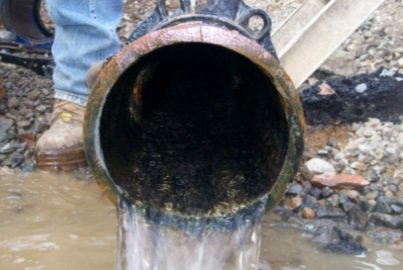
Once a hydrotest has been completed, the same pig as was used to fill the line will be run back to the launch site utilizing compressed air. Pipeline dewatering can be one of the most dangerous procedures in the pre-commissioning process. This is due to the fact that air is compressible and water is not; large air pockets develop in front of the dewatering pig creating violent releases of air/water at the terminus. APS Technicians monitor the pig as it dewaters so that valves and piping at the release point maintain a constant backflow pressure to minimize danger to both personnel and equipment. Once pipeline dewatering is complete the drying process can commence.
Why Dewatering Is One Of The Highest-Risk Pre-Commissioning Steps
Dewatering demands strict pressure control and disciplined procedures because the physics can be unforgiving. Water is not compressible, while air is compressible. If air pockets form ahead of the pig, the compressed air can release violently at the outlet when the pig arrives.
That’s why pipeline dewatering is often considered one of the highest-risk procedures in pre-commissioning. The difference between a controlled discharge and a dangerous release comes down to planning, tracking, pressure management, and experienced crews.
APS addresses this risk with controlled pig propulsion and constant backpressure management at the discharge point. The goal is to complete dewatering safely while protecting personnel, equipment, and the surrounding environment.
When Dewatering Is Required
Pipeline dewatering is typically required in several scenarios. The most common is after hydrostatic testing, where the test water must be removed before drying and commissioning can begin.
Dewatering is also used after certain repairs or tie-ins, during pipeline commissioning sequences, and anytime water must be displaced before inspection tools, product introduction, or internal coating work. In cold climates, timely dewatering can also reduce freezing and damage risks during commissioning timelines.
Why Dewatering Matters?
Dewatering is not simply a mechanical step—it is essential for long-term pipeline health and operational readiness.
Corrosion prevention: Water left in the pipeline after hydrotesting accelerates corrosion, especially when non-potable water has been used.
Cold climate protection: In freezing environments, residual water can turn to ice, causing blockages or even ruptures.
Product purity: For oil, gas, water, or industrial systems, even trace moisture can contaminate the product, reduce efficiency, or damage equipment.
Inspection readiness: A dry line is necessary for accurate smart pigging, condition analysis, and internal coating applications.
Compliance and safety: Regulatory standards and operational best practices require pipelines to be dewatered and dried to specific criteria before entering service.
How APS Performs Pipeline Dewatering
Every pipeline is different, but APS follows a structured, safety-driven approach designed to deliver predictable results.
Post-Hydrotest Preparation
The process begins with confirming the pipeline configuration, isolations, and readiness for a dewatering run. APS verifies that the correct pig is in place and that launch and receive locations are prepared for safe operations.
If the pipeline was filled using a fill pig, the same pig is commonly driven back through the line during dewatering. APS plans this return run carefully to match the pipeline’s length, profile, and discharge requirements.
Controlled Pig Propulsion
APS uses a controlled propulsion medium to drive the pig through the pipeline. Depending on the project, this may include compressed air, dry gas, or nitrogen. The propulsion choice is based on safety, operating constraints, and the downstream commissioning goals.
The objective is to move the pig at a stable, controlled speed while maintaining safe pressure behavior and avoiding conditions that create trapped air pockets or unstable discharge events.
Continuous Monitoring During The Run
During dewatering, APS monitors pig location and velocity using appropriate tracking methods and field checks. We also monitor pressure and flow behavior to detect abnormalities early and reduce the likelihood of stalling, speed swings, or unstable discharge.
This is the phase where experience matters most. Small changes in pressure behavior can indicate changes in internal conditions, debris accumulation, or developing constraints that need immediate adjustment.
Controlled Discharge With Backpressure Management
The most critical part of dewatering is the discharge. APS maintains controlled backpressure at the outlet to reduce the risk of violent air release and to ensure a stable, predictable end-of-run condition.
This is a core part of APS’s safety-first approach. The goal is to keep energy release controlled and to protect personnel and equipment as the pig arrives and water is expelled.
Verification And Readiness For Drying
After dewatering is complete, APS confirms that bulk water has been removed and the pipeline is ready for drying. This includes confirming discharge conditions, reviewing run behavior, and verifying that the line meets project requirements before moving to the next phase.
Safety: Our Top Priority
Dewatering presents unique hazards that demand expertise. Air pocket compression can cause explosive releases of energy if not properly managed. Launch and receiving facilities must be engineered to handle rapid flow changes, while technicians must remain vigilant at every step.
APS technicians follow industry-recognized procedures and apply real-time monitoring to detect pressure fluctuations. By combining technology with experience, we reduce the chance of uncontrolled releases and keep teams safe. This commitment to safety has made APS a trusted partner for pipeline operators nationwide.
From Dewatering to Drying
Dewatering is the foundation of the drying process. Once water is removed, APS prepares the pipeline for service by achieving the required dryness or dew point. Depending on project requirements, we may use dry compressed air, nitrogen, vacuum drying, or a combination of methods.
Proper drying not only prevents corrosion but also ensures that pipelines meet strict specifications before product is introduced. For certain systems, we can also follow with internal pipe coating to further extend service life and protect against corrosion.
Why Choose APS for Pipeline Dewatering?
Specialized expertise: Dewatering is one of the most complex steps in pre-commissioning. APS’s trained technicians have years of field experience in high-risk operations.
Advanced technology: From pig tracking systems to pressure control equipment, APS uses proven methods and tools to keep projects safe and efficient.
Commitment to safety: Our procedures are designed to eliminate unnecessary risk, protecting both personnel and infrastructure.
Comprehensive solutions: APS doesn’t just dewater pipelines—we provide full pre-commissioning services including pigging, inspection, condition analysis, drying, coating, and mapping.
Trusted reputation: As a member of the Pigging Products & Services Association (PPSA), APS meets global standards for pipeline service quality.
Work With APS
American Pipeline Solutions provides dewatering services across the United States, supporting oil, gas, water, and industrial pipelines of every size. Whether your project involves a new installation or routine maintenance, we bring the expertise and equipment to deliver safe, timely, and cost-effective results.
Contact APS today to schedule a consultation and ensure your pipeline is dewatered, dried, and ready for service.
FAQs:
What is pipeline dewatering and when is it required?
Pipeline dewatering is the process of removing water from the inside of a pipeline, usually after hydrostatic testing or construction. Once the line has been pressure tested, all water must be displaced and safely discharged to prevent corrosion, freezing, product contamination, and inspection issues. Dewatering is typically followed by a controlled drying phase before the pipeline is introduced into service.
Why is pipeline dewatering considered a high-risk operation?
Dewatering is high-risk because air is compressible and water is not. When compressed air, gas, or nitrogen drives a pig through the line, large air pockets can form in front of the pig and release violently at the receiving end. Without proper controls, this can damage equipment and endanger personnel. Safe dewatering requires trained technicians, engineered facilities, and continuous pressure monitoring.
How does APS perform pipeline dewatering safely?
APS designs each dewatering plan around line size, length, geometry, and service. Technicians monitor pig location and velocity while managing backpressure at the outlet to control air/water discharge. We use proven pigging technology, pressure control equipment, and real-time monitoring to keep flow dynamics stable. This approach minimizes surges, protects launch and receiving facilities, and reduces risk to personnel and infrastructure.
What happens if a pipeline is not fully dewatered after hydrotesting?
If water remains in the line after hydrotesting, it can accelerate internal corrosion, especially when non-potable water was used. In cold climates, residual water may freeze, causing blockages or ruptures. Moisture can also contaminate product, reduce efficiency, and affect downstream equipment. Incomplete dewatering can compromise inspection data and may prevent the pipeline from meeting regulatory or client specifications.
How is pipeline dewatering different from pipeline drying?
Dewatering focuses on physically displacing and removing bulk water from the pipeline using pigs and compressed media. Drying is the subsequent step where the remaining moisture is reduced to a specified dew point using methods such as dry air, nitrogen, vacuum drying, or a combination. Together, dewatering and drying prepare the line for safe operation, accurate inspection, and long-term corrosion control.
What media are used to propel pigs during dewatering?
APS typically uses compressed air, dry gas, or nitrogen to propel dewatering pigs through the line. The choice depends on pipeline design, location, and service requirements. Each medium has different compressibility and safety implications, so we design procedures and backpressure controls accordingly. Our technicians monitor pressure, flow, and pig movement throughout the operation to maintain safe and consistent conditions.
Why does dewatering matter for smart pigging and internal coating?
Accurate smart pigging and internal coating both require a dry, clean internal surface. Residual water or debris can distort inspection signals, hide defects, and interfere with coating adhesion. By fully dewatering and then drying the line to the specified dew point, APS creates the conditions needed for reliable condition analysis and durable internal coatings, supporting long-term integrity and regulatory compliance.
What types of pipelines does APS dewater?
APS provides dewatering services for oil, gas, water, and industrial pipelines across the United States. We handle a wide range of diameters and configurations, from new construction to existing lines undergoing maintenance or rehabilitation. Each project is scoped individually, with dewatering procedures tailored to the pipeline’s size, length, operating environment, and downstream requirements, including drying and potential internal coating.


