
Dewatering Pipelines Safely After Hydrostatic Testing
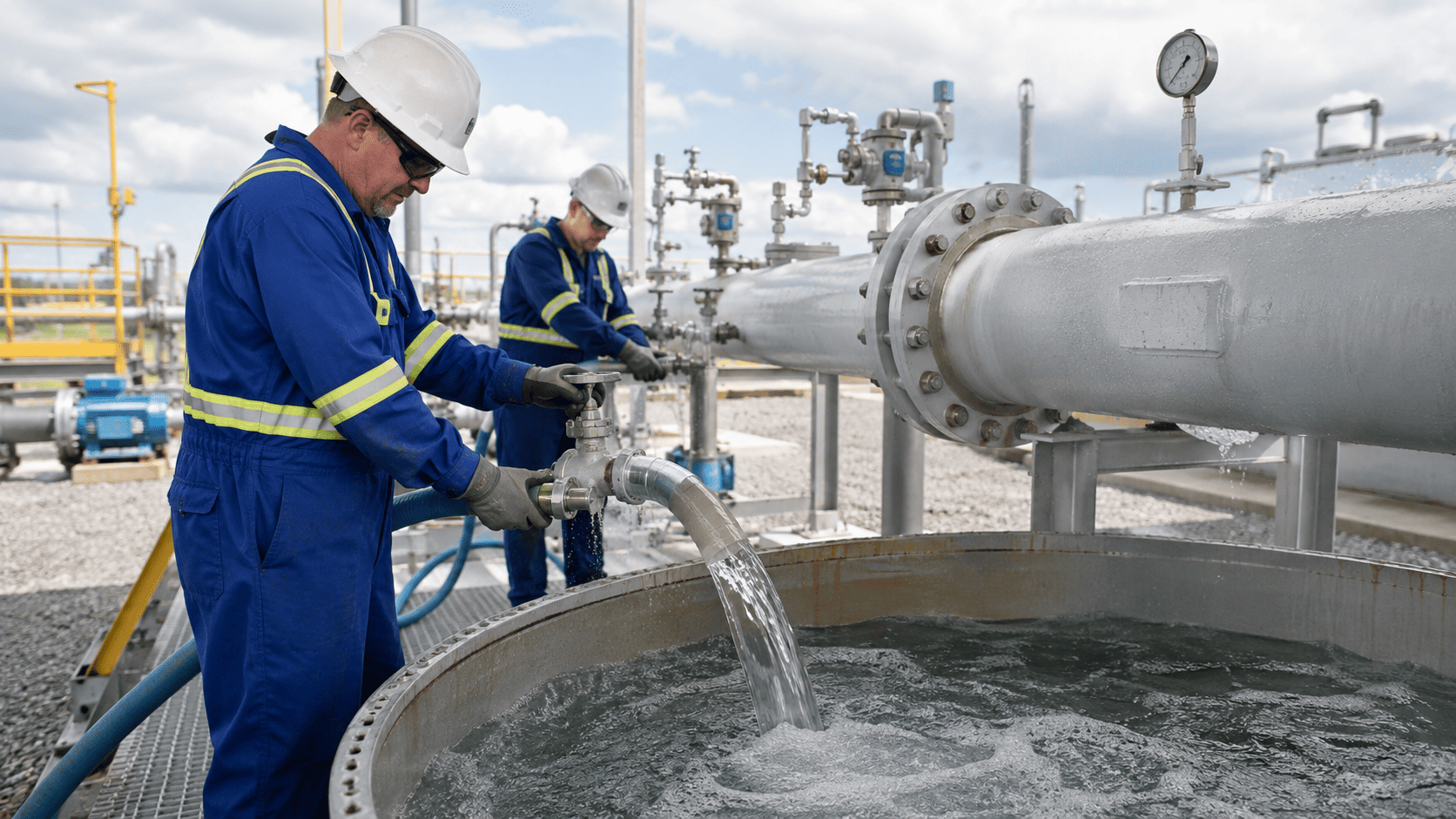
Completing a hydrostatic test confirms that a pipeline can withstand its specified test pressure, but the work does not end when the pressure is released. The water used during testing must be removed in a controlled manner before the line can be dried, inspected, preserved, or placed into service.
Pipeline dewatering involves more than opening a drain and allowing water to escape. Pressurized air or nitrogen, moving pigs, changing elevations, temporary discharge lines, and large volumes of test water can create serious hazards when the process is not properly planned.
A safe dewatering operation protects personnel, prevents damage to the pipeline, controls the discharged water, and prepares the line for the next stage of commissioning.
What Is Pipeline Dewatering?
Pipeline dewatering is the process of removing bulk water from a pipeline after pressure testing, construction, cleaning, or maintenance. Following hydrostatic testing, the process typically uses pigs propelled by compressed air or nitrogen to move test water toward a controlled discharge location.
Dewatering is often part of a broader pre-commissioning sequence. The exact steps depend on the pipeline diameter, length, elevation profile, future service, internal cleanliness requirements, and project specifications.
It is also important to distinguish dewatering from drying. Dewatering removes most of the liquid water, while drying removes the remaining moisture film and lowers the internal moisture level to an acceptable condition.
Why Safe Dewatering Matters
Hydrotest water that remains inside a pipeline can interfere with commissioning and contribute to future operating problems. This is especially important for gas pipelines, industrial systems, and lines that will carry moisture-sensitive fluids.
Residual water may contribute to internal corrosion, contamination, freezing, hydrate formation, or unreliable inspection results. In some cases, water may collect in low points even after the majority of the line appears to have been drained.
A properly planned pipeline dewatering process helps remove this water while keeping pig speed, pressure, flow, and discharge conditions under control.
Why Pipeline Dewatering Can Be Dangerous
The primary hazard during dewatering is the use of a compressed propelling medium. Water is largely incompressible, but compressed air and nitrogen can store significant energy.
As a pig travels through the pipeline, changes in slope, water volume, friction, and backpressure can cause its speed to change. A pig that accelerates unexpectedly may push a large slug of water toward the receiving location with considerable force.
Other hazards may include:
Sudden pressure release
Uncontrolled pig arrival
Moving or whipping temporary discharge lines
Trapped pressure inside the receiver
Vacuum formation within the pipeline
Unexpected water discharge
Oxygen displacement when nitrogen is used
Personnel entering exclusion zones too early
Safe dewatering therefore requires continuous monitoring and a clear operating procedure rather than relying on estimated travel time alone.
Planning A Safe Pipeline Dewatering Operation
Every dewatering project should begin with a review of the pipeline configuration and the required final condition. The method used for one pipeline may not be appropriate for another.
The project team should understand the internal diameter, wall thickness, length, elevation changes, bends, valves, tees, low points, high points, launcher, receiver, and any restrictions that could affect pig movement.
Define The Required End Condition
The required level of water removal depends on what will happen next. A pipeline being placed into water service may have different requirements than a gas line that must reach a specified dew point.
The final condition may also be influenced by whether the pipeline will undergo smart pigging, internal coating, nitrogen preservation, or immediate commissioning.
Select The Appropriate Pig Train
A dewatering pig train may use sealing pigs, cup pigs, disc pigs, foam pigs, or a combination of pig types. The first pigs generally move the bulk water, while later pigs or swabs remove smaller quantities and moisture films.
Professional pipeline pigging services select the pig configuration according to the pipeline geometry, expected debris, water volume, internal condition, and required outcome.
Plan The Discharge Location
The discharge point must have enough capacity to receive the expected hydrotest water and any water slugs created during pig arrival. Temporary lines, hoses, couplers, tanks, and containment systems should be checked before the operation begins.
Hydrotest water may contain sediment, corrosion residue, treatment chemicals, or contaminants picked up from the pipeline. The water should be characterized and handled according to project requirements and applicable discharge permits.
Step-By-Step Pipeline Dewatering Process
A dewatering procedure should be written for the actual pipeline rather than copied from a general template. Conditions should be monitored throughout the operation so adjustments can be made when necessary.
Confirm The Hydrotest Is Complete
Before dewatering begins, the hydrostatic test results should be accepted and documented. The project team should confirm that no additional pressure hold or leak investigation is required.
The pipeline should then be released for controlled depressurization according to the approved procedure.
Depressurize The Pipeline Gradually
Test pressure should be reduced in a controlled sequence. Opening valves too quickly can cause sudden changes in flow and pressure that may damage temporary connections or place personnel at risk.
High point vents may be needed to prevent vacuum conditions and allow the water to move through the system without trapping air or creating unstable flow.
Prepare The Launcher And Receiver
The launcher and receiver should be isolated, inspected, and prepared before the pig is introduced. The receiving area should include a clearly marked exclusion zone that remains restricted during pig arrival.
Temporary discharge piping should be securely restrained. The receiving trap must not be opened until the team has verified that it is fully isolated and no pressure remains.
Launch The Dewatering Pig Train
The pig train is propelled through the pipeline using controlled compressed air or nitrogen. Oil-free and properly filtered air is commonly used when contamination must be avoided.
The propelling medium should be introduced gradually. Pressure and flow should be adjusted to keep the pigs moving steadily without allowing sudden acceleration.
Control Pig Speed And Backpressure
Pig speed is affected by pipeline diameter, elevation, seal friction, water volume, gas flow, and pressure at the receiving end. Maintaining suitable backpressure can help stabilize pig movement and reduce uncontrolled water discharge.
No single speed is appropriate for every project. The acceptable range should be based on the pipeline design, pig configuration, receiving setup, and approved engineering procedure.
Track The Pig Through The Pipeline
Reliable pig tracking helps the team confirm pig location, identify unusual delays, and prepare the receiving crew for arrival.
Tracking data should be supported by pressure readings, flow information, estimated travel time, and regular communication between the launching and receiving locations.
Manage Pig And Water Arrival
The receiver is one of the highest risk areas during dewatering. Water may arrive ahead of the pig in large slugs, and the pig itself may reach the trap with considerable energy.
Personnel should remain outside the exclusion zone until the operation is complete. Discharge volume, pressure behavior, pig arrival, and receiver isolation should all be confirmed before the trap is opened.
What Happens After Bulk Dewatering?
Removing the majority of the hydrotest water does not always mean the pipeline is ready for service. Moisture may remain on the pipe wall, inside valves, at low points, or behind internal restrictions.
Additional swab runs may be necessary before the drying process begins.
Foam Swabbing And Drying Pigs
Foam pigs and absorbent swabs can collect residual water that sealing pigs may leave behind. Multiple runs may be required until the returned pigs and discharged air meet the project’s acceptance criteria.
The condition of each returned pig should be documented because it can provide useful information about remaining water, debris, internal restrictions, and pipeline cleanliness.
Dry Air Or Nitrogen Drying
After bulk dewatering, pipeline drying may use dry compressed air, heated air, desiccant systems, nitrogen, or a combination of methods.
Nitrogen may be selected when the pipeline must be dried, inerted, or protected from oxygen before commissioning. It must be handled carefully because it can displace breathable air in enclosed or poorly ventilated areas.
The process of nitrogen purging may also be used to replace air or other gases after water removal, depending on the future service of the pipeline.
Verify The Final Moisture Condition
Drying should not be declared complete based only on operating time. Outlet moisture or dew point readings should be monitored until the required condition is reached and remains stable.
The acceptance value should come from the project specifications, pipeline service requirements, owner standards, and commissioning plan. A single universal dew point should not be applied to every pipeline.
How Dewatering Supports Pipeline Inspection
A clean, controlled internal environment can improve the reliability of later inspection work. Standing water and loose debris may interfere with some inspection tools, affect sensor contact, or complicate the interpretation of collected data.
Proper preparation can support pipeline inspection, smart pigging, caliper pigging, condition analysis, internal coating, and integrity planning.
The required preparation will depend on the inspection technology being used. Some tools may tolerate limited moisture, while others need a cleaner or drier internal surface to collect dependable information.
Common Dewatering Mistakes To Avoid
Many dewatering problems result from treating the operation as a routine draining task rather than an engineered pipeline procedure.
Common mistakes include:
Releasing hydrotest pressure too quickly
Failing to establish a receiver exclusion zone
Using unsecured temporary discharge lines
Allowing the pig to travel without reliable tracking
Underestimating the receiving tank capacity
Ignoring high points and low points
Opening the receiver before confirming zero pressure
Treating dewatering and drying as the same process
Using one dew point target for every pipeline
Discharging test water without confirming disposal requirements
Addressing these risks during planning is usually safer and less expensive than responding to them during the operation.
Safe Dewatering With American Pipeline Solutions
American Pipeline Solutions plans dewatering projects around the pipeline’s geometry, service requirements, internal condition, project schedule, and final commissioning goals.
The APS team supports controlled pig propulsion, pressure and flow monitoring, pig tracking, backpressure management, water discharge, drying preparation, and pipeline condition work. This integrated approach helps clients move safely from hydrostatic testing toward inspection, preservation, or commissioning.
Whether a project involves a newly constructed pipeline, an existing industrial line, or pressure pipe infrastructure, the goal is to remove water efficiently without sacrificing safety or pipeline integrity.
Frequently Asked Questions
What Is The Difference Between Dewatering And Drying?
Dewatering removes bulk liquid water from the pipeline. Drying removes the moisture film and lowers the internal moisture level to the condition required for service.
Can Compressed Air Be Used For Pipeline Dewatering?
Yes. Dry, oil-free compressed air is commonly used to propel dewatering pigs. The pressure, flow, and pig speed must be controlled throughout the operation.
When Is Nitrogen Used For Dewatering?
Nitrogen may be used when the line must also be inerted, protected from oxygen, or prepared for hydrocarbon service. Ventilation and oxygen monitoring are important wherever nitrogen could accumulate.
How Is Dewatering Completion Verified?
Completion may be evaluated through discharge volume, pig returns, low point checks, pressure behavior, water recovery calculations, and project-specific acceptance criteria.
Can A Non-Piggable Pipeline Be Dewatered?
Yes, but the process may require gravity drainage, low point access, vacuum methods, dry air displacement, nitrogen, or temporary modifications. The method depends on the pipeline configuration.
Does A Pipeline Need To Be Dry Before Inspection?
Not every inspection method has the same moisture requirement. The pipeline should be prepared according to the inspection technology, service conditions, and inspection provider’s specifications.
Prepare Your Pipeline For Safe Commissioning
Safe pipeline dewatering requires careful depressurization, controlled pig movement, reliable tracking, secure discharge arrangements, and clear completion criteria.
American Pipeline Solutions provides nationwide support for pipeline dewatering, drying, pigging, inspection, and pre-commissioning projects. Contact APS to discuss the condition of your pipeline and the safest approach for moving from hydrostatic testing to reliable service.


