
Temporary Pig Launchers And Receivers: When Are They Needed?
Not every pipeline is built with permanent pigging facilities. Yet operators may still need to clean the line, remove hydrotest water, verify internal geometry, or perform an inline inspection.
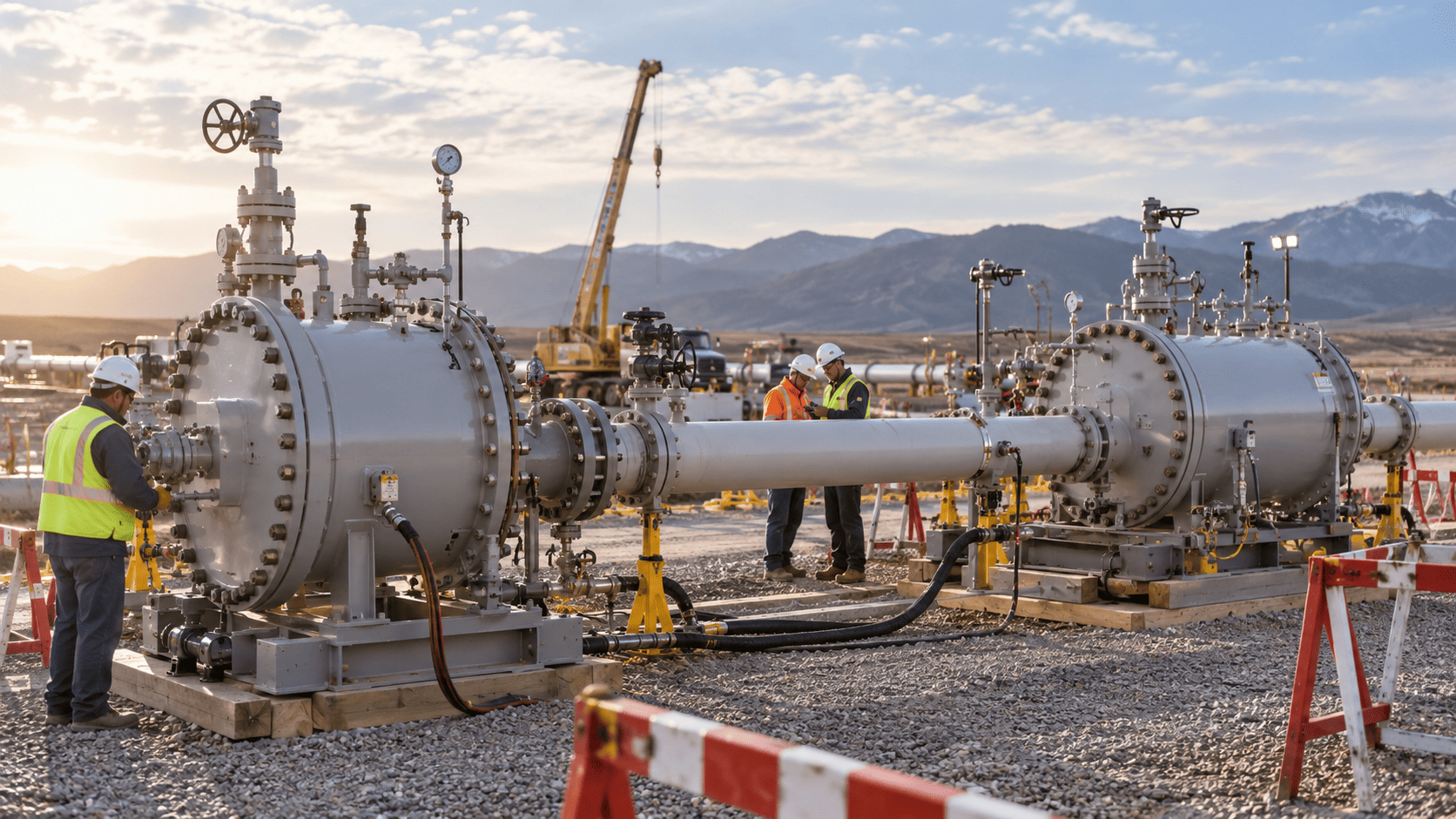
Temporary pig launchers and receivers provide controlled access for these projects without requiring permanent pig traps to become part of the pipeline system. They are particularly valuable during construction, pre-commissioning, maintenance, rehabilitation, and one-time inspection campaigns.
Whether a temporary setup is the right choice depends on more than project duration. Pipeline diameter, pressure, geometry, pig type, site access, and how often the line will need to be pigged all influence the decision.
What Are Temporary Pig Launchers And Receivers?
A pig launcher is an assembly that allows a pipeline pig to be safely inserted and introduced into the line. A pig receiver performs the opposite function by capturing the pig at the end of the run so it can be safely removed.
Together, these assemblies are often called pig traps. Permanent pig traps remain connected to the pipeline for recurring cleaning, inspection, or product movement. Temporary launchers and receivers are installed for a defined project and removed or disconnected once the required pigging work is complete.
Temporary systems can support cleaning pigs, foam pigs, gauge pigs, inspection tools, and other pigging applications. Their design and configuration must match the pipeline conditions and the specific tool being used.
Temporary Vs Permanent Pig Launchers And Receivers
Neither temporary nor permanent pigging facilities are automatically the better choice. The right approach depends on how the pipeline will be operated and maintained over its useful life.
A temporary launcher and receiver may make sense when the line requires a limited number of cleaning, testing, or inspection runs. Permanent facilities are generally more practical where pigging will become part of routine maintenance or integrity management.
For an operator planning a one-time cleaning campaign, installing full permanent infrastructure may add unnecessary complexity and cost. If the same line will be inspected and cleaned repeatedly, however, permanent facilities can provide easier access for future pigging operations.
When Are Temporary Pig Launchers And Receivers Needed?
Temporary pig traps can support several stages of pipeline construction, commissioning, maintenance, and integrity assessment. The project objective usually determines both the type of pig and the temporary setup required.
Pipeline Pre-Commissioning
New pipelines frequently need multiple internal operations before they are placed into service. Construction debris may need to be removed, the internal bore may need to be verified, and water used during testing may need to be displaced.
Temporary launchers and receivers allow pigs to move through the line during these stages without requiring permanent pigging infrastructure. APS pipeline pre-commissioning services can include cleaning, gauging, testing support, dewatering, drying, and related work needed before a system enters operation.
Once those activities are complete, the temporary equipment can be removed and the pipeline prepared for final commissioning.
Pipeline Cleaning
Existing pipelines can accumulate sediment, scale, corrosion products, liquids, and other material that affects flow and system efficiency. Some of these systems were never designed with permanent pig launchers and receivers.
Temporary pigging access can make mechanical cleaning possible without permanently modifying the system. Depending on the pipeline condition, several pigging runs may be used to progressively loosen and remove deposits rather than attempting aggressive cleaning in a single pass.
Professional pipeline cleaning services help determine the cleaning method, pig configuration, and run sequence based on actual pipeline conditions.
Hydrostatic Testing And Dewatering
Hydrostatic testing commonly introduces significant quantities of water into a pipeline. Once testing is complete, that water must often be removed before drying or placing the line into service.
Pigs can be used to displace hydrotest water toward a temporary receiver while maintaining separation between fluids. Multiple runs may be required depending on pipeline length, elevation changes, and the dryness requirements of the final system.
Temporary traps are especially useful when launch and recovery facilities are needed only during testing and commissioning rather than for long-term operations.
Inline Inspection And Smart Pigging
Some pipelines require an integrity assessment even though they were not originally built for inline inspection. Others may have existing pig traps that cannot accommodate the length or configuration of a modern inspection tool.
Temporary launchers, receivers, spool pieces, or related modifications can sometimes make these lines accessible for inspection.
APS discusses these approaches when dealing with challenging pipeline inspections, where existing line configuration may require temporary changes before an inspection tool can safely pass through the system.
Once access is established, pipeline inspection services can provide condition information that helps operators identify corrosion, wall loss, geometric changes, leaks, and other potential integrity concerns.
Pipeline Gauging And Piggability Verification
Before sending a valuable inspection tool through an unfamiliar line, operators often need to verify that the internal bore is suitable for passage.
A gauge pig can help identify restrictions, dents, bore reductions, or other geometry concerns. Temporary launchers and receivers provide the controlled access needed to perform these preliminary runs.
APS explains why pipeline gauging can be an important step before cleaning or inspection, particularly when pipeline geometry or internal conditions are uncertain.
One-Time Maintenance Or Rehabilitation
Temporary pigging systems are also useful during rehabilitation, repair, internal coating preparation, and other project-specific maintenance.
For example, an operator may need to clean a section of pipeline before additional work begins. If regular pigging is not expected afterward, temporary facilities can provide the required access without creating permanent infrastructure that may rarely be used.
What Determines Whether A Temporary Setup Will Work?
Temporary launchers and receivers still need to function as part of a complete engineered pigging operation. Several factors determine whether they are practical for a particular pipeline.
Pipeline Diameter And Geometry
Pipe diameter, bends, tees, valves, reductions, elevation changes, and other internal features influence pig selection and movement.
A pipeline that appears piggable based solely on diameter may still contain restrictions that require additional assessment before the first run.
Pig Or Inspection Tool Type
A basic foam cleaning pig may have very different space requirements from a multi-module inline inspection tool.
Smart pigs can require longer launcher and receiver barrels, additional handling space, tracking equipment, and greater control during launch and retrieval. APS smart pigging services evaluate both pipeline conditions and inspection objectives before a tool is introduced into the line.
Pressure And Flow Conditions
Pig movement depends on controlled pressure or flow behind the tool. The temporary system must be compatible with the pipeline's operating conditions and the requirements of the planned pigging procedure.
Isolation, pressure monitoring, controlled venting, and depressurization are essential parts of safe launch and recovery.
Site Access
Temporary equipment still requires physical space for installation, handling, rigging, and safe operation.
Restricted sites may affect launcher orientation, receiver placement, temporary piping, equipment access, or the ability to safely retrieve the pig after the run.
Number Of Planned Runs
Temporary systems are generally attractive for limited campaigns. If operators expect regular cleaning or inspection over many years, permanent facilities may provide greater operational value.
The expected maintenance program should therefore be considered before deciding how much temporary infrastructure to install.
When Permanent Pigging Facilities May Be Better
Temporary launchers and receivers are not the right solution for every pipeline.
Permanent pig traps may be more appropriate when cleaning is required frequently, inline inspection is part of a recurring integrity program, or pipeline operations rely on regular product displacement and batching.
The decision should consider total lifecycle requirements rather than only the cost of the immediate project. Building a temporary setup repeatedly can eventually become less efficient than incorporating properly designed permanent facilities.
Why Temporary Does Not Mean Simple
The word temporary describes how long the system will remain in place. It does not reduce the engineering, safety, or operational requirements of the pigging project.
Launching and receiving pigs can involve pressurized systems, large closures, stored energy, heavy equipment, and controlled handling of water, debris, gas, or process fluids.
A properly planned operation may require:
Isolation and pressure control
Venting and drainage
Secure supports and connections
Pressure monitoring
Pig detection and tracking
Safe depressurization before opening the receiver
Temporary assemblies on regulated pipelines must also meet applicable engineering, testing, and regulatory requirements.
How Temporary Pigging Fits Into A Complete Project
A successful temporary pigging project begins before the launcher is installed.
The team must first understand the pipeline configuration, operating conditions, cleaning or inspection objective, and the type of pig that will be used. From there, launch and recovery access can be planned around the specific system.
The pipeline may then be cleaned or gauged before the primary pigging run. During the operation, the pig can be monitored using pig tracking methods to confirm movement and identify its location along the route.
After the final pig reaches the receiver, the system is safely depressurized, the tool is recovered, and the temporary setup can be removed or reconfigured as required.
How American Pipeline Solutions Supports Temporary Pigging Projects
American Pipeline Solutions approaches temporary launchers and receivers as part of the overall pipeline operation, not as standalone pieces of equipment.
APS works with clients to evaluate pipeline configuration, piggability, cleaning requirements, inspection objectives, site conditions, and operational constraints before selecting the appropriate approach.
Depending on the project, that support may include conventional pigging and swabbing, cleaning, pipeline gauging, inspection, smart pigging, tracking, hydrostatic testing support, dewatering, drying, pre-commissioning, and temporary modifications needed to complete the work.
This coordinated approach helps ensure the pig can be safely introduced, tracked through the pipeline, and recovered while accomplishing the actual cleaning, testing, or integrity objective of the project.
FAQs
What Is A Temporary Pig Launcher?
A temporary pig launcher is an assembly installed for a specific pipeline project to safely introduce a cleaning, gauging, or inspection pig into the line. It is typically removed or disconnected after the required pigging work is completed.
What Is A Temporary Pig Receiver?
A temporary pig receiver captures the pig at the end of the pipeline run and provides a controlled location for retrieval. It must allow the system to be isolated, depressurized, and opened safely before the pig is removed.
What Is The Difference Between A Pig Launcher And A Pig Receiver?
The launcher introduces the pig into the pipeline, while the receiver captures it after the run. Both are designed around the pipeline diameter, pressure, pig type, and operating requirements.
Can Temporary Pig Launchers Be Used For Smart Pigging?
Yes, temporary launchers and receivers can be used for smart pigging when properly engineered for the inspection tool and pipeline conditions. Longer or multi-module ILI tools may require additional barrel length and handling space.
Can A Pipeline Without Permanent Pig Traps Be Pigged?
In some cases, yes. Temporary launchers, receivers, spool pieces, or other pipeline modifications may provide the access needed for cleaning, gauging, or inspection. The pipeline must first be evaluated for piggability and operational risk.
Are Temporary Pig Launchers Used During Pre-Commissioning?
Yes. Temporary launchers and receivers are commonly used to support cleaning, gauging, hydrostatic testing activities, dewatering, and drying before a new pipeline is placed into service.
How Are Temporary Pig Launchers And Receivers Sized?
Sizing depends on pipeline diameter, pig dimensions, inspection tool length, pressure, closure requirements, and the space needed to safely load and retrieve the pig.
When Is A Permanent Pig Launcher Better Than A Temporary One?
Permanent facilities may make more sense when a pipeline requires recurring cleaning, frequent inspection, product batching, or long-term integrity management. Temporary equipment is generally better suited to limited or project-specific pigging campaigns.


