
How Force Main Pigging Improves Flow Rate And Pump Efficiency
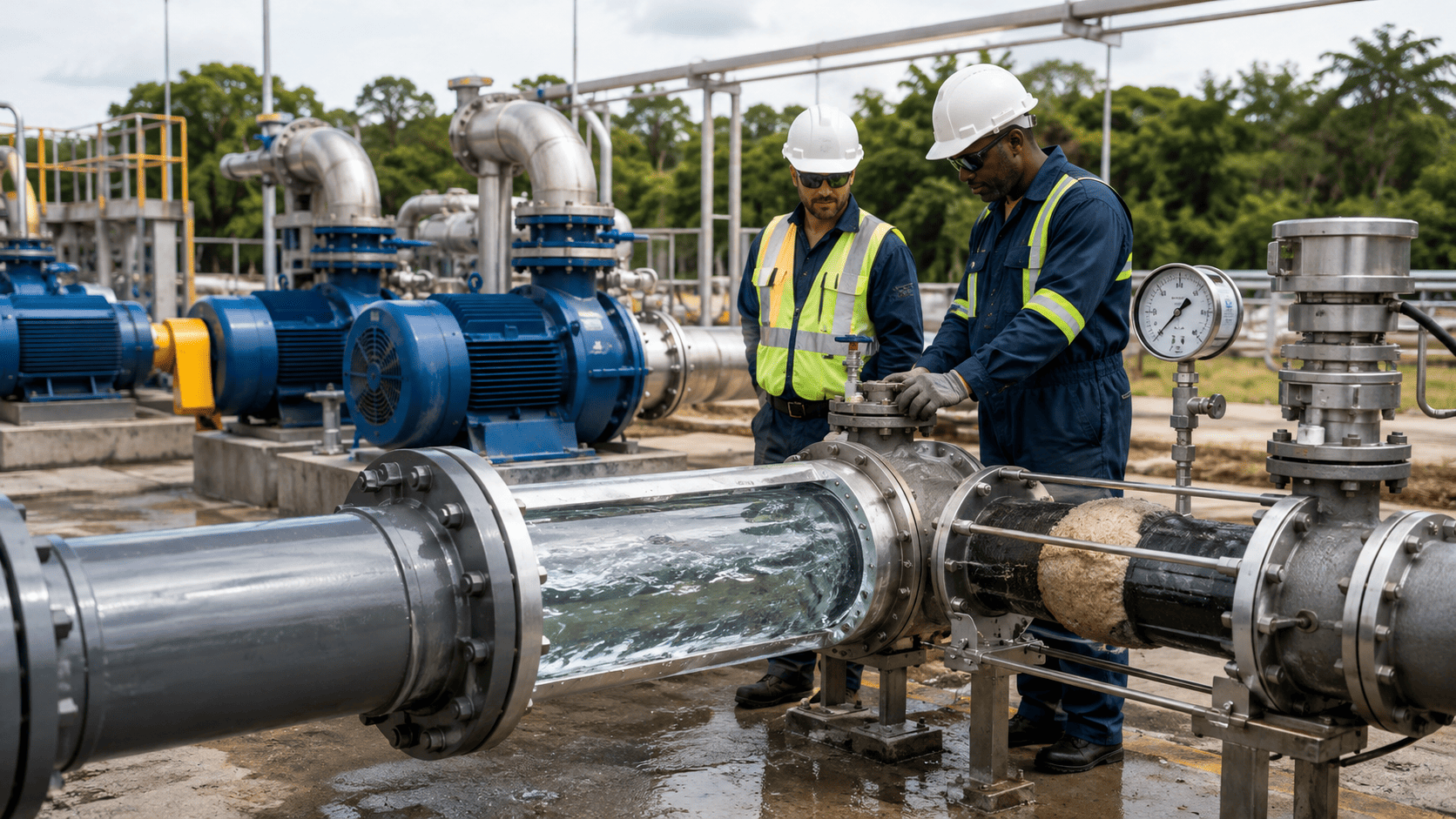
Wastewater force mains are designed to move large volumes of wastewater from lift stations to treatment facilities, but their hydraulic performance can gradually decline. Fats, oils, grease, sediment, solids, biofilm, and other deposits can accumulate along the inside of the pipe and restrict the available flow area.
As resistance increases, pumps may need to run longer to move the same volume of wastewater. Force main pigging removes these restrictions and helps restore hydraulic capacity, allowing the pipeline and pump station to operate closer to their intended performance.
Why Force Mains Lose Flow Capacity Over Time
Unlike gravity sewer lines, force mains rely on pumps to move wastewater under pressure. The condition of the pipe therefore has a direct effect on how efficiently the pump station can move flow through the system.
Over time, deposits can accumulate inside the force main. Common materials include fats, oils and grease, sediment, biological growth, scale, solids, and other wastewater debris.
Even when a force main is still moving wastewater, internal buildup can gradually reduce its effective diameter. The resulting loss of capacity may be difficult to notice at first because the pump station compensates by operating longer or under greater resistance.
Utilities may begin seeing symptoms such as:
Lower flow rates than historical operating conditions
Longer pump cycles
Increasing discharge pressure
Greater electrical consumption
Reduced wet well drawdown
Difficulty handling peak flow conditions
These changes do not automatically mean that the pumps are failing. In many cases, increasing resistance inside the force main is contributing to the problem.
How Buildup Affects Force Main Hydraulics
A force main depends on adequate internal flow area and manageable friction losses. When deposits form along the pipe wall, both conditions begin to change.
The buildup occupies space inside the pipe and creates a rougher internal surface. Wastewater then has less usable area through which to flow while encountering greater resistance as it moves downstream.
Reduced Effective Pipe Diameter
Even a moderate layer of material can affect hydraulic capacity when it extends for hundreds or thousands of feet.
As the usable internal diameter becomes smaller, the pipeline can no longer move the same volume of wastewater as efficiently. Pumps may need more time to complete each cycle, even though nothing has changed mechanically at the lift station.
Increased Friction And Head Loss
Deposits also increase friction between the wastewater and the pipe wall. Greater friction contributes to increased system head, meaning the pump must work against more resistance to maintain flow.
This is why cleaning is not only about removing debris. It is also about restoring the hydraulic characteristics of the force main.
How Force Main Pigging Restores Flow Rate
Force main pigging uses appropriately selected pigs to move through the pipeline and remove material attached to the pipe wall. Depending on the condition of the system, several progressively sized or configured pigs may be used to clean the line in a controlled manner.
Professional force main pigging can remove accumulated solids, grease, sediment, biofilm, and other restrictions while helping operators better understand how the line responds during cleaning.
Once deposits are removed, several hydraulic improvements may occur.
More Usable Flow Area
Cleaning restores more of the original internal diameter of the pipeline. With additional cross sectional area available, wastewater can move through the force main with less restriction.
The result may be an increase in gallons per minute without installing a larger pump or increasing the size of the pipeline.
Lower Friction Loss
A cleaner pipe wall generally creates less resistance than one covered with heavy deposits.
Reducing friction allows more of the pump's available energy to move wastewater rather than overcome unnecessary internal resistance.
Improved Hydraulic Capacity
The combined effect of increased flow area and reduced friction can restore capacity that gradually disappeared as the pipeline became fouled.
For utilities approaching peak flow limitations, recovering existing hydraulic capacity can be particularly valuable because it may postpone the need for more expensive infrastructure improvements.
How Pigging Can Improve Pump Efficiency
A pump does not operate independently from the pipeline connected to it. Its performance depends on the resistance created by the entire system.
If force main resistance increases, the pump's operating point can change. Flow may decline while runtime increases, causing the pump station to consume more energy for the same wastewater volume.
Cleaning the force main can reverse part of that problem when internal buildup is the cause.
With reduced hydraulic resistance, pumps may be able to move wastewater faster and complete pumping cycles sooner. Shorter runtime can reduce electrical demand and limit unnecessary operating hours on pumps, motors, and associated components.
This relationship is why routine pipeline cleaning should be viewed as part of system performance management, not simply as debris removal.
When The Pump Is Not Actually The Problem
Declining pump station performance often leads operators to investigate pumps, motors, check valves, and other mechanical components first. Those checks are important, but they do not always identify the underlying cause.
If pumps are operating properly but flow continues to decrease, the force main itself may be creating excessive resistance.
One useful comparison is the amount of wastewater being moved relative to pump runtime or electricity consumption. If the pumps are running longer while moving less flow, internal pipeline restrictions should be considered during troubleshooting.
Historical pressure and flow data can also help identify gradual changes. A force main that once moved significantly more wastewater under similar operating conditions may have lost capacity because of internal deposits.
Cleaning the pipeline before replacing functioning pumps can therefore prevent unnecessary capital spending when hydraulic restrictions are the real issue.
Real Results From Force Main Cleaning
Municipal projects demonstrate how significantly cleaning can affect system performance when internal buildup is severe.
In one force main cleaning project involving American Pipeline Solutions, flow increased by approximately 19 percent while pump runtime decreased by about 20 percent after Ice Pigging. Another force main in the same program experienced an approximately 20 percent flow improvement.
Results vary from system to system because the improvement depends on pipe condition, deposit volume, pipeline geometry, wastewater characteristics, and how much of the original performance loss was caused by buildup.
The important point is that force main cleaning can restore existing capacity. Operators may be able to improve performance without immediately adding pumping power or replacing infrastructure.
Signs Your Force Main May Need Pigging
Force mains do not need to reach a complete blockage before cleaning becomes worthwhile. Performance trends can provide earlier indications that deposits are affecting the system.
Utilities should consider investigating force main condition when they notice steadily declining flow, longer pumping cycles, increased discharge pressure, higher electricity usage, or reduced wet well drawdown.
Recurring buildup problems and a history of improved performance following cleaning are also useful indicators.
Where conventional pigging is being considered, evaluating internal restrictions before selecting a pig can reduce operational risk. Pipeline gauging can help confirm internal clearance and identify conditions that could affect a pigging run.
Force Main Pigging Vs Increasing Pump Capacity
Installing a larger pump may appear to be the easiest response to declining flow, but additional pumping capacity does not remove a pipeline restriction.
If deposits are creating excessive head loss, a larger pump may simply push against the same problem with greater power consumption.
Cleaning allows operators to determine how much hydraulic capacity can be recovered from the existing system before committing to major equipment or pipeline upgrades.
This makes force main maintenance particularly valuable for utilities trying to manage aging infrastructure and growing wastewater demand within limited capital budgets.
Conventional Pigging Or Ice Pigging?
The right cleaning method depends on the design and condition of the force main.
Conventional pigging can be highly effective in pipelines with suitable access, predictable geometry, and conditions that allow progressively configured pigs to travel safely through the system. It provides controlled mechanical cleaning and can remove significant amounts of accumulated material.
Ice Pigging uses a pumpable ice slurry that behaves like a semi solid plug as it moves through the pipeline. It can be particularly useful in lines with complex geometry, diameter changes, bends, or other conditions where conventional pigs may present greater operational challenges.
Neither approach is automatically better for every force main. Pipe diameter, material, layout, available access, deposit type, pressure, flow conditions, and project objectives should determine the cleaning strategy.
How Often Should Force Mains Be Pigged?
There is no universal cleaning schedule that applies to every wastewater force main.
Some systems may accumulate deposits rapidly because of wastewater characteristics, low velocities, heavy grease loading, or operating conditions. Others may maintain acceptable hydraulic performance for longer periods.
A condition based maintenance approach is generally more useful than choosing an arbitrary interval. Utilities can track flow, pressure, pump runtime, energy consumption, and previous cleaning results to identify when performance begins to deteriorate.
Regular maintenance can also help prevent severe restrictions from developing. As discussed in APS guidance on operational efficiency, maintaining cleaner pipelines can support more consistent system performance and reduce avoidable operating strain.
How American Pipeline Solutions Helps Restore Force Main Performance
American Pipeline Solutions works with municipalities, utilities, and industrial operators to evaluate force main conditions and determine the cleaning approach that best fits the system.
APS capabilities include conventional pigging, progressive cleaning, foam pigging, Ice Pigging™, pig tracking, pressure monitoring, launch and retrieval planning, pipeline inspection, and condition analysis. The objective is not simply to move a pig through the line, but to restore performance safely while protecting the infrastructure and maintaining service reliability.
By combining field experience with multiple cleaning technologies, APS can adapt the project around pipeline geometry, operating conditions, and the type of buildup present. This allows utilities to address hydraulic restrictions without relying on a single cleaning method for every application.
When declining flow and increasing pump runtime are caused by internal force main restrictions, the right cleaning strategy can help recover capacity, reduce unnecessary energy use, and extend the useful life of existing assets.
FAQs
Does Force Main Pigging Increase Flow Rate?
It can. When internal deposits are restricting the effective diameter or increasing friction loss, removing those deposits can restore hydraulic capacity and allow more wastewater to move through the line. The amount of improvement depends on the original condition of the force main.
How Does Force Main Buildup Affect Pump Efficiency?
Buildup increases resistance inside the pipeline. Pumps may then need to operate longer or against greater head to move the required wastewater volume, which can increase energy use and operating wear.
Can Pigging Reduce Lift Station Pump Runtime?
Yes, when excessive runtime is being caused by force main restrictions. Restoring flow capacity can allow pumps to move the required volume more quickly and complete cycles sooner.
What Builds Up Inside Wastewater Force Mains?
Common deposits include fats, oils and grease, sediment, solids, biofilm, mineral scale, and other wastewater debris. The type and rate of accumulation depend on system design and wastewater characteristics.
How Can Operators Tell Whether The Pump Or Force Main Is Causing Low Flow?
Pump condition should be evaluated alongside pressure, flow, runtime, and historical system performance. If pumps are functioning normally but flow has declined while system resistance has increased, force main restrictions may be contributing to the problem.
Can Pigging Reduce Wastewater Pumping Costs?
Potentially. When cleaning lowers pipeline resistance and reduces pump runtime, the system may consume less electricity to move the same wastewater volume. Actual savings depend on operating conditions and the severity of the original restriction.
How Often Should A Wastewater Force Main Be Cleaned?
Cleaning frequency should be based on performance trends rather than a fixed universal schedule. Flow rate, pump runtime, pressure, energy consumption, wastewater characteristics, and previous cleaning history can all help determine when another cleaning is appropriate.
Is Ice Pigging Better Than Conventional Force Main Pigging?
Each method has different advantages. Conventional pigging works well in many piggable systems, while Ice Pigging™ can be useful where geometry, access, or changing pipe conditions make traditional pigging more difficult. A pipeline assessment helps determine the best approach.


