
FOG In Wastewater Pipelines: How Grease Buildup Restricts Flow
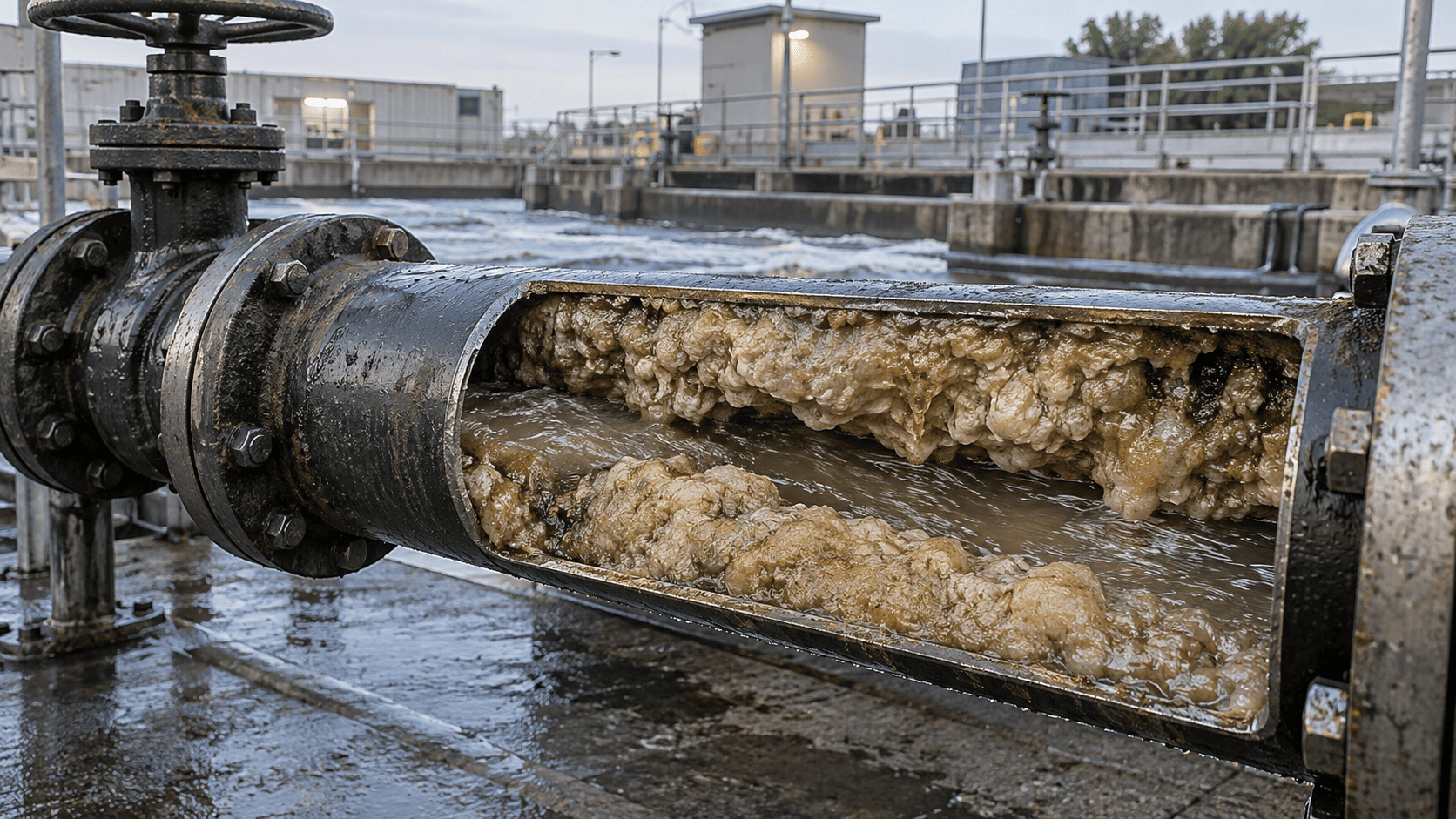
Fats, oils, and grease can create serious operating problems once they accumulate inside wastewater pipelines. What begins as a thin layer along the pipe wall can gradually combine with sediment, wipes, solids, and other debris until the available flow area becomes smaller.
For wastewater utilities, the problem is not limited to blockages. FOG buildup can also increase hydraulic resistance, extend pump runtime, reduce force main capacity, and raise energy use long before a pipeline becomes completely obstructed.
Source control can reduce how much grease enters the wastewater system, but it cannot remove deposits already attached to the inside of a pipeline. When buildup begins affecting system performance, physical pipeline cleaning may be necessary.
Why FOG Buildup Matters In Wastewater Pipelines
FOG stands for fats, oils, and grease. These materials enter wastewater systems from homes, restaurants, commercial kitchens, food processors, and other facilities.
Some grease enters the collection system in liquid form. As wastewater moves downstream and cools, fats and grease can thicken and begin adhering to pipe walls. Repeated discharges allow those deposits to continue growing.
FOG also creates a surface that can capture other materials already traveling through the wastewater system. Sediment, wipes, biological material, and suspended solids can become incorporated into the buildup, producing a denser restriction that normal wastewater flow may not remove.
The result can be a gradual loss of usable pipe diameter and hydraulic performance.
How FOG Affects Wastewater Force Main Performance
Wastewater force mains are particularly sensitive to internal restrictions because pumps must move wastewater through the pipeline under pressure.
As deposits accumulate, the effective internal diameter decreases. At the same time, the rougher pipe surface can increase friction. The pump station must then move wastewater through a smaller, more resistant flow path.
Utilities may begin seeing:
Lower flow rates
Longer pump cycles
Higher discharge pressure
Increased electrical consumption
Poorer wet well drawdown
Reduced capacity during peak flow
Recurring operational problems
These symptoms do not automatically mean FOG is the only cause. Sediment, scale, biofilm, debris, or deterioration may produce similar performance changes.
However, when pumps are operating normally but the system requires more runtime to move the same amount of wastewater, internal pipeline resistance should be part of the investigation.
APS has previously explained how force main pigging can improve flow rate and pump efficiency when internal deposits are reducing hydraulic capacity.
Why FOG Deposits Become Difficult To Remove
FOG buildup rarely consists of grease alone. Wastewater pipelines carry a mixture of materials, and the deposits that develop inside them can reflect those changing conditions.
This is one reason cleaning strategies need to be based on the actual pipeline rather than the assumption that every grease restriction behaves the same way.
Cooling And Adhesion
Fats and grease that enter a sewer while warm can become increasingly viscous as wastewater temperature drops.
Once grease begins adhering to the pipe wall, later discharges can add more material to the same area. Low velocity sections may be especially susceptible to accumulation because there is less hydraulic force available to carry deposits downstream.
FOG Combined With Solids
Grease can trap sediment, wipes, organic solids, calcium compounds, and other wastewater debris.
Over time, this combination can become much more difficult to remove than a fresh grease layer. In severe cases, hardened masses can occupy a significant portion of the pipeline opening and create recurring restrictions.
Source Control Does Not Clean An Existing Pipeline
Reducing FOG at the source remains an important part of wastewater management. Grease interceptors, food service inspections, proper disposal practices, and public education can all reduce the amount entering the collection system.
But prevention and pipeline cleaning solve different problems.
Source control limits new material entering the sewer. It does not remove years of accumulated grease, sediment, biofilm, or solids from a downstream force main.
Once existing deposits begin affecting flow, pressure, pump runtime, or available capacity, the operator must determine whether the line itself needs to be cleaned.
That distinction is important when utilities are troubleshooting declining system performance. Replacing or upsizing pumping equipment will not remove a restriction that exists inside the pipeline.
Signs FOG Or Other Deposits May Be Restricting A Force Main
A force main does not need to reach complete blockage before internal buildup becomes an operational concern.
Performance data can often reveal a developing restriction before the problem becomes severe.
Operators may want to investigate pipeline condition when they see steadily declining flow, increasing pump runtime, higher discharge pressure, worsening wet well drawdown, increasing electricity consumption, or repeated buildup at known problem locations.
Historical data can be particularly useful. If the same pumps previously moved more wastewater under comparable operating conditions, something within the system may have changed.
The pipeline should be evaluated alongside pumps, valves, controls, and other equipment rather than assuming the lift station is responsible for declining performance.
How FOG Is Removed From Wastewater Pipelines
There is no single cleaning method that is appropriate for every wastewater pipeline.
Pipe diameter, material, length, geometry, access, pressure, deposit type, severity of buildup, flow conditions, and the method for controlling removed material all affect the cleaning plan.
Conventional Pipeline Pigging
Pigging uses a cleaning device that travels through the pipeline and physically removes accumulated material from the internal surface.
In heavily restricted pipelines, cleaning may require multiple runs rather than immediately sending an aggressive pig through the line. Progressive cleaning allows the amount of material being removed to be controlled while reducing the risk associated with unknown restrictions.
APS provides municipal water main and force main pigging with equipment and cleaning approaches planned around the characteristics of the pipeline.
Foam Pigging And Progressive Cleaning
Foam pigs can be useful when operators need a compressible cleaning tool capable of moving through certain changes in pipeline geometry.
The configuration and density of the pig can be selected according to the cleaning objective. Multiple stages may be used as the internal condition becomes better understood and progressively more material is removed.
This approach is particularly important where a force main has not been cleaned for a long period or the severity of the restriction is uncertain.
Ice Pigging™
Some wastewater pipelines contain bends, changing diameters, limited access, or geometry that makes conventional pigging more challenging.
Ice Pigging™ uses a pumpable ice slurry that forms a flexible cleaning plug inside the pipeline. The slurry maintains contact with the pipe wall as it travels through the line and can negotiate features that may complicate the use of a solid pig.
Ice Pigging™ is not automatically the right method for every FOG problem. Pipeline configuration, deposit characteristics, access, operating conditions, and project goals still need to be evaluated before selecting the cleaning approach.
Other Pipeline Cleaning Methods
High-pressure water jetting is commonly used for accessible gravity sewer systems and may be effective for grease, sediment, and other deposits.
Other mechanical or specialty cleaning technologies may also be appropriate depending on pipeline construction and condition.
The important question is not which cleaning technology is universally best. It is which method can remove the restriction safely and effectively from the specific pipeline being cleaned.
APS's pipeline cleaning services are built around identifying the type of buildup and matching the cleaning method to the line rather than relying on one technique for every project.
What Determines The Right Force Main Cleaning Strategy?
Pipeline cleaning requires more than selecting a pig and pushing it through the line.
Operators and cleaning contractors need to understand how the pipeline is configured, how material will move during cleaning, and where removed debris will be recovered.
Important project considerations include pipe diameter and material, bends and fittings, available launch and retrieval locations, valves, pressure conditions, pipeline length, historical maintenance, and the suspected volume of deposits.
The cleaning sequence also matters.
A heavily restricted line may require progressively configured pigs so the deposit load is removed in controlled stages. A pipeline with complex geometry may require a more flexible cleaning technology. Lines with limited existing access may need temporary launch or retrieval arrangements before cleaning begins.
Planning around these conditions helps protect the pipeline while giving operators greater control over the cleaning process.
Measure Pipeline Performance Before And After Cleaning
Cleaning results should be evaluated in terms of pipeline performance, not simply the amount of material removed.
Flow rate, pump runtime, discharge pressure, wet well drawdown, and energy consumption can help establish how the system was operating before cleaning.
Comparing those measurements afterward can help determine whether removal of the restriction restored hydraulic capacity.
This also gives utilities useful information for future maintenance planning. If performance gradually declines again over time, operators have a better baseline for determining when another cleaning project may be justified.
Condition-based maintenance is more useful than waiting for a complete blockage or applying the same cleaning interval to every force main.
A Proactive Approach To FOG And Force Main Maintenance
FOG management works best when source control and pipeline maintenance are treated as separate but connected parts of the wastewater program.
Reducing grease entering the system can slow future accumulation. Monitoring flow, pressure, pump runtime, and energy use can reveal when internal pipeline conditions may be changing.
Physical cleaning addresses the deposits that prevention alone cannot remove.
For utilities managing aging wastewater infrastructure, that approach can help recover existing pipeline capacity before unnecessary pumping or pipeline upgrades are considered.
How American Pipeline Solutions Addresses Wastewater Pipeline Buildup
American Pipeline Solutions works with municipalities, utilities, and industrial operators to evaluate wastewater pipeline restrictions and develop cleaning strategies around actual system conditions.
APS capabilities include conventional pigging, progressive cleaning, foam pigging, Ice Pigging™, pig tracking, pressure monitoring, launch and retrieval planning, pipeline inspection, and condition analysis.
Each project is evaluated according to factors such as pipeline geometry, material, diameter, access, operating conditions, deposit type, and cleaning objective.
The goal is not simply to move a cleaning tool through the line. It is to remove accumulated material in a controlled way, restore usable pipeline capacity where possible, and give operators a clearer understanding of how the system performs after cleaning.
If FOG, sediment, biofilm, or other internal deposits are affecting wastewater flow or pump performance, contact American Pipeline Solutions to discuss the pipeline and determine which cleaning approach fits the system.
FAQs
What Does FOG Stand For In Wastewater?
FOG stands for fats, oils, and grease. These materials enter wastewater systems from residential, commercial, food processing, and industrial sources and can accumulate inside sewer pipelines.
How Does FOG Affect A Wastewater Force Main?
FOG can reduce the usable internal diameter of a force main and increase friction along the pipe wall. This may contribute to lower flow, longer pump runtime, higher system resistance, and reduced hydraulic capacity.
Can Pigging Remove FOG From A Force Main?
Pigging can remove grease, sediment, biofilm, solids, and other deposits from suitable force mains. The pig type and cleaning sequence should be selected according to pipeline condition, geometry, access, and the amount of buildup.
Can Grease Traps Remove Existing FOG From Sewer Pipelines?
No. Grease traps and interceptors help reduce new FOG entering the collection system, but they cannot remove deposits that have already accumulated farther downstream.
Is Ice Pigging™ Suitable For Wastewater Force Mains?
Ice Pigging™ can be suitable for certain force mains, including lines with bends, diameter changes, or complex geometry. Suitability depends on the specific pipeline and operating conditions.
How Do Utilities Know When A Force Main Needs Cleaning?
Declining flow, longer pump cycles, increasing pressure, reduced wet well drawdown, higher energy consumption, and recurring restrictions can indicate internal buildup. These symptoms should be evaluated together with pipeline and pump station operating data.
How Often Should Wastewater Force Mains Be Cleaned?
There is no universal interval for every force main. Cleaning frequency should reflect pipeline condition, wastewater characteristics, operating performance, previous cleaning results, FOG loading, and the rate at which restrictions develop.


