
What is Ice Pigging?
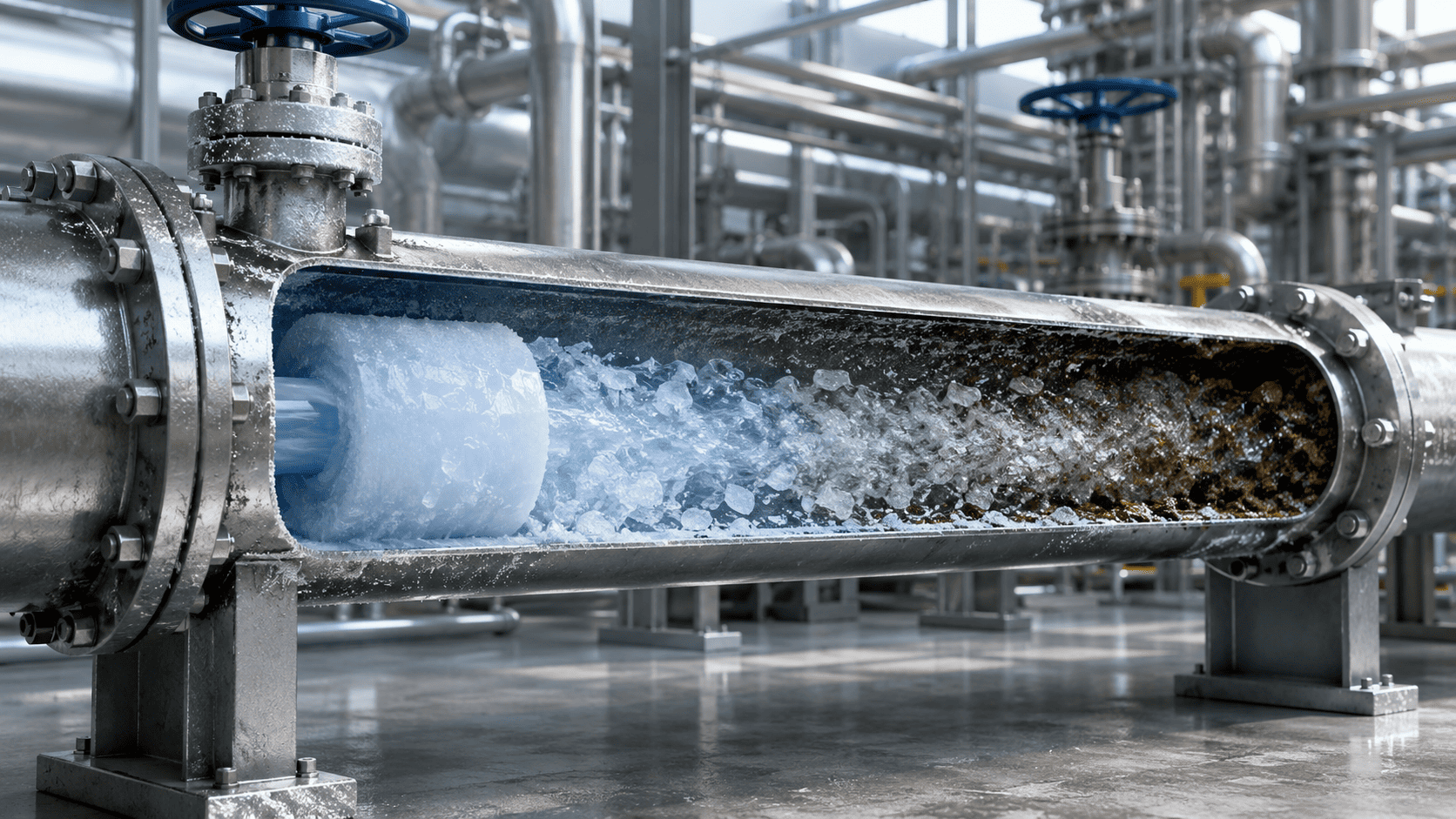
Pipeline cleaning does not always require a rigid pig, aggressive chemicals, or large volumes of flushing water. Ice Pigging uses a pumpable ice slurry to remove deposits while adapting to bends, fittings, valves, and changes in pipe diameter.
The method is used in water, wastewater, and industrial systems where sediment, biofilm, grease, or process residue can reduce performance. It offers a controlled way to clean complex pipework while limiting excavation, water use, and disruption.
What Is Ice Pigging?
Ice Pigging is a pipeline cleaning process that uses a thick mixture of small ice crystals and liquid. The semi-solid slurry forms a temporary plug inside the pipe and is pushed through the system under controlled pressure.
Unlike a conventional mechanical pig, the ice changes shape as it moves. It stays in contact with the pipe wall, loosens deposits, and carries removed material toward a planned discharge point. Once the run is complete, the remaining ice melts into liquid.
Ice Pigging is a cleaning method, not an inspection technology. It does not measure wall thickness, map corrosion, or provide structural data.
How Does Ice Pigging Work?
The project begins with a review of the pipeline layout, diameter, material, access points, operating conditions, and cleaning goals. The selected section is isolated so the slurry can be introduced and recovered safely.
A prepared ice slurry is injected through a suitable fitting, hydrant, or access point. System pressure or controlled pumping moves it through the pipeline while technicians monitor flow and pressure.
As the slurry travels, the ice crystals scour the internal surface and collect loosened sediment, biofilm, grease, or residue. The material exits with the ice at a planned discharge point.
The line is then flushed, checked, and returned to service. The detailedIce Pigging process varies according to pipe configuration, deposit type, and operating requirements.
Why Does Ice Clean Better Than Water Alone?
Water flushing relies mainly on velocity to move loose material. Water travels fastest through the center of the pipe, while movement near the wall is slower. Attached deposits may remain after repeated flushing.
Ice slurry fills more of the pipe and creates stronger contact with the internal surface. The crystals lift deposits from the wall and hold them in the slurry instead of allowing them to settle farther downstream.
This makes Ice Pigging useful when flushing improves conditions temporarily but does not remove the source of recurring sediment, discoloration, or restricted flow.
Pipeline Experts: Inspection, Cleaning, Coating & More
Certified solutions for inspection, pre-commissioning, cleaning, internal coating, ice pigging™, mapping, and turnkey pipeline projects—maximizing safety and reliability at every stage.
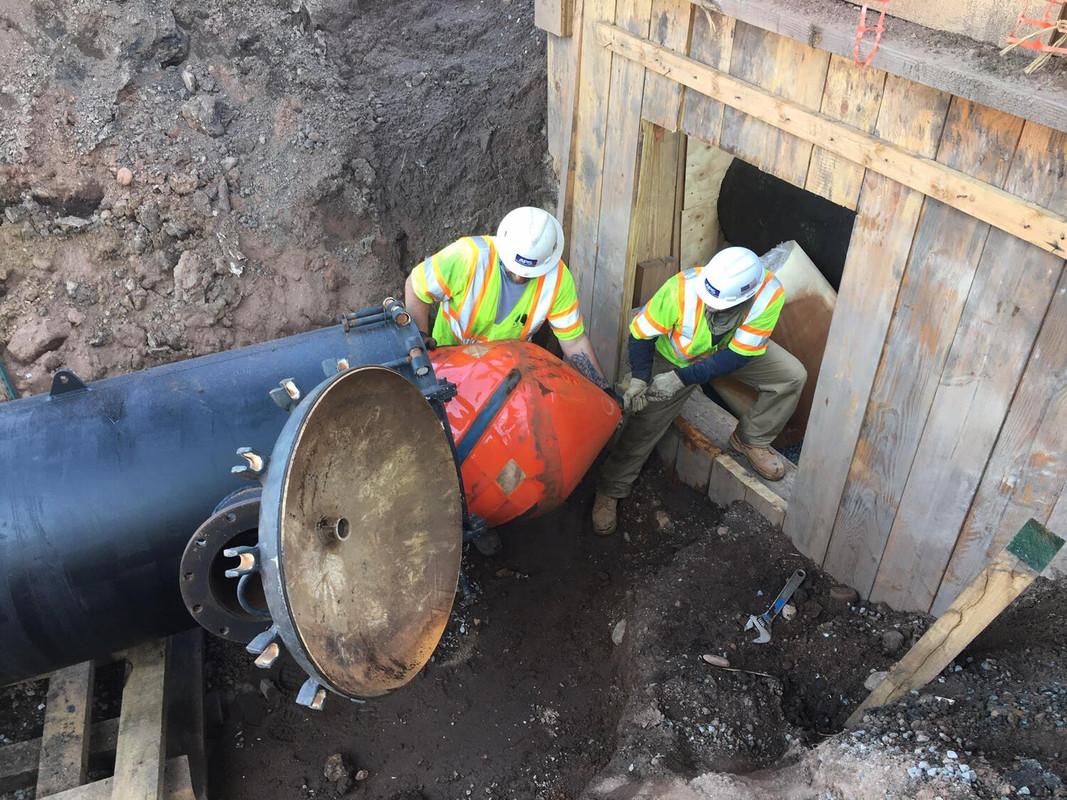
What Can Ice Pigging Remove?
Ice Pigging is best suited to loose or moderately attached deposits. Results depend on deposit hardness, pipe condition, material, and operating conditions.
Common targets include:
Sediment, sand, and silt
Biofilm and organic buildup
Iron and manganese deposits
Fats, oils, and grease
Soft scale and loose corrosion material
Food, manufacturing, or construction residue
The process may not fully remove cemented scale, severe tuberculation, or solid obstructions. Those conditions may require mechanical cleaning or another method.
Where Is Ice Pigging Used?
Ice Pigging can support several pressurized pipeline systems. Each application still requires a project-specific cleaning plan.
Drinking Water Mains
Water mains can collect sediment, iron, manganese, and biofilm over time. These deposits may contribute to discoloration, turbidity, and recurring customer complaints.
Ice Pigging can use existing hydrants or fittings in many systems, reducing excavation and helping where standard flushing has delivered limited results.
Wastewater Force Mains
Force mains may develop fats, grease, solids, and biological buildup. These deposits can restrict flow, increase pumping pressure, and place added demand on equipment.
The flexible slurry can travel through bends and changing geometry while carrying loosened material out of the line.
Industrial Process Pipelines
Industrial pipelines may retain product residue, coatings, or manufacturing debris. Cleaning may be needed during changeovers, maintenance, commissioning, or decommissioning.
Because the slurry conforms to complex pipework, it can reach areas that may be difficult to clean with a rigid device.
Ice Pigging Compared With Other Cleaning Methods
No cleaning method is right for every pipeline. The best option depends on the deposit, geometry, access, operating pressure, and required result.
Standard flushing is often effective for loose sediment, but it may use more water and provide limited pipe-wall contact. The differences between Ice Pigging andwater flushing matter when deposits repeatedly return.
Mechanical pigs can provide stronger scraping for hard deposits in piggable lines. They require suitable launch and recovery arrangements and may be restricted by complex geometry. A comparison withtraditional pigging helps determine which method fits the line.
Ice Pigging provides more wall contact than water alone while remaining more flexible than a rigid pig.
What Are The Main Benefits Of Ice Pigging?
One major benefit is adaptability. The slurry can move through bends, fittings, valves, and diameter changes that may prevent the use of some mechanical pigs.
The ice also reduces the risk of a permanent blockage. If movement stops, the slurry gradually melts rather than remaining as a solid object. Careful planning and monitoring are still required.
Other potential benefits include lower water use, limited excavation, shorter isolation periods, and less dependence on aggressive cleaning chemicals.
When Is Ice Pigging A Good Fit?
Ice Pigging may be suitable when a pipeline has recurring sediment, biofilm, soft scale, grease, or process residue. It is also useful when the system includes complex geometry or major pipe modifications should be avoided.
A good candidate normally has suitable isolation points, controlled injection and discharge locations, enough pressure or pumping capacity, and a clear waste handling plan.
Hard tuberculation, thick mineral scale, complete blockages, or severe structural damage may require another approach. A feasibility review should confirm the right method before work begins.
Results can be checked through the discharged slurry, captured sediment, water quality testing, or comparisons of flow, pressure, and pumping performance.
Pipeline Experts: Inspection, Cleaning, Coating & More
Certified solutions for inspection, pre-commissioning, cleaning, internal coating, ice pigging™, mapping, and turnkey pipeline projects—maximizing safety and reliability at every stage.
Ice Pigging Services From American Pipeline Solutions
American Pipeline Solutions provides professionalIce Pigging services for municipal water, wastewater, and industrial systems across the United States. Each project begins with an evaluation of pipeline access, deposits, operating conditions, and the desired outcome.
APS also supports broaderpipeline cleaning services, inspection, mapping, pre-commissioning, and internal pipe coating. This allows the team to recommend a method based on the pipeline rather than forcing every project into one approach.
The goal is to remove buildup safely, limit disruption, and help operators restore reliable performance through a clearly planned service strategy.
Frequently Asked Questions
These answers address common questions utilities and facility teams ask when considering Ice Pigging.
Is Ice Pigging Safe For Drinking Water Mains?
It can be used in potable water systems when the project follows appropriate slurry handling, flushing, sampling, and return to service procedures.
Can An Ice Pig Get Stuck?
The slurry can slow or stop, but it does not remain as a permanent rigid obstruction. It gradually melts into liquid.
Does Ice Pigging Require Excavation?
Many projects can use existing hydrants, valves, washouts, or other access points. Excavation may be needed if suitable access is unavailable.
What Pipe Materials Can Be Cleaned?
Ice Pigging can be used in several metal and plastic systems. Suitability depends on pipe condition, geometry, pressure, and the cleaning objective.
Can Ice Pigging Remove Hard Tuberculation?
It is better suited to sediment, biofilm, grease, soft scale, and loose deposits. Heavy tuberculation may require more aggressive mechanical cleaning.
Is Ice Pigging The Same As Smart Pigging?
No. Ice Pigging cleans the pipe. Smart pigging uses sensors to collect condition data such as corrosion, wall loss, or geometry changes.
Find The Right Cleaning Method For Your Pipeline
Ice Pigging combines the mobility of a liquid with the wall contact of a semi-solid cleaning plug. For suitable pipelines, it can remove deposits, navigate complex geometry, reduce water use, and limit downtime.
The right result starts with selecting the right method. APS can assess the pipeline, define the cleaning objective, and develop a service plan based on the system’s condition and operating requirements.


