
How to Remove Stuck Pigs in Pipelines Safely?
When a pipeline pig does not arrive at the receiver on time, operators are faced with a situation that can quickly turn from an inconvenience into a serious integrity and safety concern.
In the context of pipeline pigging, a “stuck pig” is a pig that has stopped moving or slowed dramatically inside the line due to debris, geometry, or mechanical issues.
A stuck pig can restrict flow, increase backpressure, delay operations, and, in the worst case, contribute to overpressure or damage to the pipeline.
Because of the stakes involved, stuck pig recovery must be approached in a structured, safety-first manner—not with improvised fixes.
This guide walks through common causes, typical recovery methods, and best practices for dealing with stuck pigs. It also explains when it is time to stop troubleshooting and bring in specialists like American Pipeline Solutions (APS) to support safe, effective recovery.
Safety First: Before You Try to Move a Stuck Pig
Removing a stuck pig is a high-risk activity. The pipeline is already in an abnormal operating state, and there is stored energy behind the pig in the form of pressurized gas or liquid.
Every action taken must follow company procedures, applicable codes, and the pipeline’s design limits.
The most important safety rule is never to exceed the pipeline’s Maximum Allowable Operating Pressure (MAOP) or any test pressure limit defined for the system.
Attempting to force a pig through a restriction by simply pumping harder can lead to pipe failure, equipment damage, or serious injury.
Ad-hoc tactics, such as uncontrolled pressure spikes, quickly opening or closing valves, or sending personnel into confined spaces, have no place in safe pigging operations.
Before any recovery attempt, the section of pipeline must be properly isolated, valve positions verified, vent and relief paths confirmed, and everyone involved aligned on the recovery plan.
Pipeline Experts: Inspection, Cleaning, Coating & More
Certified solutions for inspection, pre-commissioning, cleaning, internal coating, ice pigging™, mapping, and turnkey pipeline projects—maximizing safety and reliability at every stage.
Why Pipeline Pigs Get Stuck?
Understanding why pigs get stuck is the first step in preventing future incidents and choosing an effective recovery method.
One of the most common reasons is debris and build-up inside the pipeline.
Wax, scale, sand, black powder, construction debris, or foreign objects can accumulate ahead of the pig and form a plug that it cannot push through. If the line has not been pre-cleaned or has long intervals between pig runs, the risk of this kind of blockage increases.
Bore restrictions and geometry also play a major role. Unbarred tees, partially closed valves, sharp-radius bends, dents, buckles, and changes in diameter can create tight points that the pig simply cannot pass. Even a relatively small deformation may be enough to trap a pig that is a tight fit.
Incorrect pig design or sizing is another contributing factor. Pigs that are oversized and have very stiff cups or discs can create high friction and require more differential pressure than the system can safely deliver.
On the other hand, pigs that are undersized may lose their seal, stall, or tilt in the bore. Poorly chosen bypass or venting designs can also reduce driving force or allow debris to accumulate around the pig.
Operational issues can make all of these problems worse. Low differential pressure, highly variable flow, or running a cleaning pig in a heavily contaminated line without staged cleaning can all increase the chance of a pig stopping in the line.
In nearly every case, better pigging planning, appropriate pig selection, and pre-cleaning strategies dramatically lower the odds of a stuck pig.
Step 1 – Confirm the Pig Is Actually Stuck
Not every delayed pig is truly stuck. Some pigs move more slowly than expected because of low driving pressure, heavy debris, or conservative flow rates. Before initiating recovery actions, it is critical to distinguish between a slow pig and a stuck pig.
Start by comparing actual pig run time to expected run time based on prior experience, pipeline length, and flow conditions.
Review launcher and receiver records to ensure the pig was launched correctly and that the receiver is ready to accept it. Pig signallers, tracking tools, or time-stamped markers along the line can confirm the last known position and progress.
Pressure and flow trends provide valuable clues. A genuinely stuck pig often causes increasing backpressure upstream and reduced flow downstream, combined with little or no evidence of movement. If the pig appears to be making slow but consistent progress, it may be better to adjust operating conditions than to immediately switch to recovery mode.
Taking time to confirm status avoids unnecessary interventions that might turn a manageable situation into a more serious one.
Step 2 – Locate the Stuck Pig
Once it is clear that the pig is no longer moving, the next priority is to locate it accurately. Without knowing where the pig is, it is difficult to design a safe and effective recovery strategy.
Operators use a combination of methods. Pig signallers or tracking devices installed along the line provide location information at key points. Tracking logs can narrow the search to a specific line segment between two confirmed locations.
Changes in pressure or temperature between block valves, stations, or segments can also help estimate where the pig has stopped.
In some cases, acoustic tools or geophones are used on above-ground sections to listen for faint vibrations or sounds associated with the pig.
For buried or subsea pipelines, more advanced methods may be required. Radioisotope tracers, electromagnetic tracking, or specialized line-of-sight tools can be deployed to pinpoint the pig’s position.
Accurate location data is essential. It informs whether simple measures like pressure cycling are likely to work, or whether more invasive approaches such as hot tapping or excavation will be required.
Step 3 – Start with Low-Risk Recovery Techniques
With the pig located and the pipeline stabilized, the next step is to use low-risk methods to encourage the pig to move. All of these techniques must be carried out within the pipeline’s pressure and operating limits.
Pressure Cycling and Flow Adjustment
The simplest approach is to adjust flow and differential pressure to see if the pig can be gently pushed past the restriction. This normally involves increasing driving pressure or flow within safe limits and monitoring for movement.
If increasing flow does not help, operators may use pressure cycling. In this method, pressure is gradually reduced and vented toward the launcher, allowing the pig and any compressed debris behind it to relax.
After a controlled depressurization, the line is re-pressurized to drive the pig forward again. This cycle can be repeated multiple times.
Sometimes this repeated expansion and contraction is enough to dislodge the pig or break up a plug of debris.
Reverse Flow (If the System Allows It)
In systems designed for bi-directional operation, one option is to reverse the flow direction. By reversing the propellant or product flow, the pig can be encouraged to move back toward the launcher or another access point, where it can be safely retrieved.
Reversing flow requires careful evaluation of pump or compressor capability, valve configurations, and downstream facilities.
Not all pipelines can support bi-directional operation, and any change in flow direction must be planned to avoid overpressure or unintended flow into sensitive parts of the system.
Run a Foam Swab or Small Pig Behind It
If a pig has stalled because it has lost its seal or is no longer generating adequate driving force, running a line-size foam swab or a smaller, softer pig behind it can sometimes help.
The secondary pig or swab can re-establish sealing contact, increase differential pressure across the stuck pig, and push it forward.
This method requires careful selection of swab size, density, and type. A swab that is too stiff, too large, or poorly matched to the line can worsen the blockage by adding more material to an already tight section.
Chemical or Thermal Assistance
In pipelines where wax, scale, or other deposits are the likely cause, thermal or chemical methods can be used to soften the obstruction.
Hot water, gels, solvents, or other approved chemicals may be injected into the line ahead of or around the pig. As deposits soften or dissolve, the pig gains a better chance of moving.
Any chemical or thermal treatment must be compatible with the pipeline’s product, internal coatings, elastomers, and downstream facilities.
Environmental regulations and disposal requirements must also be considered before deployment.
Step 4 – Advanced Stuck Pig Recovery Methods
If low-risk techniques do not restore pig movement, more advanced methods may be necessary. These steps should only be carried out under the direction of experienced engineers and field crews.
Rescue Pigs
A “rescue pig” is a secondary pig launched specifically to interact with a stuck pig. The rescue pig is often smaller or more flexible and is designed to bump, push, or straighten the stuck pig so it can pass a restriction.
While rescue pigs can be effective, they also carry risk. If not carefully designed and modeled, they can compact debris further, lodge behind the stuck pig, or create a double blockage.
Detailed engineering review and a clear understanding of the pipeline’s condition and geometry are essential before attempting this option.
Hot Tapping and Localized Access
In some cases, the best way to free a stuck pig is to create a controlled access point near its location. This can be done by hot tapping the pipeline.
A hot tap involves installing a fitting and valve on the live pipeline and then cutting into the pipe under pressure using specialized equipment.
Once a tap is installed near the pig, operators can inject chemicals, relieve local pressure, or create a vent or bleed point. This can reduce forces acting on the pig and allow it to be moved by pressure cycling or other means.
Hot tapping requires specialized tools, experienced crews, and rigorous permitting. It also introduces new features into the pipeline that must be considered in future integrity assessments.
Opening the Line at an Access Point
Where the pipeline design allows, it may be possible to isolate, depressurize, and open the line at an existing trap, valve site, or spool. With the line safely de-energized and opened, technicians can use mechanical retrieval tools, hooks, or grips to remove the pig and any accumulated debris.
This approach involves service interruption and careful planning but can sometimes avoid more disruptive activities like excavation or pipe cutting.
Step 5 – Last Resort: Excavation and Cutting the Pipeline
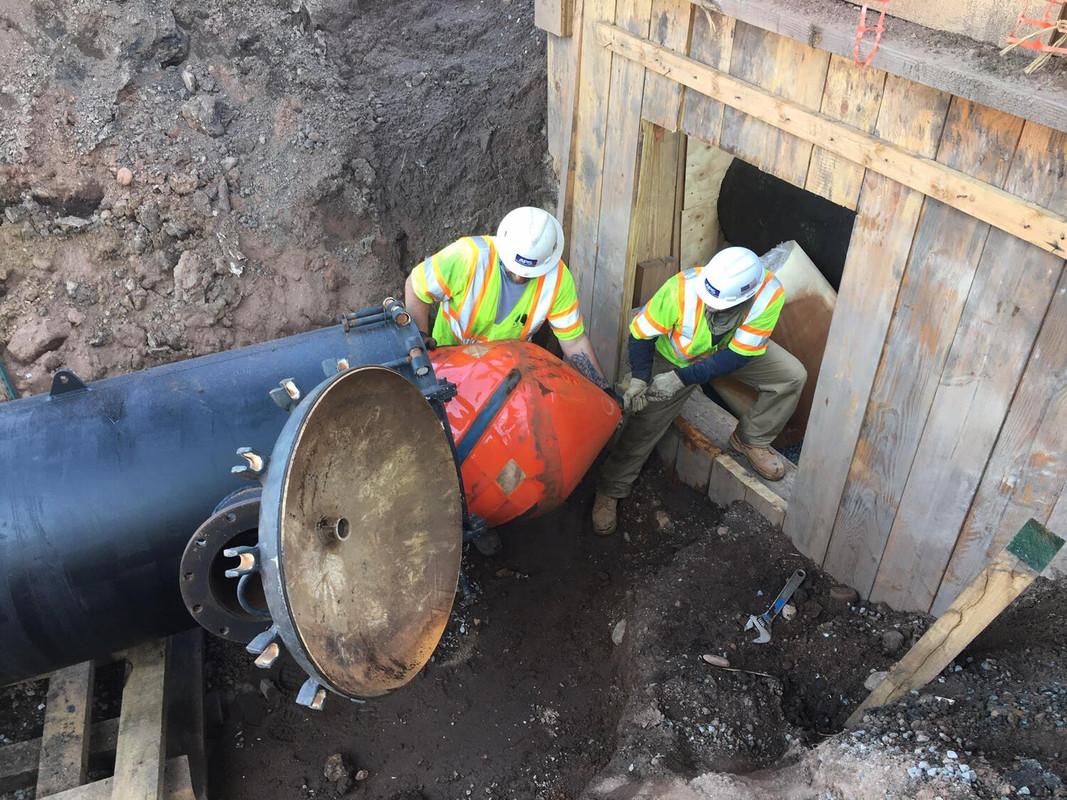
In severe cases—such as heavy deformation, a collapsed pipe, or an immovable plug of wax or debris—the final option may be to excavate and cut the pipeline at or near the pig’s location.
This is truly a last resort. Excavation and cutting involve significant cost, extended downtime, and substantial post-work requirements.
After cutting out the section containing the pig, the pipeline must be repaired or replaced, welds inspected, protective coatings restored, and cathodic protection systems re-evaluated. The line will also require re-testing before being returned to service.
Although disruptive, excavation and cutting must still be a controlled, carefully engineered activity. It should only proceed after other options have been evaluated and deemed impractical or unsafe.
When to Stop and Call a Stuck Pig Specialist?
Knowing when to stop experimenting and call in specialist support is critical. Warning signs include rising risk of overpressure, conflicting information about pig type or location, and increasing uncertainty about the cause of the blockage.
Complex facilities, subsea systems, river crossings, and high-consequence areas also demand a higher level of caution.
Specialists in pigging and pipeline integrity bring experience, modeling tools, and proven procedures to the problem.
They can simulate hydraulic conditions, analyze pig behavior, and evaluate structural risks before a small issue becomes a major event. Bringing in expert help early often reduces overall cost, downtime, and risk.
Pipeline Experts: Inspection, Cleaning, Coating & More
Certified solutions for inspection, pre-commissioning, cleaning, internal coating, ice pigging™, mapping, and turnkey pipeline projects—maximizing safety and reliability at every stage.
How to Prevent Stuck Pigs in the Future?
Prevention is always better than recovery. Designing and operating pipelines with pigging in mind significantly reduces the chance of stuck pigs.
Pipelines should be designed for piggability, with properly barred tees, suitable bend radii, and valves that open fully to a clear bore. During planning, operators should consider how pigs will traverse each fitting, transition, and station.
Pre-cleaning and staged pigging help remove bulk debris and reduce wax or scale gradually, rather than relying on a single aggressive run.
Matching pig design to the pipeline is essential: that includes choosing the correct pig type, diameter, seal configuration, and bypass settings for the line’s product, pressure, and geometry.
Before launching a pig, valves and fittings must be confirmed fully open and free of internal restrictions.
Caliper or gauging tools can be run ahead of critical or expensive pigs to detect dents, buckles, or bore reductions that might trap a tool.
These best practices are closely aligned with the broader services offered by APS, including pre-commissioning, cleaning, smart pigging, internal coating, and condition analysis.
Together, they form a comprehensive approach to minimizing stuck pig risk and maintaining pipeline integrity.
Stuck Pig Support from American Pipeline Solutions
American Pipeline Solutions is a specialist pigging company with deep experience in both routine operations and troubleshooting complex pigging issues.
APS provides conventional pigging and swabbing, smart pigging and pipeline inspection and condition analysis, Ice Pigging™ for advanced cleaning, hydrostatic and nitrogen pressure testing, pipeline mapping, and internal coating.
When a pig becomes stuck, APS can support at every stage. Our team helps review pig selection, run plans, and hydraulics to understand what went wrong.
We assist with locating the pig, evaluating recovery options, and developing a stepwise plan that prioritizes safety and pipeline integrity.
Beyond immediate recovery, APS recommends longer-term cleaning programs, inspection plans, and design improvements that reduce the likelihood of future stuck pig events.
If pigging performance looks abnormal—delayed arrival times, unusual pressure trends, or incomplete cleaning—operators are encouraged to contact APS early, before a concern turns into a full stuck pig incident.
To discuss a stuck pig issue or plan a pigging program, contact American Pipeline Solutions at (201) 525-0088 and speak with a pipeline pigging specialist.
FAQs – How to Remove Stuck Pigs
What is the first thing to do when a pipeline pig gets stuck?
The first step is to stabilize the system and confirm that the pig is truly stuck. Verify pressure and flow conditions, review tracking and signaller data, and ensure the line is within safe operating limits. Do not immediately increase pressure beyond normal limits or improvise corrective actions without a plan.
Can I just increase pressure to move a stuck pig?
No. Simply increasing pressure can be dangerous and may exceed the pipeline’s design limits or MAOP. Any pressure changes must be controlled, within defined limits, and part of a structured recovery plan.
How do you locate a stuck pipeline pig underground or subsea?
Location methods include pig signallers, tracking logs, pressure and temperature analysis, acoustic tools, and specialized tracking technologies. For buried or subsea lines, advanced tools and experienced specialists are often required to pinpoint the pig accurately.
Is it safe to send another pig to push a stuck pig out?
Sending a rescue pig can be effective, but it must be carefully engineered. An improperly sized or configured rescue pig can make the blockage worse or become stuck itself. This option should only be used after thorough evaluation of the pipeline and the original pig.
When do you have to cut the pipeline to remove a pig?
Cutting the pipeline is a last resort, typically used when other methods fail or when there is significant pipe damage or an immovable obstruction. It requires excavation, careful planning, welding and coating repair, and re-testing before the line returns to service.
How can I prevent pigs from getting stuck in future pigging runs?
Prevention involves designing for piggability, staging cleaning runs, selecting the right pig type and size, verifying valve positions, and using caliper or gauging tools to detect bore restrictions in advance. Regular inspection and maintenance also reduce the risk of debris-related blockages.
When should I call a stuck pig specialist like American Pipeline Solutions?
You should reach out for specialist support as soon as there is uncertainty about the pig’s location, cause of the blockage, or best path forward. Complex systems, high-consequence areas, and signs of increasing risk all warrant early involvement from experienced pigging professionals like APS.


