
Essential Pipeline Maintenance Services Explained
Pipelines are built to move critical products safely and efficiently, often over long distances and through places where failure is not an option. But no pipeline is “install and forget.” Over time, internal buildup, corrosion, pressure cycles, and ground movement all take their toll.
That’s where essential pipeline maintenance comes in. When inspection, cleaning, testing, and repair are planned and coordinated, operators can keep systems safe, compliant, and productive for years beyond their original design expectations.
This guide explains the core services every operator should understand—and how APS helps turn those services into a practical maintenance program.
Why Pipeline Maintenance Matters
Pipelines serve communities, industries, and critical infrastructure. When they fail, the consequences can be serious. Essential pipeline maintenance is about preventing those failures before they happen.
Safety and Environmental Protection
The most important reason to maintain pipelines is safety. A small defect left unaddressed can grow into a leak or rupture that threatens people, water sources, and land. Regular inspection and maintenance allow operators to identify corrosion, deformation, and coating failures in time to act.
For lines carrying oil, gas, chemicals, or wastewater, the stakes are even higher. Proactive maintenance reduces the likelihood of releases and gives operators confidence that they are meeting their responsibilities to the environment and the communities they serve.
Operational Efficiency and Cost Control
Maintenance also has a direct impact on day-to-day performance. Internal buildup, scale, wax, and debris all restrict flow and increase friction. Pumps and compressors work harder, energy costs rise, and throughput drops.
By keeping pipelines clean and in good condition, operators maintain design capacity and reduce operating stress on equipment.
Planned maintenance is always less expensive than emergency repairs and unplanned downtime.
Asset Longevity and Compliance
Every pipeline has an expected life, but that life is not fixed. Essential maintenance services—inspection, cleaning, testing, and internal protection—can extend the useful life of existing assets and delay costly replacements.
Regulation and internal integrity programs increasingly require operators to document how they manage pipeline threats over time.
Maintenance isn’t just about what happens in the field today; it’s also about having a clear record of inspections, tests, and repairs to support audits and risk assessments tomorrow.
Pipeline Experts: Inspection, Cleaning, Coating & More
Certified solutions for inspection, pre-commissioning, cleaning, internal coating, ice pigging™, mapping, and turnkey pipeline projects—maximizing safety and reliability at every stage.
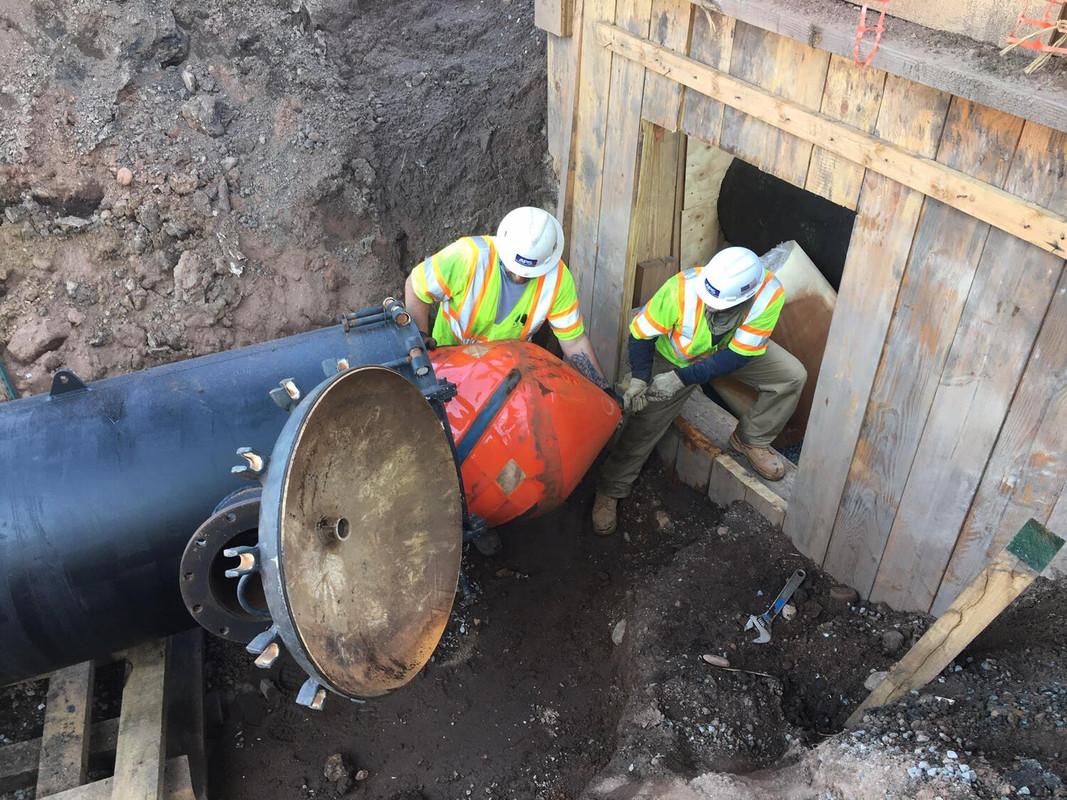
Core Pillars of Essential Pipeline Maintenance
Effective pipeline maintenance rests on a few core pillars. Each service plays a distinct role, and together they form the backbone of a strong integrity program.
Inspection and Condition Assessment
Inspection is the foundation. Without accurate information about the condition of your lines, it’s impossible to make good maintenance decisions.
Inline inspection, or intelligent pigging, uses sensor-equipped devices that travel inside the pipeline to detect metal loss, dents, and other anomalies.
These tools can identify internal and external corrosion, pitting, and deformation along the entire route of the line.
In addition to inline inspection, operators may use visual walkthroughs, external NDE, or local ultrasonic checks where pigging is not practical.
At APS, Pipeline Inspection / Pipeline Condition Analysis turns inspection results into clear, usable information. Our team doesn’t simply pass along data; we interpret what it means for your pipeline’s integrity, identify high-priority features, and help you understand where maintenance focus will have the greatest impact.
Pipeline Cleaning and Pigging
Cleaning is one of the most overlooked, yet essential, pipeline maintenance services. Over time, product residues, scale, biofilm, and debris accumulate inside pipelines. This buildup can reduce capacity, create under-deposit corrosion, and interfere with inspection tools.
Conventional pigging uses mechanical devices to sweep the interior of the line, pushing out solids and restoring a smoother bore. This not only improves flow but also makes subsequent inspections far more effective.
For water and force mains, APS offers Ice Pigging™, an advanced cleaning method that uses an ice slurry to scour internal surfaces without aggressive mechanical contact.
Ice pigging can remove deposits and biofilms in a controlled way, often with less water and downtime than traditional approaches.
Our Pipeline Cleaning services are tailored to product type, line condition, and maintenance goals. We design cleaning programs that fit your operations and integrate seamlessly with inspection and testing activities.
Pressure Testing and Verification
Inspection tells you what defects exist. Pressure testing proves the system can withstand defined loads without failure. Both have a place in essential pipeline maintenance.
Hydrostatic testing involves filling a pipeline with water and pressurizing it to a specified level, typically above normal operating pressure. This confirms that the line can hold pressure and helps validate repairs, tie-ins, or changes in service.
In situations where water is undesirable—such as cold climates, moisture-sensitive systems, or smaller station lines—nitrogen can be used instead.
Nitrogen pressure testing uses dry, inert gas to verify leak tightness and strength while avoiding the need for drying and water disposal.
APS has extensive experience with hydrostatic testing and nitrogen testing, integrating these services into pre-commissioning projects and ongoing maintenance programs.
Corrosion Control and Internal Protection
Corrosion remains one of the leading causes of pipeline failure. Cleaning and inspection identify where corrosion is occurring. Protective measures help slow it down.
Internally, contaminants and stagnant areas can accelerate metal loss. After cleaning and defect repair, internal pipe coating can be applied to create a protective barrier between the steel and the transported product.
APS combines cleaning, inspection results, and internal coating strategies to support life extension for aging pipelines. By targeting coating to the right places and conditions, operators can reduce corrosion rates and stretch the value of existing infrastructure.
Repair, Rehabilitation, and Life Extension
Maintenance doesn’t stop with finding defects; it continues through effective repair and rehabilitation.
Inspection and pressure test results guide where to dig, what to replace, and how to reinforce vulnerable segments. Instead of replacing entire lines, operators can focus on high-risk locations, perform targeted repairs, and then protect the remaining sections with internal coating or other mitigation measures.
APS supports this process through our condition analysis work and our ability to tie inspection outcomes to practical repair and rehabilitation plans that fit your operating and budget constraints.
Data, Planning, and Integrity Management
Every inspection, cleaning, and test generates valuable data. When captured and organized, that data becomes the backbone of risk-based maintenance planning.
Tracking which segments have been cleaned, coated, tested, or repaired—along with their defect history—allows operators to identify trends and adjust maintenance frequency accordingly. It also supports regulatory reporting and internal integrity management requirements.
APS brings a systematic perspective to maintenance planning. We help operators use their existing data, and the results of our services, to structure a program that is truly preventive rather than reactive.
Preventive vs Reactive Pipeline Maintenance
There are two ways to deal with pipeline problems: respond when they appear, or work to prevent them from developing in the first place.
The Cost of Waiting for a Failure
Reactive maintenance often starts with an alarm, a leak report, or an unplanned shutdown. At that point, the options narrow. Emergency repairs are typically more expensive, more disruptive, and more visible to regulators and stakeholders.
Beyond the direct repair costs, unplanned outages can impact customers, contract commitments, and facility operations.
In many cases, a failure also triggers more frequent inspections and reporting requirements going forward.
Building a Preventive Maintenance Cycle
Preventive pipeline maintenance is built around cycles of inspection, cleaning, testing, and repair carried out on a schedule informed by risk. Pipelines in higher-consequence areas or with more aggressive service may need more frequent attention. Lower-risk lines may require less frequent, but still consistent, maintenance.
When APS helps design a maintenance cycle, we look at age, product, construction details, environmental exposure, and inspection history.
The goal is to find a cadence that keeps risk at an acceptable level without creating unnecessary downtime.
Risk-Based and Condition-Based Approaches
Risk-based maintenance focuses resources where the potential consequences of failure are highest or where the likelihood of problems is greatest.
Condition-based maintenance uses actual inspection and testing results to determine when interventions are needed.
Inline inspection data, pressure test results, and coating condition reports all feed into these approaches. APS supports both strategies by providing services and insights that give operators a realistic picture of pipeline condition and risk.
Essential Pipeline Maintenance Services from APS
While “pipeline maintenance” can mean many things, APS focuses on a connected set of services that work together to protect your assets.
Pipeline Inspection and Condition Analysis
Our Pipeline Inspection / Pipeline Condition Analysis services help you understand what is happening inside your pipelines. From planning inline inspection runs to interpreting results, we ensure the data you receive is accurate, relevant, and directly tied to maintenance decisions.
We prioritize clarity in reporting, so your team can move from findings to field action without delays.
Cleaning, Pigging, and Ice Pigging™
APS’s Pipeline Cleaning and Ice Pigging™ services restore capacity and prepare pipelines for inspection and coating. Regular cleaning runs can become a core component of routine maintenance, especially for crude, refined product, and water systems.
By controlling internal buildup and creating a clean surface, cleaning services also improve the performance of pressure testing and internal coating applications.
Pre-Commissioning, Hydrostatic Testing, and Nitrogen Testing
For new lines or systems returning to service after major work, Pipeline Pre-Commissioning ensures that cleaning, drying, and testing are carried out in a logical, efficient sequence.
Our hydrostatic and nitrogen pressure testing capabilities confirm that pipelines can safely hold pressure and are ready for operation. These services can also be used as part of periodic maintenance or revalidation programs.
Internal Pipe Coating and Life Extension
For pipelines with corrosion history or limited replacement options, internal protection can be a critical maintenance tool. APS applies internal pipe coating after proper cleaning and preparation, helping operators reduce corrosion rates and extend the life of existing infrastructure.
Mapping, Turnkey, and Consulting Support
Understanding the physical route and environment of a pipeline is just as important as understanding its internal condition. APS’s mapping services provide insight into alignments, elevations, and external hazards.
Our turnkey and T&M consulting support helps operators design maintenance programs that stay aligned with budgets, regulations, and long-term asset strategies.
Signs Your Pipeline Network Needs Maintenance Attention
Not every pipeline issue is obvious, but certain signs suggest that essential maintenance may be overdue.
Operational changes—such as increased pressure drops, reduced throughput, or higher energy consumption—can indicate internal buildup or developing restrictions.
Assets with limited records, aging coatings, or known history of corrosion require closer attention. And when regulations change, or when similar assets in your sector experience failures, it’s often a signal to review your own maintenance plans.
APS can help assess where your current program stands and identify which lines should be prioritized for inspection, cleaning, or testing.
Getting Started with a Pipeline Maintenance Plan
Developing an effective maintenance plan doesn’t have to be complicated. It starts with understanding what you have, where it is, and how it has been operating.
From there, you can rank pipelines based on age, service, location, and consequence of failure. Lines that carry higher risk or have the least information typically move to the top of the list.
Once priorities are set, APS can help you design a program that integrates inspection, Pipeline Cleaning, Ice Pigging™, Pipeline Pre-Commissioning, hydrostatic and nitrogen testing, internal coating, and mapping into a coherent strategy that fits your operations.
Pipeline Experts: Inspection, Cleaning, Coating & More
Certified solutions for inspection, pre-commissioning, cleaning, internal coating, ice pigging™, mapping, and turnkey pipeline projects—maximizing safety and reliability at every stage.
Frequently Asked Questions About Pipeline Maintenance
What is considered essential pipeline maintenance?
Essential pipeline maintenance includes inspection, cleaning, pressure testing, corrosion control, and repair or rehabilitation activities that keep pipelines safe, efficient, and compliant. These services work together to manage corrosion, debris, and structural integrity over the life of the asset.
How often should pipelines be inspected and cleaned?
The right interval depends on factors such as product type, age, environment, and regulatory requirements. High-risk lines may need more frequent inspection and cleaning than lower-risk ones. Inline inspection and condition analysis results are often used to refine maintenance intervals over time.
What maintenance services reduce internal corrosion in pipelines?
Cleaning to remove deposits, followed by appropriate internal protection, is key. Removing scale, wax, and biofilm reduces under-deposit corrosion, while internal pipe coating can provide a barrier between the steel and the transported product.
What is the role of pigging in pipeline maintenance?
Pigging is central to pipeline cleaning and inspection. Cleaning pigs remove debris and buildup, while smart pigs collect data on wall thickness, dents, and other defects. Techniques like Ice Pigging™ provide specialized cleaning options for water and force mains.
How do hydrostatic and nitrogen testing fit into pipeline maintenance?
Hydrostatic and nitrogen testing verify that a pipeline can safely hold pressure and is leak-tight. They are often used after repairs, tie-ins, or major projects, and they can be part of periodic revalidation programs to confirm ongoing strength.
Can an older pipeline still benefit from maintenance instead of replacement?
Yes. Many older pipelines can continue to operate safely when they are cleaned, inspected, repaired, and internally coated as needed. Maintenance extends life and allows operators to plan replacements on their own schedule rather than in response to an emergency.
How can American Pipeline Solutions help with my pipeline maintenance plan?
APS provides integrated services that cover inspection, cleaning, Ice Pigging™, pre-commissioning, pressure testing, internal coating, mapping, and condition analysis. We help you prioritize assets, design maintenance programs, and execute field activities that improve safety, reliability, and long-term performance.


