
Nitrogen Purging Services
American Pipeline Solutions provides controlled nitrogen purging services for pipelines, tanks, pressure vessels, and industrial piping systems nationwide. APS helps operators remove oxygen, moisture, hydrocarbons, and unwanted gases before startup, inspection, maintenance, or shutdown work.
Request nitrogen purging support from APS for pre-commissioning, drying, inerting, degassing, and pipeline maintenance programs.
What Is Nitrogen Purging?
Nitrogen purging is the process of introducing dry, inert nitrogen gas into a pipeline or industrial system to displace oxygen, moisture, flammable vapors, or other gases. Because nitrogen is non-combustible and non-reactive under normal conditions, it is commonly used to create a safer internal environment before a system is started, opened, inspected, or maintained.
For pipelines and process systems, nitrogen purging is often used before commissioning, after hydrostatic testing, during shutdowns, and before hot work. It can also support system preservation by reducing exposure to oxygen and moisture.
Nitrogen purging may be used as a standalone service or as part of a broader pipeline program that includes cleaning, dewatering, drying, pressure testing, inspection, and pre-commissioning support.
Why Nitrogen Is Used For Purging
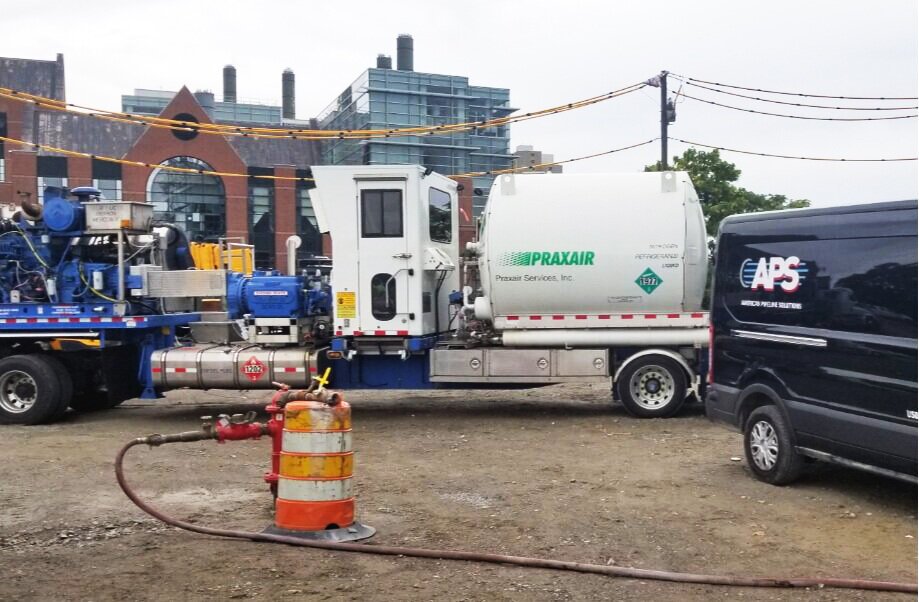
Nitrogen is widely used because it helps create a controlled internal atmosphere without adding combustion risk. It can displace oxygen from a system, reduce the presence of flammable vapors, and support moisture removal in sensitive applications.
Nitrogen purging is commonly used to help with:
Oxygen displacement
Hydrocarbon degassing
LEL reduction
Moisture and water vapor removal
Pipeline drying support
System inerting
Product displacement
Corrosion control during preservation
Startup and shutdown readiness
The right purge plan depends on system volume, access points, pressure limitations, purge target, and the condition that must be reached before work can continue.
When Nitrogen Purging Is Needed
Nitrogen purging is used whenever a pipeline, tank, vessel, or piping system needs to be cleared, dried, or made safer before the next phase of work. In many industrial environments, this step is critical for safety, quality, and operational readiness.
Pre-Commissioning And Startup
Before a new pipeline or industrial system enters service, nitrogen purging can remove air and ambient moisture from the internal space. This helps prepare the system before process fluids, natural gas, or other service media are introduced.
For pre-commissioning projects, nitrogen purging may be combined with cleaning, gauging, filling, hydrostatic testing, dewatering, and drying to create a complete startup readiness program.
Shutdowns And Turnarounds
During shutdowns and turnarounds, nitrogen can help displace hydrocarbons, flammable vapors, or reactive gases before maintenance work begins. This is especially important in refineries, petrochemical plants, oil and gas facilities, and process environments where safe access is required.
A controlled nitrogen purge helps reduce risk before inspection, repair, isolation work, or hot work.
Pipeline Drying After Hydrostatic Testing
After hydrostatic testing, residual water and moisture can remain inside the pipeline. Dry nitrogen can support the drying process by helping remove moisture and water vapor from the internal environment.
This is especially important when a pipeline must meet a dew point requirement or when moisture could affect startup, product quality, corrosion risk, or system performance.
System Preservation
Nitrogen can also be used to preserve idle systems by limiting oxygen and moisture exposure. A nitrogen atmosphere can help reduce corrosion drivers while a system is waiting for startup, repair, or future service.
Nitrogen Purging Applications
APS supports nitrogen purging across a wide range of pipeline and industrial environments. Each project is planned around the system layout, safety requirements, purge target, and operational timeline.
Common applications include:
Pipeline purging for oil, gas, industrial, and utility systems
Tank and vessel purging before inspection or maintenance
Process piping purging in refineries and plants
Hydrocarbon degassing before hot work
Oxygen freeing before startup or maintenance
LEL reduction in systems with flammable vapor risk
Product displacement before cleaning or shutdown work
Nitrogen drying support after hydrostatic testing
These services are frequently used in oil and gas, petrochemical, refining, power generation, manufacturing, and industrial facility environments.
The APS Nitrogen Purging Process
APS approaches nitrogen purging as controlled field execution. The goal is not only to introduce nitrogen, but to do it safely, efficiently, and in a way that supports the project objective.
System Review
APS begins by reviewing the system type, pipe diameter, approximate length or volume, access points, pressure limitations, previous contents, and project goal. This helps determine the right purge method and field setup.
Purge Method Selection
The purge method is selected based on system geometry, target atmosphere, operating limits, and available access. Depending on the system, the approach may include displacement purging, dilution purging, pressure cycling, or pig-assisted nitrogen displacement.
Field Setup And Isolation
Before nitrogen is introduced, APS coordinates isolation points, connection points, venting paths, monitoring locations, and site safety needs. Proper setup is critical because nitrogen purging can involve pressure, gas movement, confined spaces, and oxygen-deficient atmospheres.
Controlled Nitrogen Introduction
Nitrogen is introduced at controlled flow and pressure to displace oxygen, moisture, hydrocarbons, or unwanted gases. APS monitors conditions throughout the process so the purge remains stable and aligned with the project plan.
Verification And Documentation
Depending on the scope, verification may include oxygen readings, LEL checks, pressure observation, moisture checks, dew point verification, or field logs. APS documents results and provides practical next-step recommendations for startup, drying, testing, inspection, or maintenance.
Common Nitrogen Purging Methods
Different systems require different purging methods. APS helps select the approach that fits the layout, risk level, and target condition.
Displacement Purging
Displacement purging pushes the existing atmosphere out of the system as nitrogen enters. This method is often used for pipelines and systems with a clear flow path.
Dilution Purging
Dilution purging mixes nitrogen with the existing atmosphere and gradually reduces oxygen, moisture, or unwanted gas concentration. This may be used in more complex vessels or piping arrangements.
Pressure Cycling
Pressure cycling involves pressurizing a system with nitrogen, venting it, and repeating the process until the target condition is reached.
Pig-Assisted Nitrogen Displacement
For certain pipelines, nitrogen can be used with pigging to help separate fluids, remove liquids, or improve displacement efficiency. This can be useful when purging is part of a larger pipeline cleaning or pre-commissioning program.
Safety Considerations For Nitrogen Purging
Nitrogen is highly effective, but it must be handled with care. It is colorless and odorless, and it can create oxygen-deficient atmospheres if not controlled properly.
APS plans nitrogen purging with safety in mind, including:
Oxygen monitoring where required
LEL checks when flammable vapors may be present
Controlled pressure and venting
Rated hoses, fittings, and connections
Safe work zones and access control
Confined space awareness
Clear communication with site teams
Safe nitrogen purging depends on trained crews, proper equipment, and disciplined field procedures.
Industries APS Supports
APS provides nitrogen purging support for critical pipeline and industrial systems across the United States.
Oil And Gas
APS supports upstream, midstream, transmission, gathering, and facility piping systems that require oxygen displacement, inerting, product displacement, drying, or purge support.
Refineries And Petrochemical Plants
Nitrogen purging is commonly used in process piping, tanks, reactors, pressure vessels, and turnaround maintenance environments where hydrocarbon degassing and LEL reduction are required.
Power Generation And Utilities
Power and utility systems may require nitrogen purging for pre-commissioning, preservation, maintenance readiness, and pressure testing support.
Industrial Manufacturing
Manufacturing facilities often rely on nitrogen purging for moisture-sensitive systems, process piping, utility lines, tanks, and vessels.
How Nitrogen Purging Fits Into APS Pipeline Services
APS is not just a gas service provider. Our team understands how nitrogen purging fits into a larger pipeline maintenance, cleaning, and pre-commissioning strategy.
Nitrogen purging can be integrated with:
Pipeline cleaning
Pigging and swabbing
Hydrostatic testing support
Dewatering and drying
Pipeline pre-commissioning
Pressure testing
Inspection and condition analysis
Shutdown and turnaround support
This service-first approach helps clients avoid fragmented project execution and move from one phase to the next with better control.
Why Choose American Pipeline Solutions?
American Pipeline Solutions brings nationwide field experience, practical pipeline knowledge, and disciplined service execution to nitrogen purging projects. APS works with oil, gas, municipal, industrial, power, and utility systems where safety, timing, and system readiness matter.
Clients choose APS because our team can support the full pipeline workflow, not just one step. If nitrogen purging is part of a larger project, APS can help coordinate the sequence and recommend the next practical action.
Request Nitrogen Purging Services
Contact American Pipeline Solutions to discuss your nitrogen purging needs. Helpful project details include system type, pipe diameter, length or volume, access points, previous contents, purge objective, pressure limits, moisture requirements, and project schedule.
APS provides nationwide nitrogen purging support for pipelines, tanks, vessels, and industrial piping systems.
Frequently Asked Questions About Nitrogen Purging Services
What Are Nitrogen Purging Services?
Nitrogen purging services use dry, inert nitrogen gas to displace oxygen, moisture, hydrocarbons, or unwanted gases from pipelines, tanks, vessels, and piping systems.
What Is Nitrogen Purging Used For?
Nitrogen purging is used for pre-commissioning, startup, shutdowns, turnarounds, hydrocarbon degassing, oxygen freeing, LEL reduction, pipeline drying, system inerting, and preservation.
Can Nitrogen Purging Help Dry A Pipeline?
Yes. Dry nitrogen can support pipeline drying by helping remove moisture and water vapor, especially after hydrostatic testing and dewatering.
Is Nitrogen Purging Dangerous?
Nitrogen purging must be handled by trained crews because nitrogen can create oxygen-deficient atmospheres. Proper monitoring, venting, pressure control, and site safety procedures are critical.
What Information Is Needed For A Quote?
Useful details include system type, pipe diameter, length or volume, access points, product history, purge target, pressure limits, dew point requirements, and project timeline.


